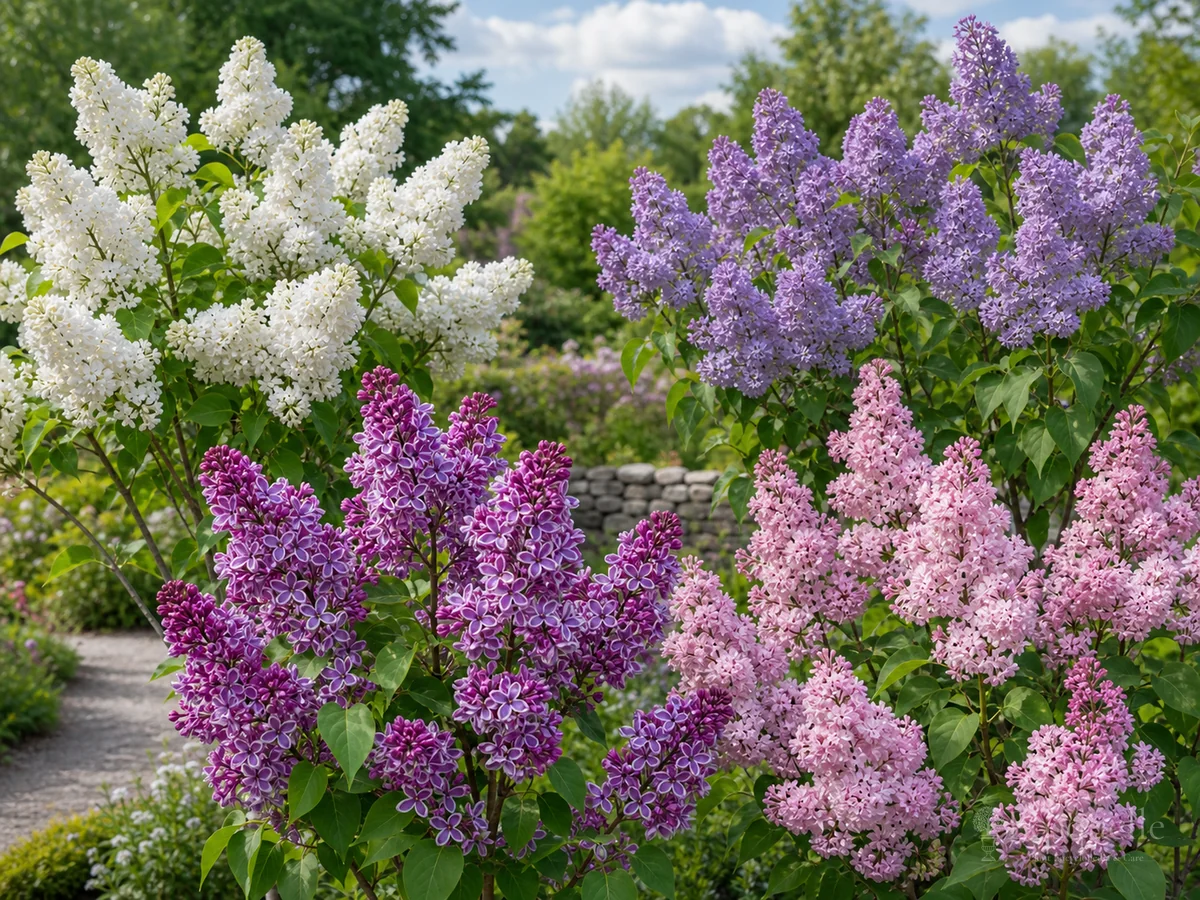
One fork before colour: classic shrub hybrid (vulgaris / early / dwarf-rebloom / compact) versus tree-lilac scale (reticulata / pekinensis). They do not share a prune skeleton or a footprint.

Take the fork, then browse 52 Syringa. Care on How to Grow Lilacs; after-bloom cuts on Pruning Lilacs.
Fork — shrub hybrid or tree lilac?
| Shrub / hybrid lane | Tree-lilac lane | |
|---|---|---|
| Scale | Classic May shrub to patio dwarf | Small-tree structure |
| Faces | Madame Lemoine, Pocahontas, Bloomerang Purple, Palibin | Ivory Silk, China Snow |
| Wrong buy | Expecting a street-tree trunk | Expecting vulgaris May fragrance volume |
Know your USDA hardiness zone before you pick a type of lilac that will take your winter. Type your ZIP below.
2023 USDA ZIP listings (PRISM / USDA-ARS). Find Your USDA Hardiness Zone · Official USDA map.
Ivory Silk is not a taller Madame Lemoine. Species and tree class come before paint chips.
Session-end check: can you name shrub/hybrid lane versus tree-lilac scale — and say whether your pick blooms on old wood like vulgaris or reblooms on a different calendar — before you match flower colour?
Wrong syringa buys that look like a types page
Tree lilac in a foundation bed: Ivory Silk and China Snow read “lilac” on the tag but own small-tree structure — not Palibin foundation scale. The footprint mismatch shows in year three, not at checkout.
Classic vulgaris where you wanted rebloom: Madame Lemoine and Beauty of Moscow are once-bloom May theatre — not Bloomerang Purple or Bloomerang Dark Purple repeat flush. Expect the old-wood calendar unless you deliberately chose a rebloom series.
Fragrance assumed from any purple tag: scent varies by cultivar and distance. Sort class first; curated scent shortlists live on Fragrant Garden Lilacs.
One prune script for every lilac: shrub hybrids bloom on old wood — after-bloom cuts. Tree lilacs and rebloom series have their own timing. Prune method stays on Pruning Lilacs; Types only locks the class.
Inside the shrub lane
- Common vulgaris fragrance — Madame Lemoine, Sensation, Beauty of Moscow → Fragrant Garden Lilacs
- Early hyacinthiflora — Pocahontas
- Dwarf / rebloom — Bloomerang Purple, Bloomerang Dark Purple
- Compact foundation — Palibin, Miss Kim → Lilac Companion Plants
Rebloom series — not vulgaris calendar
Bloomerang Purple, Bloomerang Dark Purple, and other dwarf/rebloom marketed lines can flush again on a different rhythm than classic Madame Lemoine. They still live in the shrub lane — not tree-lilac scale. Do not expect once-bloom May-only behaviour or the same hard prune assumptions without reading the series notes on the profile.
Site match after the fork
| Site job | Prefer | Avoid as default |
|---|---|---|
| Foundation / patio edge | Compact (Palibin, Miss Kim) or dwarf rebloom | Tree lilac (Ivory Silk) |
| May fragrance hedge | Common vulgaris (Madame Lemoine, Sensation) | Early-only if you need the earliest week |
| Earliest lilac week | Early hyacinthiflora (Pocahontas) | Expecting vulgaris fragrance volume |
| Small-tree street / alley | Tree lilac (Ivory Silk, China Snow) | Foundation-scale compact shrub |
Alkaline-lean drainage and full sun are shared across lanes — scale and bloom calendar are not. After you pick a lane, the hole and first-year water stay on Planting Lilacs.
Class notes inside the shrub lane
Use the site-match table above, then open two or three faces in the matching band. Common vulgaris such as Madame Lemoine buys May fragrance volume; dwarf rebloom such as Bloomerang Purple buys a different repeat rhythm, still not tree-lilac scale. Compact foundation such as Palibin is the small shrub footprint. Care and prune stay on the pillars.
Full catalog by class (52)
Groups use common / early / dwarf-rebloom / compact / tree signals — not invented flower-colour Types. Pick the fork first, then open two or three faces inside the matching band.
How to use the bands: shrub-lane shoppers compare fragrance, rebloom, and footprint — not all 52 at once. Tree-lilac shoppers confirm canopy room before panicle colour. Cards shortlist inside the class you already chose.
Common lilac (vulgaris) (15)
Classic May shrub Syringa vulgaris (Madame Lemoine, Sensation, Beauty of Moscow, Charles Joly) — once-bloom old-wood display at full shrub scale.
Early lilac (hyacinthiflora) (13)
Earlier-blooming Syringa × hyacinthiflora (Pocahontas, Ascippi, Declaration, Scentara) — often hardier and ahead of classic vulgaris timing.
Dwarf and rebloom lilacs (9)
Compact patio-scale and rebloom series (Bloomerang, Baby Kim, Josee, Scent and Sensibility, Tinkerbelle) — different prune and season calendar than classic once-bloom shrubs.
Compact shrub lilacs (4)
Small foundations and hedges (meyeri Palibin, Miss Kim / patula, Red Pixie, microphylla Superba) — shrub form at reduced scale, not tree lilac.
Tree lilac (5)
Small-tree scale Syringa reticulata / pekinensis (Ivory Silk, China Snow, Beijing Gold, Snowdance) — different size and structure from shrub lilacs.
Other lilacs in our library (6)
These Syringa entries do not yet match a stronger band cue (including some hybrid and species rows) — open the profile before assuming vulgaris vs tree vs dwarf.
Where care, prune, and scent live
Plant-out hole and spring-or-fall window: Planting Lilacs. Alkaline soil and old-wood pointer: How to Grow Lilacs. After-bloom cuts and rebloom timing: Pruning Lilacs. Fragrance shortlists: Fragrant Garden Lilacs.
After you lock shrub versus tree and rebloom versus once-bloom, soil panic and prune timing belong on Care and Prune — Types only sorted the class.
Fork shrub/hybrid lane versus tree-lilac scale first, then browse the matching group and open Care or Prune.
FAQ
Is a tree lilac the same as a common lilac?
No — that is the fork. Tree lilacs (reticulata / pekinensis) are a different scale from Syringa vulgaris shrubs.
Shrub hybrid or dwarf rebloom for a patio?
Stay in the shrub lane — dwarf/rebloom (Bloomerang class) or compact foundation (Palibin / Miss Kim), not tree lilac.
Why isn't this grouped by flower colour?
Colour does not settle the shrub-vs-tree fork. We group by habit/species class cues from the catalog.
Where do I grow the type I picked?
How to Grow Lilacs for shared care; Pruning Lilacs for after-bloom cuts; Fragrant Garden Lilacs for scent shortlists.
Is Bloomerang the same as a common lilac?
Same shrub lane — different rebloom calendar. Do not expect classic vulgaris once-bloom timing or identical prune habits.
Ivory Silk for a foundation bed?
Only if you want tree-lilac scale. For foundation footprint, start with compact or dwarf-rebloom shrub lanes.
Early hyacinthiflora or common vulgaris?
Early (Pocahontas class) for the earliest week; common vulgaris for classic May fragrance volume — both shrub lane.
Where is alkaline soil advice?
On How to Grow Lilacs — Types only locks habit class before you browse cultivars.
Related guides


This note is part of Lilac Guides.
More type comparisons by plant are gathered in Types of Plants Guides.
Updated: Reviewed by Bosquelle Editors