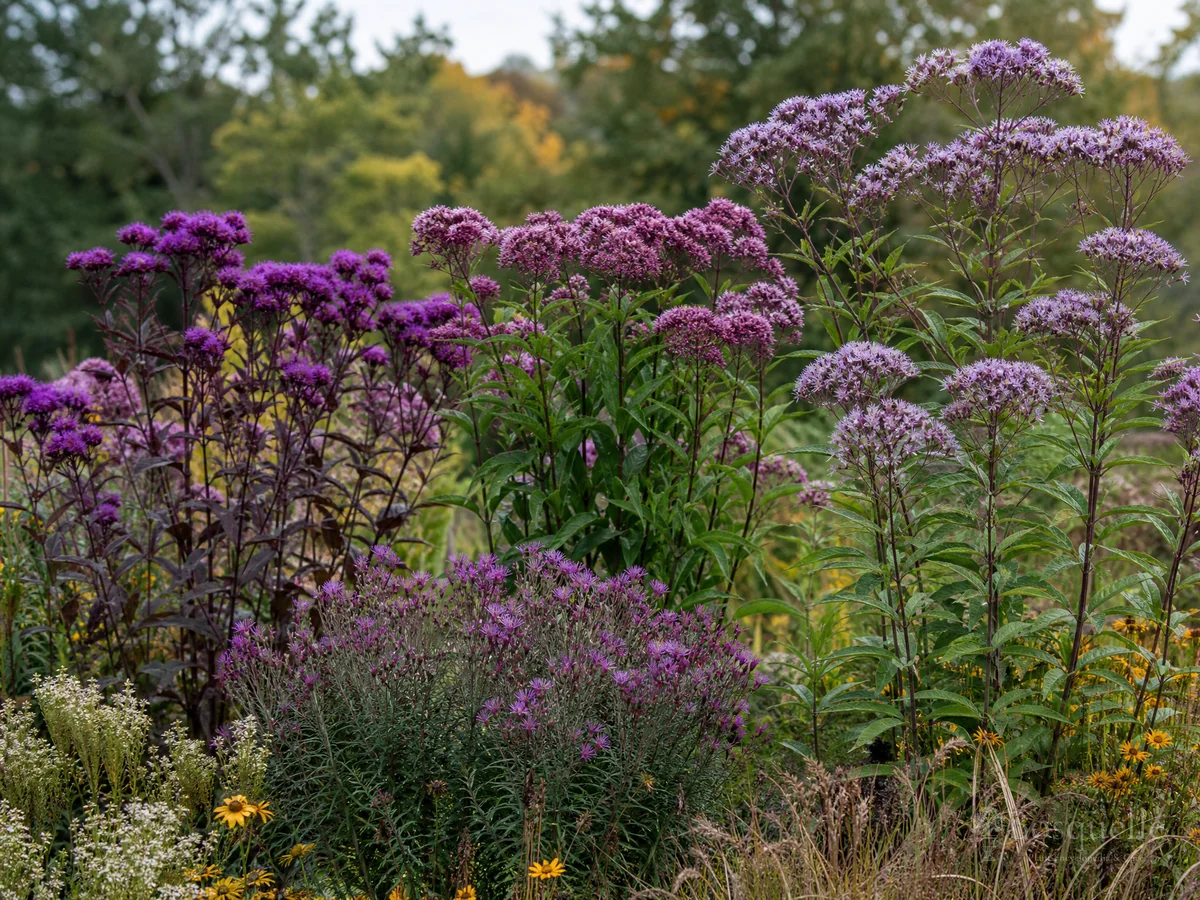
Choose a compact narrowleaf ironweed, a tall New York ironweed, a giant, or a prairie species first — each one fits a different garden size and soil condition.

Choose a compact narrowleaf, a tall New York, a giant, or a prairie ironweed first
| Type | Height | Best for |
|---|---|---|
| Narrowleaf (lettermannii) | 2–3 ft | Small borders, rock gardens, drier and leaner soil |
| New York (noveboracensis) | 5–8 ft | Moist borders, rain gardens, meadow back row |
| Giant (gigantea) | 8–10 ft | Large meadows, stream banks, tall screen planting |
| Prairie (fasciculata, missurica) | 2–6 ft | Moist to wet prairie, Zone 4+ gardens |
| Hybrid selections | 2–4 ft | Garden borders where a more compact, consistent habit matters |
Know your USDA hardiness zone before you pick a type of vernonia that will take your winter. Type your ZIP below.
2023 USDA ZIP listings (PRISM / USDA-ARS). Find Your USDA Hardiness Zone · Official USDA map.
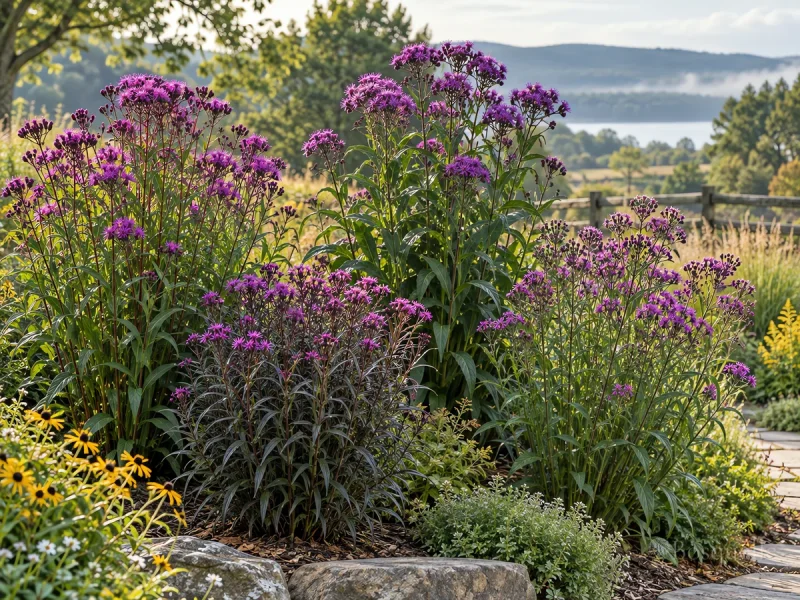
The Iron Butterfly cultivar of narrowleaf ironweed stays two to three feet tall with fine, needle-like foliage. It tolerates drier, leaner soil better than the other species and suits a rock garden, pollinator border, or smaller bed where New York ironweed would swamp everything. [1]
New York ironweed is the most widely sold tall ironweed. It reaches five to eight feet in moist to average soil, has lance-shaped dark green leaves, and is notably rust-resistant compared to other tall species. [2]
giant ironweed can top ten feet in rich moist soil — it is the back-of-border or meadow plant where scale is the point. common prairie ironweed is native to wet prairies from the Upper Midwest and starts blooming a few weeks earlier than the eastern species, in early to mid-July. [3]
Hybrid selections such as Summer’s Swan Song and Summer’s Surrender were bred at the Chicago Botanic Garden from crosses between narrowleaf and Arkansas ironweed. They reach three to four feet, hold upright stems without staking, and have good garden habit. [4]
What is the difference between ironweed and Joe-Pye weed?
Ironweed (Vernonia) has deep violet heads on branched tips and alternate leaves. Joe-Pye weed (Eutrochium) has whorled leaves, a vanilla scent, and a softer mauve dome. Both attract late-season butterflies in moist, sunny sites. See How to Grow Ironweed for care on this plant.
Is Iron Butterfly the same as New York ironweed?
No. Iron Butterfly is a cultivar of Vernonia lettermannii, a compact narrowleaf species from Arkansas. It stays two to three feet tall and tolerates drier soil. New York ironweed (V. noveboracensis) reaches five to eight feet and needs consistently moist ground.
Browse by kind
Pick the species or cultivar that fits your bed size and soil: compact Iron Butterfly for a small border or drier site, New York ironweed for a moist rain garden or meadow back row, or giant ironweed where scale is the point. All of them bloom late and feed pollinators through early fall.
FAQ
Which ironweed is best for a small garden?
Iron Butterfly — a compact Vernonia lettermannii cultivar — stays two to three feet tall and wide, tolerates drier soil, and is easy to fit into a border or pollinator garden. Most other species get at least five feet tall.
Is this love-in-a-mist?
No. Love-in-a-mist is Nigella, an annual with finely cut leaves and pale blue flowers in early summer. Ironweed is a tall native perennial with deep violet heads in late summer. The fine foliage of Iron Butterfly can look similar to Amsonia hubrichtii (Arkansas blue star) when not in bloom — check the tag.
Related guides

References
- [1] NC State Extension Gardener -
https://plants.ces.ncsu.edu/plants/vernonia-noveboracensis/ - [2] Gardener’s Path -
https://gardenerspath.com/plants/flowers/grow-ironweed/ - [3] Chicago Botanic Garden -
https://www.chicagobotanic.org/plant-evaluation/ironweeds - [4] Mt. Cuba Center -
https://mtcubacenter.org/chelsea-chop/
This note is part of Vernonia Guides.
More type comparisons by plant are gathered in Types of Plants Guides.
Updated: Reviewed by Bosquelle Editors