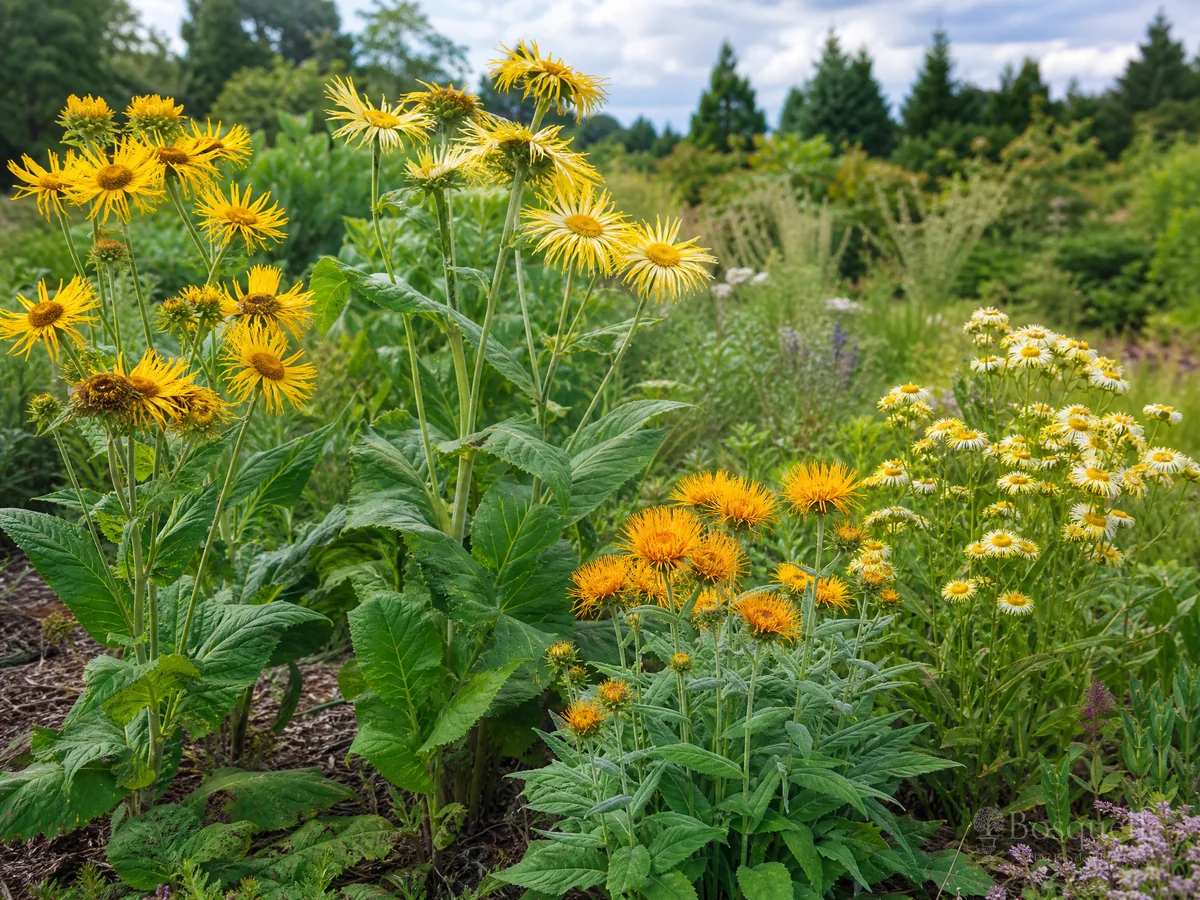
Choose Inula by height first: classic elecampane, giant Inula, Hooker's, or meadow fleabane. We list four kinds.
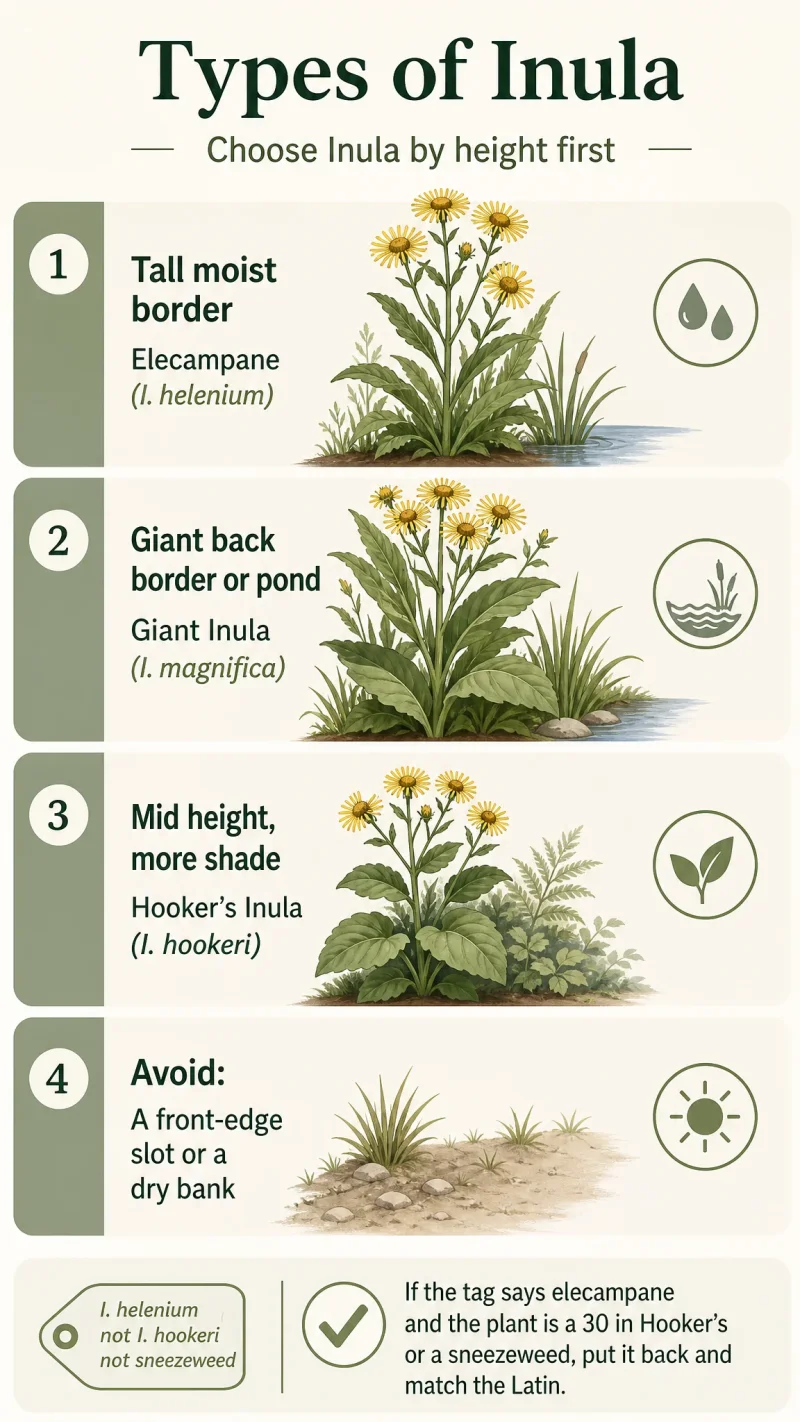
Choose elecampane, giant Inula, Hooker's, or meadow fleabane
| Factor | Recommended | Avoid |
|---|---|---|
| Tall moist border | Elecampane (I. helenium) | A front-edge slot or a dry bank |
| Giant back border or pond | Giant Inula (I. magnifica) | An unstaked wind tunnel |
| Mid height, more shade | Hooker's Inula (I. hookeri) | Treating an elecampane packet as the 6 ft plant |
| Shorter yellow | Skip unless you meant meadow fleabane | Planting I. britannica as a harmless cottage daisy |
Know your USDA hardiness zone before you pick a type of inula that will take your winter. Type your ZIP below.
2023 USDA ZIP listings (PRISM / USDA-ARS). Find Your USDA Hardiness Zone · Official USDA map.
Elecampane, Hooker's, and giant Inula share moist soil and yellow daisy heads; scale is the shop job. [1] Meadow fleabane is a different risk: about 1 to 1.5 feet, creeping fleshy roots, and listed noxious in the US. [2]
What is meadow fleabane versus elecampane?
Meadow fleabane is I. britannica, a shorter plant with a noxious listing in the US. Classic elecampane is I. helenium at 3 to 6 feet.
Browse by kind
Elecampane
Elecampane (I. helenium) is the classic 3 to 6 ft yellow daisy with large basal leaves. Fuller bloom in year two; give it back-border room.
Giant Inula
Giant Inula (I. magnifica) pushes 5 to 6 feet with heads up to 6 inches. Moist back border or a pond edge; stake in wind.
Hooker's Inula
Hooker's Inula (I. hookeri) stays about 30 inches and takes more part shade. Packets may still say elecampane — it is not the 6 ft plant.
Meadow fleabane
Meadow fleabane (I. britannica) is the shorter yellow. It is listed noxious in the US and has hitchhiked in nursery stock — do not treat it as a cute filler.
Not Inula — sneezeweed and Mexican fleabane
- Helenium sneezeweed is a different genus. Same late yellow daisy look; not elecampane care, and not a substitute label.
- Mexican fleabane is Erigeron karvinskianus, a spreading rock-garden daisy. Meadow fleabane here is Inula britannica.
- Pentanema on the label is often the same shorter plant. Floras moved British yellowhead to Pentanema britannicum; nursery tags may still say Inula britannica.
- Giant Inula is I. magnifica, not a tropical Medinilla. Six-foot stems, 36 inch spacing, stake in wind. [3]
- Hooker's sold as elecampane is I. hookeri at about 30 inches in part shade. It can colonize; site it with care. [4]
- Swordleaf Inula (I. ensifolia) shows up on some grow lists. We do not card it.
Is Inula the same as Helenium sneezeweed?
No. Sneezeweed is Helenium. Confirm Inula on the tag when you want elecampane, giant Inula, Hooker's, or meadow fleabane.
If the tag says elecampane and the plant is a 30 in Hooker's or a sneezeweed, put it back and match the Latin.
FAQ
Do we list swordleaf Inula (ensifolia)?
No. Some grow lists include a shorter swordleaf kind. The four here are helenium, magnifica, hookeri, and britannica.
Is British yellowhead the same as elecampane?
No. British yellowhead is meadow fleabane (I. britannica / Pentanema britannicum). Elecampane is I. helenium.
Why does a label say Pentanema?
Some lists moved meadow fleabane out of Inula. If the tag says britannicum or britannica, treat it as the shorter noxious kind, not classic elecampane.
Is elecampane invasive?
I. helenium can persist and self-seed in moist ground. I. britannica is the listed noxious weed and has hitchhiked in nursery pots. Deadhead if volunteers are unwelcome.
Related guides


References
This note is part of Inula Guides.
More type comparisons by plant are gathered in Types of Plants Guides.
Updated: Reviewed by Bosquelle Editors