
Choose geum by habit first — a border hybrid, water avens, or prairie smoke — then by flower color. Care stays on How to Grow Geum.
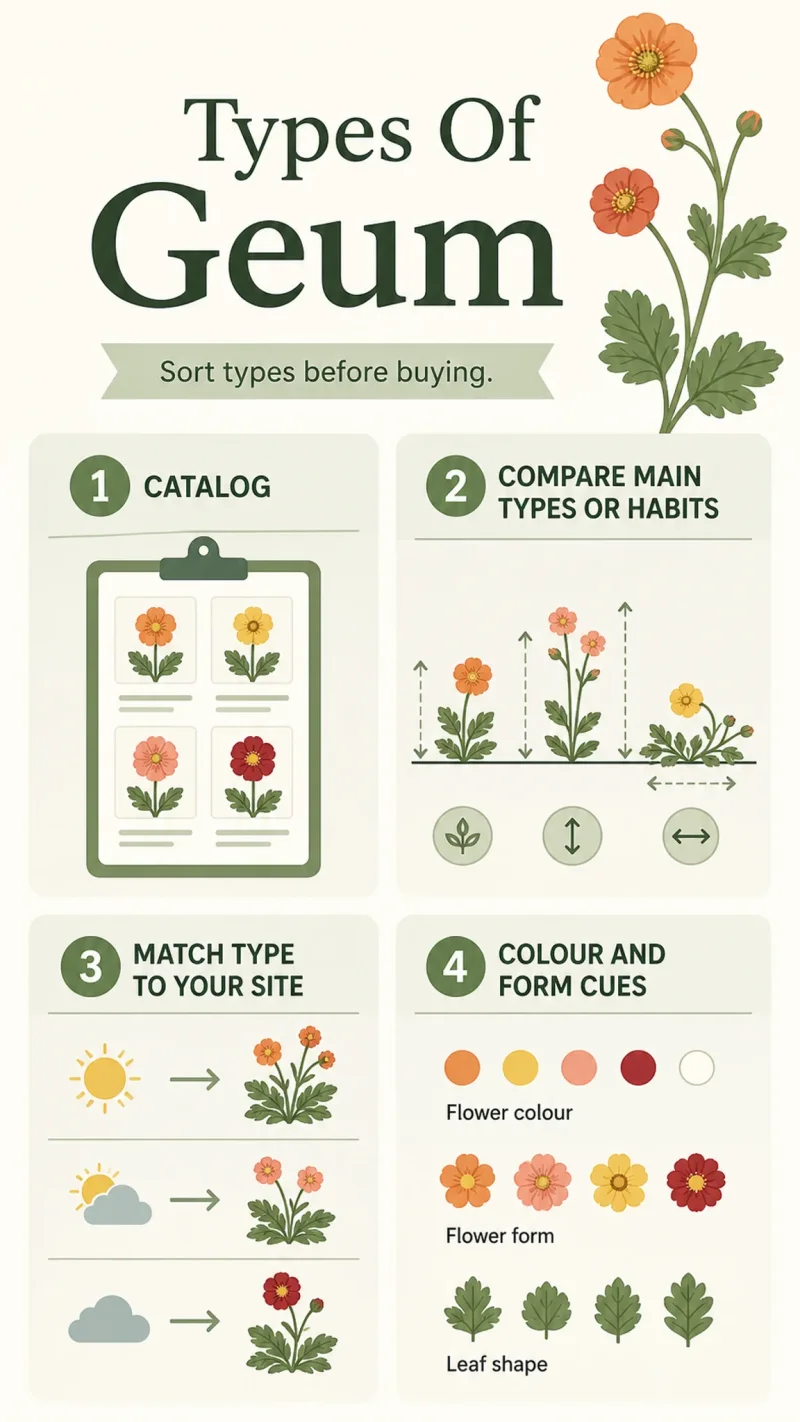
Choose habit, then flower color
Chicago Botanic Garden: border hybrids carry the hot saucer flowers. Water avens and prairie smoke hide smaller petals in colored bracts, and prairie smoke is grown as much for the seed heads as for bloom.
If the tag only says avens, ask whether it is a repeat-blooming hybrid or a species. A shady, dry, or waterlogged bed is the wrong site for every band here — fix that on the care page, not by swapping color.
How do I choose a geum type?
Pick habit first: sunny-border hybrid, damper water avens, or prairie smoke for seed heads. Then pick flower color inside the hybrid group.
Border hybrids
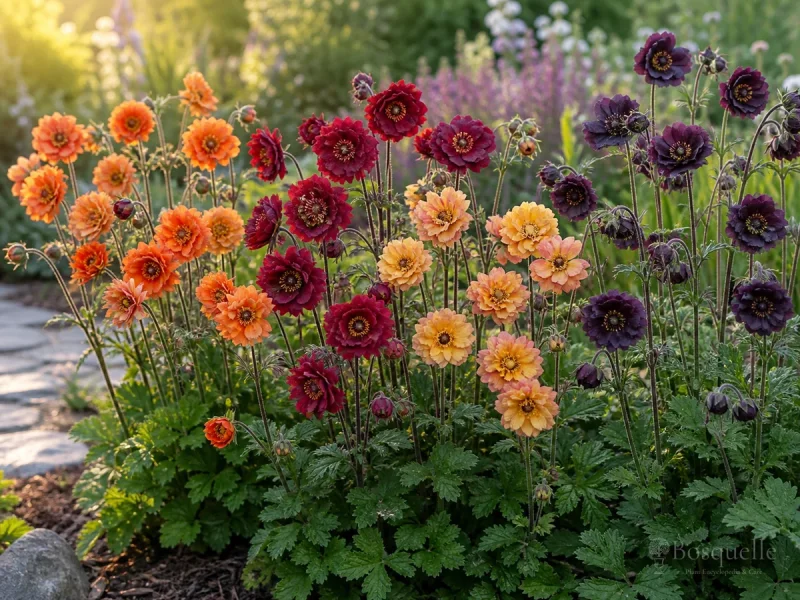
Orange and tangerine hybrids
Saucer flowers in orange to apricot on a mounding rosette. Same sun and even moisture as other border hybrids. Deadhead for a longer season; some, such as Totally Tangerine, are sterile and keep blooming.
Red hybrids
True red singles and doubles for a sunny edge. Same moist, draining soil and deadhead rhythm as the orange band.
Yellow hybrids
Bright yellow flowers, often on a more compact clump. Same sun and moisture; a good front-pocket size.
Dark hybrids
Near-black-red flowers on the same sun-edge hybrid care. Give them a lighter neighbor so the bloom reads.
What is the most reliable reblooming geum?
Totally Tangerine is widely grown for a long, sterile-flowered season. Deadhead other hybrids the same way.
Which geum has the darkest flower color?
Dark and Stormy — near-black-red flowers, still a sun-edge hybrid in care.
Water avens and prairie smoke
Water avens
Geum rivale and its selections. Nodding flowers, cooler ground, and slightly damper soil than the hot hybrids — still drained, not a puddle.
Prairie smoke
Geum triflorum. Spring flowers nod like a shepherd’s crook; the show is the feathery seed heads after bloom. Keep the seed heads if that is why you bought it.
What is the difference between geum hybrids and species?
Hybrids are bred for saturated color and rebloom. Water avens nods and likes cooler, damper ground. Prairie smoke is grown for feathery seed heads after a short spring flush.
What is G. triflorum grown for?
The feathery seed heads after flowering, as much as the modest spring bloom. Do not deadhead if that smoke show is the point.
Tag decoder and wrong buys
| Tag says | Band | Rebloom |
|---|---|---|
| Totally Tangerine, Fireball, Fire Storm, Prinses Juliana, Alabama Slammer, Mai Tai | Orange hybrid | Strong if you deadhead (Tangerine is sterile) |
| Double Bloody Mary, Mrs J. Bradshaw, Wet Kiss | Red hybrid | Good with deadheading |
| Flore Plena Sunrise, Gimlet, Borisii | Yellow hybrid | Good with deadheading |
| Dark and Stormy | Dark hybrid | Good with deadheading |
| rivale, Leonard’s Variety | Water avens | Mainly one flush |
| triflorum, prairie smoke | Prairie smoke | Short flush, then seed heads |
Know your USDA hardiness zone before you pick a type of geum that will take your winter. Type your ZIP below.
2023 USDA ZIP listings (PRISM / USDA-ARS). Find Your USDA Hardiness Zone · Official USDA map.
- Do not buy a hot hybrid for a damp shade pocket — that is water avens territory, and still not a bog.
- Do not deadhead prairie smoke if you wanted the seed heads.
- Do not treat a hybrid as drought-proof because the leaf looks tough.
If the tag only says avens, ask hybrid or species before you pay. Then match sun and moisture to that habit.
FAQ
Is Borisii a good starter geum?
Yes. It is a compact yellow hybrid that is easy to place at the front of a sunny edge.
Can I mix two geum types in one bed?
Yes, if they share sun and even moisture. Pair a hot hybrid with water avens only if the bed stays moist without drowning the hybrid.
What does sterile-flowered mean on a geum tag?
The flowers set little or no seed, so the plant keeps making more blooms. Totally Tangerine is the usual example.
Related guides



This note is part of Geum Guides.
More type comparisons by plant are gathered in Types of Plants Guides.
Updated: Reviewed by Bosquelle Editors