
Grow geum in full sun and soil that stays moist but drains. It is also called avens. Prairie smoke is Geum triflorum.

Sun, moist soil, and drainage
| Factor | Recommended | Avoid |
|---|---|---|
| Light | Full sun; afternoon shade where summers run hot | Deep shade (thin bloom, floppy rosette) |
| Moisture | Evenly moist through the growing season | Bone-dry gravel, or standing water on the crown |
| Soil | Fertile mix that drains after a soak | Waterlogged clay |
| Habit | Mounding basal rosette at the front of a border | Treating it as a shade groundcover |
Missouri Botanical Garden: clump-forming hybrids bloom in sun, with wiry stems above the rosette. In heat, afternoon shade keeps foliage from scorching.
Is geum a perennial?
Yes. It is a hardy, clump-forming perennial. Hybrids may be semi-evergreen in a mild winter; in cold climates the top dies back and the crown returns in spring.
Does geum need full sun?
Yes, for the strongest bloom. Afternoon shade helps in hot summers. Deep shade thins flowers and loosens the rosette.
How to deadhead for rebloom
Chicago Botanic Garden: sterile hybrids such as ‘Totally Tangerine’ keep flowering because they do not set seed. Cut spent stems on the rest, or the first flush is often the last.
- When a flower cluster fades, cut that stem down to the basal rosette.
- Keep going through summer on border hybrids. That is the job that extends bloom.
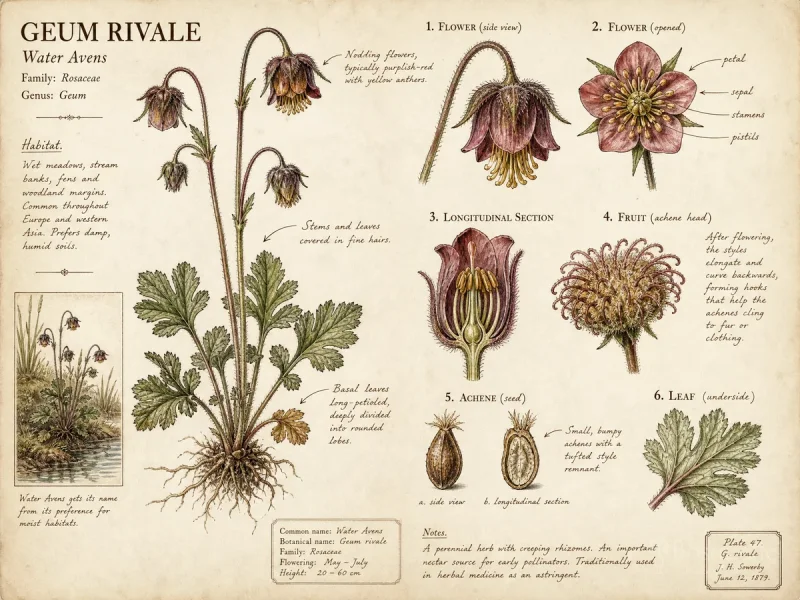
- Leave seed heads on prairie smoke if you grew it for the feathery show. Water avens (water avens) is mostly a single main flush — tidy it if you want, but do not expect hybrid-length rebloom.
When should you deadhead geum?
When the cluster fades and petals drop. Cut the stem to the base so the plant puts energy into new stems, not seed.
Why did my geum stop blooming?
Usually skipped deadheading, too much shade, or a dry spell. Hybrids need the cut-back. Prairie smoke is grown for seed heads after a short spring flush.
Divide, and what fails
University of Minnesota Extension: culture is sun and even moisture. When the center of the clump goes bare, flowering drops — that is a divide job, not a new cultivar.
Divide
Every two to three years, or when the middle dies out, lift the clump in spring or early fall. The rosettes are linked by rhizomes. Keep vigorous outer pieces with roots; discard the woody center. Replant at soil level and water in.
What fails
- Deep shade.
- Soil that bakes dry, or a crown sitting in winter water.
- Skipping deadhead on a hybrid, then blaming the name.
- Leaving a woody center for years without dividing.
When should you divide geum?
Every two to three years, or when the center looks bare. Spring or early fall. Replant healthy outer rosettes.
Avens, prairie smoke, and pots
Names
Avens is the common name. Prairie smoke is prairie smoke. Color bands and the rivale split live on Types of Geum. Plant-out depth and spacing live on Planting Geum. Partners live on Geum Companion Plants.
Pots
- A pot with holes and a mix that stays moist without sitting in a saucer of water.
- Compact hybrids fit a pot more easily than a tall clump.
- Open ground is easier to keep evenly moist. Divide or refresh the pot every couple of years.
Can I grow geum in a container?
Yes, for a season or two, in a sunny pot that drains. Keep the mix evenly moist. In-ground clumps last longer.
Cut spent stems to the rosette after the first flush. Do not let the crown sit in winter water.
FAQ
Does geum spread?
It clumps. Rosettes creep on short rhizomes. It does not carpet ground the way ajuga does. Species may self-sow lightly.
Is geum deer resistant?
Browse varies by region. Do not rely on it as the only unpalatable plant in a high-pressure garden.
Can I grow geum from seed?
Species may come from seed. Named hybrids do not hold color from seed — divide them instead.
Should I fertilize geum?
A light spring top-dress is enough. Heavy feed makes soft growth without better bloom.
Related guides


Recommended plants




This note is part of Geum Guides.
More first-season notes by plant are gathered in How to Grow Guides.
Updated: Reviewed by Bosquelle Editors