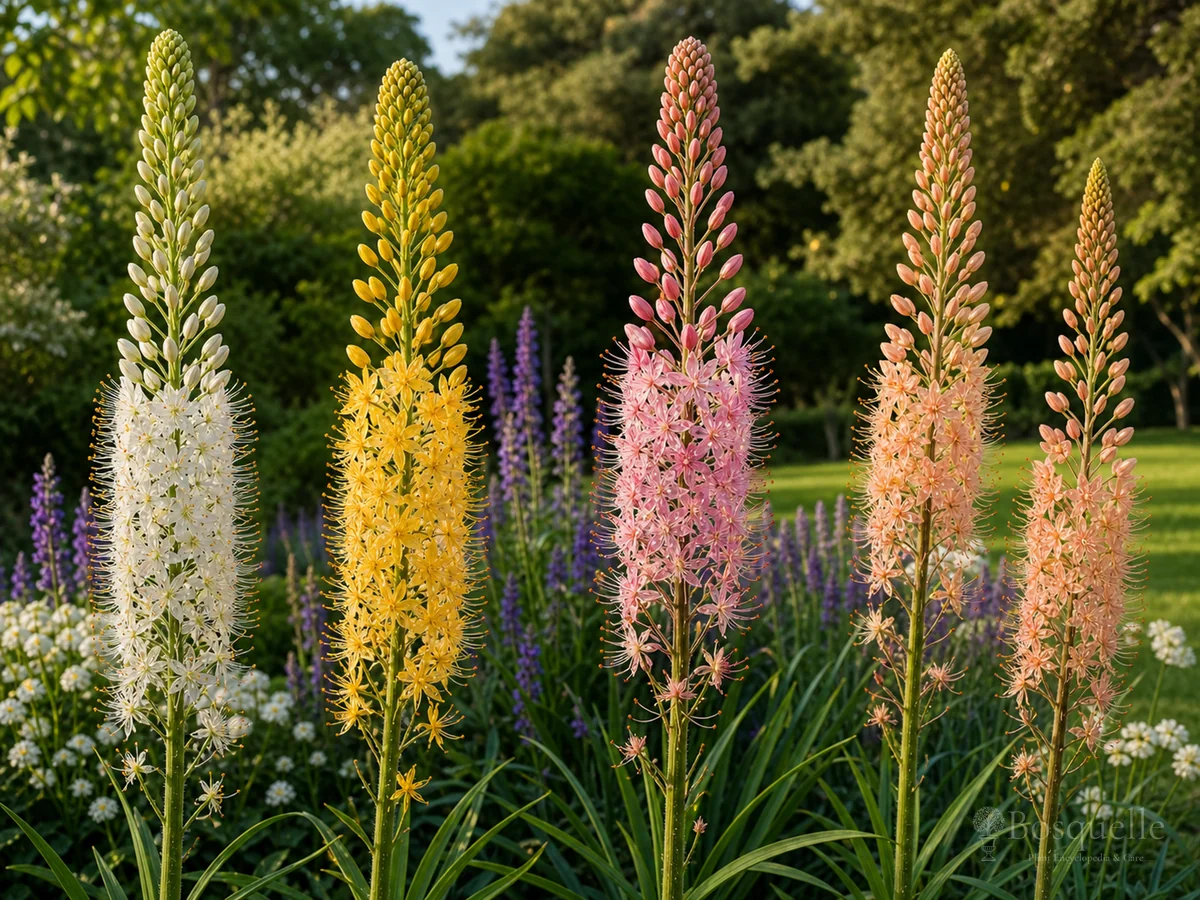
Nursery tags say foxtail lily or desert candle and a color. The real buy is height, then flower color: a mid-border pink spike, a warmer orange hybrid, a giant pale candle that needs a stake, or a shorter yellow species. Shade and wet clay fail before the paint does. This catalog lists 8 Eremurus.
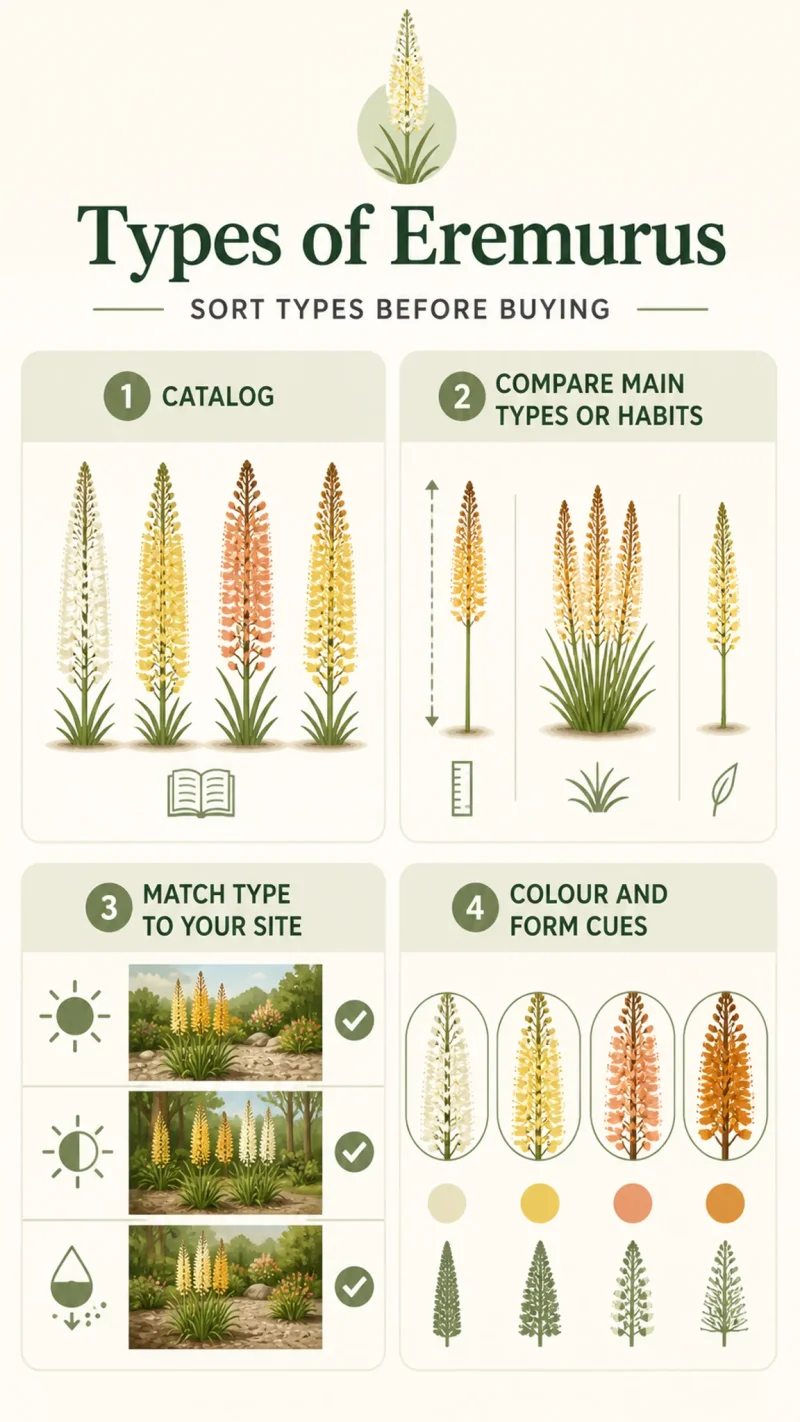
Sun, drainage, and the brittle crown stay on How to Grow Eremurus. The hole, depth, and mulch stay on Planting Eremurus.
Choose Eremurus by height and flower color
Ask two questions before you match a pink tag: how tall can the spike be in wind, and which color do you actually want in late spring? Mid pink–peach hybrids sit about 3–5 ft and are the usual border start. Orange isabellinus hybrids are similar in height with warmer flowers. Giant pale types can reach 6–8 ft. Yellow stenophyllus is shorter, with narrower leaves.
Foxtail lily and desert candle are common names for the genus, not extra species. A mix tray that only says desert candle does not tell you whether you bought a 4 ft hybrid or an 8 ft giant. Read the Latin and the listed height on the tag. Flower color never rewrites sun or drainage.
- Mid pink–peach — about 3–5 ft; typical border spikes. Foxtrot, Oase, and Romance sit here.
- Orange isabellinus — similar height, warmer paint. Cleopatra and Pinokkio are the usual orange hybrids.
- Giant pale / white — tallest candles; plan a stake. Eremurus robustus and Eremurus himalaicus own this height.
- Yellow narrow-leaved — shorter yellow species. Eremurus stenophyllus is the compact yellow.
| Your site | Prefer | Avoid as default |
|---|---|---|
| Mid border, some wind | Pink–peach or orange hybrids at 3–5 ft | An 8 ft giant with no stake plan |
| Open, sheltered sun + drain | Giant pale / white if you want height | A short yellow if you wanted a skyline spike |
| Front of a sunny gravel bed | Yellow stenophyllus | A giant that shades its own skirt partners |
| Shade or wet clay | A different genus | Any Eremurus as a woodland or bog plant |
Know your USDA hardiness zone before you pick a type of eremurus that will take your winter. Type your ZIP below.
2023 USDA ZIP listings (PRISM / USDA-ARS). Find Your USDA Hardiness Zone · Official USDA map.
Foxtrot is the mid-height pink–peach start: same culture as the rest of the catalog, less stake work than the giants. Lock height before you shop paint.
Wrong Eremurus buys that look like a types page
- Shade like a woodland lily — Eremurus wants full sun. A shorter yellow will not bloom under a shrub because the name sounds desert-tough.
- Wet clay as a hardy perennial clump — hardiness assumes drainage. A giant white in a puddle rots the same as a pink hybrid.
- An 8 ft giant in a tight, windy slot — height is the buy. If you cannot stake, buy a mid-height hybrid instead.
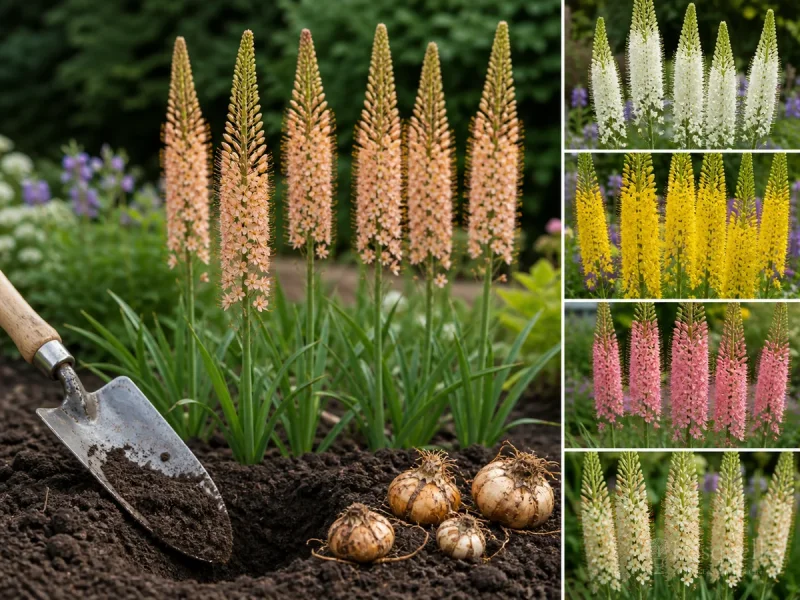
- A deep bulb hole like a tulip — the crown sits near the surface. Deep planting snaps the starfish roots. That is a planting fail, not a types fail, but mix trays still get planted that way.
- A pot as the main home — spreading brittle roots want a wide, shallow hole in the ground. A deep container is a poor match.
Color rhyme with a neighbor is optional. Sun and drain are not. A white giant and a yellow species share culture; they do not share height or stake work. Unlabeled “assorted foxtail lily” six-packs often mix heights — split them when you plant so a giant does not sit in front of a short yellow.
What height and color offer
Species height is the stable split. E. robustus is the tall pale-pink giant. E. himalaicus is the tall white. E. stenophyllus is the compact yellow with narrower leaves. Most named pink, peach, and orange plants are hybrids (often listed as E. × isabellinus) selected for flower color at mid-border height.
Cleopatra and Pinokkio are the orange pair in this catalog — same sun and drain as Foxtrot, warmer flowers. Eremurus robustus is the height outlier: leave room for a stake and for the dying basal leaves. Eremurus himalaicus is the white giant with the same stake and drain rules.
Leaf width follows the yellow species more than the hybrids. Stenophyllus foliage is finer; the giants make a broader clump of leaves that yellows after bloom and wants a skirt partner. Flower color is free to swap inside the height you can keep. Marketing names never fix shade, clay, or a missing stake.
If you are still unsure, grow one mid-height hybrid and one giant in the same sun. The one that stays in scale without a cane is your border plant. The one that needs a stake is your skyline plant. Then buy more color inside that winner instead of mixing both heights in a four-foot bed. Tags that list only a color chip without a height in feet are incomplete — ask, or open the profile, before you commit a back-of-border slot to an unknown giant. Height on the tag beats a pretty photo.
Oase and Romance sit with Foxtrot as mid pink–peach hybrids — useful if you want a drift of one height rather than a mixed-height tray. They are not a different culture. They will not stay evergreen after bloom, and they will not forgive winter wet because the flowers are peach instead of yellow.
Full catalog by class (8)
Browse all eremurus by group. Groups follow height and flower color, not a hardiness system. Open Care or Planting for method. Confirm height on the tag before you hang a giant in wind or tuck a short yellow at the back of a border.
Mid pink–peach cultivars (3)
Foxtrot, Oase, and Romance — mid-height pink to peach spikes.
Orange isabellinus hybrids (2)
Cleopatra and Pinokkio — orange E. × isabellinus hybrids.
Giant pale / white (2)
E. robustus and E. himalaicus — tall pale or white spikes.
Yellow narrow-leaved (1)
E. stenophyllus — compact yellow, narrower leaves.
Choose by height, then flower color. Mid hybrids for a 3–5 ft border spike; giants if you can stake; yellow stenophyllus for a shorter front. Sun and drainage stay on the grow page.
FAQ
Foxtrot or robustus after I reject shade?
Foxtrot for a mid-border pink spike. Robustus for a tall pale candle you can stake. Color comes after height.
Is foxtail lily a different plant from Eremurus?
No. Foxtail lily and desert candle are common names for Eremurus. Read the Latin and the listed height.
Does flower color change the care?
No. Orange, pink, white, and yellow share full sun and sharp drainage. Height changes the stake job.
What is Eremurus stenophyllus?
The compact yellow species with narrower leaves. Use it at the front of a sunny, draining bed — not as a shade plant.
Where is planting depth?
Planting Eremurus. Crowns sit just below the surface with roots spread flat.
Can I grow Eremurus in a pot?
It is a poor fit. The brittle roots want a wide, shallow hole in the ground.
Are the orange types a different species?
Usually E. × isabellinus hybrids, sold for orange flowers at mid-border height. Same sun and drain as the pink hybrids.
Related guides


This note is part of Eremurus Guides.
More type comparisons by plant are gathered in Types of Plants Guides.
Updated: Reviewed by Bosquelle Editors