
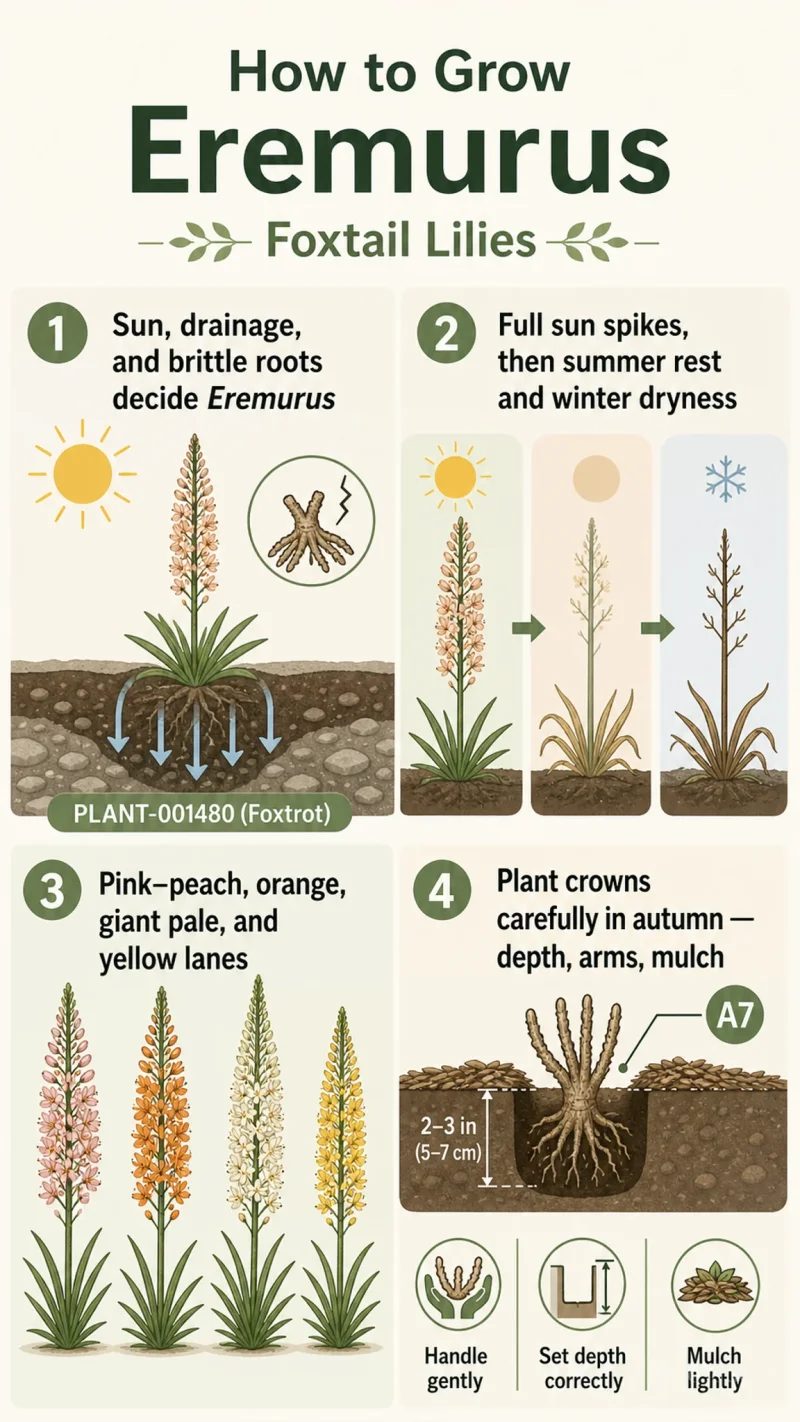
Sun, drainage, and brittle roots decide Eremurus
| Factor | Recommended | Avoid |
|---|---|---|
| Light | Full sun, open ground | Shade under shrubs; a frost pocket |
| Soil | Sharp drainage; grit or a raised mound on clay | Winter-wet clay around the crown |
| Crown | Just below the surface; roots spread flat | A deep bulb hole; folded or snapped roots |
| Stake | A cane or ring on tall spikes before wind | Waiting until a 6–8 ft spike leans in bloom |
| Summer | Dry rest after foliage yellows | Weekly watering on a dormant crown |
Two things fail Eremurus more than a missed fertilizer: shade, and a crown sitting in wet clay through winter. Raise the bed or plant on a grit mound so water moves away. Handle the fleshy roots as little as you can — they break, and a broken arm does not regrow that season.
Foxtrot is a typical mid-height pink–peach spike: same sun and drain as the giants, less stake work. Often hardy about USDA zones 5–8 if drainage is real. Young spring foliage can scorch in a late frost — skip a frost pocket.
Full sun spikes, then summer rest and winter dryness
- Fall or early spring: plant dormant crowns in workable soil. Full hole, depth, and mulch steps live on Planting Eremurus.
- Spring: water while leaves are growing. A light potash feed in spring is enough; heavy nitrogen makes soft growth that rots in wet soil.
- Late spring into early summer: bloom. Stake tall types such as Eremurus robustus before the spike is heavy. Shorter Eremurus stenophyllus often skips a cane in a sheltered bed.
- After bloom: leave foliage until it yellows so the crown recharges, then ease water. Cut only when the leaves are spent — not while they are still green.
- Summer dormancy: the bed looks empty. Do not keep a hose habit on the crown. Partners that hide the gap without shading the crown live on Eremurus Companion Plants.
- Winter: drainage first. A light mulch beside the crown is fine; a wet blanket on the neck is not.
Poor bloom is usually wet soil, shade, or a crowded crown — not the wrong pink. Pots are a poor fit: the roots want a wide, shallow hole, not a deep container.
Plant crowns in fall — depth, roots, mulch
- Soak dry bare roots in water for a short time if they arrived shriveled; skip a long soak on plump stock.
- Dig a wide, shallow hole — not a tulip-style deep pit. On clay, build a grit or sand mound in the hole.
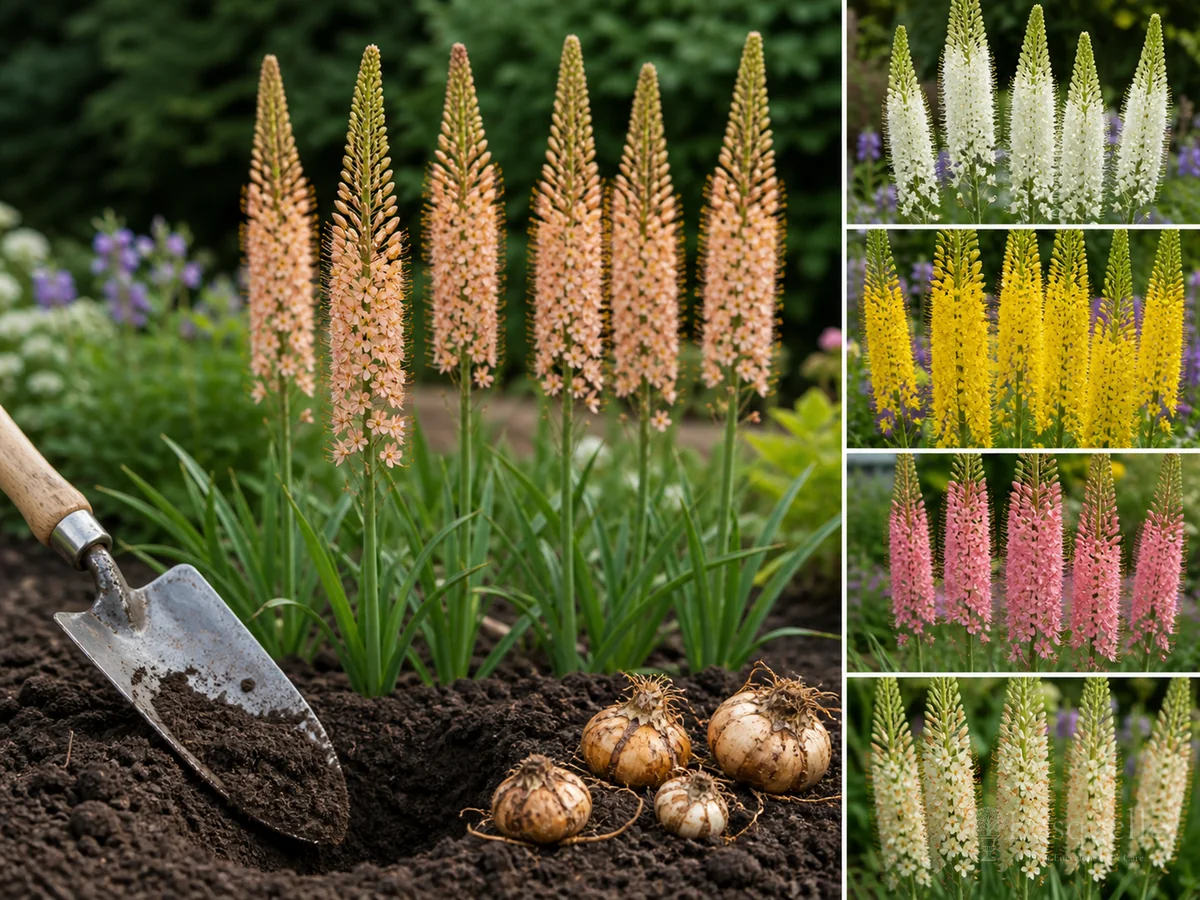
- Set the crown just below the surface (about 1–2 inches). Spread the fleshy roots out like a star. Do not fold them.
- Backfill, water once to settle, and mark the spot. Foliage disappears in summer, and a later fork will spear the crown if you guess.
Space about 12–18 inches for compact types and 24–36 inches for giants so roots and stakes have room. The full depth, spacing, and first-season calendar is on Planting Eremurus.
Height and color before you buy
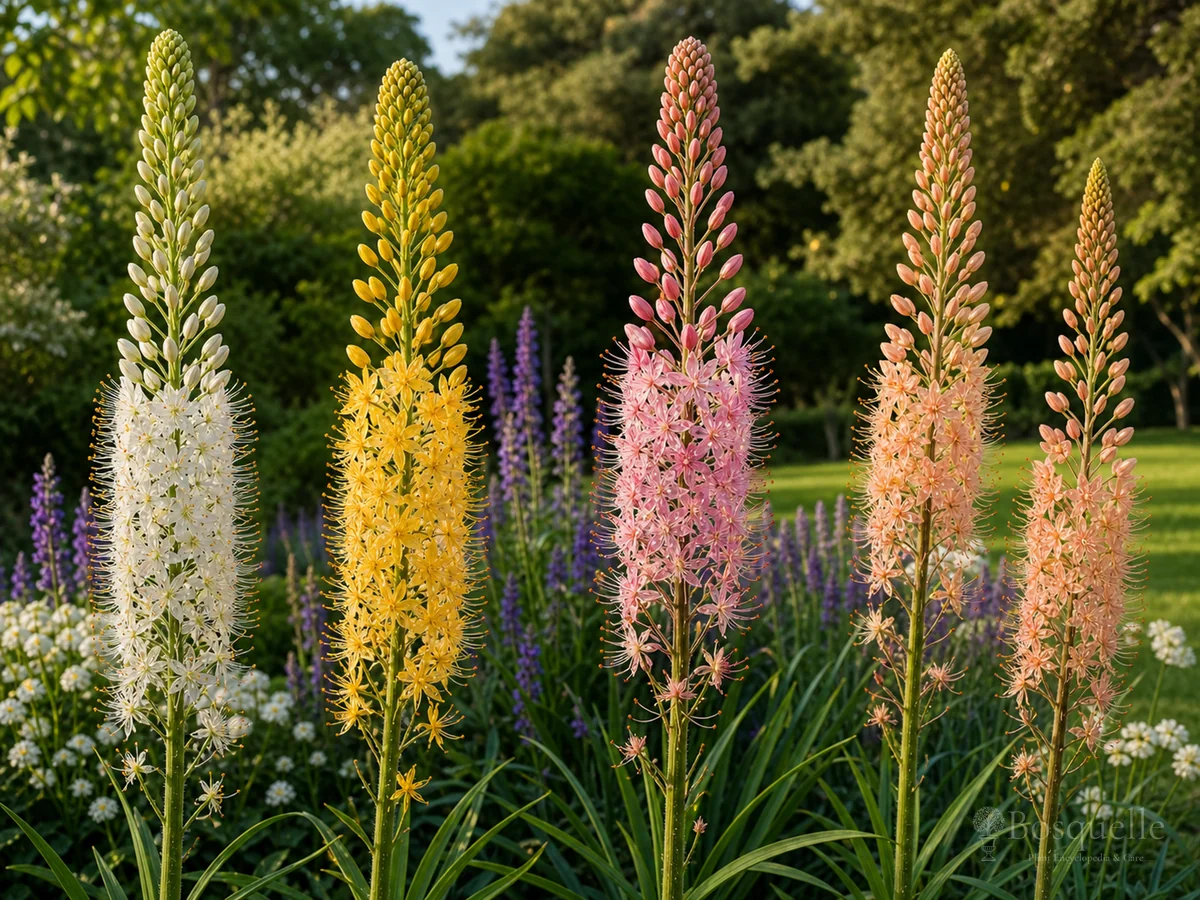
Shop height first, then flower color. Mid pink–peach hybrids such as Foxtrot sit about 3–5 ft. Orange isabellinus types are similar in height with warmer paint. Giant Eremurus robustus can reach 6–8 ft and needs wind room. Yellow Eremurus stenophyllus is shorter, with narrower leaves. Sun, drainage, and the brittle crown do not change with paint. Open Types of Eremurus before you buy a mix tray labeled only foxtail lily.
Full sun, sharp drainage, a shallow crown with roots spread flat, a stake on tall spikes, and a dry rest after the leaves yellow. Open Types, Planting, or Companion Plants for the next job.
FAQ
Is Eremurus a lily?
No. Foxtail lily and desert candle are common names. It is Eremurus, in the asphodel family, not a true lily.
Sun or shade for Eremurus?
Full sun and soil that drains. Shade leans stems and thins the spike.
When should I plant Eremurus?
Fall, or early spring if the ground is workable. Plant dormant crowns; do not wait until the spike is up.
How deep do I plant the crown?
Just below the surface, about 1–2 inches, with roots spread flat. A deep bulb hole folds and snaps the roots.
Why didn’t it bloom?
Usually wet winter soil, too little sun, or a crown that was planted too deep or damaged. First-year spikes can also be light while the crown settles.
What causes winter rot?
A crown sitting in wet clay, or a thick wet mulch on the neck. Raise the bed, add grit, and keep mulch off the crown.
Do I need to stake foxtail lily?
Tall types, yes — set a cane when shoots clear the soil. Shorter yellow stenophyllus often stands without one in a sheltered bed.
Should I cut the leaves after bloom?
Not while they are green. Leave foliage until it yellows so the crown stores energy, then remove spent leaves.
Is Eremurus hardy?
Often about USDA zones 5–8 if drainage is sharp. Young spring foliage is frost-tender. Hardiness does not rescue a wet clay bed.
Where do I compare types?
Types of Eremurus sorts height and color. Planting Eremurus owns the hole. Companion Plants covers partners that hide dying foliage.
Related guides

Recommended plants


This note is part of Eremurus Guides.
More first-season notes by plant are gathered in How to Grow Guides.
Updated: Reviewed by Bosquelle Editors