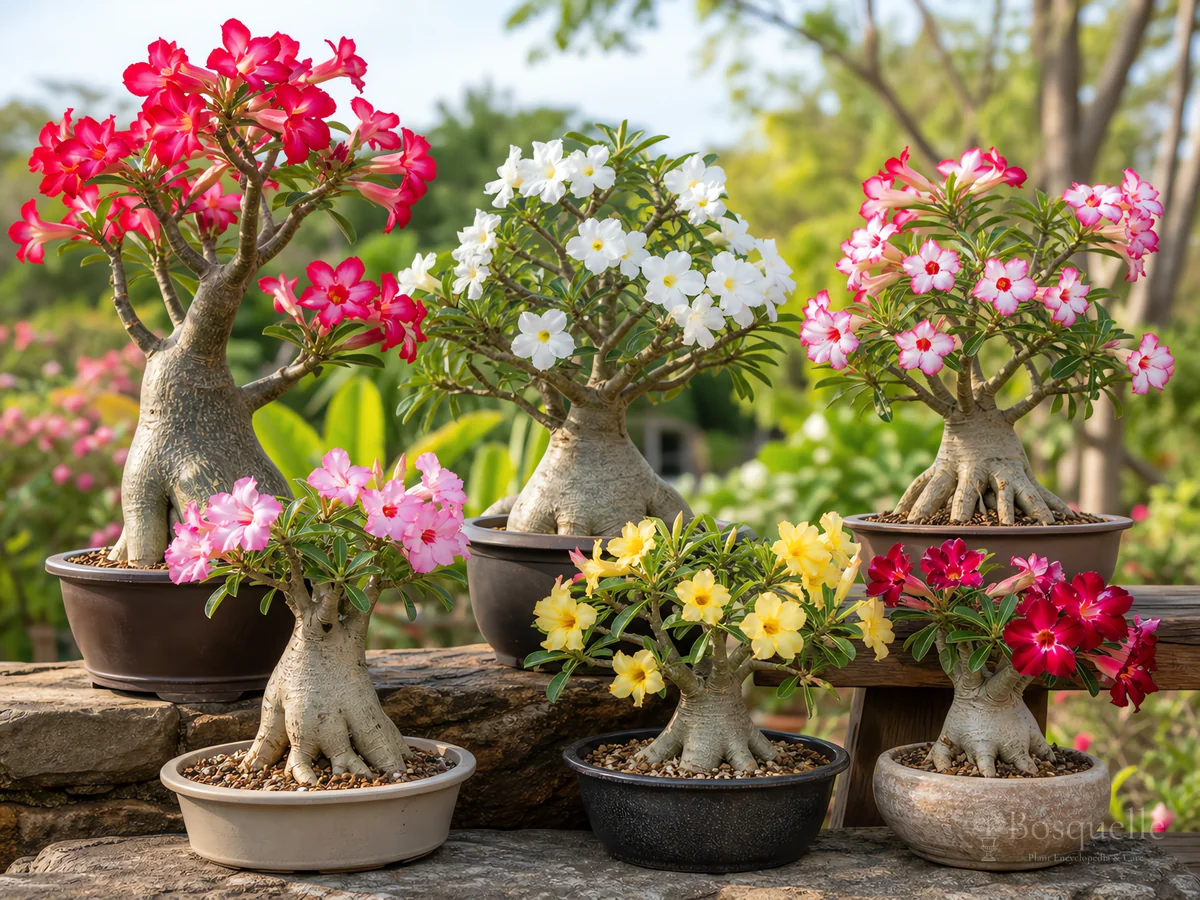
Buy the foot, not the word “rose.” Glossy A. obesum sold in flower and broader A. arabicum grown for a fat elephant’s foot are the two desert roses we write. Swazicum, Socotran, Somalense, Shada, and a gypsum crystal are different shopping jobs. Shared sun and seasonal water stay on How to Grow Desert Rose.

Choose glossy obesum bloom versus arabicum elephant’s foot
Start with the base and the leaf. Retail desert rose in flower is usually A. obesum: brighter green, glossier leaves, a swollen stem that is already a show, and the hybrid trumpet colors you see in garden centers. A. arabicum is the collector silhouette — a thicker, more sculptural foot and a grayer, sometimes velvetier leaf. Care overlap is nearly total. The shop difference is form.
Shop until you see the trunk. A modest bottle with glossy leaves and a flush of pink or red is the obesum job. A squat, baobab-like caudex with broader, duller foliage is the arabicum job. If the object in front of you is a cluster of sandy crystals, that is selenite. If it is a thorny woody rose, that is Rosa. Flower color alone does not tell the species — pink, white, red, and bicolor throats all sit on obesum hybrids at the same bench.
Tags blur. Both species print “desert rose.” Impala lily, sabi star, desert azalea, and mock azalea are obesum common names, not extra kinds. Elephant’s foot and dwarf bottle tree show up on the genus. Trust the swollen stem more than marketing poetry. University of Florida Extension and Planet Desert both split obesum bloom from arabicum’s broader foot — that is the choose fork here.
What is the difference between Adenium obesum and arabicum?
Obesum is the common glossy-leaved flowering retail plant. Arabicum often shows a broader caudex and grayer, sometimes velvet-textured foliage. Both want full sun and sharp drainage. Flower color alone does not tell the species.
Two we hold
Adenium obesum — the retail bloom show
A. obesum is the plant most people bring home: clusters of leaves at the branch tips, a swollen gray-green stem, and summer trumpets in pink, red, white, or bicolor throats. Doubles and triples are hybrid flower forms, not separate species we add as cards. This is the default patio pot. It still needs full sun. A north room will not pay for the flowers.
Adenium arabicum — the elephant’s-foot caudex
A. arabicum is the one growers chase when the silhouette matters as much as the flowers. The foot is often broader; leaves read grayer and fleshier. Pale pink is common; color range is still not a reason to invent extra species. Bonsai shops lean here because the trunk is the point. Water it as Adenium, not as a tropical that likes a wet tray.
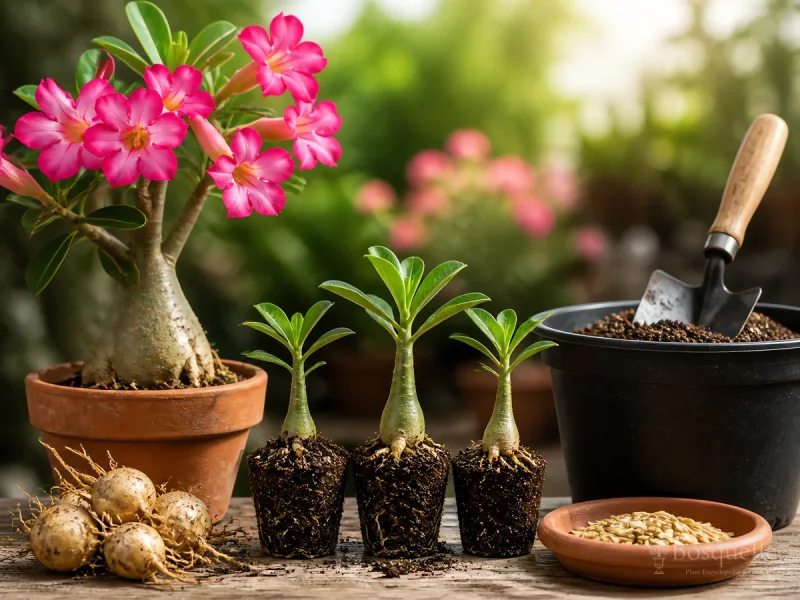
Shared rules for both: full sun, gritty mix, dry-between soaks in heat, nearly dry in cool rest, gloves for sap. Sow or take a callused cutting on How to Propagate Desert Rose. Step the pot on How to Repot Desert Rose. Seed-grown stock of either species is the long game for the fattest base. Cuttings and grafts are the fast flower path. That fork is a method, not a third type. Do not buy a skinny cutting of obesum expecting an arabicum belly by next fall.
Buying checklist: Adenium on the label, a drain hole, a full-sun site ready, gloves for handling, and a winter indoor plan before the first cold snap. Then pick glossy bloom versus sculptural foot.
Not types — extra species, flower color, mineral, and true rose
- Swazicum / summer impala lily — a dwarf Adenium other shops name. We do not hold it as a type card.
- Socotran desert rose (socotranum) — an island form often sold grafted. Not a card here.
- Somalense — twisted-trunk collector plant. Not a card here.
- Shada and other named strains — flower or leaf selections, not extra species we list.
- Pink, white, red, black, purple “desert rose” — flower color on obesum hybrids. Color is not a species.
- Selenite / gypsum desert rose — a mineral. Not a plant.
- True rose (Rosa) — thorns and hips. Different family, different watering.
Is swazicum or socotranum a type of desert rose we cover?
Those names appear on collector lists. We write two species: obesum and arabicum. Flower-color tags, selenite crystals, and garden roses are also not types on this page.
Once you know the foot, stop shopping. Sun, grit, winter withhold, and sap are the same on How to Grow Desert Rose. Grafted doubles are still desert rose if the rootstock is Adenium. The flower is the scion; the fat foot, when it exists, is usually seed-grown understock. That is useful at the register. It is not a third species card.
Name collisions to ignore: desert azalea (not an azalea), kudu lily, mock azalea. They point at obesum, not at extra kinds. If the Latin on the pot is neither obesum nor arabicum, it is outside this choose page. At the nursery, ignore the word “azalea” on a desert-rose tag. Look at the leaf shine and the width of the foot. A grafted union — a scar or change of bark below the first branches — means the flowers may not match the rootstock species.
Do not shop from a color grid. Black, purple, and white desert rose search heads are pigment on obesum hybrids, not extra species we card. If the seller cannot show Latin, buy the foot you can see, then match it to obesum or arabicum at home. A double trumpet is still obesum’s flower job, not a third species. Arabicum can bloom too; you paid for the foot. Water both the same way.
If the trunk in your hand is a modest glossy bottle with a flush of trumpets, that is obesum. If it is a squat gray elephant’s foot, that is arabicum. Stop hunting extra names. Put the pot in full sun and keep the mix fast-draining. The year ahead is ordinary desert-rose care, not another variety list.
FAQ
Is arabicum better for bonsai?
It is the usual fat-foot shop. Obesum also takes informal bonsai form. Styling does not change sun or seasonal water.
Are pink and white desert rose different species?
Usually no. Those are flower colors, most often on obesum hybrids. Species here are obesum versus arabicum.
Is impala lily a different plant?
Impala lily is a common name for Adenium obesum. It is not a third type we add as a card.
Do we sell swazicum?
We do not card it here. Shop obesum versus arabicum on the two silhouettes above.
Is selenite desert rose a plant?
No. It is a gypsum mineral.
Can I grow a garden rose like desert rose?
No. Rosa wants different watering and is not Adenium. See How to Grow Desert Rose for Adenium care.
Are doubles a separate species?
No. Double trumpets are flower forms, usually on obesum hybrids.
Where is watering advice?
On How to Grow Desert Rose.
Related guides



This note is part of Adenium Guides.
More type comparisons by plant are gathered in Types of Plants Guides.
Updated: Reviewed by Bosquelle Editors