
Desert rose clones two ways, and they are not the same plant in ten years. Sow fresh seed if you want the fat caudex. Take a callused stem cutting if you want the parent’s flower sooner. A stem in a water jar rots. Gloves on — the sap is milky. Aftercare sun and seasonal water stay on How to Grow Desert Rose.
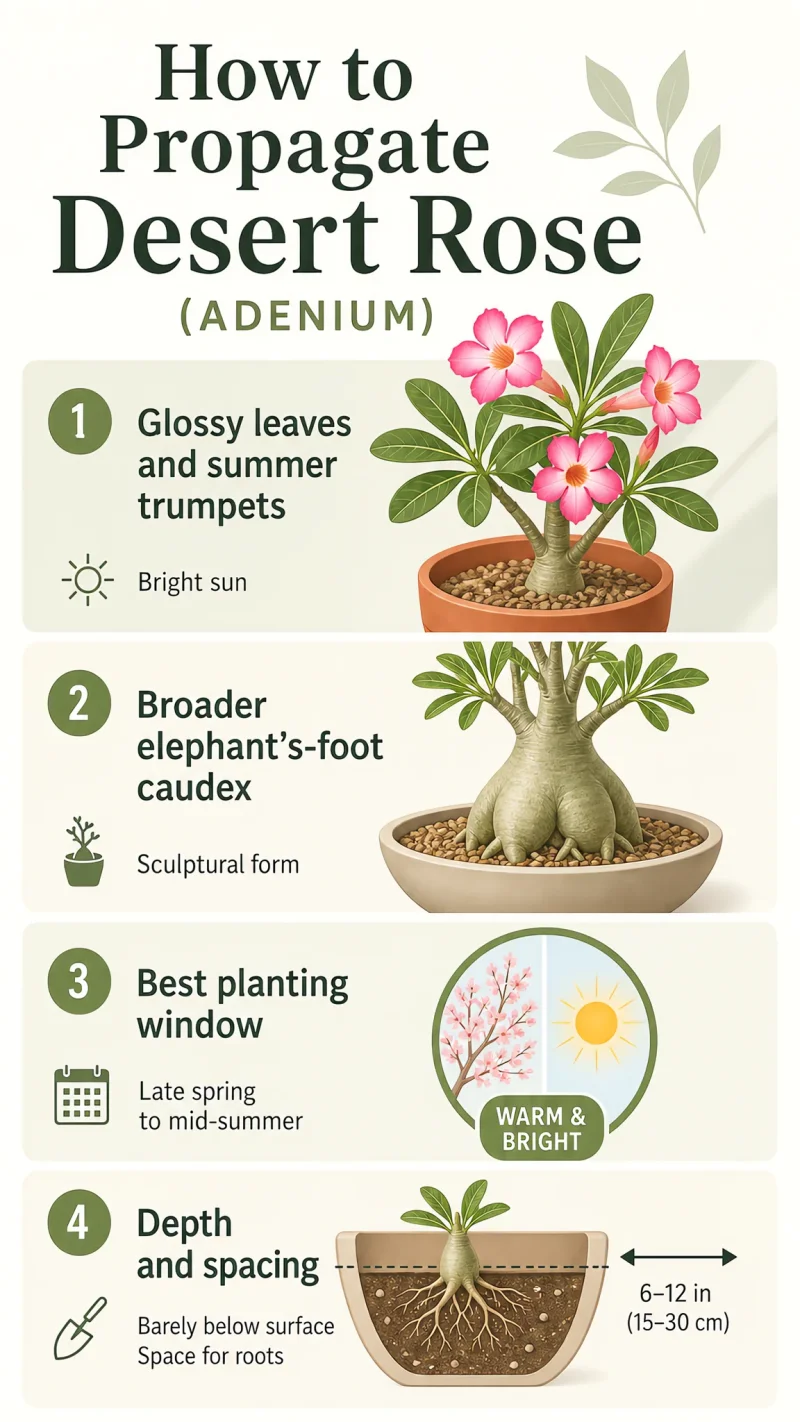
Pick the job — seed for the fat caudex, cutting for a flower clone
| Factor | Recommended | Avoid |
|---|---|---|
| Fat bottle foot | Fresh seed, sown warm | Expecting a cutting to bottle like a seedling |
| Copy a flower | Callused stem cutting of A. obesum or A. arabicum | A stem in a water jar |
| Season | Spring into early summer while the parent grows | A cold, dark sill in midwinter |
Seed-grown plants build the swollen base from the start. That is the bottle people buy desert rose for. Cuttings root in weeks and often bloom sooner, but they grow as a stem with adventitious roots. They can thicken over years. They rarely bottle like a seedling. Grafted shop plants are usually a pretty scion on seed-grown understock — useful, not the method this page finishes with. If the tag says “double” or “triple,” you are buying a flower form. Copy it with a cutting if you want that exact trumpet. Grow seed if you want the fat foot and will accept whatever color comes up.
Work in warmth. Wear gloves before the first cut. Wipe sap off tools. Rinse the cut face so latex does not glue a wet skin that never calluses. A good cutting is firm, not flowering, and thick enough to stand in grit. Pencil-thin tips from a starved indoor plant rot more often than a stout tip from a sunny patio parent. Skip flowering wood when you can: a stem busy making trumpets is slower to root and more likely to rot at the cut.
Do desert rose cuttings make a fat caudex?
Not the classic seedling bottle. Cuttings clone the flower and root as a stem. Seed-grown plants build the swollen foot from the hypocotyl. You can later lift a cutting a little to show thickened roots — that is still not a seed caudex.
Sow warm and dry-between; callus a stem, never a water jar
From seed. Use fresh seed — viability drops within a year. The seeds are torpedo-shaped with tufts; trim tufts so they lie flat. Sow on a fast-draining cactus mix with extra perlite, press for contact, and barely cover. Bottom-water once. Keep the tray warm (about 80–85°F). Germination is often a week when heat holds. Below about 75°F, seed sits and rots. Vent a cover daily. Remove it after the first true leaves. Move seedlings into several hours of direct sun as they toughen. Water when the surface dries. Damping-off is a black stem at the soil line. Do not keep a sealed wet dome for weeks. A heat mat under the tray is more useful than a spray bottle over the mix.
A small caudex bulge can show within a year. That is a start, not a finished specimen. Keep seedlings on the desert-rose contract: brighter and drier as they age, not a tropical tray forever. Crowded seedlings stall; pot them on once they have a few true leaves and the mix stays wet too long between waterings. Label the tray. Fresh seed of obesum and arabicum look similar — the foot you wanted is the reason you sowed, and it takes time.
- Cut a 4–8 inch healthy tip in growth, no flower buds if you can help it. Strip lower leaves. Gloves.
- Wipe sap and wait. Set the cut end in dry shade until it forms a hard skin — often five to seven days. Planting a wet cut is rot.
- Pot into dry grit in a small draining pot. Rooting hormone is optional. Do not water for many days (about a week or ten) while roots try to form.
- Then a light watering and dry-between. New leaves at the tip mean it took. Move to full sun and ordinary desert-rose care.
A. arabicum and obesum take the same two methods. The species choice is Types of Desert Rose. The pot step after a rooted cutting or a crowded seedling is How to Repot Desert Rose. Aftercare is ordinary desert-rose care: full sun, soak and drain in heat. A plastic bag tent over a cutting is extra humidity you do not want. A dark closet “to recover” stretches a plant that already wants sun. Once new leaves show on a cutting, treat it as a small desert rose, not as a tropical cutting that likes a wet tray. The first full-sun afternoon after a dim rooting corner can still scorch — walk it out the way you would a houseplant in spring.
What fails a desert-rose clone
- A wet, uncallused cutting — rot at the cut.
- A stem in a water jar — Adenium is not pothos. The cut stays wet and fails.
- Stale seed — old packets often do nothing. Sow fresh.
- Cold mix — seed sits; cuttings stall. Warmth first.
- Expecting a cutting to bottle like seed — that is a different path. Choose on purpose.
Gloves stay on. Sap on a fresh cut is not a cue to dunk the stem. Let the skin form, then grit, then wait to water. A rooted cutting that sits in a dim, wet cup is still a failed clone — move it to sun and a draining pot as soon as the tip pushes new leaves.
FAQ
Can I root desert rose in water?
Do not. A water jar keeps the cut wet and invites rot. Callus dry, then pot into grit.
How long to callus a cutting?
Often five to seven days in dry shade until a hard skin forms.
When to sow desert rose seed?
When you can keep the tray warm, about 80–85°F, usually spring into early summer.
Do seedlings need full sun at once?
Give several hours of direct sun as they toughen. Do not jump from a sealed dome to unfiltered noon.
Can I graft desert rose?
Shops graft for flower. This page finishes on seed or a callused cutting.
Why did my cutting wrinkle?
It dried too hard before roots formed, or it was too thin. Start a stouter tip and wait to water.
Is sap dangerous when I cut?
Yes. Wear gloves. Keep latex off skin and eyes.
Where is watering after it roots?
On How to Grow Desert Rose.
Related guides


Recommended plants

This note is part of Adenium Guides.
More notes on making another plant live in Propagating Guides.
Updated: Reviewed by Bosquelle Editors