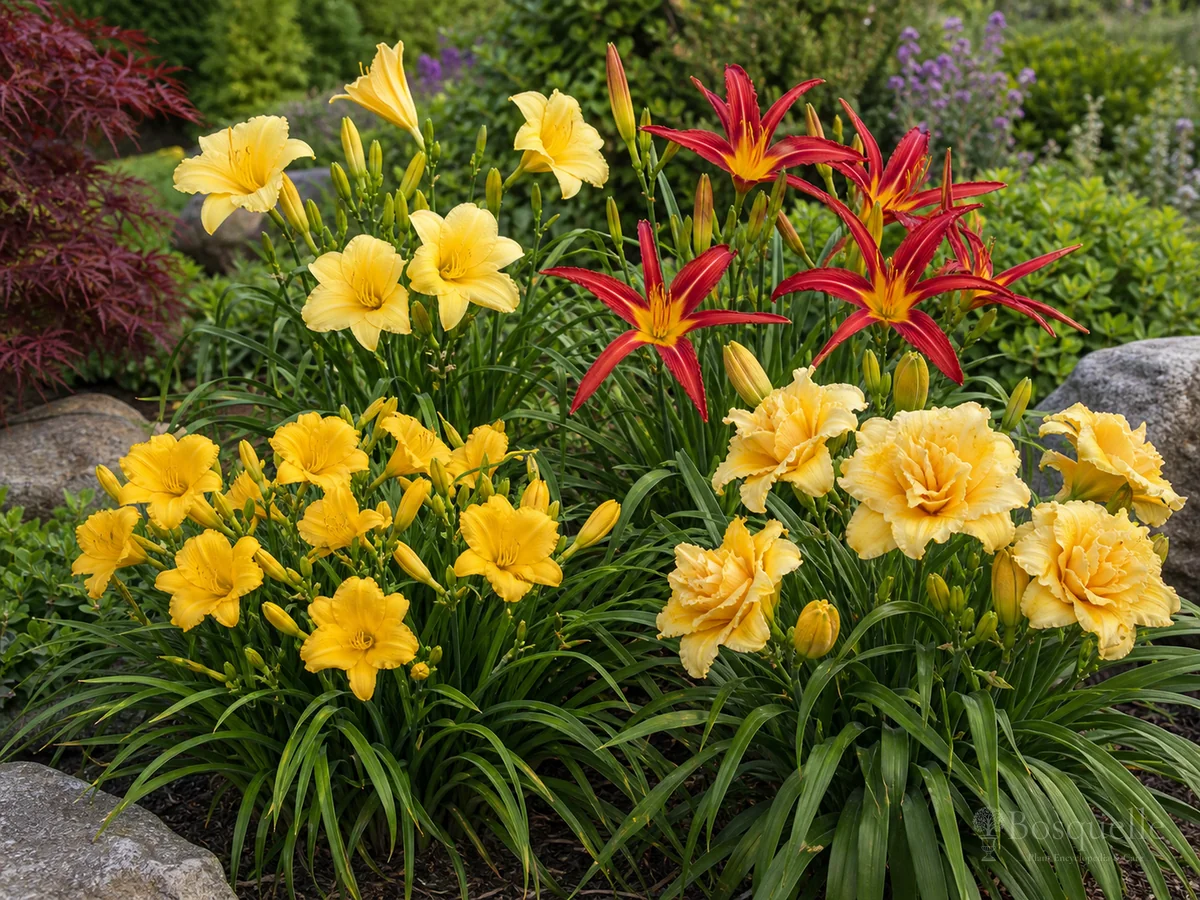
Choose daylilies by rebloom, petal form, and scape height — not flower colour alone. Each bloom lasts about a day. Daylilies are Hemerocallis, not Lilium.

Name the job, then browse all 168 garden daylilies. Shared care stays on How to Grow Daylilies.
Choose by rebloom versus one-flush
| Factor | Recommended | Avoid |
|---|---|---|
| Long summer colour | Reblooming class (deadhead and keep soil moist) | Expecting every tall classic to repeat like Stella |
| Narrow petals / silhouette | Spider class | Buying a compact rebloomer for spider form |
| Fuller flower heads | Double class | Assuming doubles need a different watering rule |
| Back-of-border height | Tall class | A shallow patio pot for a tall scape |
| Not this genus | Hemerocallis fibrous crowns | True lily (Lilium) bulbs and stem roots |
Know your USDA hardiness zone before you pick a type of daylily that will take your winter. Type your ZIP below.
2023 USDA ZIP listings (PRISM / USDA-ARS). Find Your USDA Hardiness Zone · Official USDA map.
If long summer colour is the job, stay with rebloomers such as Stella de Oro and Happy Returns. If form or height is the job, open spider (Ruby Spider), double (Double Pardon Me), tall (Hyperion), or garden border (Pardon Me, Mini Pearl).
What changes on the stake tag
- Rebloom keywords — Stella / Returns cues first when both compact and rebloom apply.
- Petal architecture — spider vs double change the face, not the one-day bloom rule.
- Scape height — compact / patio vs tall back border; pots want the short class → Daylilies in Containers.
Match job to class
| Job | Class | Example |
|---|---|---|
| Long summer flushes | Reblooming | Stella de Oro / Happy Returns |
| Narrow petals | Spider | Ruby Spider |
| Fuller heads | Double | Double Pardon Me |
| Back-border height | Tall | Hyperion |
| Mid-border workhorse | Garden border | Pardon Me / Mini Pearl |
Colour stays a cultivar choice on each profile. Do not invent yellow Types buckets — the choice that fails first is rebloom expectation or height.
Wrong hemerocallis buys that look like a types page
Stella-length rebloom from every tall row: Hyperion and Ruby Spider peak on a different rhythm — not every daylily repeats like Stella de Oro. Height and form change the summer story.
Spider form from a rebloom pot: Ruby Spider owns narrow petals and a different silhouette — compact rebloomers such as Stella de Oro will not deliver the same face.
True lily from a “daylily” tag: Hemerocallis bloom one day per flower; Lilium bulbs are a different plant. Wrong genus is a types fail before colour.
Tall border in a shallow pot: Hyperion and tall classics need volume. Compact Mini Pearl and rebloom paths own patio edges → Daylilies in Containers.
Rebloom rhythm vs peak flush
| Factor | Rebloom path | Classic peak path |
|---|---|---|
| Deadhead job | Through the summer | Main flush then quieter |
| Border role | Long colour strip / edge | Statement form or height |
| Pot fit | Compact rebloom series | Tall needs deep volume |
| Wrong swap | Expecting spider form from Stella | Expecting Stella rhythm from Hyperion |
Stella de Oro and Happy Returns earn their keep with repeat scapes when you deadhead and water. Hyperion and Double Pardon Me sell peak presence and petal form — a different checkout. Colour is a cultivar pick after the class is named.
Reading the catalog label
“Reblooming / everblooming” cues the Stella class first — still check height on the profile before you promise a back-border row.
“Spider / double / unusual form” changes petal shape (Ruby Spider, Double Pardon Me) — not the one-day bloom rule shared across Hemerocallis.
“Daylily mix” bags hide rebloom, height, and form. Sort class before you plant — mixed bags are how tall rows land in patio pots.
When to open the catalog
You are ready to browse when you can assign rebloom, spider, double, tall, or garden-border class — and you have rejected Lilium as the same plant. Until then, stay on the tables above.
Pardon Me and Mini Pearl share mid-border scale but differ on form cues; open profiles after the class is clear. Partners and divide timing live on child guides — Types only sorts habit before you promise a summer length or pot volume.
Full catalog by type (168)
Groups follow rebloom and form name cues and catalog height. Open a card for hardiness, sun, and height.
Reblooming daylilies (8)
Reblooming daylilies (Stella / Returns types and rebloom cues) give repeat flushes when watered and deadheaded — strong beginners for long summer colour.
Spider daylilies (3)
Spider daylilies have long, narrow petals. Give them room to show form and full sun for strongest stems.
Double daylilies (3)
Double daylilies carry extra petal layers for fuller flower heads. Deadhead spent blooms so the clump keeps pushing new scapes.
Compact and dwarf daylilies (1)
Compact and dwarf daylilies (catalog max height ≤ 0.50 m) suit front edges, rock skirts, and patio pots without towering over neighbours.
Tall daylilies (96)
Tall daylilies (catalog max height above 0.90 m) need space for scapes and air movement — use them as mid-to-back border anchors.
Garden border daylilies (57)
Garden border daylilies are the default mid-height cohort for beds and paths — average soil, sun to light shade, and even moisture for bloom.
Shared care lives on How to Grow Daylilies. Clump refresh lives on Dividing Daylilies.
Sort rebloom from one-flush form and height first — and reject Lilium as the same plant. Browse the matching heading, then grow with the shared care pillar.
FAQ
Is Stella de Oro a compact or a rebloomer?
Both cues can apply; our exclusive order prefers reblooming first when Stella / Returns / rebloom keywords match.
Are daylilies the same as true lilies?
No. Daylilies are Hemerocallis. True lilies are Lilium — a different genus with a different care sheet.
Rebloom or spider for a long summer border?
Choose reblooming if flush length is the job. Choose spider if petal form is the job — do not assume every spider reblooms like Stella.
Where do I grow the daylily I picked?
How to Grow Daylilies for shared care; Dividing Daylilies for refresh; Fragrant Garden Daylilies for scent shortlists.
Do doubles need different watering?
No. Extra petals change the flower face. Sun, drainage, and summer moisture stay on How to Grow Daylilies.
Can I choose daylilies by flower colour first?
Colour is a cultivar pick after class. Rebloom, height, and form fail first if you shop only by yellow or red.
Related guides




This note is part of Daylily Guides.
More type comparisons by plant are gathered in Types of Plants Guides.
Updated: Reviewed by Bosquelle Editors