
Daylilies (Hemerocallis) are hardy perennials grown for weeks of summer colour. Each flower lasts about one day. That is normal. They are not true lilies (Lilium). Give them full sun, average drained soil, and water while they bloom. Deadhead spent flowers and scapes.
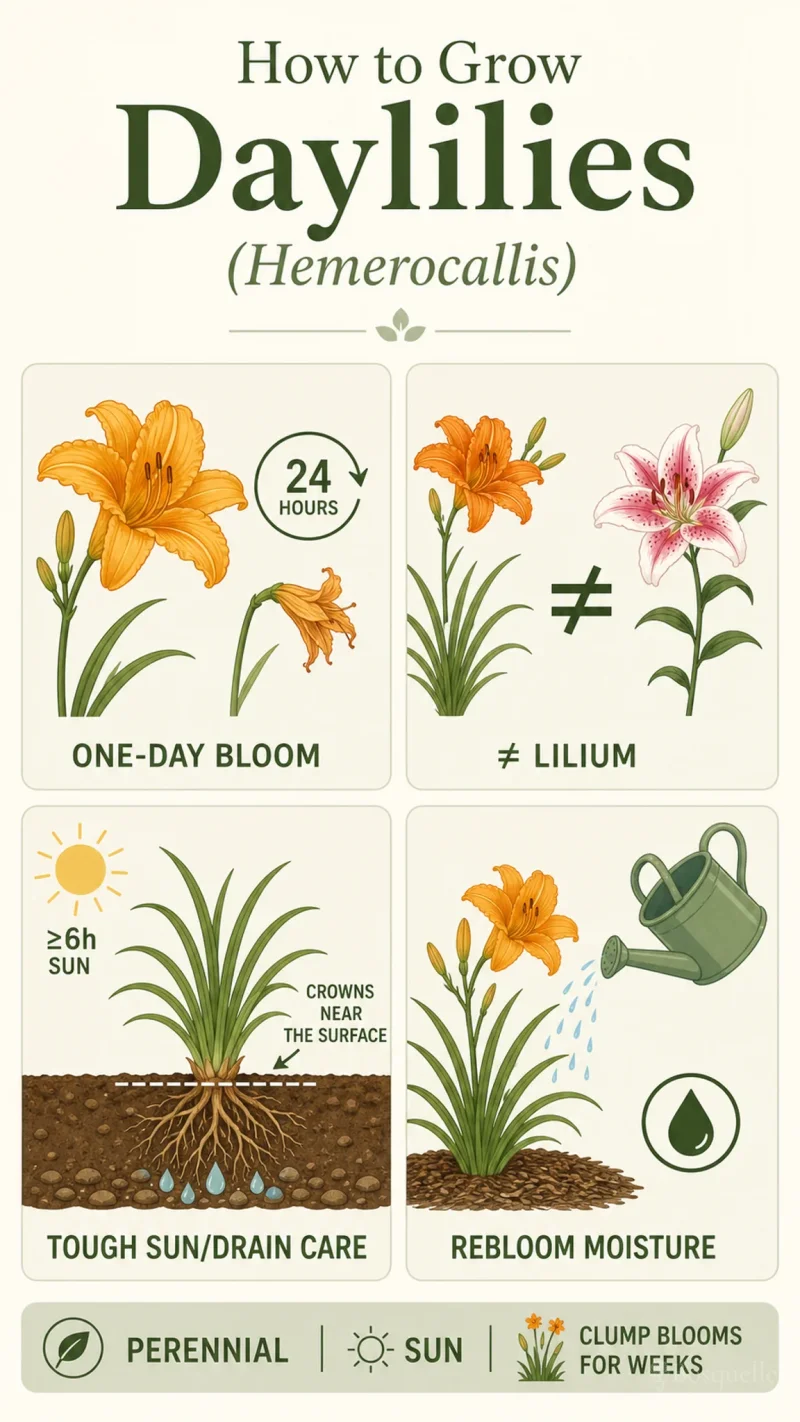
Divide crowded clumps every few years.
Daylily care — one flower a day, weeks of display
| Factor | Recommended | Avoid |
|---|---|---|
| Light | Six or more hours of sun | Deep shade (thin bloom, weak scapes) |
| Soil | Average, well drained | Winter-wet clay on the crown |
| Planting depth | Crown about 2.5 cm (1″) below the surface | Burying the crown under a thick mulch blanket |
| Spacing | 45–60 cm (18–24″) between clumps | Packing fans so air cannot move |
| Bloom | Weeks of successive buds on each scape | Treating a one-day flower as a failed plant |
RHS growing notes match this table: daylilies take almost any drained soil in sun or light shade, and they fail in heavy shade. Set the crown near the surface. Water for bloom in dry spells. Cut a finished scape near the ground — that is the prune answer; there is no separate prune page.
Stella de Oro is the compact rebloomer many gardeners start with. Other selections change height, petal form, or rebloom. They do not change the sun and drainage rule.
Daylilies grow from fibrous crowns, not Lilium bulbs. Do not follow true-lily planting depth or stem-root rules here. Group them with other sun perennials that tolerate average soil — not with a constantly wet fern bed or a dry Mediterranean strip on the same valve.
If bloom is thin in a north courtyard, move the clump into sun rather than adding fertiliser. Extra feed cannot replace light. If fans collapse in winter-wet clay, raise the bed before you replace the cultivar.
Site and soil for daylilies
Choose an open bed with six or more hours of sun and free drainage. Light afternoon shade can help rich reds and pinks that bleach in hard glare. Deep shade cuts flower count.
Plant with the crown no deeper than about 2.5 cm (1″). Space about 45–60 cm (18–24″) so fans can expand. In heavy clay, raise the bed. In sand, add compost so summer moisture does not flash away. Mulch lightly; keep thick mulch off the crown.
Compact rebloomers such as Stella de Oro and Happy Returns earn a front row or path edge. Mid types such as Pardon Me fill the middle. Tall classics such as Hyperion need space at the back so scapes do not lean over shorter neighbours.
Dormant types usually die back after frost and return in spring. Evergreen and semi-evergreen types hold foliage longer in mild gardens and still need water in heat. Confirm leaf habit on the plant profile. Do not invent one climate table for every daylily.
Water and deadhead for bloom
Water new plants until they settle. Then soak during dry spells while buds and scapes are active. Rebloomers stall if the root zone dries out in peak heat. Avoid daily leaf misting; soak the soil.
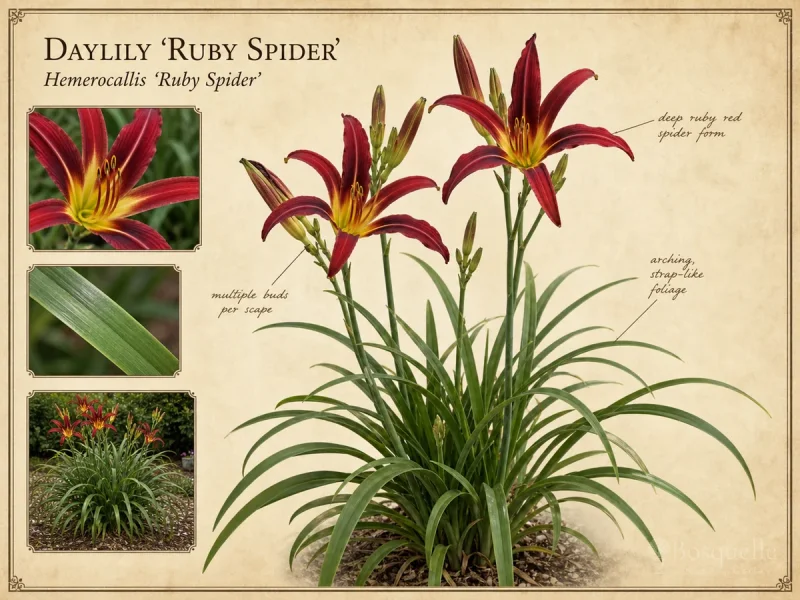
Each flower lasts about a day. Pinch spent blooms so the bed looks fresh. When a scape finishes, cut it near the ground so energy returns to the clump. Doubles such as Double Pardon Me and spiders such as Ruby Spider use the same rhythm. Form does not invent a new watering rule.
Daylily rust shows as yellow-orange pustules on leaf undersides after wet foliage and crowded air. Remove badly marked leaves. Water at soil level. Space clumps. Do not start with a spray as the first fix.
Fragrant Returns and Pardon Me still need summer moisture for a full scape show. Deadheading does not rewrite that water rule.
Evergreen vs dormant foliage
Some daylilies go fully dormant in cold winters. Others stay evergreen or semi-evergreen in mild gardens. Catalog rows do not always mark leaf persistence — confirm on the plant profile when winter foliage matters. Do not assume every Hemerocallis keeps green fans year-round. Do not panic when hardy dormant types die back after frost.
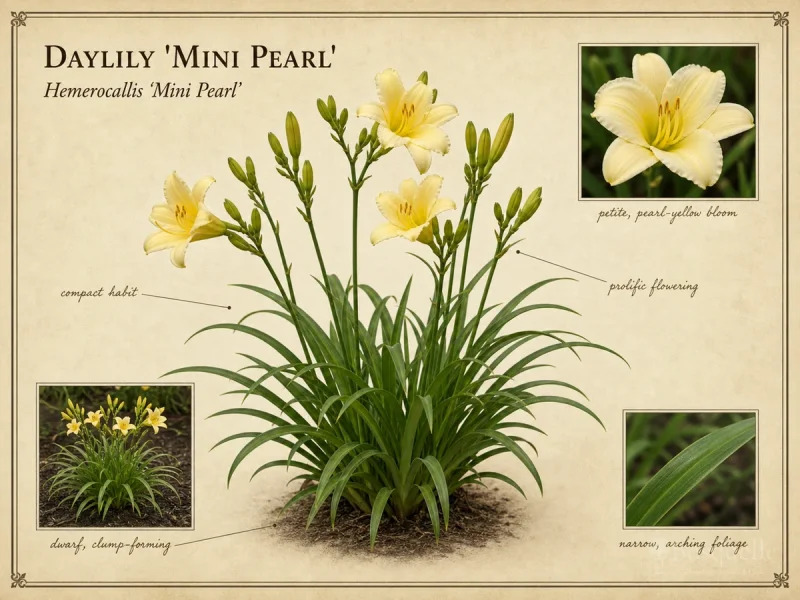
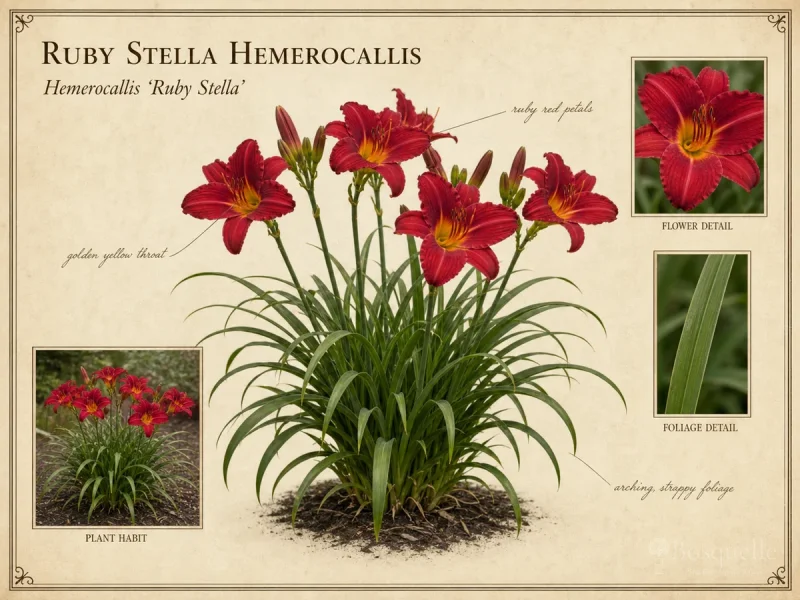
Ruby Stella and Mini Pearl still follow the same sun and water method. Leaf habit changes winter look, not the summer bloom rule.
Seasonal rhythm through the year
- Spring: tidy winter debris; water as growth starts; optional early divide before heat.
- Summer: enjoy bloom; deadhead daily; water rebloomers; stake only if tall scapes lean in wind.
- Early fall: second divide window; cut spent scapes; ease water as growth slows.
- Winter: mulch crowns in cold gardens after the ground freezes; leave evergreen foliage tidy but unforced in mild gardens.
Hyperion, Chicago Apache, and Catherine Woodbury still run this same calendar. Height and colour change the picture, not the season jobs.
Growing daylilies in containers?
Pots change watering and crown space. Compact rebloomers such as Stella de Oro suit deep patio containers. This pillar stays on in-ground care. For pot size, mix, and patio watering, use Daylilies in Containers.
Common mistakes: deep shade with no bloom; soggy winter crowns; skipping deadhead so rebloom stalls; waiting too long to divide; treating daylilies as true Lilium.
Choosing form or height first? See Types of Daylilies. Partners live on Daylily Companion Plants. Divide steps live on Dividing Daylilies. Scent shortlists live on Fragrant Garden Daylilies.
Give daylilies sun to light shade, average drained soil, water for bloom, and cut finished scapes — then open child guides for types, pots, divide, companions, and fragrance.
FAQ
Why do daylily flowers only last one day?
That is normal — each bloom opens for about a day. Deadhead spent flowers and keep watering rebloomers for the next flush.
Are daylilies the same as true lilies?
No. Daylilies are genus Hemerocallis. True lilies are Lilium — different plants, bulbs, and care.
Where is the divide checklist?
Dividing Daylilies for the seasonal checklist. This pillar covers year-round growing rules.
When is the best time to divide daylilies?
Early spring as fans emerge, or late summer to early autumn after flowering. Divide every three to five years when bloom thins.
What are the signs a daylily clump needs dividing?
Fewer scapes than previous years, a bare centre, fans pushing outside the intended patch, or flopping stems in calm weather.
Does deadheading daylilies extend the bloom season?
Pinching spent flowers keeps the scape tidy. Cutting finished scapes improves appearance and stops seed set. Rebloom still needs moisture.
Why has my daylily stopped flowering?
Usually overcrowding, too little sun, or a dried-out rebloomer. Divide congested clumps and restore six hours of sun.
Are daylilies perennials?
Yes — hardy perennials with fibrous crowns. They are not true lily bulbs. “Orange daylily bulbs” usually means these crowns.
Do daylilies need full sun?
Aim for six or more hours of direct sun. Light shade is tolerable; deep shade cuts flower count.
How long do daylilies bloom?
Each flower lasts about one day. A healthy clump typically flowers for about 30–40 days as buds open; rebloomers add later flushes if the soil stays moist.
Related guides


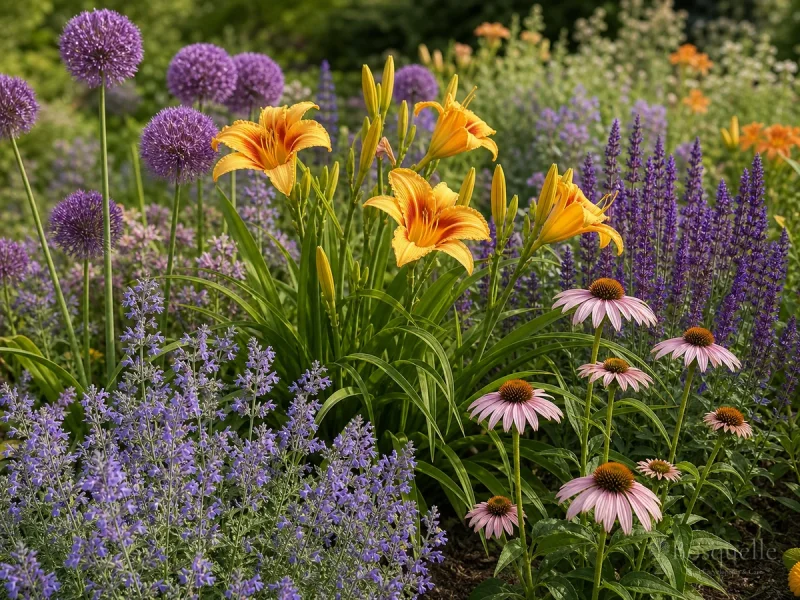

Recommended plants


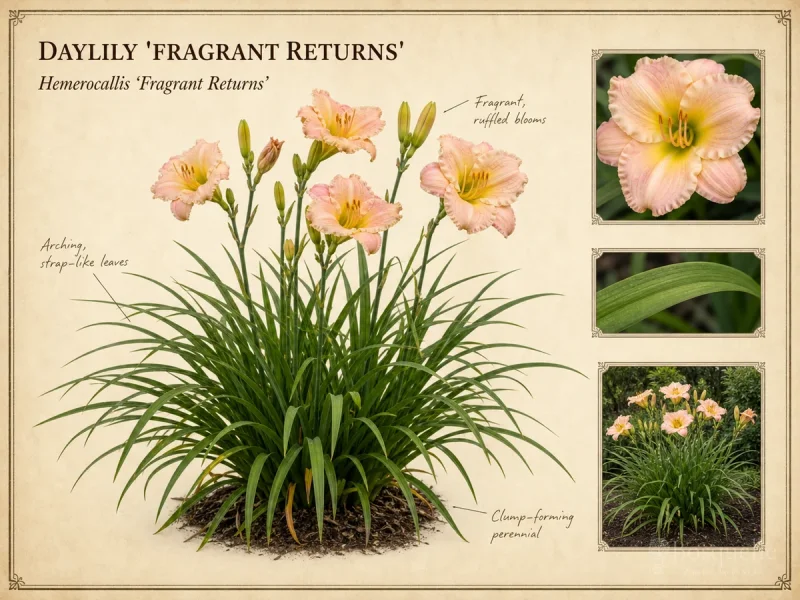

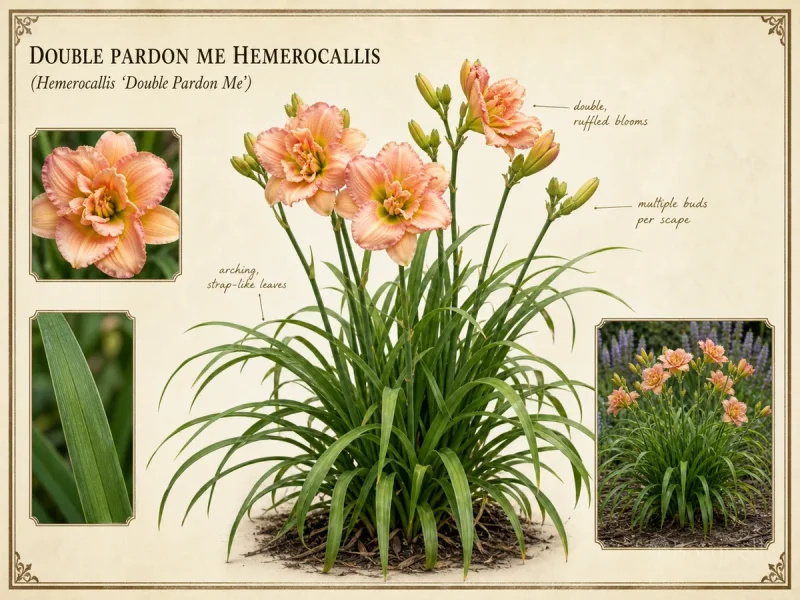


This note is part of Daylily Guides.
More first-season notes by plant are gathered in How to Grow Guides.
Updated: Reviewed by Bosquelle Editors