
Buy if the height fits — a tall red spike, a mid orange spray, a yellow type, or giant montbretia. Height and winter care beat impulse red. Browse all 16 Crocosmia in this catalog by type.

Sun, drainage, and lift stay on How to Grow Crocosmia.
Choose Crocosmia by height and flower colour
| Factor | Recommended | Avoid |
|---|---|---|
| Tall red | Lucifer-class spikes for the back of a sunny border | A tiny shade pocket or a wind tunnel with no support |
| Mid orange | Arching sprays for the middle of a hot border | Assuming every Crocosmia tag is Lucifer-tall |
| Yellow / cream | Softer colour on the same sun and drain | Treating yellow as a shade plant |
| Giant montbretia | Masoniorum for large leaves and presence | A front-edge bowl or a 12-inch formal knot |
Know your USDA hardiness zone before you pick a type of crocosmia that will take your winter. Type your ZIP below.
2023 USDA ZIP listings (PRISM / USDA-ARS). Find Your USDA Hardiness Zone · Official USDA map.
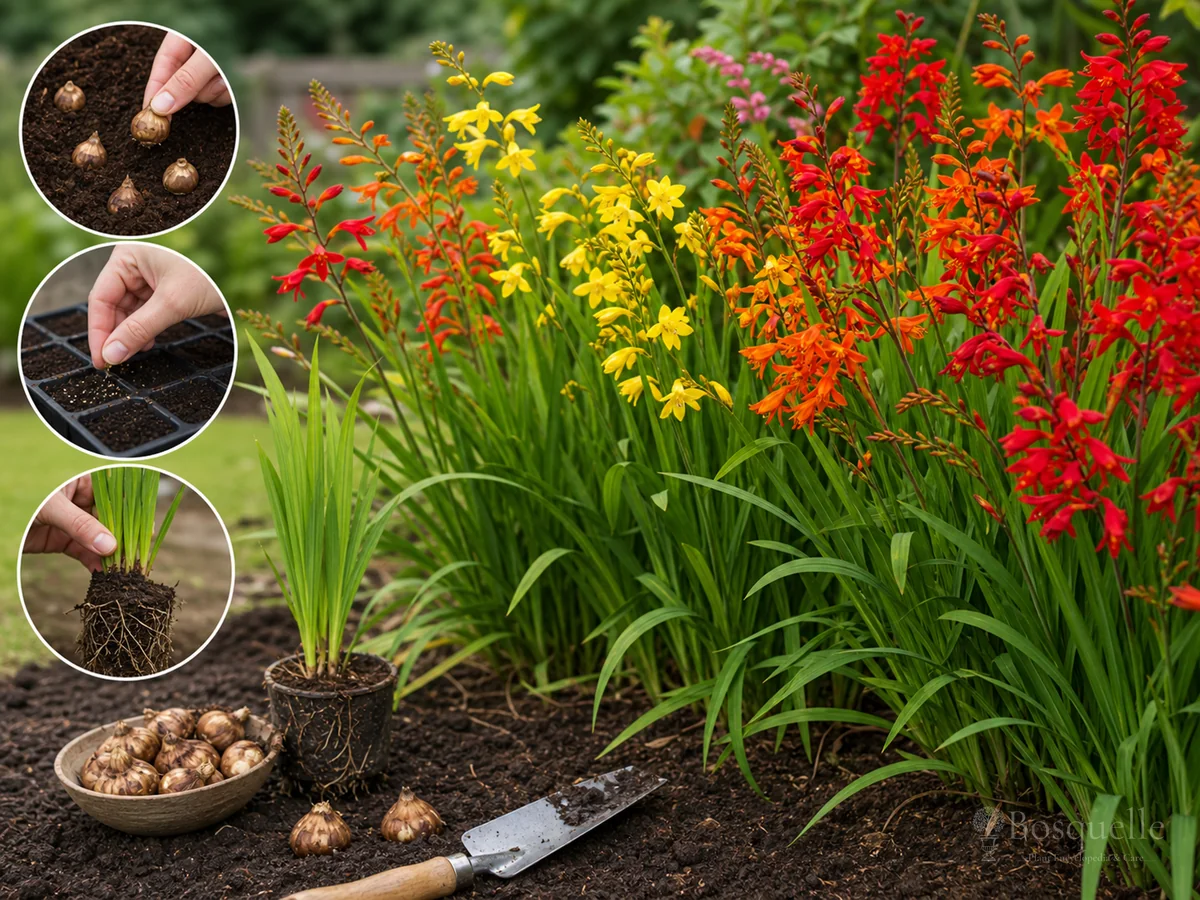
Tall red (Crocosmia ‘Lucifer’, Crocosmia ‘Emberglow’): vertical summer spikes. Plan air and a wind break.
Mid orange (Crocosmia ‘Emily Mckenzie’, Crocosmia ‘Limpopo’): classic arching sprays. Confirm listed height; it is not Lucifer-scale by default.
Yellow (Crocosmia ‘Buttercup’, Crocosmia ‘Solfatare’, Crocosmia ‘Star of the East’): same corm and sun rule. Colour does not rewrite winter care.
Giant (Crocosmia masoniorum): C. masoniorum — scale first, then colour.
Wrong Crocosmia buys that look like a types page
Crocosmia ‘Lucifer’ for a shady pocket: tall reds need sun. Shade builds leaves and weak bloom.
Crocosmia masoniorum as a front-edge dwarf: giant montbretia needs a real footprint.
Unnamed × crocosmiiflora as a well-behaved border plant in a mild, wet climate: common hybrids can spread. Prefer a named cultivar and an edit plan.
No winter plan on a tall red: colour does not rewrite mulch-or-lift. Write that plan before you pay.
What each type actually offers
Tall red / hot spike: Lucifer-class red spikes for the back of a sunny border — plan air, a wind break, and the same mulch-or-lift winter care.
Mid orange sprays: Arching mid-height orange sprays — confirm listed height; they are not Lucifer-tall by default.
Yellow / cream: Yellow and cream types on the same sun and drain as the reds. Colour does not mean shade, and it does not rewrite winter care.
Giant montbretia: Crocosmia masoniorum — large leaves and presence, not a front-edge dwarf. Same corm depth; give it a real footprint.
Flower colour does not rewrite frost. A yellow such as Crocosmia ‘Buttercup’ still wants sun. A tall red such as Crocosmia ‘Lucifer’ still needs a winter plan. Hybrids under C. × crocosmiiflora still differ in height — read the cultivar.
Crocosmia ‘Emily Mckenzie’ is a mid orange spray, not a Lucifer substitute. Crocosmia ‘Solfatare’ is a yellow type, often with bronze-tinted leaves. If two plants share a type, pick by listed height and colour on the tag.
Full catalog by type (16)
Groups follow tall red, mid orange, yellow, and giant masoniorum — not invented hardiness types. Read the type first, then open two plants inside it.
Photograph the cultivar name. Common labels drift. If a seller cannot say Crocosmia and approximate height, put the tray back.
Tall red / hot spike (4)
Lucifer-class red spikes for the back of a sunny border — plan air, a wind break, and the same mulch-or-lift winter care.
Mid orange sprays (4)
Arching mid-height orange sprays — confirm listed height; they are not Lucifer-tall by default.
Yellow / cream (7)
Yellow and cream types on the same sun and drain as the reds. Colour does not mean shade, and it does not rewrite winter care.
Giant montbretia (1)
Crocosmia masoniorum — large leaves and presence, not a front-edge dwarf. Same corm depth; give it a real footprint.
Where planting and companions live
Sun, drainage, winter care, and division: How to Grow Crocosmia. Plant-out: Planting Crocosmia. Sunny-border partners: Crocosmia Companion Plants.
When two cultivars share a type, pick by listed height and bloom week on the current tag, not by a photo from another year. Nursery stock is relabelled. Open two plants in the matching group before you pay.
Prefer a named cultivar when gifting. Gifting unlabeled × crocosmiiflora into a mild, wet climate is how patches escape the bed. Keep this page as a type picker. Do not treat Types as a second watering calendar.
Height is the first filter. Knee-high yellows and shoulder-high reds solve different border jobs even when both are sold as Crocosmia. Write the intended height on your note before you enter the aisle.
A one-season pot trial is useful when frost is unknown. Use a deep pot, the same corm depth, and a lift date on the label. Open ground comes later, once the first winter is proven.
Do not sort this catalog by flower colour alone. Orange mid sprays and tall Lucifer still share sun and drain, but they do not share one stake and spacing plan. Colour is optional after height and winter care.
If neighbours fear invasive × crocosmiiflora, name which problem you have: mild-climate spread, or cold-climate survival. They are opposite jobs. Named stock in a contained bed is the usual answer for a mixed border.
Match a type to height and winter care, browse the matching group, then open Care, Companions, or Planting.
FAQ
How do I choose a Crocosmia type?
Pick height first — tall red, mid orange, yellow, or giant — then colour. Write the winter plan before you pay.
How tall is Lucifer Crocosmia?
A tall back-border spike. Confirm current nursery height. Plan for vertical presence and wind.
What is giant montbretia?
Crocosmia masoniorum — larger leaves and presence, not a dwarf substitute.
Is Emily McKenzie a tall type?
Usually a mid orange spray. Confirm listed height. Do not assume Lucifer-scale spikes.
Are all yellow Crocosmia short?
Many are more modest than tall reds, but still check listed height. Yellow does not mean dwarf, and it does not mean shade.
Is montbretia invasive?
Unnamed C. × crocosmiiflora can naturalise in some mild, wet regions. Prefer named cultivars and contain the clump. Cold gardens rarely have that problem.
Where is planting depth?
Planting Crocosmia — linked above.
Where are companion ideas?
Crocosmia Companion Plants — linked above.
Related guides



This note is part of Crocosmia Guides.
More type comparisons by plant are gathered in Types of Plants Guides.
Updated: Reviewed by Bosquelle Editors