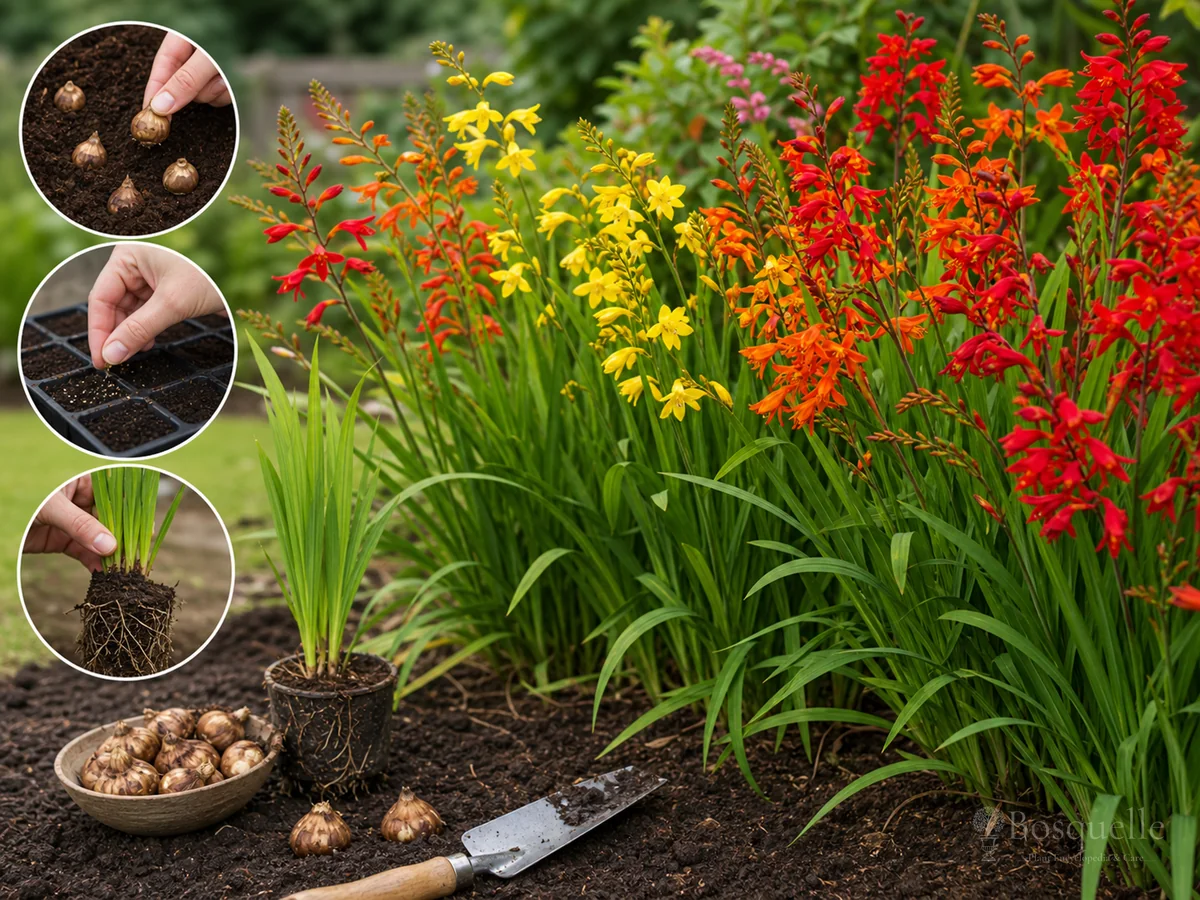
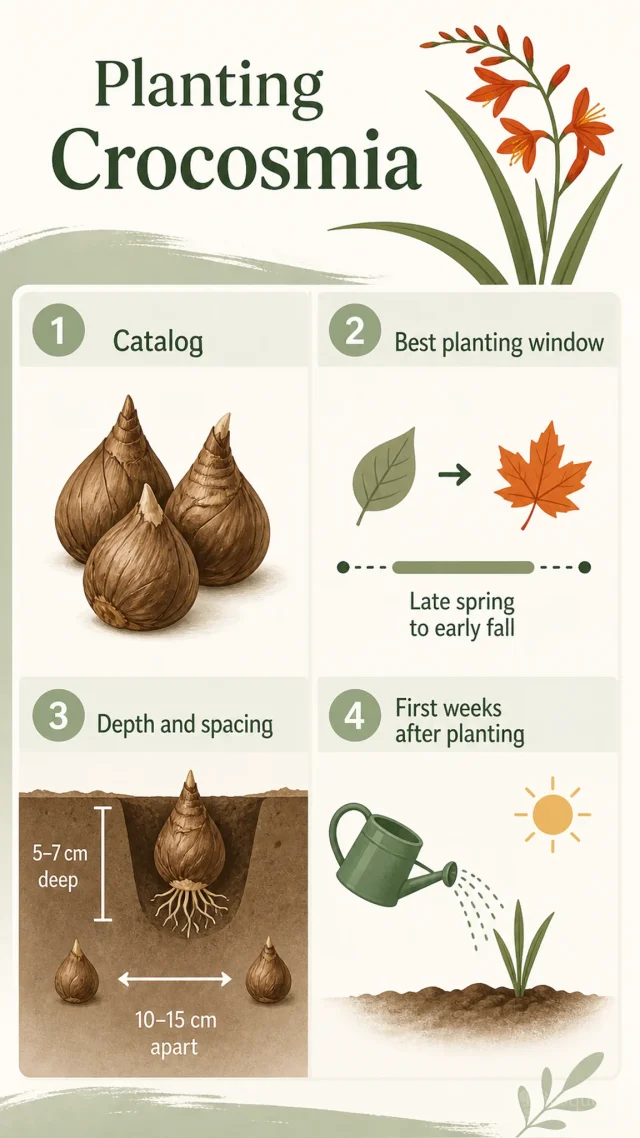
Plant Crocosmia in spring after frost risk eases and the soil has warmed. Set corms 3–4 inches (8–10 cm) deep, pointed end up, and write the mulch-or-lift plan before you backfill.
Ongoing care stays on How to Grow Crocosmia; types on Types of Crocosmia.
Spring timing, corm depth, and winter storage
| Factor | Recommended | Avoid |
|---|---|---|
| Stock | Firm named corms; discard soft or mouldy pieces | Unlabeled × crocosmiiflora mix in a mild, wet climate |
| Season | Spring after frost into warm, workable soil | Planting into frozen ground or a winter puddle |
| Depth | 3–4 inches (8–10 cm), pointed end up | Corms perched at the crust, or a fertiliser trench under each |
| Winter | Mulch in place, or lift, dry, and store cool | A sealed wet bag; forgotten clumps in freezing clay |
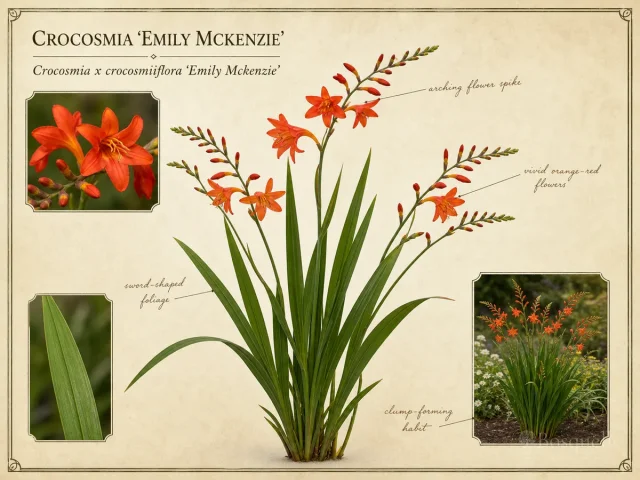
Timing, depth, and the winter plan decide whether the planting holds. A tray of Crocosmia ‘Lucifer’ still fails in wet winter clay with no lift. Crocosmia ‘Emily Mckenzie’ still fails in deep shade, even at the right depth.
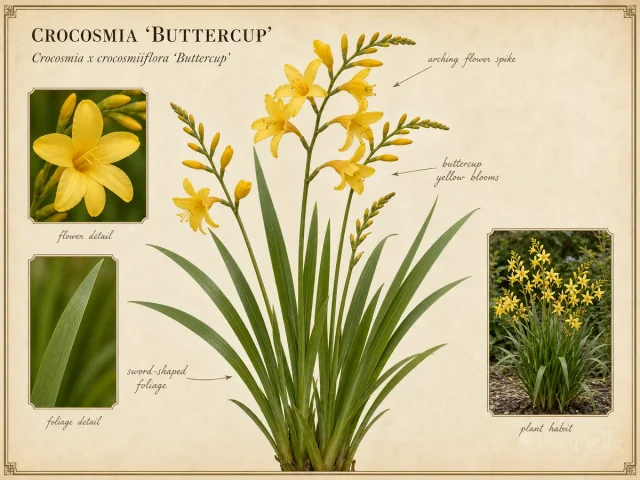
Flower colour does not change planting depth. Crocosmia ‘Buttercup’ and Crocosmia masoniorum follow the same pointed-end-up rule.
Planting Crocosmia corms in spring
- Confirm a cultivar name and refuse soft corms.
- Choose full sun and soil that drains after rain.
- Set each corm 3–4 inches (8–10 cm) deep, pointed end up.
- Space 6–8 inches (15–20 cm); plant in groups of 6–10.
- Firm gently and water once to settle.
- Mark the clump and note the mulch-or-lift date.
Optional: plump very dry stored corms in tepid water for an hour. Do not soak them for days. Do not fertilise at plant-out.
Spacing for tall Lucifer versus mid sprays
- Tall reds — clusters with air between groups so spikes can stand
- Mid orange sprays — 6–8 inches apart for arching stems
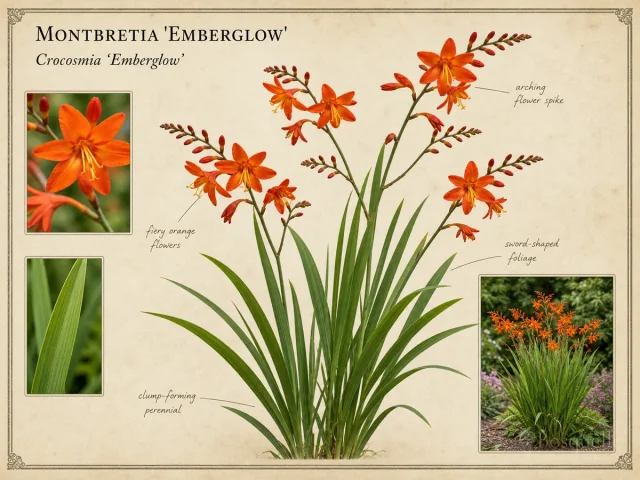
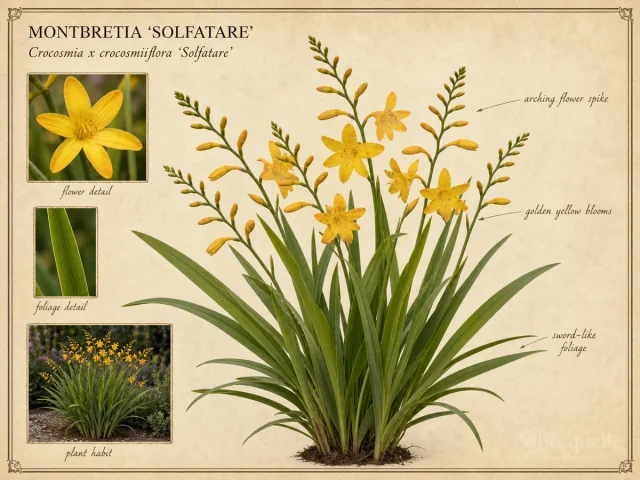
- Yellow types — same depth; colour is not a closer spacing
- Giant montbretia — a real footprint for large leaves
- Pots — deep containers; same depth; move before frost
Tray spacing is not mature spacing. Plan to divide in three to five years. Do not jam Crocosmia masoniorum into a front-edge strip, and do not seat Crocosmia ‘Lucifer’ in a path choke point.
After planting: water, bloom, then leave the leaves
- Keep moisture even through the first summer
- Expect slow sprouting until the soil warms
- Leave green leaves after bloom so the corms can recharge
- Do not fertilise heavily at planting
Wilt at dusk with dry soil needs water; noon wilt can be temporary. If a heat wave hits the same week, temporary shade helps new plantings — take it off once roots grip. Mulch the soil surface, not the emerging shoots.
Count corms before you open the bag. A group of six to ten of one cultivar reads as a spray. Mixing spare corms from two packets is how a yellow type lands in a Lucifer group. Keep one cultivar per hole.
Slug patrol matters on soft new tips. Recheck labels after rain.
Overwintering: mulch in place or lift corms
After foliage yellows, either mulch the bed once the ground has chilled, or lift, dry, label, and store cool and frost-free. Replant in spring when soil is workable. Mild, drained gardens can leave named clumps in place for years — still divide when bloom thins.
If dividing on plant day, keep the newest firm corms in the chain and discard the oldest shrivelled bases. Replant immediately at the same depth. Tools: a fork, a dry crate for lift, and labels. Water once after replant, then keep the soil lightly moist until shoots show.
Do not plant into frozen or waterlogged soil. Workable soil crumbles in your hand. After backfill, water once and check that corms are still covered — settling can leave them at the crust.
Partners after plant-out: Crocosmia Companion Plants. Type before you multiply stock: Types of Crocosmia. Shared watering: How to Grow Crocosmia.
Label the crate by cultivar. Lucifer and a mid orange look alike when dry. A mixed crate is how a tall spike lands in a front-edge strip the next spring.
Wait to lift while leaves still feed the corm and frost is not yet a threat. Lift when leaves yellow and a freeze is coming on tender stock. Replant denser only after you have extra corms — not by crowding the first six into one hole.
Plant in spring at 3–4 inches, space in groups, mulch or lift before a hard frost, then return to the care pillar.
FAQ
When should I plant Crocosmia?
Spring after frost risk eases, into warm, workable soil. Mild, drained sites may plant in autumn.
How deep do I plant Crocosmia corms?
About 3–4 inches (8–10 cm), pointed end up. A little deeper in light soil; shallower if the ground stays wet.
How far apart should I plant Lucifer?
About 6–8 inches (15–20 cm) in groups, with air between groups so tall spikes have presence without a thicket.
Should I soak corms before planting?
Optional brief plump in tepid water for dry stored corms. Do not leave them soaking for days.
When do I lift for winter?
After foliage declines and before hard freezes, if you are not mulching in place. Store cool, dry, and labeled.
Can I plant Crocosmia in autumn?
In mild, drained sites yes. In cold wet winters, spring is the safer default.
Why did my corms rot?
Often winter wet or damp storage. Reset drainage and keep stored corms dry.
Where is ongoing care?
How to Grow Crocosmia — linked above.
Related guides

Recommended plants



This note is part of Crocosmia Guides.
More planting notes by plant are gathered in Planting Guides.
Updated: Reviewed by Bosquelle Editors