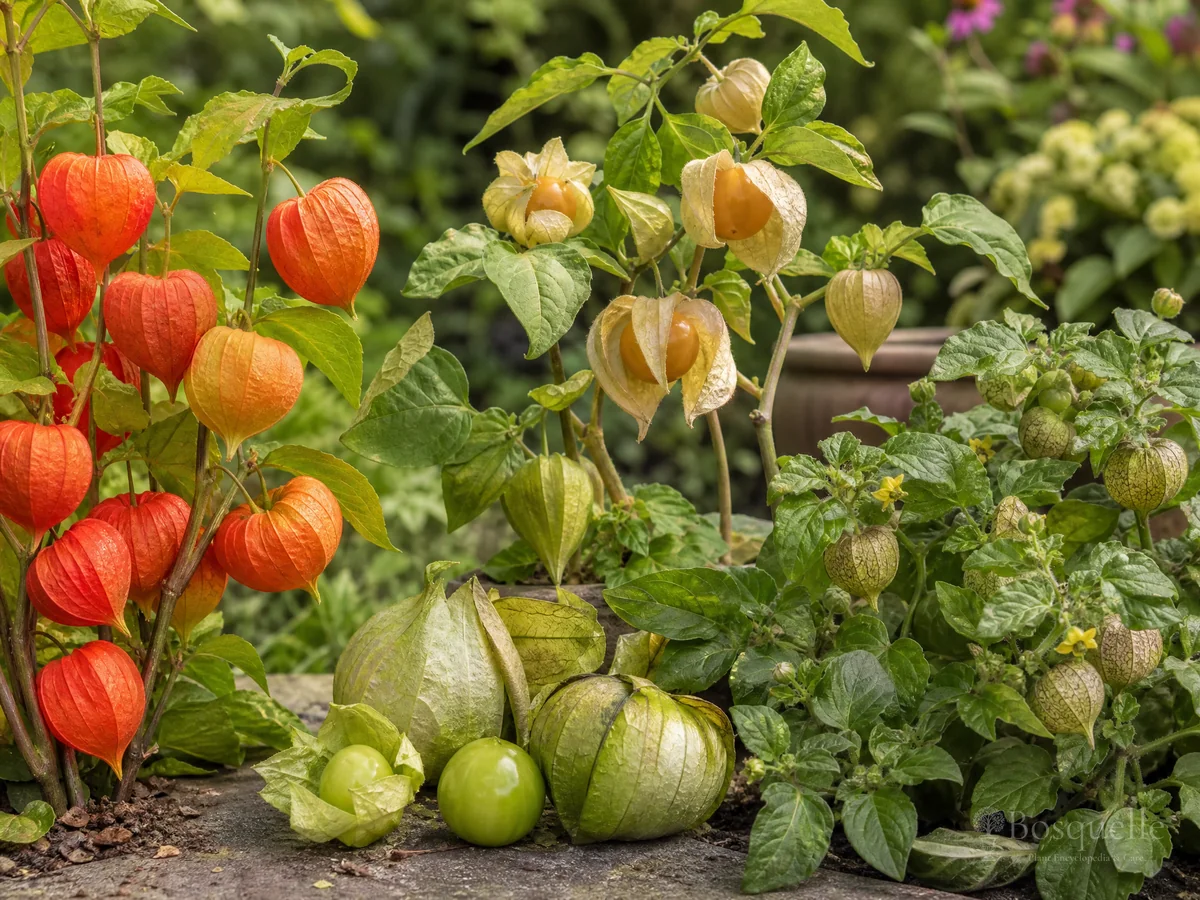
Choose Physalis by job: a craft lantern, a cape gooseberry, a tomatillo, or a ground cherry. Those are the kinds here.
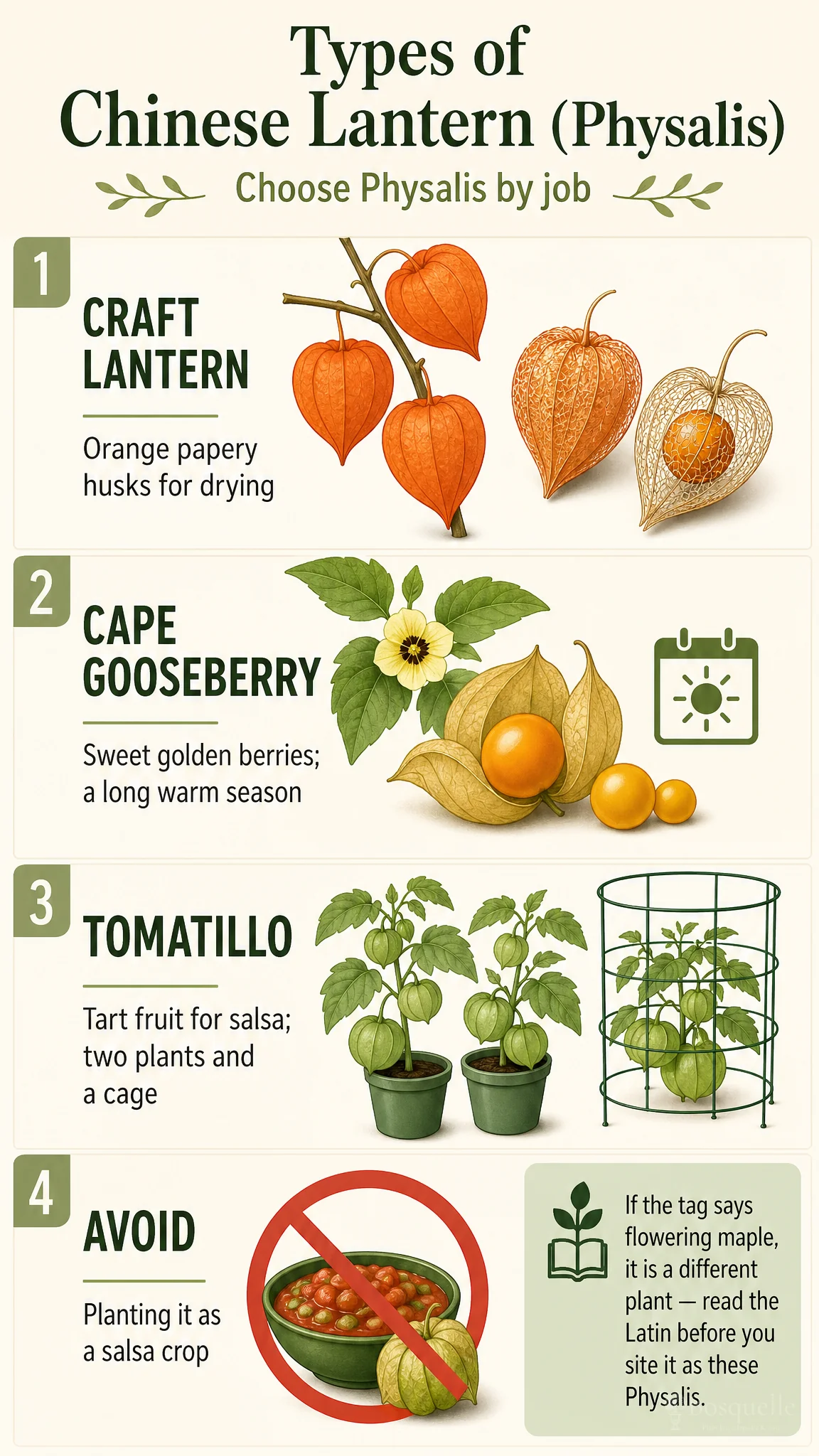
Choose a craft lantern, a cape gooseberry, a tomatillo, or a ground cherry
| Factor | Recommended | Avoid |
|---|---|---|
| Craft lantern | Orange papery husks for drying | Planting it as a salsa crop |
| Cape gooseberry | Sweet golden berries; a long warm season | Expecting orange craft husks |
| Tomatillo | Tart fruit for salsa; two plants and a cage | A single plant in a shade strip |
| Ground cherry | Small sweet fruit that drops when ripe | Waiting for orange lanterns |
Know your USDA hardiness zone before you pick a type of physalis that will take your winter. Type your ZIP below.
2023 USDA ZIP listings (PRISM / USDA-ARS). Find Your USDA Hardiness Zone · Official USDA map.
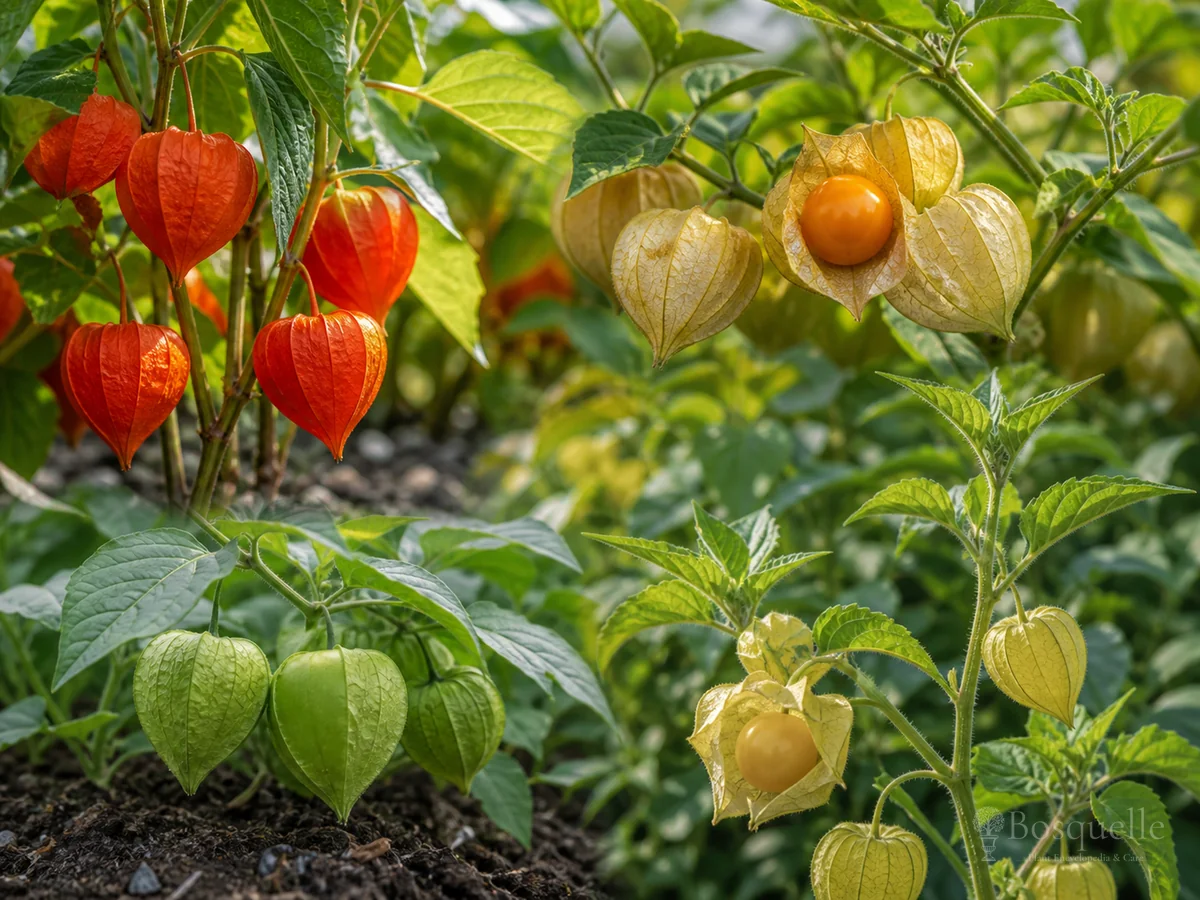
Read the Latin on the tag. Orange autumn lanterns are P. alkekengi. [1] Cape gooseberry, tomatillo, and ground cherry share a papery husk, but the job is fruit, not dried stems. Ground-cherry husks turn tan when ripe; the craft lantern stays bright orange. [2] Tomatillo fruit fills the husk on the plant — pick it; it does not drop like ground cherry. Two plants set fruit more reliably. [3]
How is cape gooseberry different from Chinese lantern?
Cape gooseberry is grown for sweet fruit on a warm-season bush. Chinese lantern is grown for orange craft husks on a hardy rhizome perennial.
Browse by kind
Ornamental lanterns
P. alkekengi is the orange craft plant. Husks turn orange in fall. Fruit inside is bland. Contain the rhizomes.
Cape gooseberry
P. peruviana is cape gooseberry: a taller warm-season bush with sweet golden berries in papery husks. It needs a long season.
Tomatillo
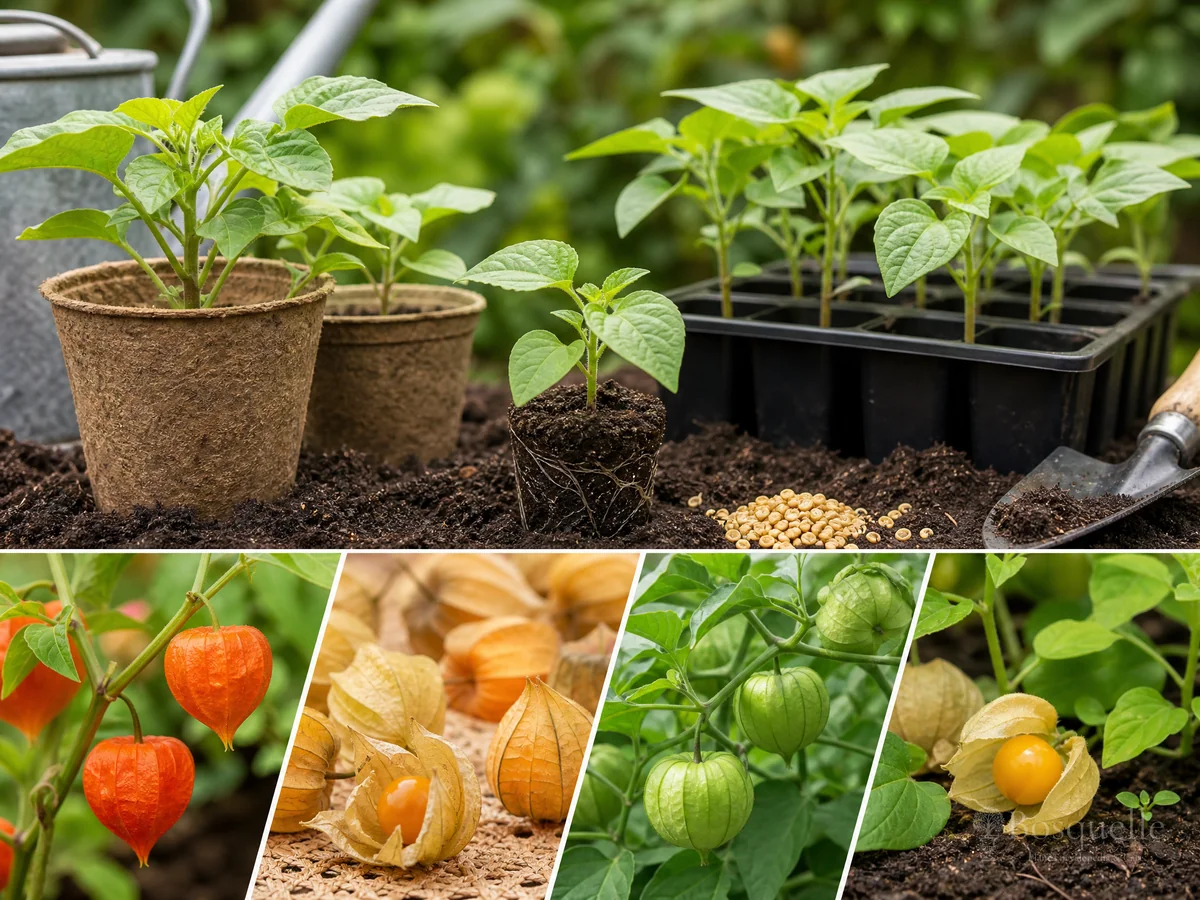
P. philadelphica is tomatillo for salsa. Fruit fills a tan husk on the plant. Grow at least two, and give them a cage.
Ground cherry
P. pruinosa is ground cherry: a compact plant with small sweet fruit. Husks turn tan and drop when ripe.
Not flowering maple, and not a tomatillo from a craft tag
Flowering maple (Abutilon) is a frost-tender shrub with maple-like leaves and hanging bell flowers. It is sometimes sold as Chinese lantern. It is not Physalis, and it does not make papery orange husks. [4] A craft-lantern tag will not give you salsa tomatillos. Match the Latin to the job before you plant.
Is Chinese lantern the same as a tomatillo?
No. Tomatillo is the salsa crop. Chinese lantern is the orange craft perennial. Both have papery husks.
Is flowering maple the same plant?
No. Flowering maple is Abutilon — a shrub with hanging bells. Chinese lantern is Physalis with papery husks.
If the tag says flowering maple, it is a different plant — read the Latin before you site it as these Physalis.
FAQ
Do you list Aunt Molly’s or Toma Verde?
No. Extra vegetable names such as Aunt Molly’s, Toma Verde, or Purple Coban are sold elsewhere. The four jobs here are the craft lantern, cape gooseberry, tomatillo, and ground cherry we hold.
Can I eat the orange lantern fruit?
Ripe lantern fruit is technically edible but bland. Do not eat unripe fruit or leaves. For a snack husk, grow ground cherry or cape gooseberry.
Related guides

References
- [1] Gardenia -
https://www.gardenia.net/genus/physalis-ground-cherry-tomatillo-chinese-lantern - [2] Penn State Extension -
https://extension.psu.edu/programs/master-gardener/counties/susquehanna/penn-state-master-gardener-articles/off-the-beaten-path-ground-cherries - [3] NC State Extension Gardener -
https://plants.ces.ncsu.edu/plants/physalis-philadelphica/ - [4] NC State Extension Gardener -
https://plants.ces.ncsu.edu/plants/abutilon/
This note is part of Physalis Guides.
More type comparisons by plant are gathered in Types of Plants Guides.
Updated: Reviewed by Bosquelle Editors