
Plant Sisyrinchium with other full-sun plants that drain after rain, not with a bog iris strip. Lucerne sits at the path or rock edge. Guests must share that grit. This page is partners, not a second grow guide.

Shared care lives on How to Grow Sisyrinchium.
Partners that share sun and drainage
| Factor | Recommended | Avoid |
|---|---|---|
| Site | The same full sun and sharp drainage as the clump | A lawn valve or a sealed wet clay bowl |
| Scale | Low cushions and fine meadow plants that leave the stars visible | Dense shrubs that shade the fans |
| Calendar | Spring bulbs with grass widow; summer prairie plants with blue stars | One mix that needs summer flood after spring rest |
Pass drainage first. Then pick a role: rock edge, meadow front, or early spring pocket. Suwannee still fails if a water-loving iris seals wet clay beside it. Color rhyme is optional after that gate.
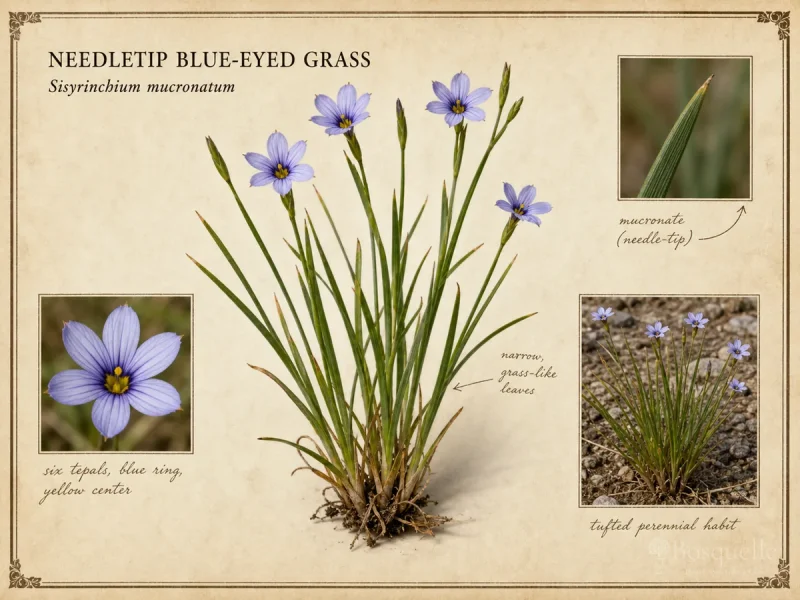
Lucerne and Narrowleaf Blue-Eyed Grass set the blue-eyed grass story. Keep a clear collar at the crown so winter wet does not sit under a groundcover.
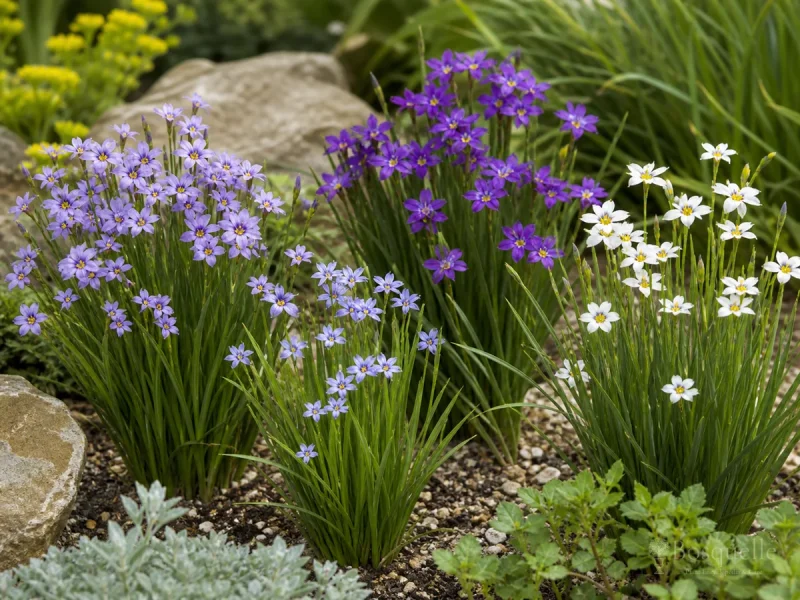
Rock gardens and path edges
Seat thyme, dianthus, or low sedum beside the fans so stones and grit stay open. Water to establish, then let the surface dry. Do not run a weekly bog soak on the same line.
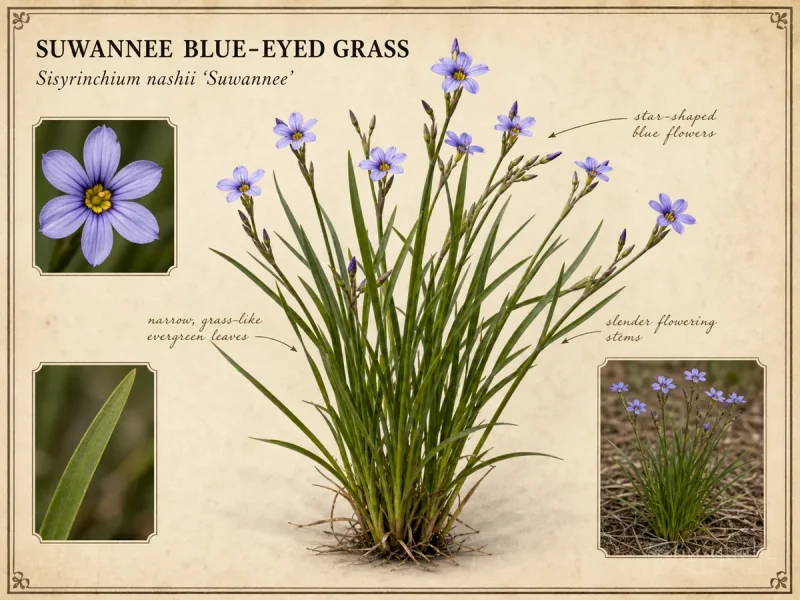
Western Blue-Eyed Grass and Suwannee read as path-edge plants when partners stay low. Edge tightly if volunteers would climb into a formal rose strip. A single grit seam with a few blue fans often reads cleaner than a mixed bog-and-rock tray forced into one pocket.
Keep mulch off the wood. Cushions that root onto the crown are smother, not companions.
Meadow and prairie partners
Place fine grasses or airy sun wildflowers behind the clumps so the stars still read at the front. Butterfly weed, prairie smoke, and blazing star share sun with many blue-eyed grasses. Leave pauses for seedlings where a meadow look fits.
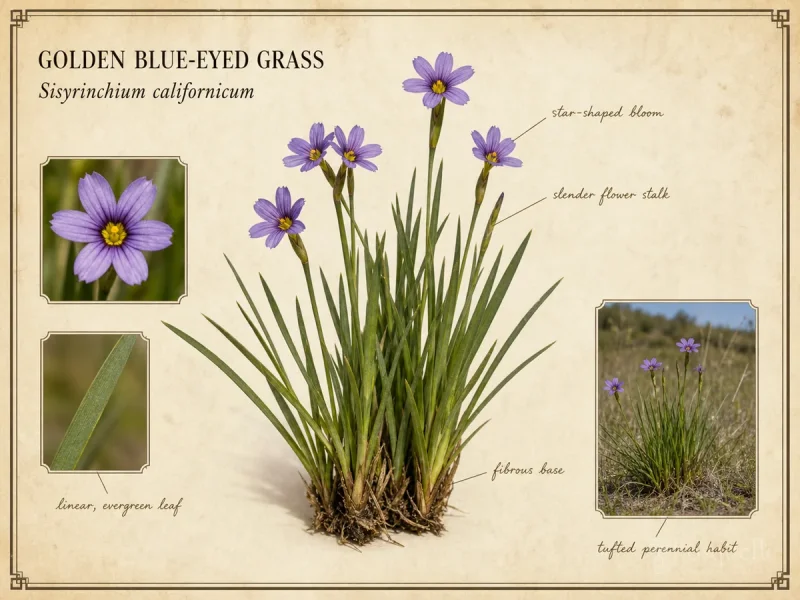
Golden Blue-Eyed Grass is a yellow echo in that strip. Do not use a shade hosta as the “green partner” unless the pocket is actually part sun and still drains. Most Sisyrinchium wants more light than a woodland floor.
Early spring: small bulbs can peak with Grass Widow. After grass widow rests, do not keep that pocket flooded all summer for a bog plant. Split the bed or pick a different neighbor.
Plant-out lives on Planting Sisyrinchium. Color groups live on Types of Sisyrinchium.
What not to plant
Do not plant bog iris, canna, or other wet-crown plants on the same hose. Do not plant a dense evergreen that steals sun. Do not use a lawn as the understory and then mow the fans.
Do not hang a second thirsty annual so thick you cannot see the crown. Access is how you shear after bloom.
Prairie bake without water the first year kills new clumps. Established fans take dry spells. New ones do not. Match the neighbor to that first-year need, then ease off.
Partners do not rewrite sun or drainage. If the stars fail, move the Sisyrinchium. Adding another pretty sun plant without grit is how the strip becomes compost.
A finished edge still shows fan outlines. If the front reads as one soft green mound with no stars in June, remove a piece before you add another.
Keep a stepping stone so you can divide without crushing thyme. Access is part of the mix.
If two instincts compete — a cottage jumble versus a grit ribbon — pick the ribbon for this genus. The flowers are small. They disappear behind a peony.
Do not plant black walnut overhead. Shade and juglone both hurt. Tall sunflowers on the south side steal the morning light the stars need.
Start year one with fewer plants. Add the meadow back after you can see the fans. Over-planting the first summer is how living mulch becomes a seal.
Roses can share loamy drainage at a distance. Do not shove Lucerne under a dense shrub rose that holds wet leaves on the crown all winter.
Thyme and dianthus work when they stay as a collar, not a mat over the wood. Because they like the same grit, people plant them too tight. Then you cannot shear the fans or divide without tearing the cushion. Leave a hand’s width of open grit at the crown.
Sedum at the rock edge is a match only if you water to establish, then let the surface dry. A weekly flood for a thirsty annual on the same line sours both. Split the irrigation or pick a neighbor that also rests between rains.
Butterfly weed and blazing star sit behind the clumps so the stars still read. They share sun. They do not share a first-year soak if you plant Sisyrinchium into dry prairie bake. Water the new fans until roots fill, then ease off with the meadow.
Prairie smoke is an early partner near grass widow. After spring, that pocket should not stay a bog for a wet iris. Because calendars differ, one hose for both jobs fails. Split the bed or change the guest.
Fine ornamental grasses can back the ribbon if they do not flop onto the fans after rain. A heavy Miscanthus shade is the wrong scale. Keep the front open so June stars show. Then you still see whether the crown stays dry.
Do not use a hosta as the default green partner. Most hostas want more shade and more even moisture than this clump. A part-sun pocket that still drains can work. A woodland floor will not.
Path edges need a firm stepping stone, so you can weed and divide without crushing thyme. Access is part of the mix. If you cannot reach the crown, you will miss the shear and get a seedling mess in the joints.
A mixed tray from a big-box “sun collection” often includes a water-loving annual. Pull that one before it seals the soil. Then keep the Sisyrinchium with the grit plants only.
FAQ
What plants go with blue-eyed grass?
Low sun plants that drain: thyme, sedum, dianthus, prairie wildflowers, and fine grasses, kept off the crown.
Can I plant it with iris?
Only if the iris shares sharp drainage. Bearded iris on a dry slope can work. Flag iris in a bog does not.
Do companions change Sisyrinchium care?
No. Shared sun and drainage stay on How to Grow Sisyrinchium.
Where is full care?
How to Grow Sisyrinchium. This page only covers partners.
Related guides


Recommended plants


This note is part of Sisyrinchium Guides.
More neighbour shortlists by plant live in Companion Plant Guides.
Updated: Reviewed by Bosquelle Editors