
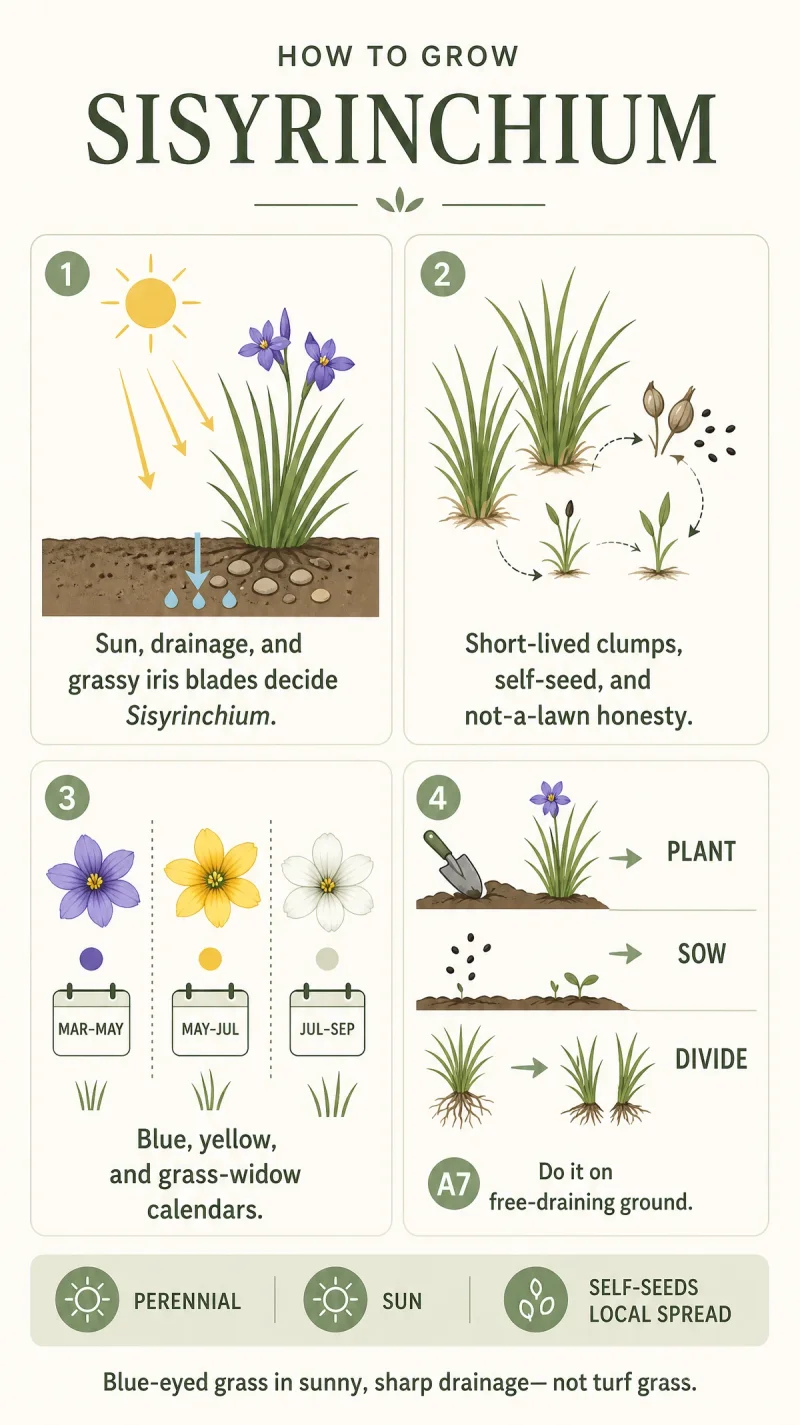
Blue-eyed grass is not a grass. It is a small iris-family clump with starry flowers and fan-like blades. Give it full sun and soil that drains after rain. Part shade cuts bloom. Wet clay rots the crown. Shear after flowering if you do not want a seedling carpet.
Habit lives on Types of Sisyrinchium. Plant-out lives on Planting Sisyrinchium.
Sun, drainage, and iris-family blades
| Factor | Recommended | Avoid |
|---|---|---|
| Light | Full sun; light part sun only if you accept fewer flowers | Deep shade that makes lanky blades and no stars |
| Soil | Moist in spring, then sharp drainage; lean grit or sand | A sealed clay bowl or a weekly bog soak |
| Habit | A clump of iris-family fans, 6–18 inches tall | Treating it as turf you can mow like a lawn |
Most clumps fail from shade or from wet feet. Rich soil makes lanky growth and fewer flowers. Compost is optional. Heavy fertilizer is not. Water new plants through the first summer, then let the top inch or two dry between waterings.
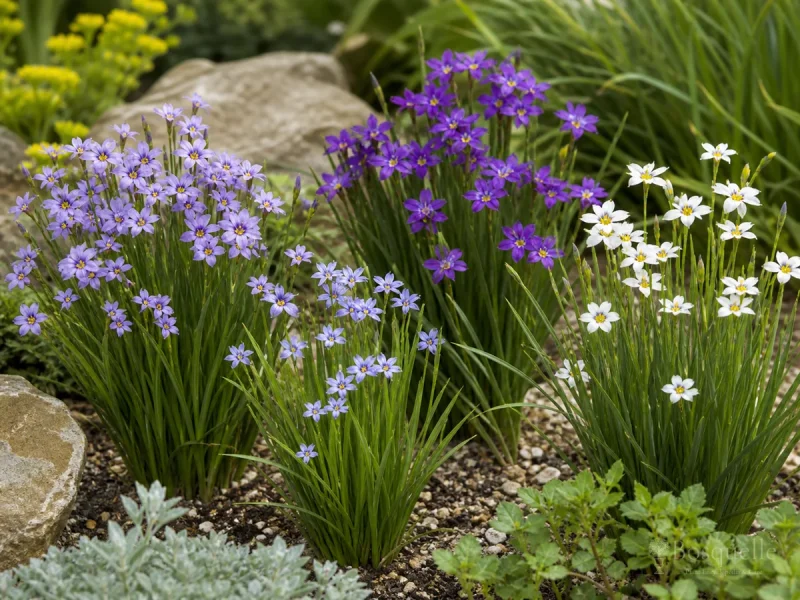
Lucerne is the usual named blue. Narrowleaf Blue-Eyed Grass is narrowleaf species. Western Blue-Eyed Grass is western blue. They share sun and drainage. They are not a lawn mix.
Keep mulch off the crown. A thin layer beside the clump can hold spring moisture if water still moves after rain. A wet blanket on the wood starts rot.
This cluster has no containers page. A drained pot can hold a clump for a season. The method is still sun and a mix that dries. Do not leave a saucer of water under the crown.
Not a lawn: clumps, seed, and shear
Clumps are often short-lived. They renew by seed and by division. That is normal, not a fertilizer fail. Shear the foliage after bloom if you want a tidy fan and fewer volunteers. Leave seed if you want a meadow ribbon.
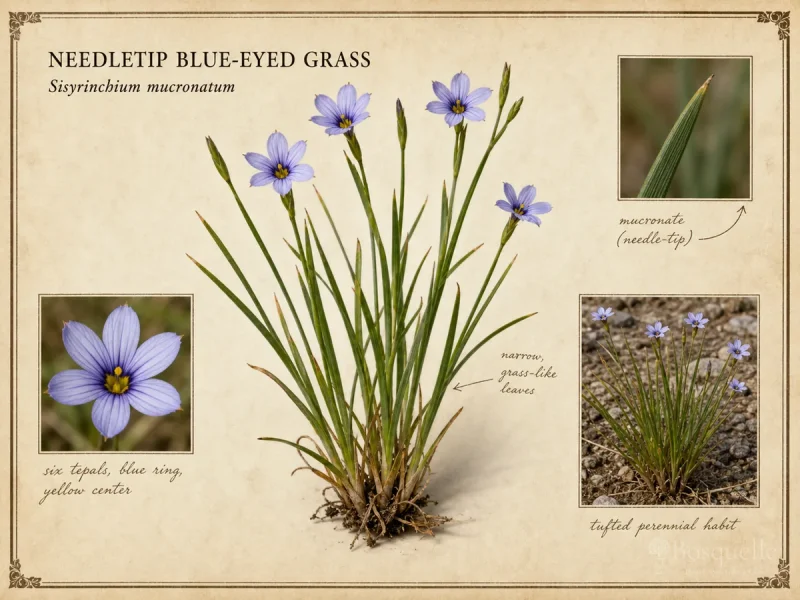
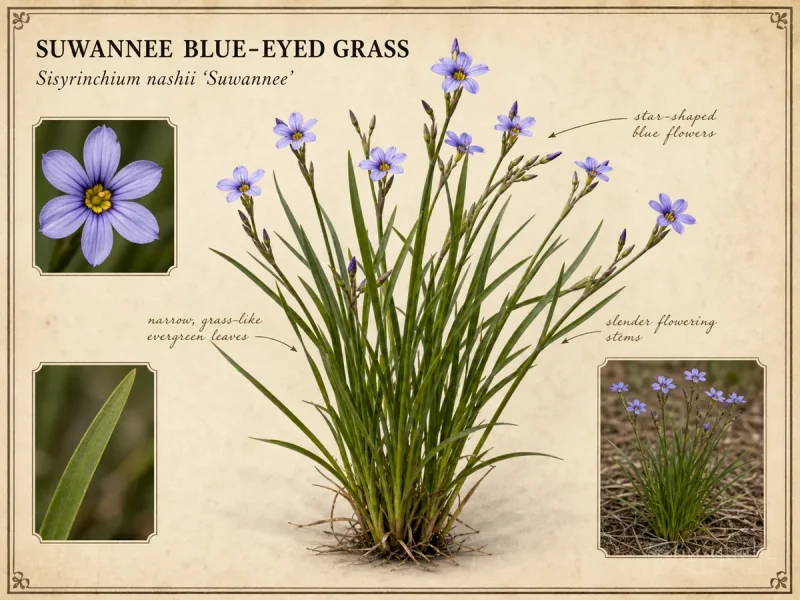
Suwannee is another named blue. Needletip Blue-Eyed Grass is a slender species look. Named types stay truer from division than from mystery seedlings.
Deer usually leave it alone. A hungry year is still browse, not a watering cue. Rust is uncommon if air and sun stay open. Crowding in wet shade is the usual disease setup.
Do not mow the fans like turf after bloom if you still want the plant. The blades feed the clump. A hard scalp in July is how you get a thin crown next spring.
Blue, yellow, and grass widow
Blue to violet stars are the usual summer show. Yellow types use the same sun and drainage. Grass widow blooms early, then rests. Color does not rewrite water. Shop the calendar on Types of Sisyrinchium.
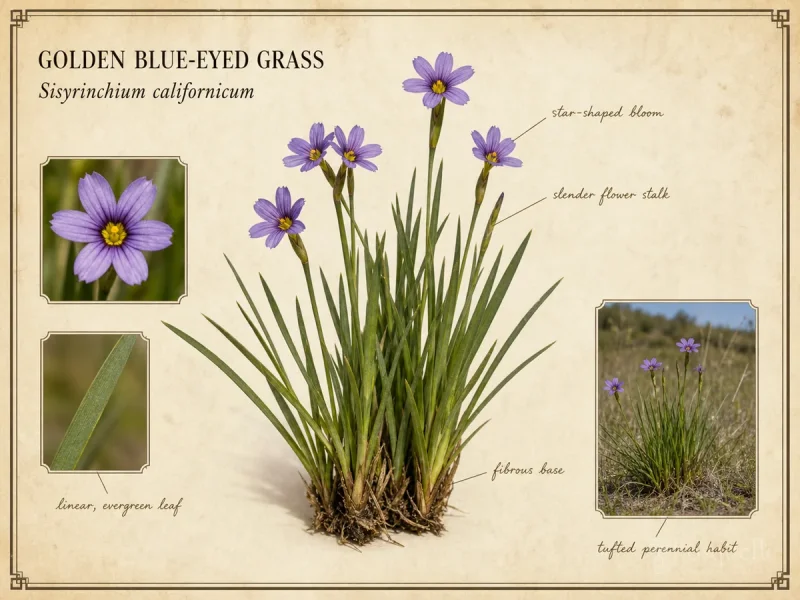
Golden Blue-Eyed Grass and Pale Yellow-Eyed Grass are the yellow pair. Grass Widow is grass widow (Olsynium douglasii, often still tagged Sisyrinchium). Do not expect it to carpet like Lucerne all summer.
This cluster has no types lecture on this page beyond that fork. Confirm the tag. Blue-eyed grass as a common name is fine. It is not proof of Poaceae turf culture.
Divide, plant, and next jobs
Divide every two to three years when the center thins, in early spring or fall. Plant a nursery clump at soil level on Planting Sisyrinchium. Sow species in fall, or moist-chill the seed, on Growing Sisyrinchium from Seed.
Partners that share sun and grit live on Sisyrinchium Companion Plants.
Label blue versus yellow versus grass widow on the pot. Next May a green fan will not tell you the flower color.
A north wall with four hours of sun is the wrong site even if the blades look grassy in a photo. Flowers need heat. Shade makes a green tuft with almost no stars.
Do not copy a lawn-care card onto this clump. Do not copy a bog iris soak onto a rock-garden fan. Read drainage first.
Keep a notebook line: blue, yellow, or grass widow, plant year, and whether you sheared. Guessing from blade width alone repeats last year's seedling mess.
If paving reflects heat, water new clumps more often the first year. Black stone cooks shallow roots faster than a grit bed.
After a flood, lift a sour, black crown and discard it. Soft rot will not recover in the same hole until you add grit or raise the bed.
First year, bloom may be light until roots fill. Plan the shear date before capsules drop seed into a formal rose strip.
Buy a firm, leafy fan. A dried plug with a buried crown will sulk. Soak the nursery pot, then plant at soil level. Do not drop a bone-dry ball into a dry hole.
Group these clumps with other full-sun, sharp-drainage plants on one hose. A valve that also serves a hosta bed will fail one of the two. Split the line or split the bed.
Map the ribbon once a year after bloom. If seedlings have jumped a path, lift them the same week. Waiting until fall lets another round set seed.
A late frost that nips flower buds is not a reason to flood. Wait for new fans. Then keep even moisture while they establish.
If the catalog says “grass,” still read the family. Iris-family fans are not fescue. One bag photo is not a lawn.
Slugs rarely bother it. Chewed blades after a wet spring are still not a cue to seal the soil. Fix drainage before you spray.
Store unused divisions in moist grit, not a sealed wet bag. Trapped moisture starts crown rot before you replant.
A meadow look wants pauses between clumps so seed can land. A formal edge wants a shear after bloom and a divide before the center hollows. Pick one look. Mixing both on a six-inch strip is a mess.
Winter foliage dies back in cold gardens. That is the calendar, not a dead plant. New fans push in spring. Do not dig the clump in March because the old blades browned.
If two instincts compete — collect every named blue versus master one sunny grit strip — master the strip. Color is easy to swap. A wet crown is not.
Keep stones or a grit collar at the fan so winter wet does not sit under a dense groundcover. Pretty thyme is a partner only if it stays off the wood.
Photograph the tag. Narrowleaf and Lucerne look similar in a small pot. Mix-ups show up the second bloom.
Buy a plant tagged Sisyrinchium or Olsynium, not a grass-seed blend. A meadow mix can hide a true turf grass you will mow, so you still plant the iris-family clump on its own. Then you can shear after bloom without wrecking a lawn stand.
If the pot looks grassy in April, wait for a flower before you copy a lawn card onto it. Because the blades are fans, a rotary mower cuts the growing points. Then the clump thins and you add fertilizer that only makes more lanky growth.
Spring moisture helps while roots take, so water when the top inch dries. Because clay holds water after rain, mix grit or raise the bed first. Then you can keep even moisture without a sealed bowl under the crown.
A lawn sprinkler on a timer is the wrong hose for this clump. The fans sit low, so they stay wet while turf still looks thirsty. Then the crown sours. Split the valve or move the plant off the turf line.
After you shear, new fans push from the base. That green is the plant, not a weed flush. Because seed heads are gone, volunteers drop. Then you can keep a formal edge without a second mow.
Yellowing inner blades in summer often mean wet feet or too much shade, so check drainage before you feed. A lean, sunny clump can still brown at the tips after a heat spike. Then one deep soak beats a daily sprinkle that never dries.
Western blue types still want sun and grit. They do not rewrite the method because the catalog photo looks wild. Confirm the species if you garden where summer rain is heavy. Then raise the bed if water stands after a storm.
Seedlings in paver joints are the same plant, so lift them while small if you do not want a ribbon. Waiting until they flower in the path makes a harder move. Then you transplant a bigger fan into the same wet crack and it fails.
Grass widow rests after spring bloom, so do not keep that pocket flooded all summer for a bog neighbor. Blue-eyed grass wants moisture in spring, then drier shoulders. Split the bed if those calendars fight.
A named blue that comes back thinner each year is telling you to divide, not to add a richer feed. Pull fans with roots while they are still firm. Then replant at soil level the same day so the pieces do not dry on a bench.
If a late frost nips buds, leave the fans. Extra water on a cold crown invites rot. Wait for new growth, then keep even moisture while the clump rebuilds.
Pots work for a season if the mix drains and you empty the saucer. Because the crown sits high, a waterlogged cachepot fails first. Then move the plant to a grit bed before winter wet sits in plastic.
Do not plant under a dense shrub that sheds wet leaves onto the fan all winter. The shade cuts bloom, and the leaf pack holds moisture on the wood. Keep a clear collar, then mulch beside the clump, not on it.
Record whether you sheared. Next June a thick seedling carpet is not a surprise if you left capsules. Because named color drifts in seed, divide the labeled clump when you want the same blue back.
FAQ
Is blue-eyed grass a perennial?
Yes. Clumps return, though they are often short-lived and renew by seed or division.
Does blue-eyed grass need full sun?
Yes for good bloom. Light part sun is possible. Deep shade cuts flowers.
Is Sisyrinchium a true grass?
No. It is in the iris family. The blades look grassy. Do not treat it as turf.
Will it spread?
Yes, mostly by seed if you do not shear after bloom. Divide named types to keep the color true.
Should I fertilize blue-eyed grass?
Usually no. Lean soil flowers better than a rich feed.
When do I divide it?
Every two to three years in spring or fall when the center thins. See Planting Sisyrinchium.
What is grass widow?
Early spring purple bells, often sold as Olsynium douglasii. It is not a summer-long blue carpet. See Types of Sisyrinchium.
Where are types and partners?
Types of Sisyrinchium and Sisyrinchium Companion Plants — linked above.
Related guides



Recommended plants




This note is part of Sisyrinchium Guides.
More first-season notes by plant are gathered in How to Grow Guides.
Updated: Reviewed by Bosquelle Editors