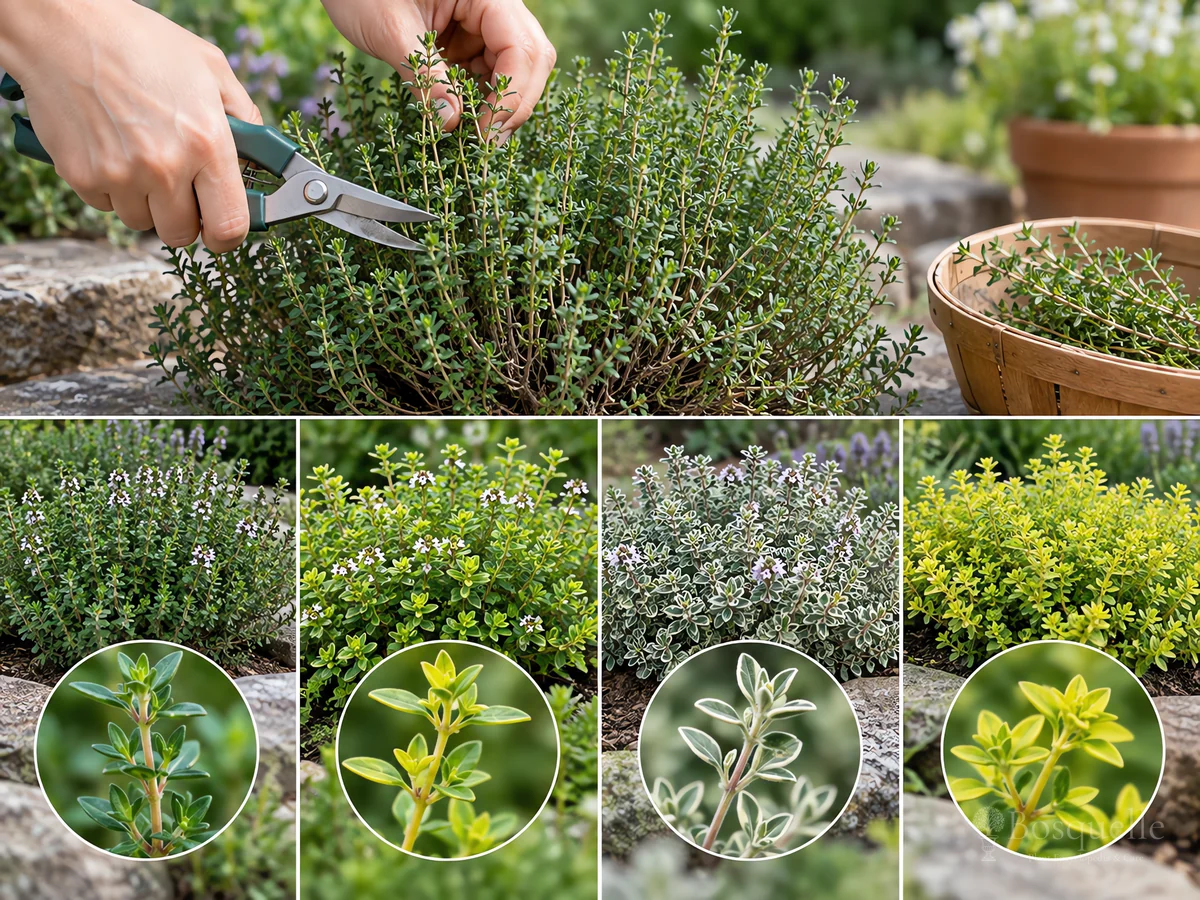
Prune thyme after it flowers. Shear the green growth, and do not cut into old wood. Stay above the woody base.
Shear after it flowers, and do not cut into old wood
| Factor | Recommended | Avoid |
|---|---|---|
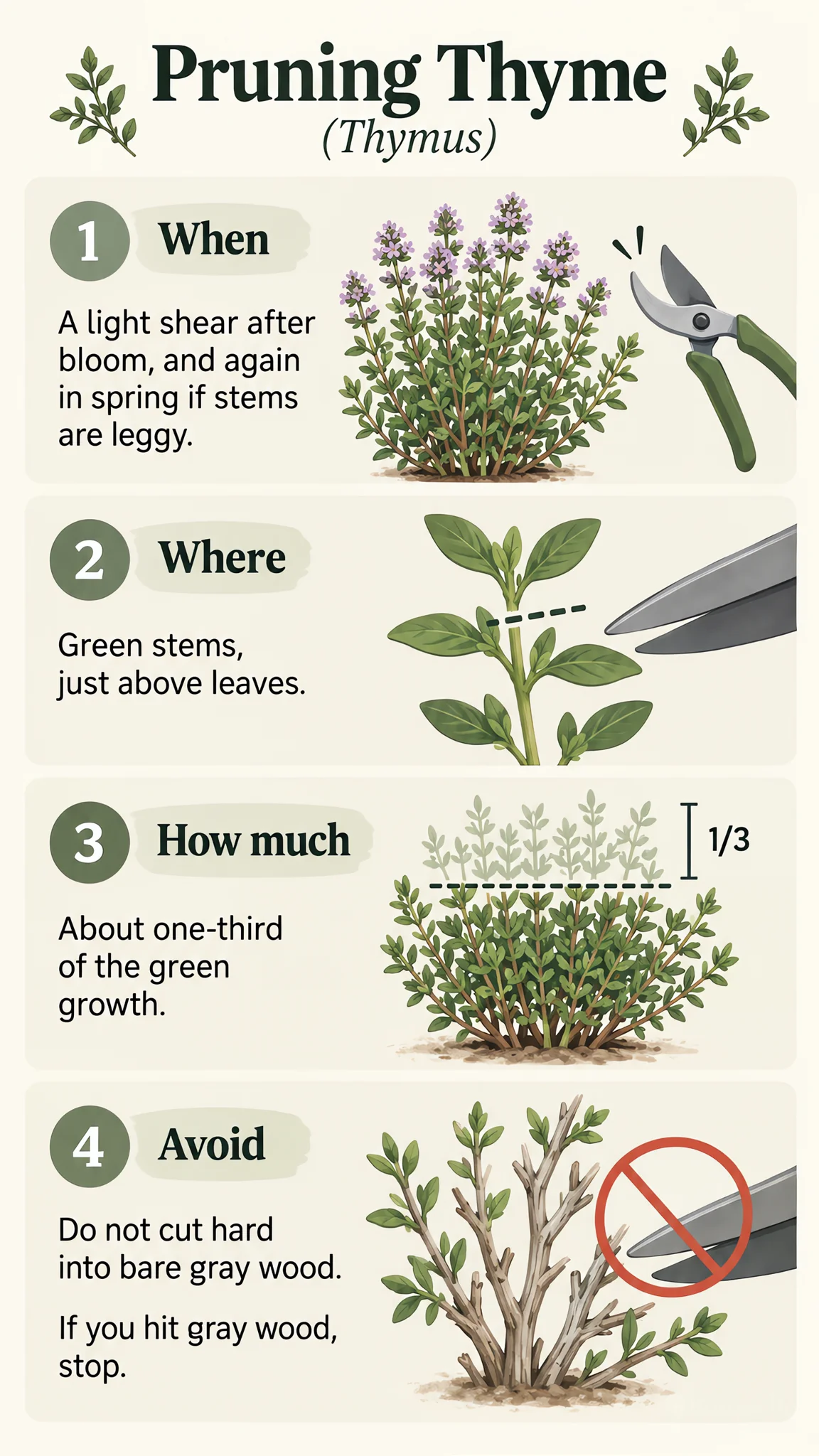
| When | A light shear after bloom, and again in spring if stems are leggy | Do not cut hard into bare gray wood |
| Where | Green stems, just above leaves | Do not cut below the line where leaves meet old wood |
| How much | About one-third of the green growth | Do not strip the plant to a woody stub in one pass |
| Woody center | Replace the plant, or start a cutting from green tips | Do not expect gray wood to reshoot |
After bloom, shear the plant lightly so it stays compact. Do not cut into bare gray wood. Old wood does not reshoot well, and a plant that is all wood is better replaced. [1] common thyme and lemon thyme take the same cut. Trim when the plant gets leggy, in early spring and again in summer. [2] Illinois renews an older plant by cutting it back in spring, still on green wood, not into a dead base. [3] In humid heat, thinning crowded stems helps air move through the mound so the center does not stay damp. A kitchen picking cut is a different job on Harvesting Thyme.
When do I prune thyme?
Shear after it flowers, and again in spring if stems are leggy. Never cut into bare old wood.
How to prune thyme
Stay in the green zone. Shape the mound, then stop above the woody base.
- Wait until you see green growth. After flowering, shear spent blooms and the top of the green stems so the plant stays tight.
- Cut just above a leaf. Stop where green stems meet gray, leafless wood.
- Do not remove more than about one-third of the green growth in one pass. [4]
- If the center is already a woody nest with no green, replace the plant. A green-stem cutting is on How to Grow Thyme.
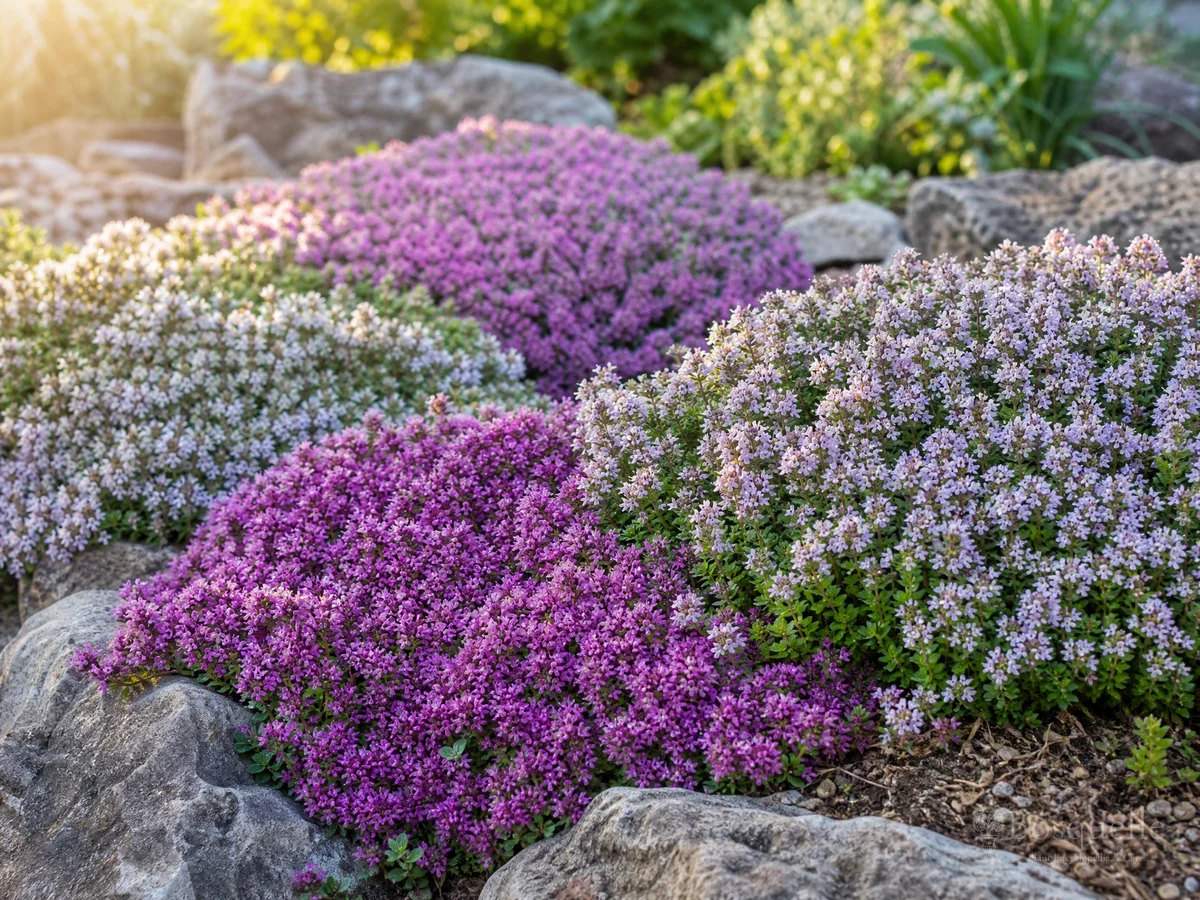
- On a creeping mat, shear spent flowers after bloom so the carpet stays low. Do not scalp it to gray wood.
Can I cut thyme back hard?
Not into bare old wood. A light shear on green stems is safe. A plant that is all wood should be replaced.
If you hit gray wood, stop. Take a green cutting and replace the woody plant.
FAQ
What if the center is already woody?
Start a new plant from a green tip, or buy a replacement. Gray wood in the center will not fill back in.
Related guides



Recommended plants


References
- [1] Iowa State University Extension -
https://yardandgarden.extension.iastate.edu/how-to/all-about-thyme - [2] North Carolina Extension Gardener Plant Toolbox -
https://plants.ces.ncsu.edu/plants/thymus-vulgaris/ - [3] Illinois Extension -
https://extension.illinois.edu/herbs/thyme - [4] UF/IFAS Extension Pasco County -
https://blogs.ifas.ufl.edu/pascoco/2024/04/23/spice-up-your-life-a-beginners-guide-to-growing-thyme/
This note is part of Thymus Guides.
More pruning timing notes by plant live in Pruning Guides.
Updated: Reviewed by Bosquelle Editors