
Trim prune by class first — Japanese maples (palmatum, dissectum, fullmoon) and landscape shade-tree maples need different cuts. This guide is the timing playbook — not a second full care pillar. Shared site and water rules stay on How to Grow Maples.
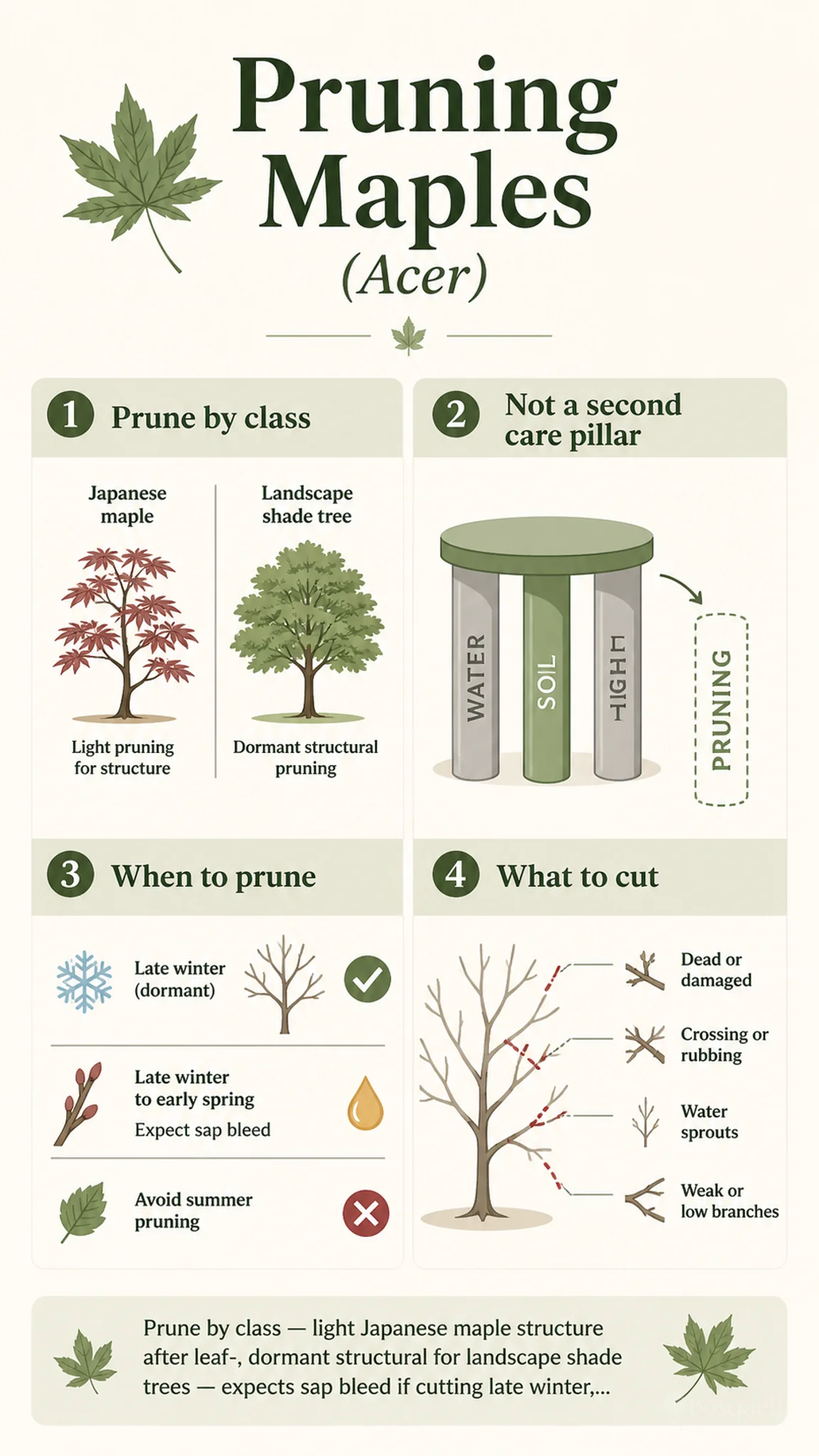
Tools and timing overview
Use sharp bypass secateurs for light wood, loppers for thicker stems, and clean tools between plants. Timing follows class — not a single “hard cut in late winter for everything” calendar. Confirm type on Types of Maples before you cut hard.
| Class | Main prune window | Severity |
|---|---|---|
| Japanese maple (palmatum / dissectum / fullmoon) | After leaf-out / light summer tidy | Light structure; avoid late-winter heavy cuts |
| Landscape / shade-tree maple | Dormant season | Structural: remove dead, crossing, hazard wood |
Japanese maple pruning — light structure after leaf-out
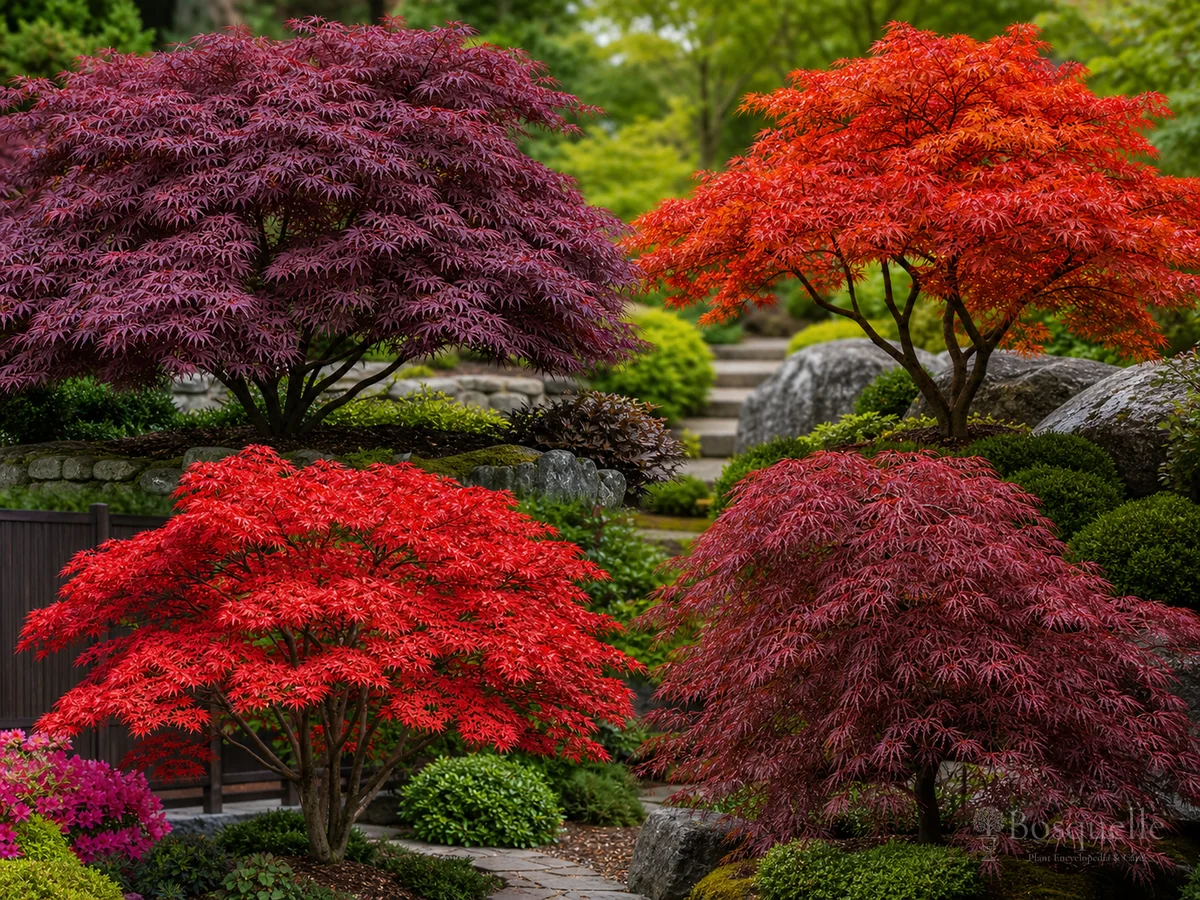
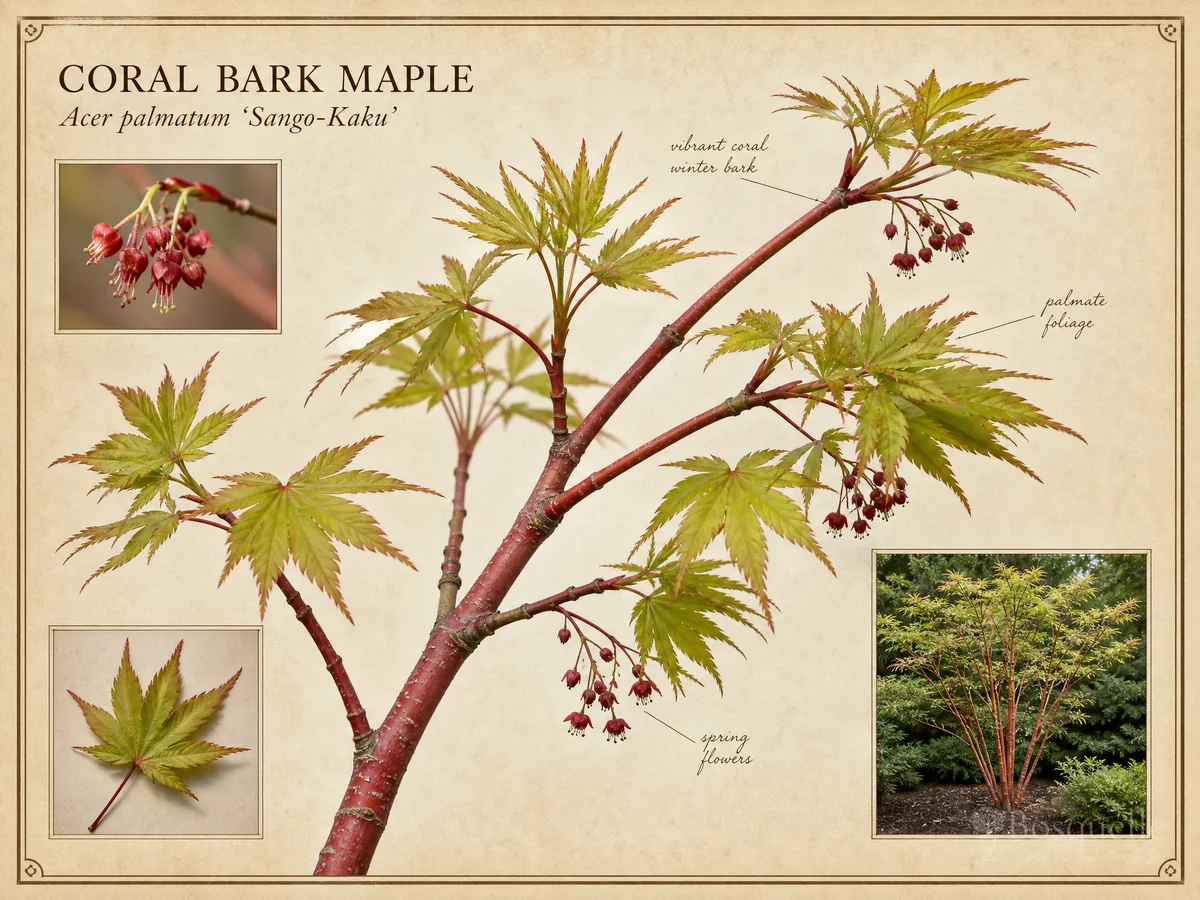
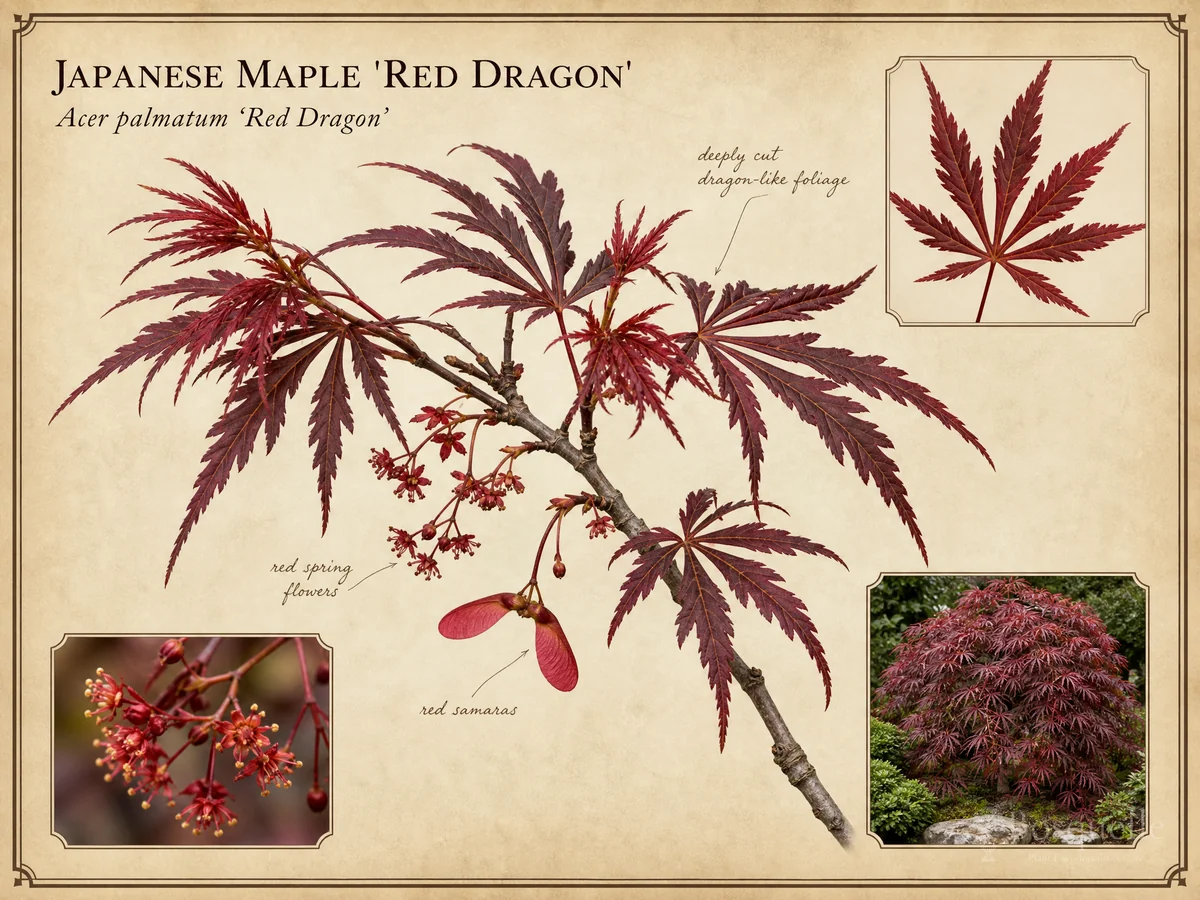
Upright Japanese maples such as Bloodgood, Sango-kaku, and Emperor I, and laceleaf types such as Crimson Queen, Red Dragon, and Viridis, respond to light structural pruning after leaves expand so you can see live wood and natural form. Thin crossing twigs, shorten wayward shoots, and remove dead wood anytime. Do not shear hard in late winter — heavy dormant cuts on Japanese maples invite dieback and ugly stubs.
Landscape maple pruning — dormant structural cuts
Landscape shade trees such as Red Maple, Autumn Blaze, and Crimson King take a dormant structural prune: clear dead and hazardous wood, reduce crossing limbs, and keep a strong central leader or open framework suited to street and lawn scale. Hire qualified help for large canopies and power-line conflicts — this guide covers garden-scale pruning, not a climbing-arborist manual.
Timing — avoid late-winter heavy cuts on Japanese maples
Japanese maples bleed and stress when cut hard while dormant in cold wind. Prefer light work after leaf-out, then a modest summer tidy if needed. Landscape maples tolerate dormant structural work better — still avoid topping. Shared growing rules remain on How to Grow Maples.
What not to do
- Do not topiary-shear a laceleaf into a ball.
- Do not remove more than about a quarter of the canopy in one year on a Japanese maple.
- Do not paste Japanese maple light cuts onto a large landscape maple that needs structural dormant work — or the reverse.
Identify class first, cut on the matching calendar, keep Japanese maple pruning light, and keep shared growing rules on the care pillar.
FAQ
When should I prune maple trees?
Japanese maples: light structure after leaves expand so you can see live wood — avoid heavy late-winter shearing. Landscape shade trees: dormant structural cuts are fine; expect sap bleed if you cut as spring rises. Dead wood anytime.
Can I hard-prune all maples in late winter?
No. Japanese maples prefer light structure after leaf-out. Landscape shade trees take dormant structural cuts — not one calendar for both. Never top a maple into stubs.
When should I prune a Bloodgood Japanese maple?
Light tidy after leaves expand so you can see live wood; avoid heavy late-winter shearing. Expect some sap bleed if you cut earlier — it is usually cosmetic, not fatal.
Where is full maple care?
On How to Grow Maples — this guide only covers prune timing by class.
Related guides


Recommended plants





This note is part of Maple Guides.
More pruning timing notes by plant live in Pruning Guides.
Updated: Reviewed by Bosquelle Editors