
Plant windmill palm in soil that drains, no deeper than the root ball, and leave room for a tall solitary trunk.

Plant it in soil that drains, no deeper than the root ball
| Factor | Recommended | Avoid |
|---|---|---|
| When | Early to mid-spring, once the soil is working; early fall is fine in a mild climate | Do not plant into the heat of midsummer or into frozen ground |
| Hole | As deep as the root ball and about twice as wide | Do not dig a deep sump that buries the trunk |
| Depth | Match the old soil line | Do not set the tree several inches deeper to hide the nursery stain |
| Backfill | The soil you dug, tamped as you go | Do not dump a rich compost pocket into packed fill |
Windmill palm moves as a container tree. Give it ground that drains. A low wet pocket is where the roots rot. [1]
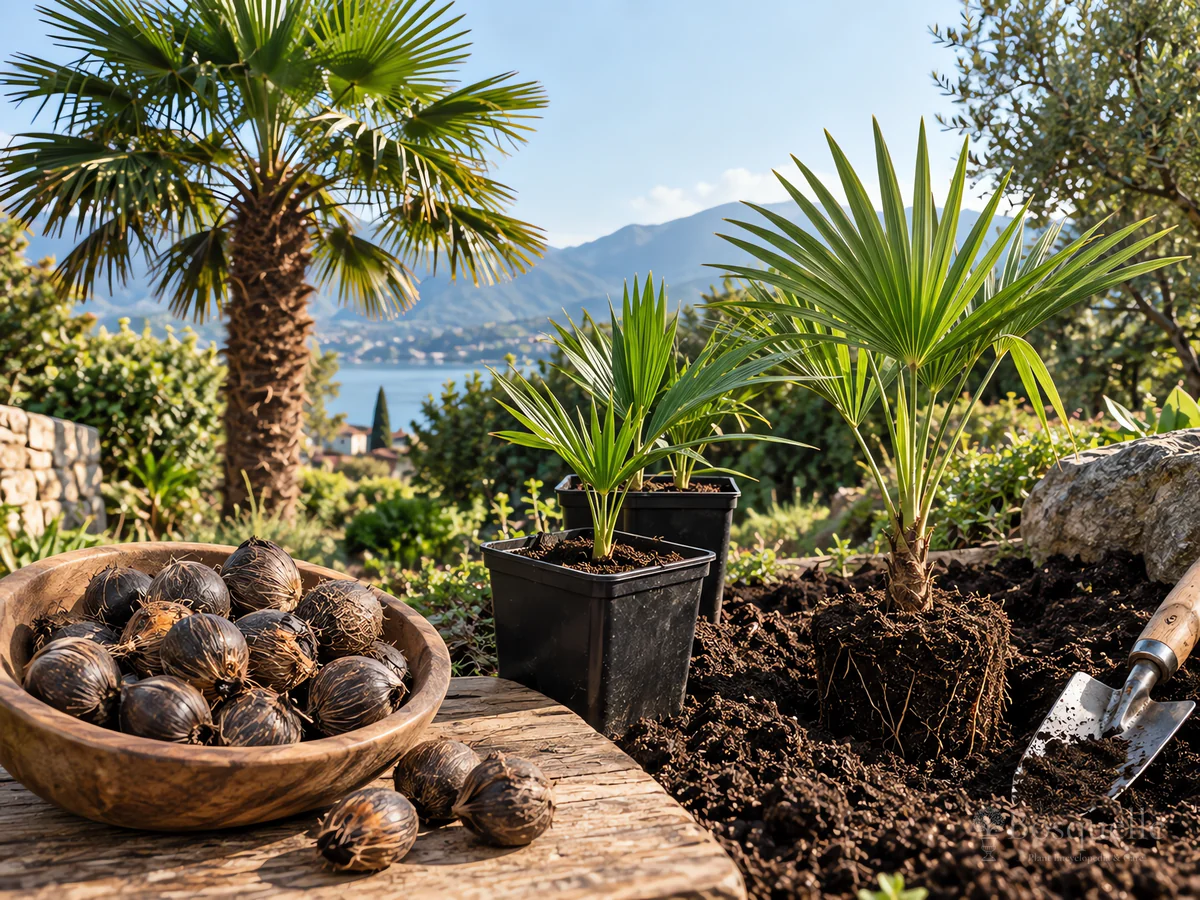
- Soak the nursery pot until bubbles stop, then dig a hole as deep as the root ball and about twice as wide, so the sides are not a slick cup.
- Set the tree so the old soil line matches the new grade. If the pot mix has sunk, find where the roots meet the trunk and set that join at the soil surface. [2]
- Backfill with the soil you took out. Add water as you go so air pockets do not hide under the ball.
- Build a low berm at the edge of the ball to hold the first soaks, then take it down once new fans show.
- Do not bury the trunk to hide a tall nursery can. Palms rot when they are planted too deep. [3]
How deep should I plant windmill palm?
No deeper than it sat in the pot. Match the old soil line. Do not bury the trunk to hide a nursery stain.
Leave room for a tall solitary trunk, and keep the ball watered through the first months
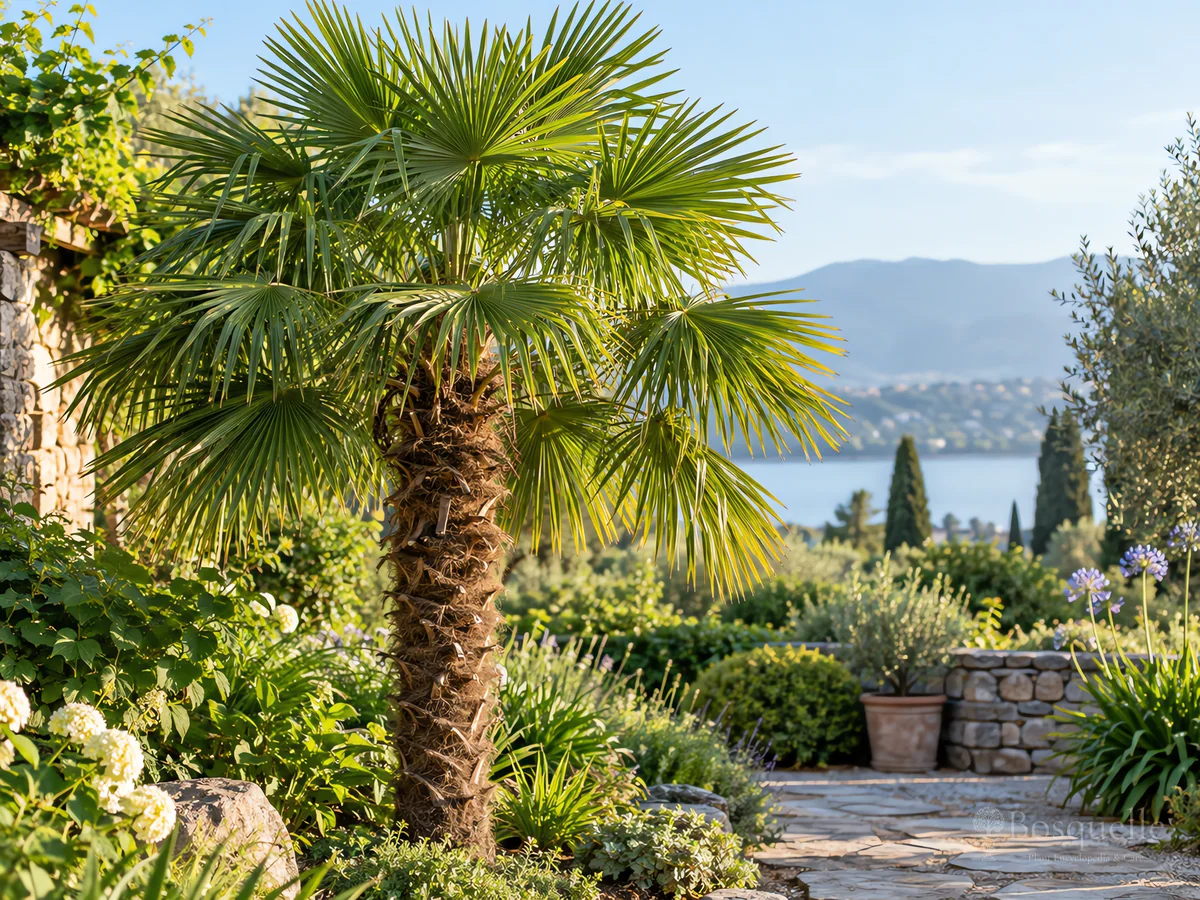
This palm makes one trunk, not a clump, and it will keep adding height for decades. Plan on about 10 to 40 feet of height and 4 to 10 feet of crown as it matures, and keep the fans off a walk, a roof eave, and overhead wires. A wall or hedge that breaks the wind is a better neighbor than an open corner. [4]
- Measure well away from walls, walks, and overhead wires before you dig.
- Mulch the root zone, and keep mulch off the trunk.
- Keep the ball evenly moist for the first four to six months. After that, soak and let the ground dry. Sun and feed after that stay on How to Grow Windmill Palm.
- Do not fertilize in the hole. Wait until new fans appear, then spread a palm fertilizer under the crown.
How much room does the tree need?
Leave about 10 to 40 feet of height and 4 to 10 feet of crown as it matures. It is a solitary tree, not a short clump, and the fans will shred if they sit in a wind tunnel.
Match the old soil line, leave room for a tall trunk, and keep the ball watered through the first months.
FAQ
Should I add compost to the planting hole?
No. Backfill with the soil you dug. A rich pocket in packed fill holds water against the roots, and that is how this palm rots.
When should I plant windmill palm?
Early to mid-spring, once the soil is working. Early fall is fine in a mild climate. Skip midsummer heat and frozen ground.
Related guides

Recommended plants

References
- [1] Ask Extension -
https://ask.extension.org/kb/faq.php?id=630123 - [2] UF/IFAS Extension -
https://ask.ifas.ufl.edu/publication/EP001 - [3] UF/IFAS Gardening Solutions -
https://gardeningsolutions.ifas.ufl.edu/plants/trees-and-shrubs/palms-and-cycads/windmill-palm/ - [4] North Carolina Extension Gardener Plant Toolbox -
https://plants.ces.ncsu.edu/plants/trachycarpus-fortunei/
This note is part of Trachycarpus Guides.
More planting notes by plant are gathered in Planting Guides.
Updated: Reviewed by Bosquelle Editors