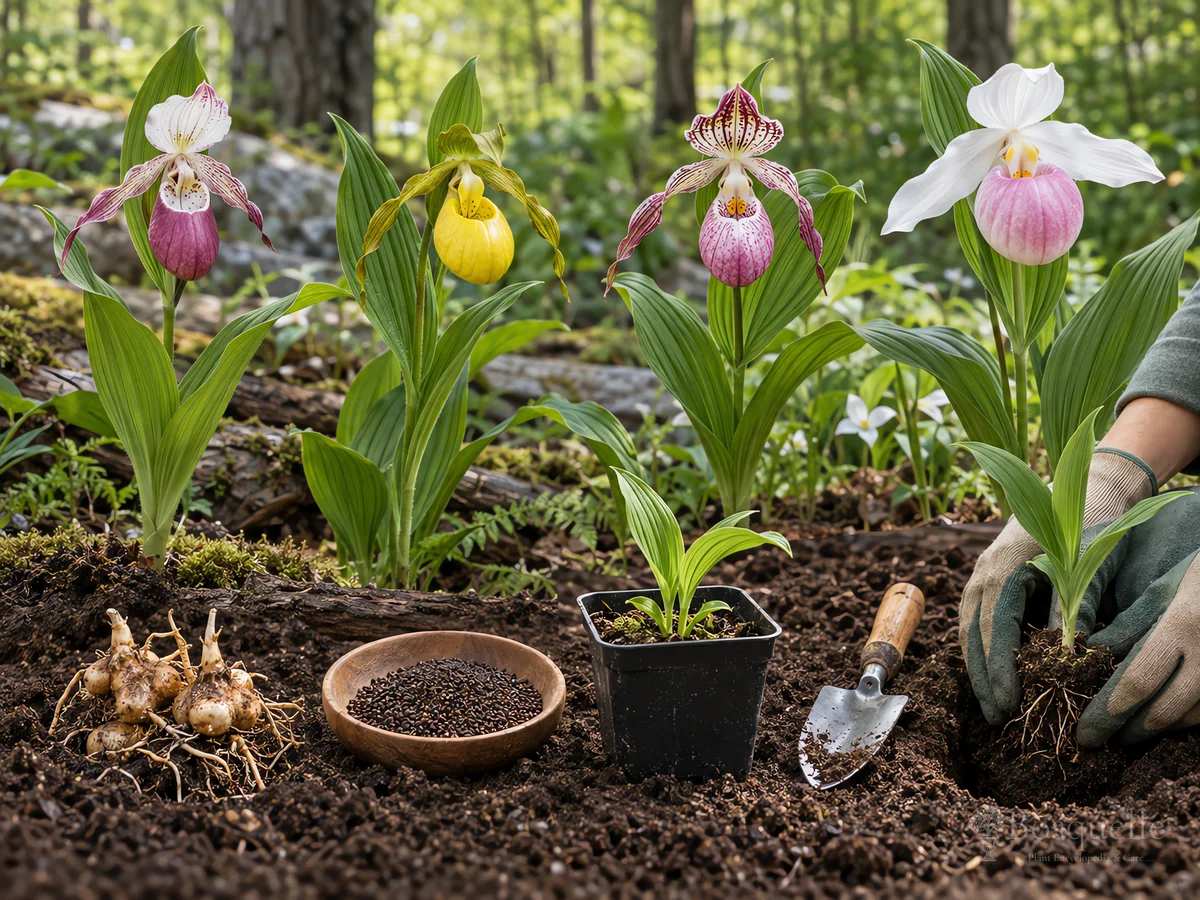
Plant lady's slipper with the roots spread flat and the rhizome about an inch deep, usually in fall.
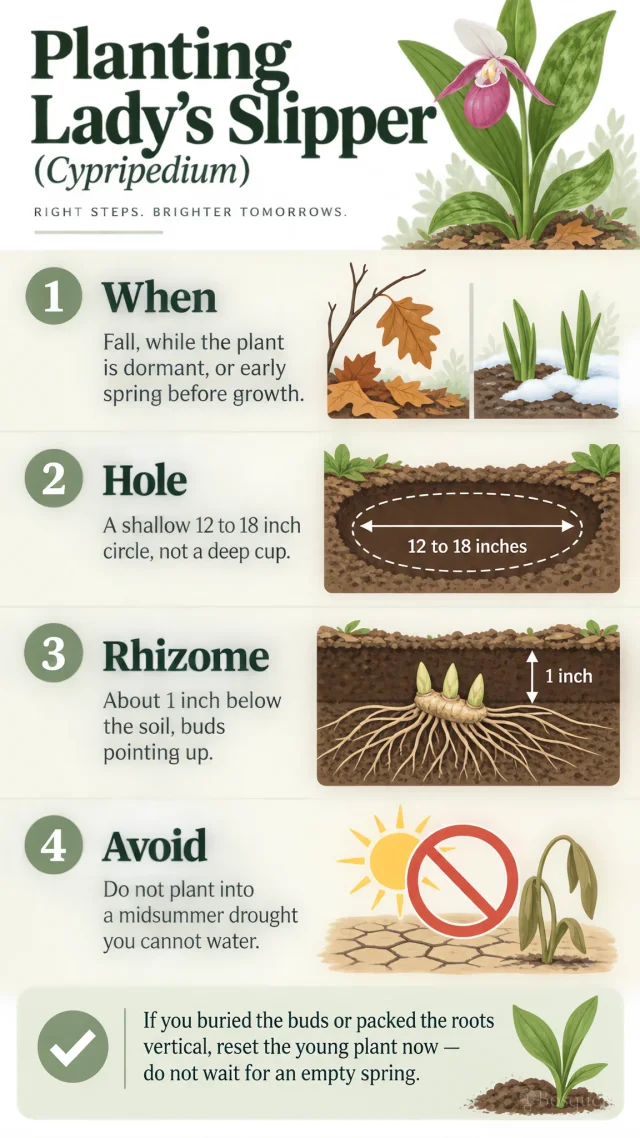
Spread the roots flat, and set the rhizome about an inch deep
| Factor | Recommended | Avoid |
|---|---|---|
| When | Fall, while the plant is dormant, or early spring before growth | Do not plant into a midsummer drought you cannot water |
| Hole | A shallow 12 to 18 inch circle, not a deep cup | Do not dig a tight, deep hole that stands water on the buds |
| Rhizome | About 1 inch below the soil, buds pointing up | Do not bury the buds several inches down |
| Roots | Spread flat in the top few inches | Do not stuff the roots in a vertical wad |
| Finish | Cover without packing; water once; mark the spot | Do not stamp the soil hard over the buds |
These roots run sideways under leaf litter. A deep hole is the wrong shape. [1] Set the rhizome shallow so the next shoot can break. [2]
How deep do I plant a lady's slipper?
Set the rhizome about an inch below the soil, with the buds up. Spread the roots out in the top few inches. Do not bury the plant as if it were a tulip bulb.
How to plant a lady's slipper
Work one plant at a time: confirm the kind, spread the roots, set the rhizome, then water once.
- Confirm hybrid, US native, or Asian on the tag so you know whether you bought the hard acid moccasin. If the tag is only a cultivar name, match it on Types of Lady's Slipper.
- Choose ground that drains yet holds moisture, with dappled shade. Raise or drain a bog before you dig.
- Cultivate a 12 to 18 inch circle. Make a shallow dish with a slight mound in the middle. [3]
- Set the shoots on the mound. Spread the roots out flat, like spokes, in the top four inches.
- Cover so the growing tip sits just under the soil, about one inch deep. Do not pack the mix. [4]
- Water once to settle. Mulch lightly, kept off the buds. Keep the new plant moist through the first growing season if rain fails. After that, watering is on How to Grow Lady's Slipper.
When should I plant lady's slipper?
Fall is the usual window, while the plant is dormant. Early spring before the shoots rise also works if you can keep the roots moist.
Divide a mature clump in fall
Once a garden clump is crowded, split it in autumn after the shoots die back, so the oldest center does not rot through the plant. A nursery plant is still the usual first start.
- Lift the clump after the shoots have died back. Wash the soil off with cold water so you can see the rhizome and the buds.
- Pull dead stems sideways. Bend the clump until the rhizome breaks at a natural joint. Avoid a knife unless the clump is so dense it will not flex.
- Keep two or three buds and a fan of roots on each piece. Replant with the roots spread flat and the rhizome about an inch deep, then water once.
When do I divide a lady's slipper?
Wait until fall, after the shoots die back, and only split a mature clump. Each piece needs buds and roots. A young nursery plant is not ready.
If you buried the buds or packed the roots vertical, reset the young plant now — do not wait for an empty spring.
FAQ
Can I start lady's slipper from seed?
Not as a garden job. Seed needs a lab flask and years to bloom. Buy a nursery-grown plant.
Should I fertilize the day I plant?
No. Water once to settle the soil, then wait until you see strong new growth before any feed.
Related guides


Recommended plants

References
- [1] Special Vegetation -
https://specialvegetation.com/culture/planting-and-care-of-cypripedium-species/ - [2] Garden Slippers -
https://gardenslippers.com/plantcare.html - [3] Frosch Cypripedium -
https://www.cypripedium.de/English/planting/planting.html - [4] Plant Delights Nursery -
https://www.plantdelights.com/blogs/articles/cypripedium-orchids-lady-slipper-fit
This note is part of Cypripedium Guides.
More planting notes by plant are gathered in Planting Guides.
Updated: Reviewed by Bosquelle Editors