
Plant goldenrod for the habit you locked — a clump cultivar, a tall colony, or a site specialist. Timing, spacing, and containment change with that sentence.
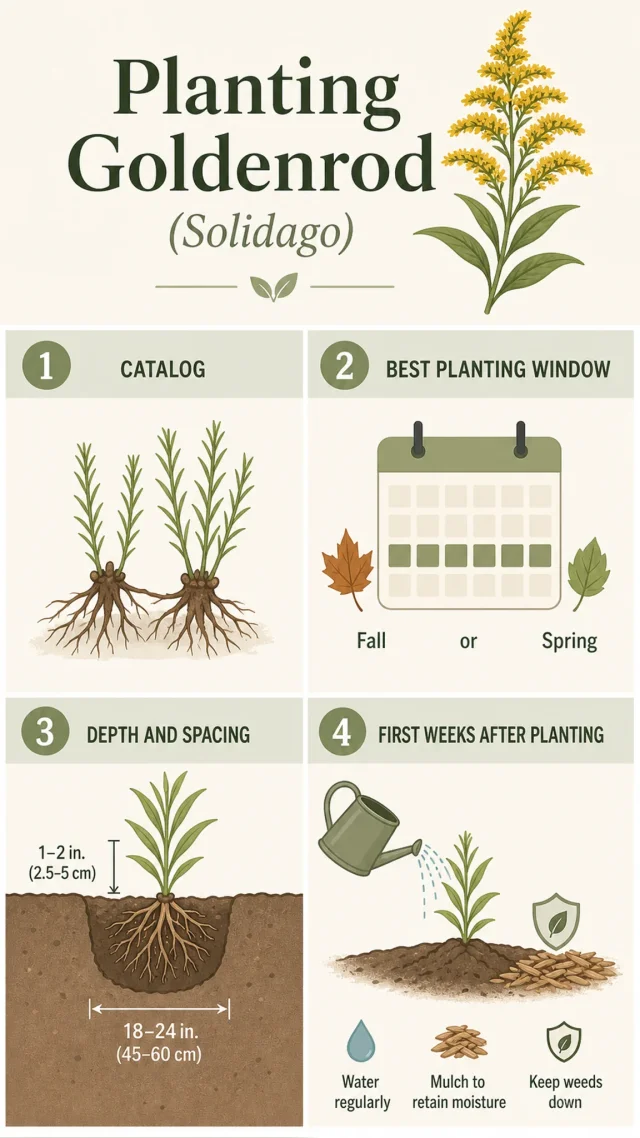
Ongoing care stays on How to Grow Goldenrod; bands on Types of Goldenrod.
Checks that clear plant-out, spacing, and containment
| Factor | Recommended | Avoid |
|---|---|---|
| Season | Spring after frost, or early autumn in workable soil | A waterlogged winter hole for dry-bank types |
| Depth | Crown at pot level | A buried crown in a rich wet cup |
| Spacing | A clear bowl for clumps; room to run for colonies | Canada goldenrod in a tiny formal knot |
| Containment | An edit strip or mow path for colony types | Runners as a temporary filler beside treasures |
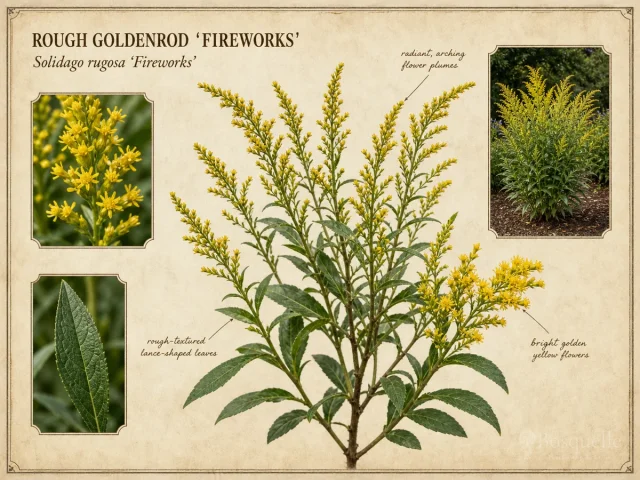
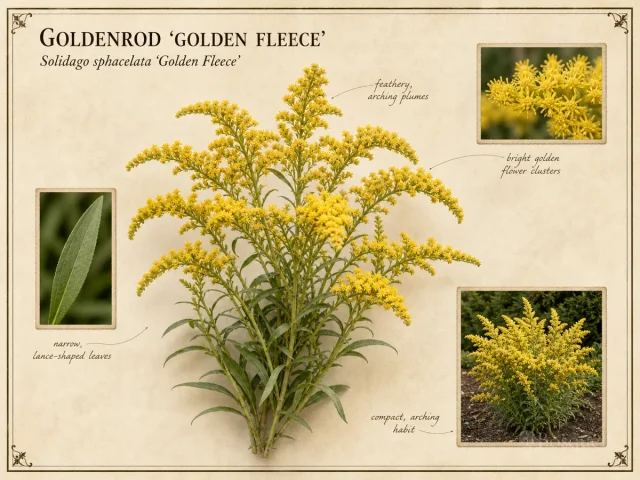
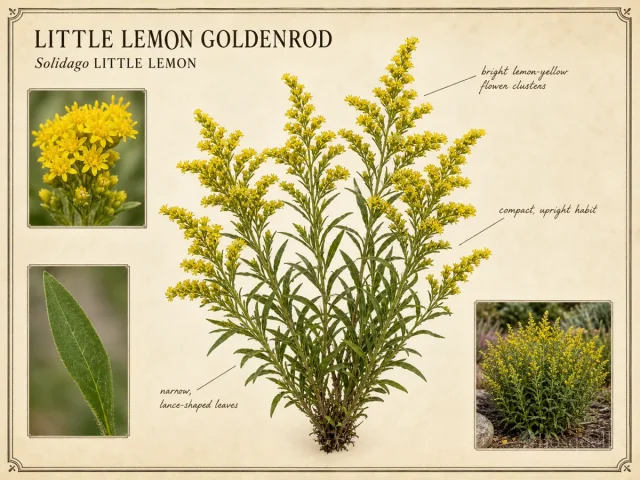
Cool, workable soil is the stake. Confirm the table, then open spacing. Solidago ‘Fireworks’ and Solidago ‘Little Lemon’ follow the same spring or early-autumn window as other clumpers. Flower colour does not rewrite depth.
Planting goldenrod in cool soil
- Lay the pots on the bed and mark clump, colony, or woodland lanes.
- Dig a hole wider than the pot; keep the crown at soil level.
- Backfill with native soil — skip a rich wet compost bowl.
- Firm gently and water once to settle air pockets.
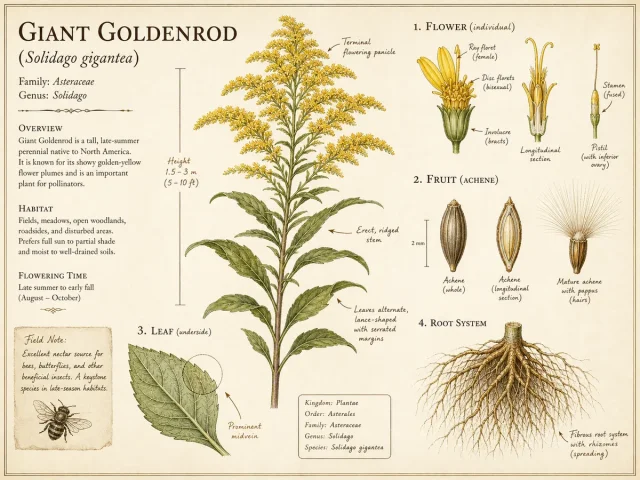
- Stake tall colony types the same day if the site is a wind tunnel.
- Mulch lightly; keep mulch off the crown.
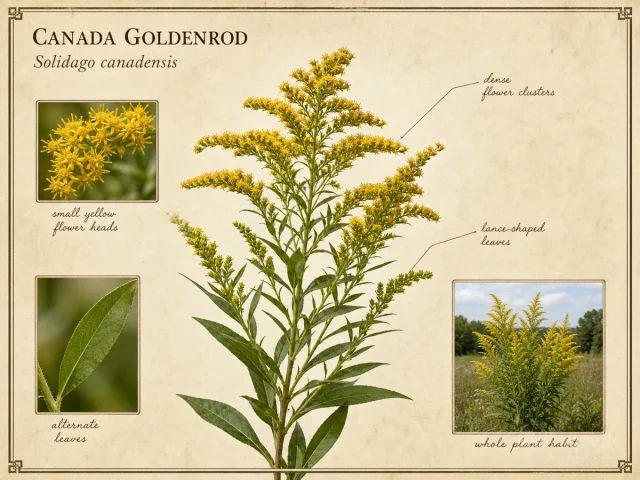
Solidago canadensis and Solidago sempervirens still follow the same crown-level rule. Habit changes spacing and containment, not the centimetres of burial.
Spacing by habit
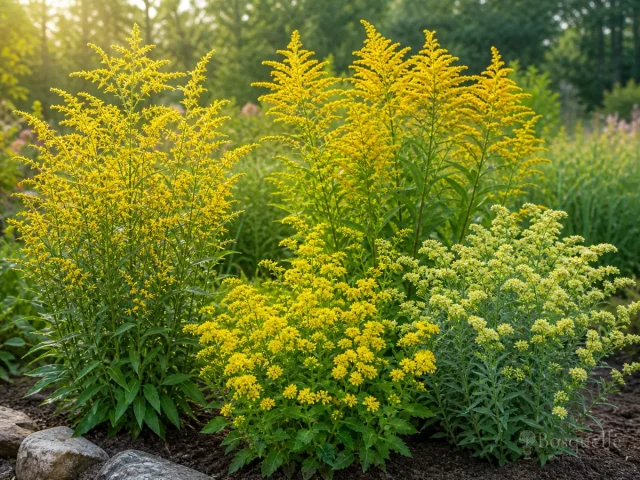
- Clumps (Solidago ‘Fireworks’) — a clear bowl each; crowding makes mildew
- Colonies (Solidago canadensis) — start at the back of the allowed zone
- Seaside (Solidago sempervirens) — sharp drain; do not create a summer swamp
Tray spacing is not mature spacing. Plant for the leaf span you will see in year two, not only for the nursery pot. Do not jam clump cultivars into a rhizome thicket and hope cultivars win.
Containment at plant-out
For colony types, leave a mowable strip or root-aware edge. Pull seedlings in spring while small. Rhizomes ignore polite plans — edit early. Root barriers help only when installed deeply and monitored; they are not magic.
Refuse to plant tall colony goldenrod as a temporary filler beside treasures. Temporary becomes permanent underground. Use annual fillers for gaps instead. Label Latin names, not only catalogue nicknames.
First weeks after planting
- Keep moisture even through establishment, then return to lean watering
- Do not fertilise at plant-out
- Walk the edit strip after the first rain and reset flags
Wilt at dusk with dry soil needs water; noon wilt can be temporary. If a heat wave hits the same week, a few days of temporary shade helps soft divisions — remove it once roots grip.
Common planting mistakes
A rich wet hole that flops stems later. A colony type in the centre of a tiny bed. Lost labels that mix Little Lemon with Canada goldenrod. Planting dry-bank types into a winter puddle. Skip those four and the checklist usually holds.
Before you backfill, confirm four items: habit label, spacing, edit plan, and sun/drainage match. Missing any one item is how redo planting starts. After the first hard rain, recheck depth and washout.
If dividing on plant day, discard soft rotten pieces and keep firm fans. Replant immediately and water once to settle. Do not set divisions into a fertiliser trench.
Skip plant-out while the clump is in full bloom unless a storm has already torn it. Heat plus open wounds is a weaker window than spring buds. If you must move a plant in summer, shade the new pieces for a few days and water until they stand up again.
Each piece should look like a small plant, not a handful of leaves. A woody core with no shoots is waste. A ring of outer shoots with roots is the keep. Brush soil off so you can see the join before you cut.
Replant on the same lean ground you would use for a new nursery pot. Do not drop a division into a wet clay pocket “to help it settle.” Label Latin names so spring seedlings and rhizome runners can be sorted.
Tools: a sharp knife or spade, a bucket for discard centres, and stakes for tall colony pieces. Clean the blade between clumps if rot was present. Dry-fit the new spacing on the bed before you cut so you do not leave a hole you cannot fill.
If rain is forecast within a day, still water in, then let weather help. If a hot windy week is forecast, delay planting or provide temporary shade for soft divisions. Timing is part of planting skill. Carry spare labels and a permanent marker on plant day.
Plant in cool soil, space by habit, contain colony types at plant-out, then return to the care pillar.
FAQ
When should I plant goldenrod?
Usually spring after frost, or early autumn where winter wet will not drown dry types.
How far apart should I plant Fireworks goldenrod?
Give each clump a clear bowl for plume shape and airflow — avoid tight blobs.
How do I plant Canada goldenrod?
Only in a zone that may become a colony, with an edit strip you can reach.
Should I use a root barrier?
For vigorous runners in mixed beds, containment at plant-out saves work — monitor barriers; they are not magic.
Can I plant goldenrod in autumn?
Yes when soil is workable and drainage holds heading into winter.
Can I transplant goldenrod?
Clump cultivars move kindly when young; mature colony patches are containment projects, not casual relocations.
Why did my new plant flop?
Often rich wet soil or too little sun. Reset site match before staking forever.
Where is ongoing care?
How to Grow Goldenrod — linked above.
Related guides

Recommended plants

This note is part of Solidago Guides.
More planting notes by plant are gathered in Planting Guides.
Updated: Reviewed by Bosquelle Editors