
Goldenrod fails when you give every yellow tag the same sun, soil, and watering. Match care to habit: a clumping garden selection, a tall rhizome colony, or a woodland-edge species. Full sun and lean, free-draining soil come first for most prairie types.

Flower colour does not rewrite spread or drainage.
Browse habit bands on Types of Goldenrod; partners on Goldenrod Companion Plants; spacing on Planting Goldenrod.
Does goldenrod cause hay fever?
| Factor | Recommended | Avoid |
|---|---|---|
| Pollen | Treat goldenrod as mostly insect-carried | Blaming every August sneeze on the yellow plumes |
| Lookalike | Check for ragweed blooming at the same time | Ripping every Solidago while ragweed stays on the verge |
| Habit | Reject a plant for rhizome spread if that is the real risk | Using an allergy myth to skip checking spread |
| Site | Full sun and lean soil for prairie types | Rich wet bowls that flop stems after the first storm |
Iowa State Extension sites most prairie goldenrods in full sun with well-drained soil. Pollen is relatively heavy and sticky — moved mostly by insects, not wind. The classic late-summer wind pollen is ragweed blooming at the same time.
Solidago ‘Fireworks’ is a clumping garden cultivar many mixed borders can hold. Other tags are tall colonies or woodland leaners. They do not share one care method — and none of them rewrite the ragweed distinction.
Clump or runner — which care fits?
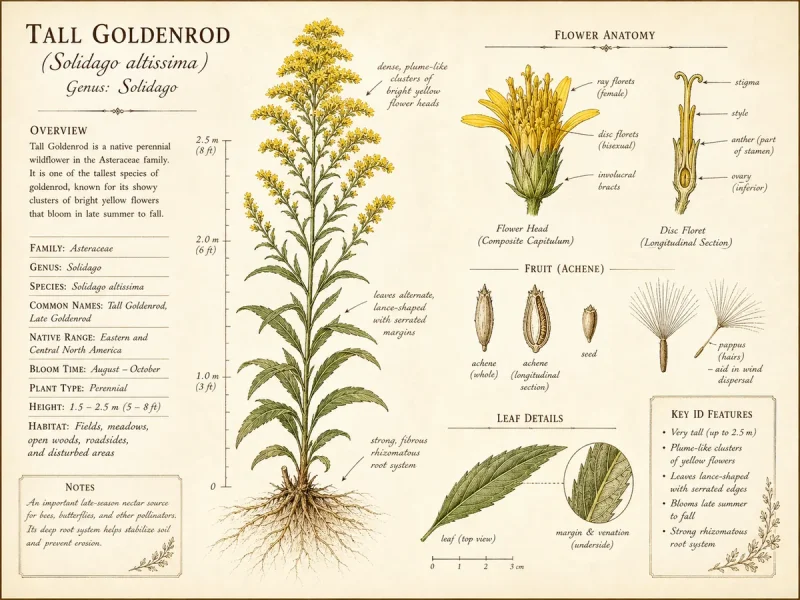
Ask the habit question before the fertiliser question. Clumping garden selections expand politely when happy and are the default for mixed borders. Tall Canada, tall, and giant goldenrods travel by rhizome and seed — treat them as meadow or large-bank plants with an edit strip, not as compact 40 cm border plants.
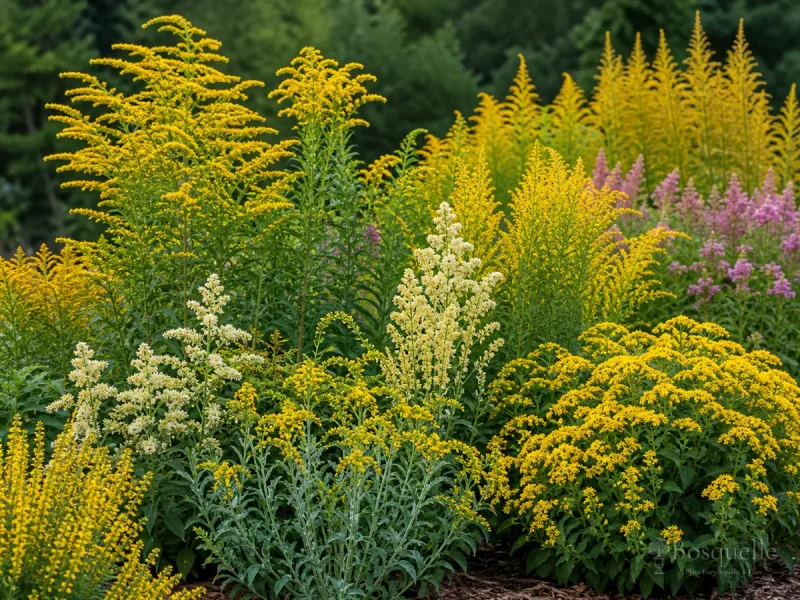
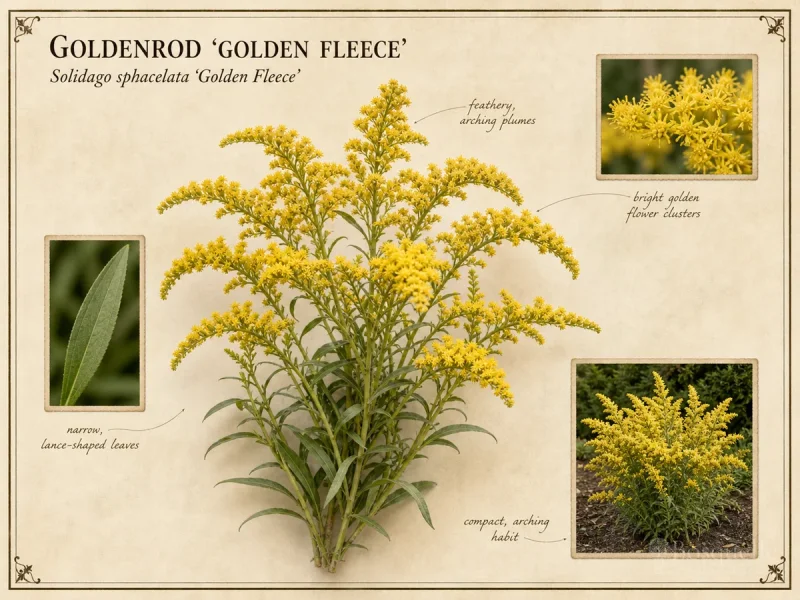
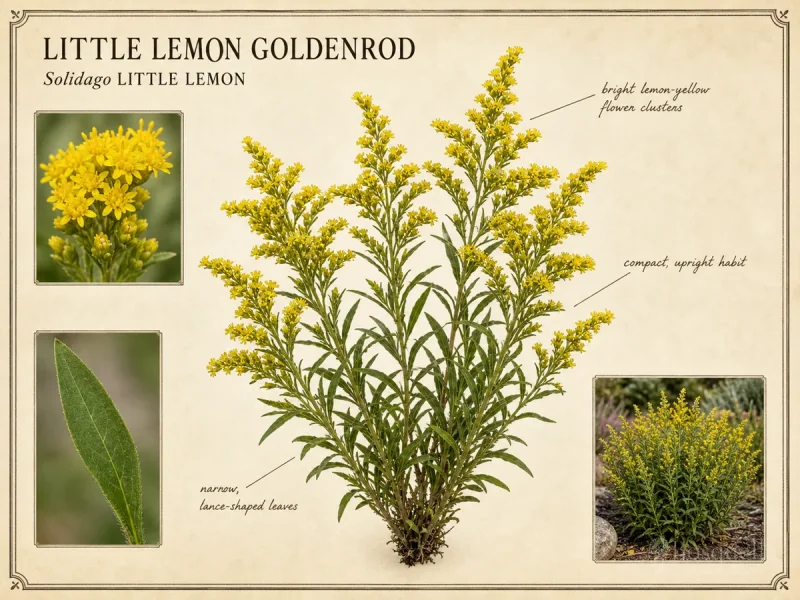
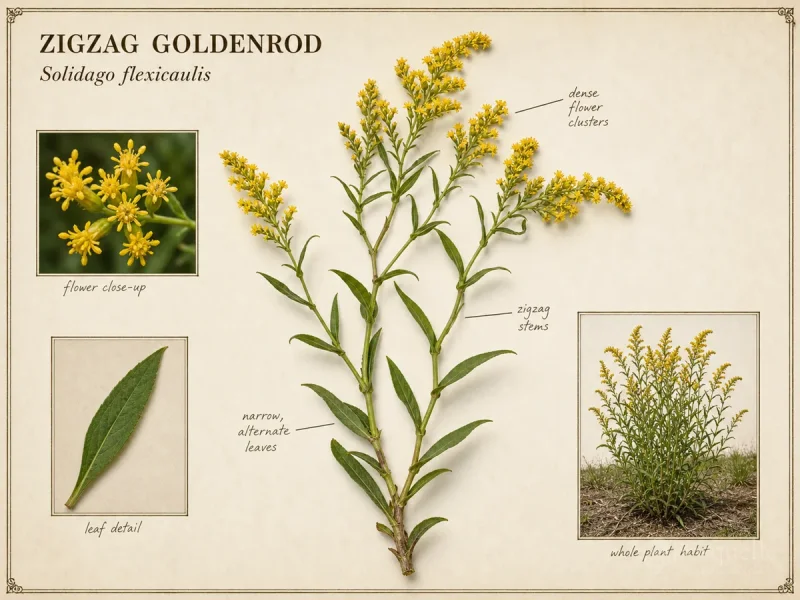
Garden clumps such as Solidago ‘Golden Fleece’, Solidago ‘Little Lemon’, and Solidago ‘Goldenmosa’ stay in a clearer bowl. Colony types such as Solidago canadensis, Solidago altissima, and Solidago gigantea map their own path. Woodland species such as Solidago caesia and Solidago flexicaulis want lighter shade than open prairie plumes.
Seaside types such as Solidago sempervirens forgive salt wind and sharper drainage.
If you cannot say which habit you bought, stop watering advice and reopen Types of Goldenrod. Same genus nickname, different spread and edit work.
Sun, soil, and water — lean usually wins
Most goldenrods want full sun and soils that are not constantly rich and wet. Lean to average ground keeps stems sturdier. Heavy feeding and irrigation push soft growth that lodges after the first autumn storm. Woodland types tolerate part shade; deep shade steals bloom.
Water new plants through the first season. Established clumpers often shrug off ordinary dry spells once roots lock. Wet feet in winter kill more dry-bank types than summer drought does. Mulch lightly; keep mulch off the crown.
Seaside and stiff / dry-lean types such as Oligoneuron rigidum appreciate sharper drainage. Some meadow allies accept more moisture — still not a stagnant sump. Match the plant to the hydrology you already have. Do not copy a lawn-feed calendar onto a prairie clump.
Season rhythm — late yellow is the point
Spring: crowns wake; mark them so early cultivation does not slice late risers. Summer: foliage builds while other perennials flower — do not panic that goldenrod is “doing nothing.” Late summer into autumn: plumes open when pollinators need nectar.
Winter: leave stems for structure and seed eaters, or cut after hard frost if you need a tidy bed.
Deadhead if you want fewer seedlings from prolific species. Leave some seed heads if birds and winter silhouette matter more. Tall colony types seed and run — deadheading alone will not stop rhizomes.
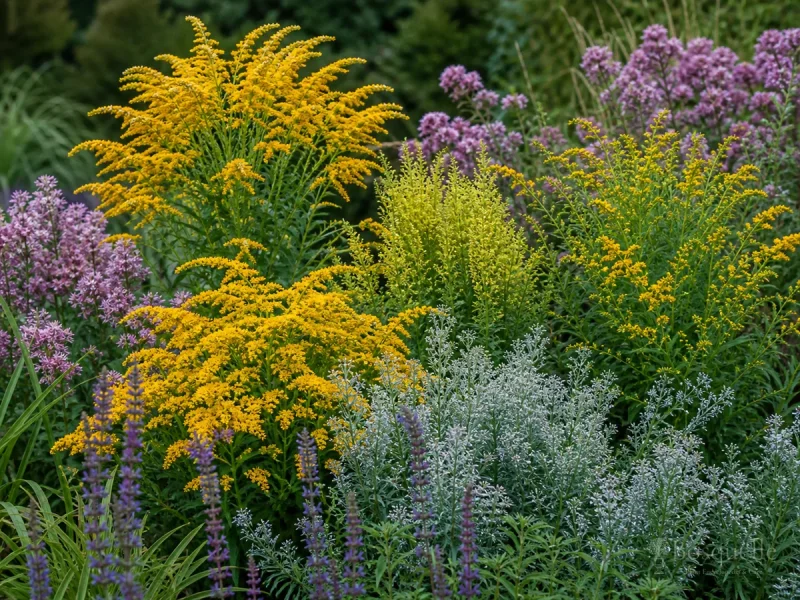
When neighbouring asters colour up, check whether your goldenrod still has sun and air. Summer fillers that were charming in June can shade the plumes if left uncut. Cut those neighbours back in August so the goldenrod stays in sun. That is maintenance, not a failed plant.
Staking, flop, and cut-back choices
Flop usually means too-rich soil, too little sun, or a tall species in a narrow border. Fix the site before buying stakes. If you must support a tall plume in a wind tunnel, stake early while stems are soft — not after a storm folds the patch into the path.
An early-summer tip pinch can shorten some vigorous types and delay bloom slightly — useful on tall runners you insist on keeping near a path. Do not chop woodland species into oblivion; know the plant first.
If stems lodge after a storm, cut the worst for the vase and leave the rest for pollinators. A partially groomed patch still feeds the season better than a cleared stump with no nectar left.
Pests, mildew, and stress signs
Goldenrod is tough. Occasional rust, leaf spots, or galls appear and rarely end the patch. Improve airflow, avoid overhead evening water, and remove badly marked stems if looks matter. Broad insecticides on a late-season nectar station undo the reason many people plant goldenrod.
Powdery mildew shows in wet crowded air. Thin congestion. Do not treat mildew with more fertiliser. Observe aphids and beetle chew without treating every mark as failure.
Sudden collapse in winter wet is usually a drainage fail on dry-bank types, not cold alone. Yellow old leaves plus wet soil: dry it, check the crown. Wilt in wet soil is not thirst.
Goldenrod in pots — a limited job
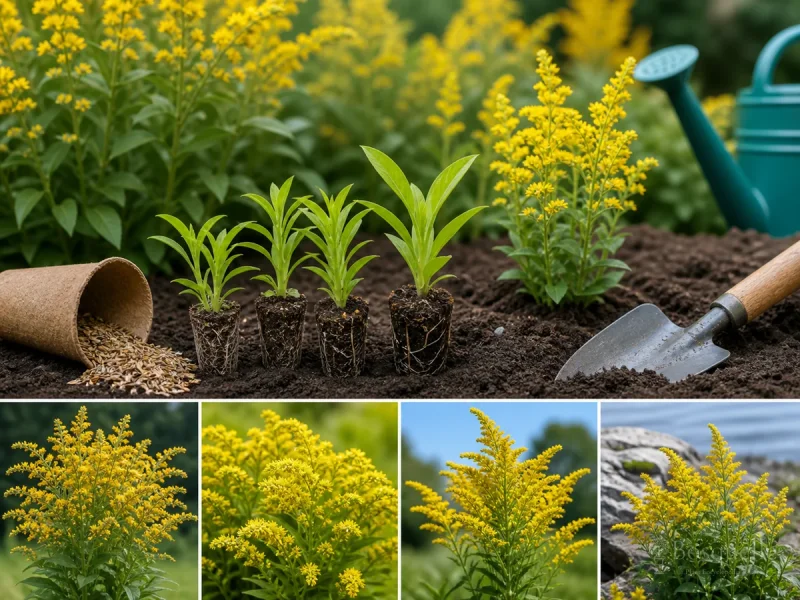
Dwarf clumpers such as Solidago ‘Little Lemon’ can live a season or two in deep pots with full sun and lean mix. Tall colony species outgrow containers. If you pot, water more evenly than in ground and plan to divide or plant into ground when roots circle. Patio pots still need lean nutrition.
A weekly liquid feed turns a compact clump into a soft flop beside the grill.
This cluster has no dedicated containers URL. Pots are a trial, not the default. Open-ground culture stays the care path.
Division and relocation
Clumping garden types divide kindly in cool spring or early autumn when soil is workable. Discard weak centres; replant firm fans at the same depth. Tall runners divide themselves — your job is containment, not coaxing more spread. Do not move a mature meadow colony into a tiny formal bed and act surprised.
Label divisions. Little Lemon and Fireworks are not interchangeable with Canada goldenrod just because both are yellow in September. When relocating a clump, dig a wide root ball and replant the same day. Water to settle — then return to the lean rhythm that keeps stems upright.
Full spacing and containment live on Planting Goldenrod. Habit bands live on Types of Goldenrod.
Write the habit on a stake the day you plant: clump, colony, or woodland. If new shoots appear a hand-span away from last month’s crown, treat it as a runner whether the catalogue smiled or not.
Winter wet kills more dry-bank crowns than gardeners expect. If your soil sits glossy after rain, raise the bed or add grit before you blame the variety. Raised edges under stiff and seaside types are not optional cosmetics.
Late nectar is real for bees and butterflies when many garden flowers are finished. That habitat value does not require planting the most aggressive rhizome species beside the driveway. Choose a clumping cultivar for small gardens and still feed the season.
Give prairie goldenrod full sun and lean soil, manage colony types with an edit strip, keep the ragweed distinction, then open child guides for types, partners, and planting.
FAQ
Does goldenrod cause allergies?
Goldenrod pollen is mostly insect-carried. Late-summer hay fever is often ragweed blooming at the same time — separate the myth from rhizome regrets.
Is goldenrod invasive in gardens?
Some species run hard (Canada, tall, giant). Garden cultivars like Fireworks or Little Lemon are usually better border citizens — still check habit.
How much sun does goldenrod need?
Full sun for most prairie types. Woodland species tolerate part shade; deep shade steals bloom.
Should I fertilise goldenrod?
Usually no. Rich soft growth flops. Lean to average soil is the default.
When does goldenrod bloom?
Late summer into autumn for most garden types — that late nectar window is the point.
Can I grow goldenrod in pots?
Dwarf clumpers can manage in deep pots short-term. Tall runners belong in ground.
How do I stop goldenrod spreading?
Choose clumping cultivars, use edit strips or mow paths, and pull seedlings early. Rhizomes ignore deadheading alone.
Is stiff goldenrod a Solidago?
Often listed as Oligoneuron rigidum — a goldenrod ally with its own stiff habit; treat moisture and spread notes on the profile.
Should I cut goldenrod back in winter?
Optional. Leave stems for structure and seed eaters, or cut after hard frost if you need a tidy bed.
Why is my goldenrod floppy?
Usually too much richness, irrigation, or shade — or a tall species in a narrow border. Fix the site before permanent staking.
Related guides
Recommended plants




This note is part of Solidago Guides.
More first-season notes by plant are gathered in How to Grow Guides.
Updated: Reviewed by Bosquelle Editors