
Plant a nursery fringed orchid with the crown even with the soil. Do not dig a wild plant from a bog.

Set a nursery plant with the crown at the soil
| Factor | Recommended | Avoid |
|---|---|---|
| When | Spring as new shoots start, or fall after the leaves die back | Do not plant a dried-out bare root in midsummer heat |
| Depth | Crown even with the surrounding soil, or about half an inch under | Do not bury the crown, and do not shake the nursery mix off the roots |
| Spacing | About twelve inches between plants | Do not crowd crowns so new shoots have no air |
| Hole | A wet, acidic bog, meadow, or pond margin; leave the mix on the roots | Do not drop it in a submerged pond basket, or in a sealed puddle with no outlet |
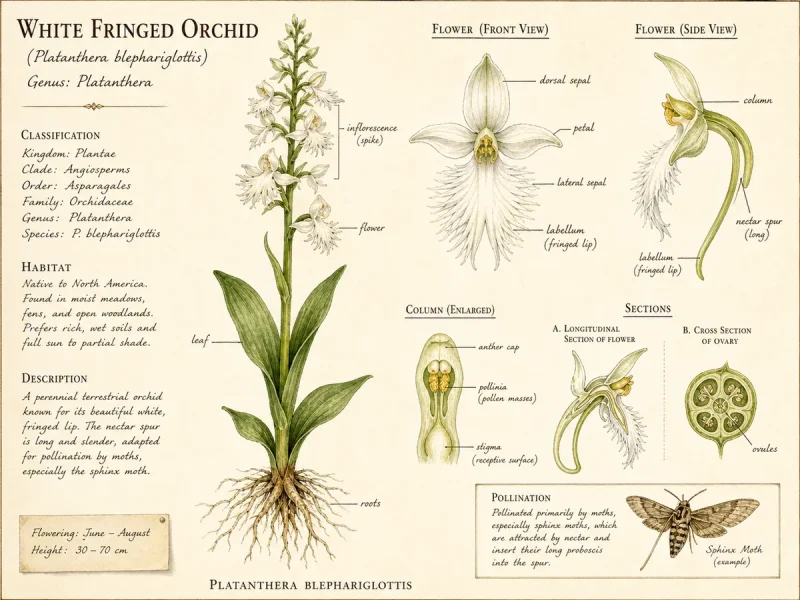
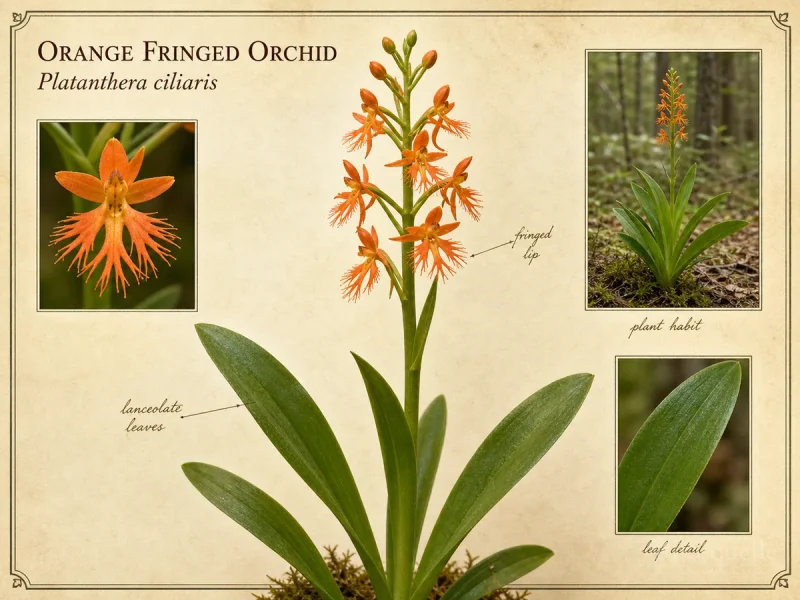
Buy a nursery-propagated plant. Set the crown even with the surrounding soil, at the same depth it sat in the pot, then water to settle. [1] white fringed orchid and orange fringed orchid take that same crown-at-soil set.
How deep do I set the plant?
Set the crown even with the soil, at the same depth as the nursery pot, or about half an inch under. Do not bury the crown, and do not shake the mix off the roots.
How to plant a fringed orchid
Plant one nursery plant at a time in a prepared hole, with the mix still on the roots, then keep the new hole wet.
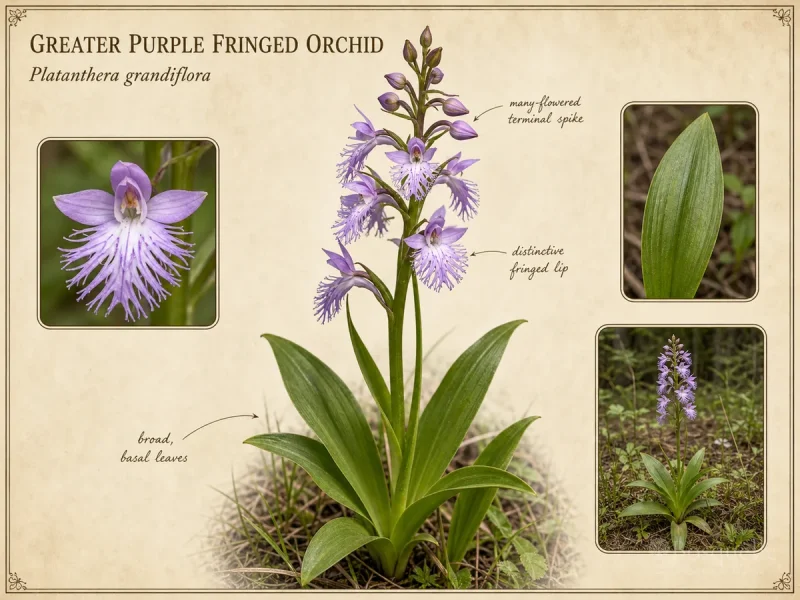
- Confirm a white, orange, or purple kind on the tag. If the tag is only a shop name, match it on Types of Fringed Orchid.
- Plant in spring as new shoots start, or in fall when growth has stopped. Do not let a bare root dry on the bench.
- Dig a hole as deep as the pot and a little wider. Slide the plant out. Leave the nursery mix on the roots, because that mix holds the fungus the orchid needs.
- Set the crown even with the surrounding soil, or about half an inch under. Do not bury the growing point. [2]
- Space plants about twelve inches apart. Backfill, firm gently, and water in with rainwater if your tap is hard. [3] After planting, sun, moisture, and rest are on How to Grow Fringed Orchid. Buy nursery stock — do not plant a wild-dug root.
When should I plant fringed orchid?
Spring as shoots start, or fall after the leaves die back. Do not plant a dried-out root in hot weather.
Divide in fall after the leaves die back
If a nursery clump has made extra crowns, split it in fall after the leaves die back, or in very early spring before growth starts. Keep the mix on each piece, and replant at the same depth the same day. Do not split a small first-year plant. [4]
Can I divide fringed orchid?
Yes, in fall after dieback, if the clump has extra crowns. Keep the mix on the roots and replant at the same depth. A first-year plant is not ready.
What fails at planting
Burying the crown in cold, wet soil smothers the new shoot, and shaking the mix off the roots strips the fungus the plant needs, so the transplant often dies. A root left dry on the bench rarely leafs out. A wild-dug plant is often protected, and it usually dies after a move. Crowding plants a few inches apart leaves no room for new shoots, and a sealed puddle in summer heat rots the fleshy roots.
If the crown is buried, lift it and reset it even with the soil this week — do not wait for a missing spike next summer.
FAQ
Can I grow fringed orchid from seed?
Garden plants come from a nursery. The dust-fine seed needs a fungus to germinate, so a flask or a lab is not a backyard job.
Can I divide instead of planting a nursery plant?
Only if you already have a crowded clump. Split it in fall after dieback and replant the same day. A first-year plant is not ready.
Can I dig one from a bog?
No. Buy nursery plants. Wild plants are often protected, and they usually die after a move because they lose the fungus in the soil.
Related guides


Recommended plants
References
- [1] NC State Extension Gardener -
https://plants.ces.ncsu.edu/plants/platanthera-ciliaris/ - [2] Carnivorous Plant Nursery -
https://carnivorousplantnursery.com/blogs/general-growing-and-care/growing-tips-for-bog-orchids - [3] Gardenia -
https://www.gardenia.net/plant/platanthera-blephariglottis - [4] Gardenia -
https://www.gardenia.net/plant/platanthera-ciliaris
This note is part of Platanthera Guides.
More planting notes by plant are gathered in Planting Guides.
Updated: Reviewed by Bosquelle Editors