
Plant Fargesia in spring, at the same depth it grew in the pot. Space a hedge on center. You do not install a running-bamboo barrier for this genus.

Plant in spring, at the same depth as the pot
| Factor | Recommended | Avoid |
|---|---|---|
| When | Spring, so the clump can settle before its first winter | Do not set a new plant out into late fall with no time to root |
| Depth | The same depth as the nursery pot; do not bury the culms | Do not plant deeper to hide the rhizomes |
| Hole | About twice as wide as the root ball, in soil that drains | Do not drop the plant into a waterlogged pit |
| Spacing | About 3 to 5 feet on center for a quicker hedge | Do not set a screen on a 12-inch patio grid |
In a mild winter you can plant most of the year. In a climate with a hard freeze, plant early enough that the clump can take hold before winter wind hits. [1] Sun, watering, and thinning stay on How to Grow Fargesia. Kind stays on Types of Fargesia.
When should I plant Fargesia?
In spring, so the clump can settle before its first winter. In a mild winter, most of the year is fine.
How to plant Fargesia
- Dig a hole about twice as wide as the root ball. Keep it no deeper than the pot, or only a little deeper if you will set the plant back to the old soil line. [2]
- Slide the plant out. Set it so the top of the root ball sits at the same level it grew in the nursery pot. Do not bury the culms.
- Backfill with the native soil mixed with compost. Firm the soil so there are no air pockets, then water until the hole settles.
- Mulch around the clump, keeping mulch off the culms. For a privacy row, space plants about 3 to 5 feet on center, from the center of one root ball to the next. [3]
How deep do I plant it?
Set the root ball at the same depth it grew in the pot. Planting too deep in wet soil is the main reason a new clump rots.
What fails at planting
A hole that holds water around the rhizomes is the main reason a new clump rots. Planting deeper than the pot smothers new shoots. A running-bamboo HDPE sheet is the method for Phyllostachys, not for Fargesia — this genus stays in a clump that widens slowly. Do not treat a lucky-bamboo vase as this plant.
Do I need a rhizome barrier?
No. Fargesia is a clumper. A barrier is for running bamboo. Give the clump room to widen, and do not plant it into a bog.
Divide a crowded clump — don’t wait on seed
These plants flower on a long cycle and rarely set useful seed in a home garden. To make a second plant, divide a section of the clump in late winter or early spring, before new shoots run.
- Water the clump the day before so the soil holds together.
- Cut through the root mass with a saw or a sharp spade. Take several culms with roots attached. Cut the tops back to about one-third so the division does not dry out. [4]
- Pot the piece in a draining mix, and keep it in bright shade with even moisture until new growth holds. Then plant it at the same depth as the pot.
Can I divide an established clump?
Yes. Late winter or early spring is the usual window. Take culms with roots, cut the tops back, and keep the division moist in shade until it recovers.
If the hole still holds water an hour after you water, move the plant to draining ground now — a soggy set is the main reason a new clump rots.
FAQ
Can I start Fargesia from seed?
Seed is rare and slow, and it usually follows a flowering year. Buy a potted plant or divide a clump you already have.
Can I take a culm cutting?
Division is the reliable home method. Cuttings of young rhizomes are a nursery job, not a vase cutting.
Related guides

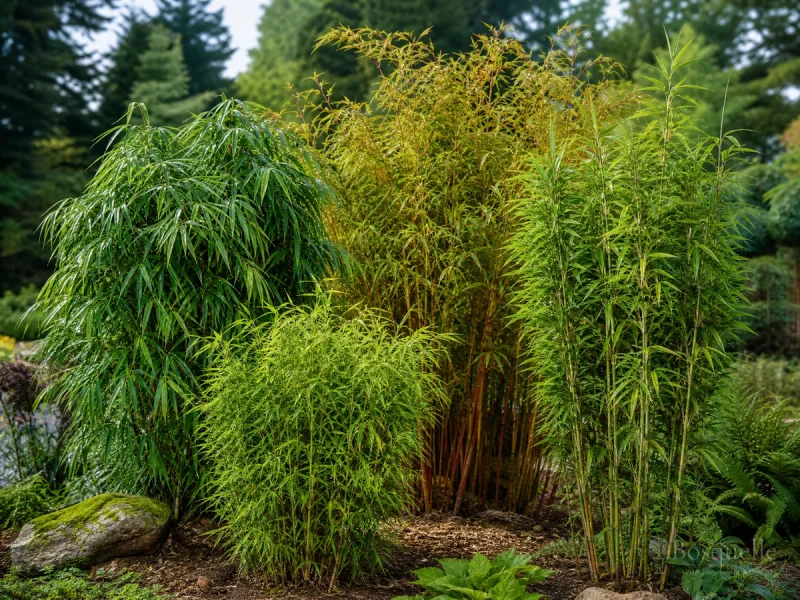
Recommended plants


References
- [1] American Bamboo Society -
https://www.bamboo.org/bamboo-planting-and-care/ - [2] Bamboo Plants Online -
https://bambooplantsonline.com/blogs/blog/77808388-diy-guide-on-how-to-plant-clumping-bamboo - [3] Wilson Bros Gardens -
https://www.wilsonbrosgardens.com/spacing-bamboo-for-hedge-or-privacy-screen.html - [4] Beautiful Bamboo -
https://beautifulbamboo.com/how-do-i-divide-off-a-section-of-a-clumping-bamboo/
This note is part of Fargesia Guides.
More planting notes by plant are gathered in Planting Guides.
Updated: Reviewed by Bosquelle Editors