
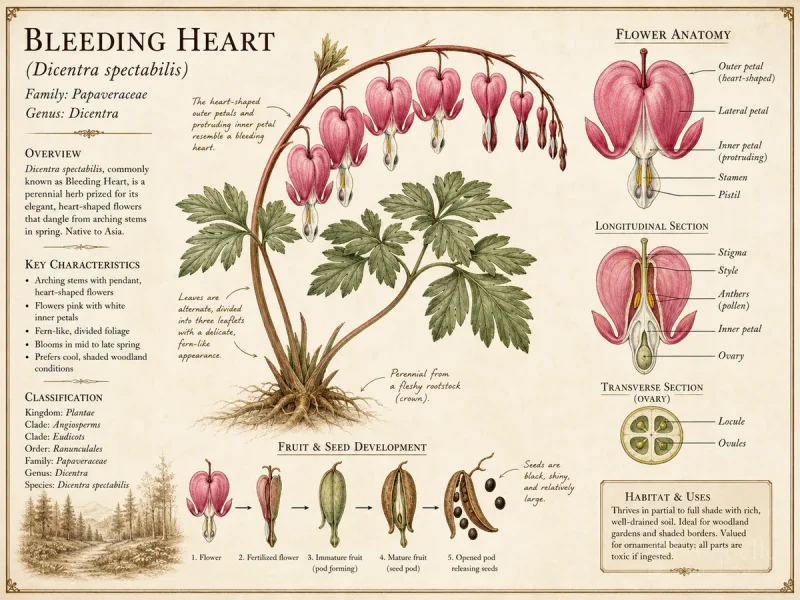
Plant bleeding heart in spring or fall, crown shallow, eyes up, in moist shade. Roots are brittle — do not tease them. D. spectabilis needs about 24 inches; 'Luxuriant' sits closer. Native D. cucullaria is a woodland scale, not a cottage spacing. Shade and dormancy stay on How to Grow Bleeding Heart.

When and where to plant bleeding heart
Pennsylvania Extension: early spring or fall. White Flower Farm: potted plants with the crown at soil level; bareroot spectabilis about 2 inches below the soil line, smaller kinds about 1 inch. Almanac: loosen a foot deep, mix in organic matter, tubers about an inch down, space old-fashioned clumps about 24 inches. Wisconsin Horticulture: well-drained soil — soggy ground rots the fleshy roots.
- Choose light shade or morning sun. Hot afternoon sun in dry soil forces early dormancy on spectabilis.
- Spring plant-out as shoots show, or fall while dormant. Avoid midsummer moves on a sleeping clump you cannot see.
- Same moist, draining woodland soil as on How to Grow.
- D. cucullaria wants a woodland pocket, not a 24-inch cottage spacing copied from spectabilis.
How to plant, step by step
- Dig a hole twice as wide as the root ball (Pennsylvania Extension). Mix leaf mold or compost into the backfill if the soil is poor.
- Set a potted plant with the crown at soil level. Set bareroot spectabilis about 1–2 inches below the surface, eyes (buds) up. Do not bury the crown under a wet mulch mound.
- Handle roots as little as you can — they snap. Do not tease a tight ball apart.
- Backfill, firm gently, water to settle. Mulch to hold moisture, kept off the crown.
- Mark the clump with a stake the same day. You will need that marker when foliage disappears in summer.
If a heat wave hits the week after planting, temporary shade beats drowning the crown. Keep even moisture while roots take hold.
Spacing and dividing clumps
- Spacing: about 24 inches for old-fashioned spectabilis (Almanac). Fernleaf closer, about 12–18 inches. Leave room for hosta or ferns beside spectabilis, not on the crown.
- When to divide: early spring as growth begins (White Flower Farm). Gently separate brittle roots; replant vigorous pieces from the outer edge. Pennsylvania Extension also allows late fall. Avoid dividing a dormant spectabilis in high summer when you cannot see the eyes.
- How: lift with a fork. Each piece needs buds and roots. Discard soft rotten sections. Replant promptly at the same shallow depth. Water to settle.
- After: even moisture, shade. Division is not a cure for a winter-wet crown. Fix drainage first.
Partners that cover the summer gap live on Bleeding Heart Companion Plants. Class (old-fashioned vs fernleaf) lives on Types of Bleeding Heart.
FAQ
When should I plant bleeding heart?
Spring or fall. Set plants while dormant or just emerging. Avoid digging a sleeping clump in July.
How deep do I plant bleeding heart?
Crown at soil level for pots; about 1–2 inches below for bareroot spectabilis, eyes up. Do not bury the crown under wet mulch.
How far apart should I space bleeding heart?
About 24 inches for old-fashioned clumps; closer for fernleaf. Leave a collar for summer cover plants.
When can I divide bleeding heart?
Early spring as growth begins. Roots are brittle — separate gently. Late fall is a second window.
Can I plant bleeding heart in sun?
Morning sun is fine. Hot afternoon sun in dry soil forces early dormancy on spectabilis.
Do I fertilize at planting?
Compost in the hole is enough. Heavy feed on a wet crown invites rot.
Why did my new plant not come up?
Crown too deep, roots broken, or winter wet. Check depth and drainage before replacing.
Can I plant in summer when it looks dead?
Wait until you can see the crown, or plant in fall. Summer “empty” soil is often a dormant spectabilis.
Related guides


Recommended plants




This note is part of Dicentra Guides.
More planting notes by plant are gathered in Planting Guides.
Updated: Reviewed by Bosquelle Editors