
Plant bergenia in fall or spring in workable soil. Set the thick rhizome on or just below the surface — never deep. Space about 12–18 inches for cover, wider for a loose edge. When the center goes bare, divide. Do not run this depth on a tropical elephant ear tuber, and do not treat B. ciliata as a reason to bury 'Winter Glow'.

When to plant
| Factor | Recommended | Avoid |
|---|---|---|
| Season | Fall or spring, soil workable | Frozen ground; a parched midsummer hole |
| Depth | Rhizome on or just below the surface | Deep burial like a hosta crown |
| Spacing | 12–18 inches for cover; wider for a ribbon | Crowding against a shrub trunk |
| Water | Water in; keep even moisture until established | A puddle on a buried stem |
Fall planting gives roots a cool window before spring bloom. Royal Horticultural Society: early fall is ideal, and you can plant any time the ground is not frozen, waterlogged, or parched. Spring after frost is the other easy window. Water the first season either way. Site light still follows How to Grow Bergenia.
A nursery pot with an already exposed rhizome is normal. Do not cover that stem with extra inches of soil “to hide it.” Leave it proud. Mulch around, not on, the crown.
Seed is slow and may not come true. Buy a clump or a division. If a seed packet appears, treat it as a specialist experiment, not this checklist.
How to plant bergenia
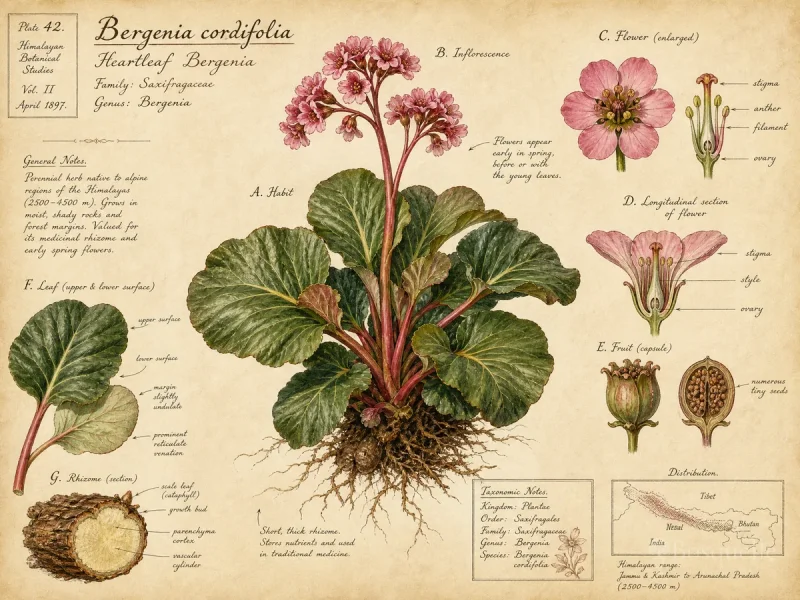
The thick piece is a rhizome — a creeping stem — not a deep tuber. Set it where you can still see the top after backfill.
- Water the nursery pot. Slide the plant out. Tease circling roots without snapping the rhizome.
- Dig a hole as deep as the root mass and a little wider. Mix compost into the backfill. Add grit if the hole ponds.
- Set the plant so the rhizome sits on or just below the soil. The leaf rosette stays above grade. Do not bury the growing point.
- Space 12–18 inches apart for a knit of leaves in two to three seasons. Use about 18–24 inches for a looser path ribbon.
- Backfill, firm lightly, and water once to settle. Mulch the soil, not the crown. Keep moisture even until new leaves show.
- If you are planting a division, each piece needs roots and at least one leaf or bud. Discard the woody, leafless center.
Winter-color versus white flower versus fringed B. ciliata lives on Types of Bergenia. Depth does not change with flower color. B. ciliata still sits shallow; it may simply hold fewer leaves after a freeze.
Mark the clump. The first year looks modest. That is normal. Do not dig it up in July to check the rhizome.
Stagger the row so leaves knit without stacking wet on wet. A straight soldier line is fine along a path; in a bed, a slight zigzag covers weeds faster. Do not plant against a south wall that bakes unless you can water. Do not plant in a gutter that holds ice.
Firm the soil so the rhizome does not rock and dry. A wobble in week one is a plant that never roots. Press with your palm, not a stomp that buries the stem. Water again if the mix settles and exposes roots — add a little soil around, still not over, the crown.
Divide a bare center, and what fails at plant-out
After four or five years the middle can go woody and flower-poor. Lift the clump in fall or after bloom in spring. Cut away the old center. Replant the live outer rhizomes at the same shallow depth, 12–18 inches apart, and water them in. Divisions usually bloom the next spring.
Missouri Botanical Garden: pigsqueak is a slowly spreading clump of leathery leaves; do not fight that pace by burying it. What fails at plant-out: deep burial; a puddle; midsummer heat without water; planting on a frozen day; covering an exposed rhizome with extra soil; seed as the stand-in for a clump; setting a tropical elephant ear at this depth and calling it bergenia.
Week one: if the soil crusts dry, water. If it ponds, lift and reset shallower with grit. Slug-watch new leaves. Do not fertilize a soggy new crown. A light compost dressing at plant-out is enough.
If nothing moves after a cool month, the piece may have had no bud. Open a spare: a firm rhizome with a leaf or an eye is what you wanted on day one. Soft mush is rot from depth or water.
After divide, treat the new pieces like first-year plants: even moisture, no deep burial, slug watch. The mother site may look thin for a season. That is the reset, not a reason to flood. Compost the woody center; do not replant it hoping it will wake.
A pot-grown plant in flower can still be planted if you keep the rhizome shallow and the mix moist. Cut the spike if the plant wilts hard after plant-out — the leaf matters more the first year. Do not add a second clump in the same hole to “fill” a modest start.
Plant in fall or spring. Set the rhizome on or just below the soil, 12–18 inches apart, and water in. Divide a woody center and keep pieces with a leaf and roots. Do not bury the crown, and do not use seed as the main method.
FAQ
When should I plant bergenia?
Fall or spring, when the soil is workable. Skip frozen ground and midsummer drought.
How deep do I plant bergenia?
The rhizome sits on or just below the surface. Do not bury it like a hosta.
How far apart?
About 12–18 inches for cover. Wider if you want a loose ribbon along a path.
Can I plant bergenia in summer?
Only with careful water. Fall or spring is kinder to a new rhizome.
The nursery plant already shows a rhizome. Is that bad?
No. A partly exposed rhizome is the correct depth. Do not bury it.
When do I divide bergenia?
When the center is bare, every few years, in fall or after spring bloom. Keep pieces with a leaf and roots.
Do I soak bergenia like a ranunculus corm?
No. This is a rhizome clump, not a florist corm. Plant from a pot or a division.
Should I grow bergenia from seed?
Not as the usual home method. Divide, or buy a plant. Seed is slow and may not match the parent.
Do I water right after planting?
Yes. Water in, then keep even moisture until the clump is established. Empty any saucer on a pot.
Related guides

Recommended plants



This note is part of Bergenia Guides.
More planting notes by plant are gathered in Planting Guides.
Updated: Reviewed by Bosquelle Editors