
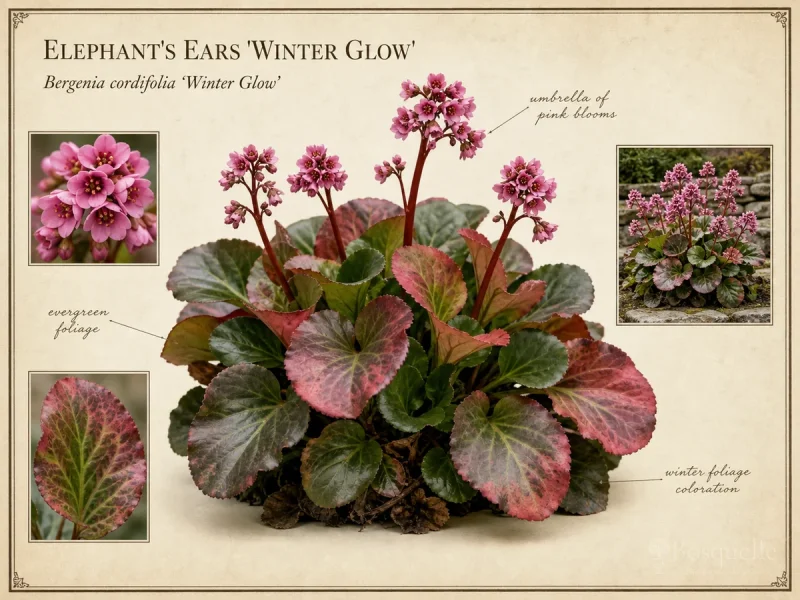
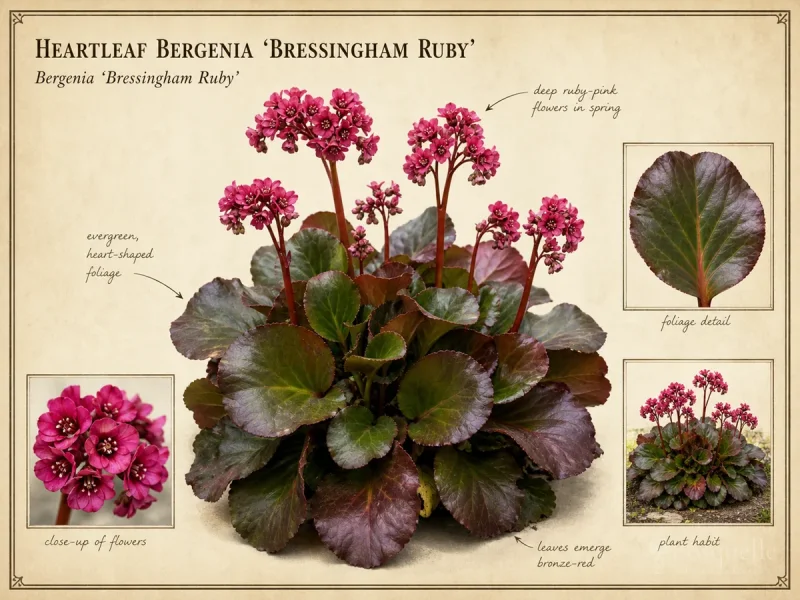
Bergenia (pigsqueak — rub two leaves and they squeak) is an evergreen rhizome clump with leathery rounded leaves. Cold often turns the foliage bronze or ruby on packs such as 'Winter Glow' and 'Bressingham Ruby'. Spring spikes of pink or white sit on that winter leaf, they do not replace it. Keep the rhizome on or just below the soil. Water the first year. B. ciliata is a fringed species that is not the same glossy winter-color crop.

Shade, sun, and even moisture
| Factor | Recommended | Avoid |
|---|---|---|
| Light | Part shade; sun if the soil stays moist; afternoon shade in heat | Hot dry full sun that scorches leaves |
| Soil | Ordinary garden soil that drains; compost mixed in | A buried rhizome in a puddle; powder-dry sand the first summer |
| Water | Even moisture the first year; established clumps take dry shade | Drought on a new plant; standing water on a deep-set crown |
| Winter | Cold that colors winter-color packs | Expecting every species to stay glossy green after a hard freeze |
| After bloom | Cut spent spikes; pull tatty leaves in late winter | Shearing all leaves in July like a hedge |
Give bergenia part shade, or sun with moisture. Missouri Botanical Garden: grows in part shade, prefers humusy soil that stays moist, and the leaves turn purplish-bronze in winter on 'Winter Glow'. In heat, afternoon shade beats a west wall. Deep shade still makes a leaf clump; flower spikes are fewer. Dry full sun scorches the leathery leaf — that is site, not a need for more fertilizer.
- Pick a woodland edge, a path front, or a north or east bed that does not bake. Full sun is fine only where the soil stays moist.
- Loosen the soil and mix in compost. Add grit if the hole ponds after rain. Do not bury the rhizome to “hide” it.
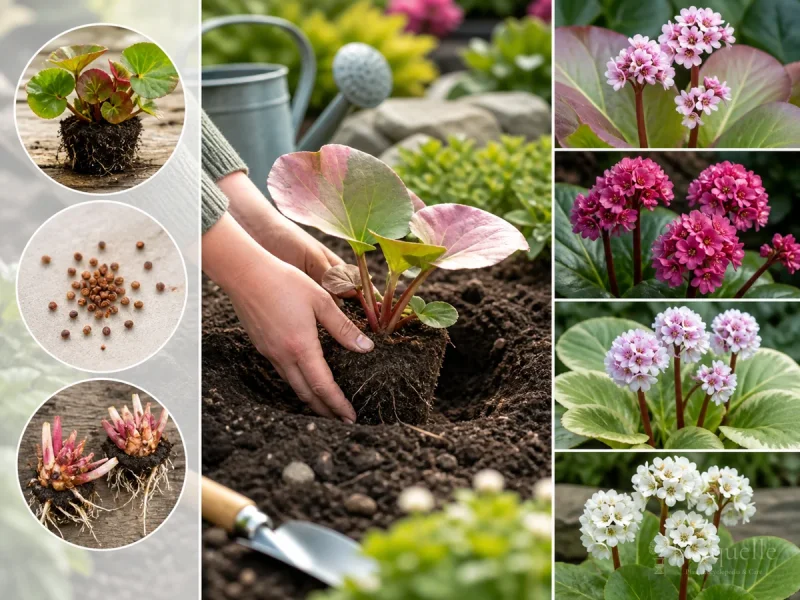
- Set the plant with the thick rhizome on or just below the surface. Water in. Keep moisture even the first growing season.
- Mulch around the clump, not on the crown. Leave the leaves on through winter — they are the show and the food factory.
- In late winter, pull leaves that are torn or rotten. Deadhead spent spikes after bloom. Do not cut the whole clump to the ground in summer.
Established clumps take poor soil and dry shade better than a new plant. The first-year can still needs regular water. A downpipe splash that drains is useful; a sump that never dries is rot on a buried crown. Check the day after rain: water should leave the planting strip. If it stands, raise the clump or add grit before you buy a second plant.
Sandy soil in sun dries the leaf edge even when the rhizome is shallow. Mulch helps, but keep it off the stem. Clay that drains after a day is fine. Clay that stays a puddle is not. You do not need a special mix bag for open ground if the site already sheds water and holds a little moisture in summer.
Deer and rabbits usually skip the leathery leaf. Slugs chew new growth in wet springs — pick them, or bait, rather than flooding the crown. Aphids can line a flower spike; a water spray is enough. Do not soak the crown to wash pests off. A weekly high-nitrogen feed is the wrong fix for scorch or a missing spike.
Winter leaf color, spring spikes, and tatty leaves
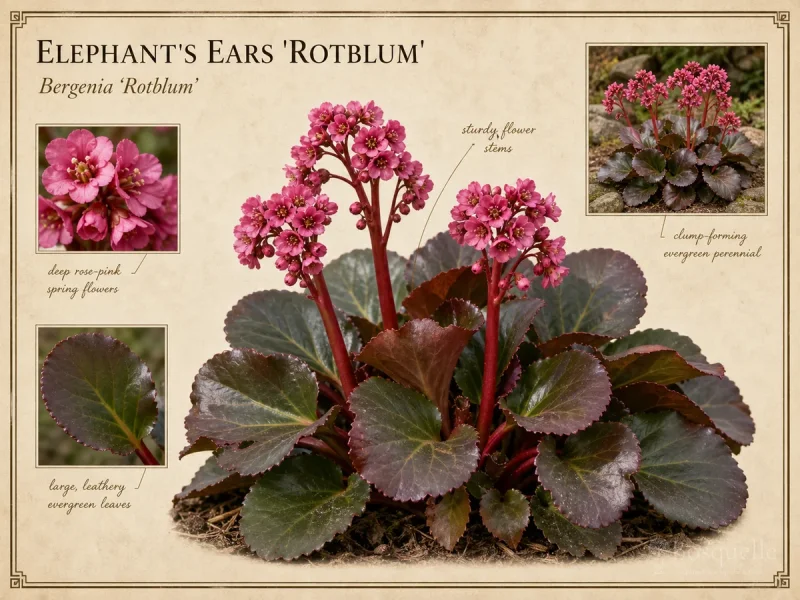
Cold, not short days alone, flushes bronze and ruby on winter-color packs. Royal Horticultural Society: the glossy leaves often take on reddish-purple hues in winter, and the plant earns its keep as evergreen ground cover in sun or shade. Plant 'Winter Glow' and 'Bressingham Ruby' where you will see them from a window in January. A sheltered courtyard that never gets cold will stay greener — that is weather, not a failed cultivar.
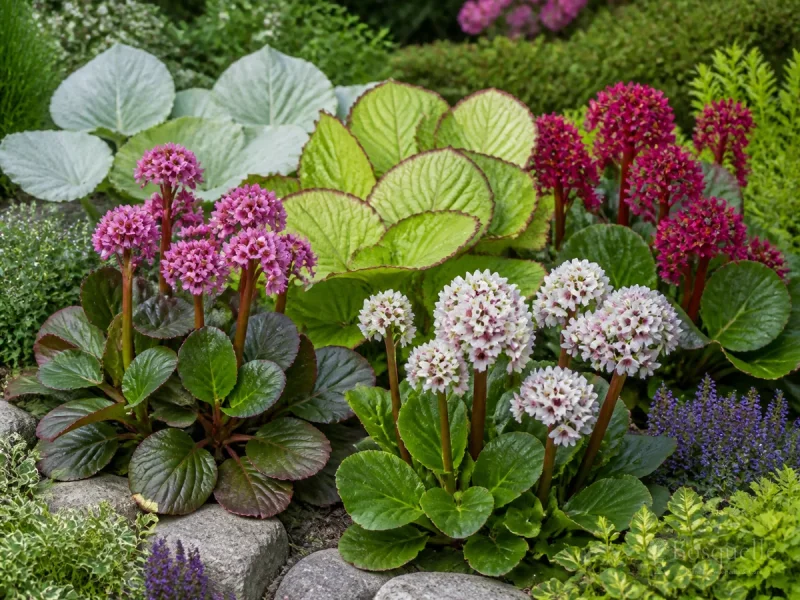
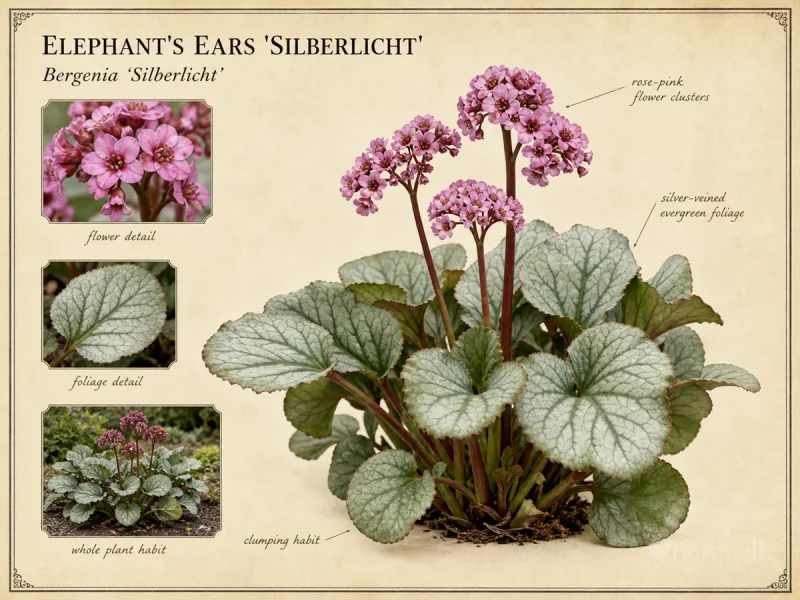
Spring flowers are clusters of pink, magenta, or white on stout stems. They are early nectar. Deadhead when they fade so the leaf stays tidy. Do not strip healthy winter-colored leaves to “make room” for the spike. The leaf was the winter job; the spike is extra.
Late winter, pull tatty or slug-eaten leaves by hand. New growth and flower stems show better. A few scarred leaves in February are normal. Replace them with the new flush, not with a summer haircut.
Poor soil can deepen winter tints and keep the clump tighter. Rich, wet soil makes lusher green leaves and fewer reds. Choose the look, then site it. Do not feed weekly hoping for more ruby — nitrogen makes leaf, not winter pigment.
If leaves stay green all winter on a pack sold for color, check sun and cold. Shade plus a mild winter equals green. B. ciliata may drop leaves in a freeze — that is the fringed species, not a watering miss on heartleaf bergenia.
A light frost on the leaf is normal and often the start of the bronze. Ice on a buried, wet rhizome is the failure mode. Keep the stem where air can reach it. Do not wrap the clump in plastic for winter. A loose leaf layer around, not on, the crown is enough in a hard snap.
Cut spikes when the bells fade, down to the leaf. Leave the foliage. If a late spring freeze blacks a spike, cut it; the leaf will still do the year. Do not strip a winter-red clump in March because the color looks “off” next to new green neighbors — that red is the point.
Rhizomes, slugs, and a bare center
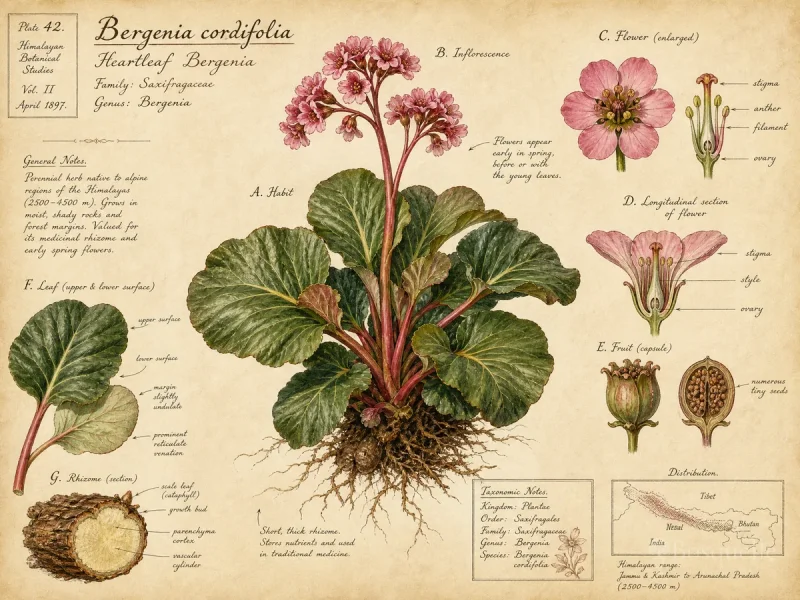
Bergenia spreads by a thick surface rhizome (the creeping stem — use rhizome after this). BBC Gardeners' World: divide congested clumps in spring or fall; discard the old woody center and replant sections that still have a leaf. A bare middle after several years is age, not a fertilizer miss. Lift, cut, and reset the live outer pieces on Planting Bergenia.
Slugs and snails notch new leaves in a wet spring. Check at dusk. Keep mulch off the crown so the rhizome can dry between rains. Vine weevil can nibble roots in pots more than in open ground. Knock the failing mix out, check for grubs, then replant in fresh draining mix.
No bloom is usually deep shade, a new clump, or a pack grown for leaf color in a site that never chills. Scorch is hot dry sun. Yellow mush at the crown is a buried rhizome in wet soil. Do not bury it deeper to “protect” it from frost — that is the rot depth.
Seed is slow and the seedlings may not match the parent. Home growers divide. Do not start this crop from seed as the main method.
A clump that never spreads is often planted too deep, or sitting in a dark, wet pocket. Reset it shallow in draining soil in fall or spring. A clump that runs into the lawn is the rhizome doing its job — lift the edge and reset, or give it a bed strip it can fill.
Leaf spots show in crowded, wet foliage. Pull the worst leaves, give air, and stop overhead watering. Do not compost badly diseased leaves onto the crown. New growth from a healthy rhizome is the recovery, not a fungicide calendar on a buried stem.
Pots, planting, and next jobs
A wide pot with drain holes can hold a rhizome for a patio, but the clump wants to run. Use a shallow-wide container, grit in the mix, and an empty saucer. Do not use a tall tree pot of wet mix. Move the pot to part shade in a heat wave. Winter-color packs still need cold to tint.
Set depth, spacing, and divide steps on Planting Bergenia. Winter-color versus white flower versus fringed B. ciliata lives on Types of Bergenia. Hellebore, fern, and hosta that share moist shade are partners — offset them so a giant hosta does not sit on the rhizome.
Open ground still beats a pot once the site is right. Empty saucers. When the center goes bare, divide; do not keep feeding a woody core.
Site bergenia in part shade or moist sun, with the rhizome on or just below the soil. Water the first year. Leave the leaves through winter so they can bronze. Pull tatty foliage in late winter and deadhead spent spikes. Divide a bare center; do not bury the crown or treat a mild green winter as a failed cultivar.
FAQ
Is bergenia a perennial?
Yes. It is a hardy evergreen rhizome clump. Fringed B. ciliata can be less evergreen in a hard freeze.
Is bergenia evergreen?
Heartleaf types keep leathery leaves year-round. Cold may bronze them. That color is the winter show, not a dying plant.
When should you plant bergenia?
Fall or spring, in workable soil. Avoid frozen ground and midsummer heat. Full steps are on Planting Bergenia.
Why are my bergenia leaves turning red?
Cold. Winter-color packs such as 'Winter Glow' flush bronze to ruby. Green all winter usually means mild weather or deep shade.
Does bergenia like sun or shade?
Part shade is the easy site. Sun works if the soil stays moist. Hot dry sun scorches.
How often should I water bergenia?
Keep new plants evenly moist the first year. Established clumps take dry shade. Do not leave the crown in a puddle.
Should I cut bergenia back in fall?
No. Leave the leaves for winter. Pull tatty ones in late winter. Deadhead spikes after bloom.
Can I grow bergenia in a pot?
Yes, a wide draining pot. The rhizome wants to run, so a pancake of wet mix is still wrong.
Is pigsqueak the same as elephant's ears?
Both are common names for this genus. It is not a Colocasia elephant ear, and it is not a begonia.
Related guides

Recommended plants



This note is part of Bergenia Guides.
More first-season notes by plant are gathered in How to Grow Guides.
Updated: Reviewed by Bosquelle Editors