
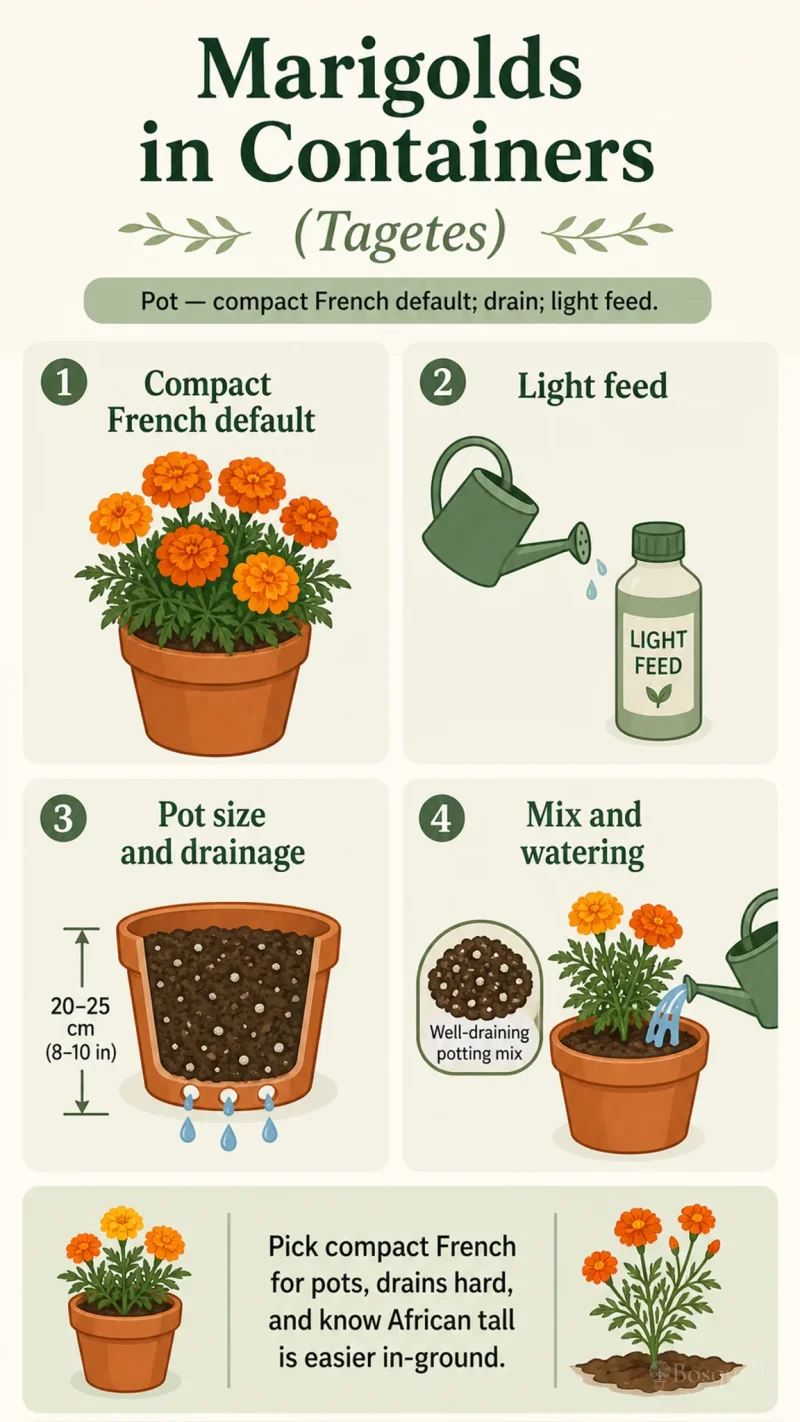
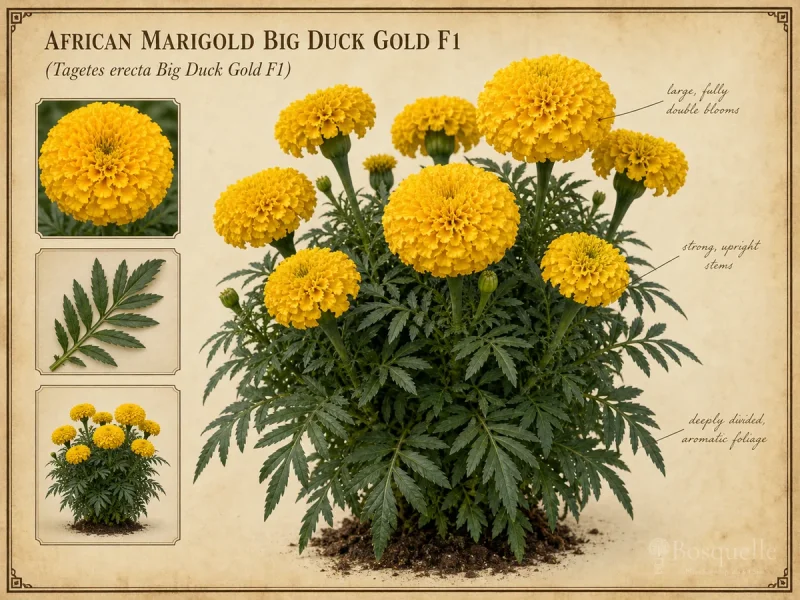
Compact French marigolds are the default for patio pots. They want a pot that drains, full sun, and spent heads snipped off. Tall African types need real pot volume or they flop and dry unevenly. Fireball is a compact French type. Big Duck Gold is a tall African type.
Sun, sow, and deadhead stay on How to Grow Marigolds.
A pot that drains
| Factor | Recommended | Avoid |
|---|---|---|
| Pot | Open drain holes; 8–12 inches across for compact French | A sealed cachepot with standing water |
| Mix | Fresh potting mix that drains | Garden clay packed in a small pot |
| Site | Full sun on the patio | A dark, wet corner under eaves |
Empty the saucer after rain. Wet mix in a sealed pot rots marigolds faster than a dry spell. Raise the pot on feet if it sits in a dish.
Use fresh mix each spring. Last year’s sour, packed mix holds wet and starves roots of air. Do not scoop garden soil into a 10-inch pot.
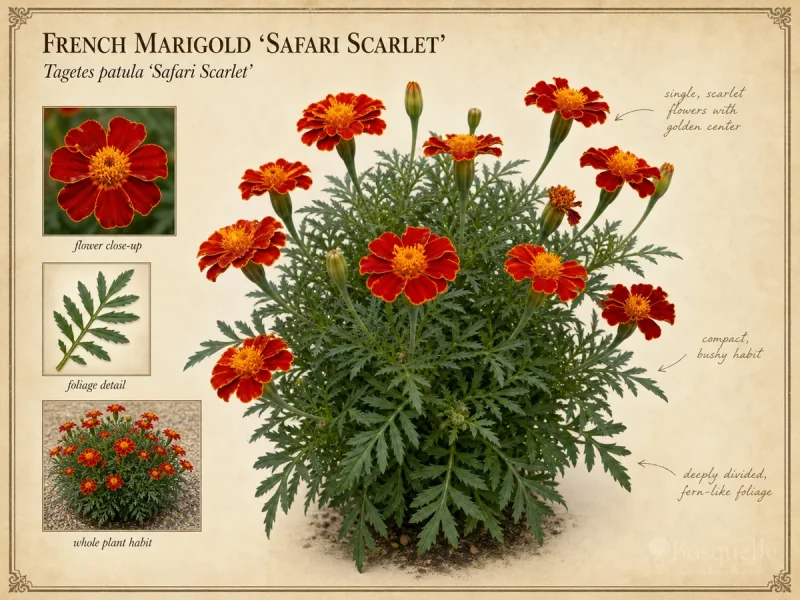
Fireball, Naughty Marietta, and Safari Scarlet fit a standard patio pot. They still need sun and drain. Compact is not a shade plant.
Potting marigolds
- Choose a pot with open drain holes. Add fresh potting mix, not garden clay.
- Set the plant at the same depth as the nursery pack. Firm the mix around the roots.
- Water until it runs from the holes. Empty the saucer after 15 minutes.
- Place in full sun. Turn the pot weekly so stems stay even.
- Deadhead spent heads above a leaf pair every week.
- At frost, pull the plants and empty the mix. Do not overwinter a blackened annual.
Shared growing rules live on How to Grow Marigolds. Height class: Types of Marigolds.
Space two compact plants in a 12-inch pot so air still moves. A jammed trough looks full in May and then mites in July.
Compact French vs tall African
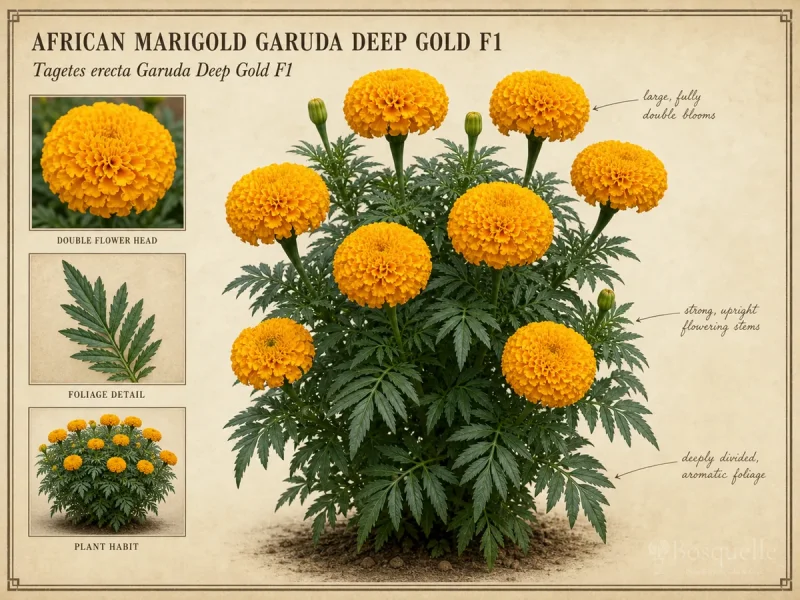
French types are the patio default. African types such as Big Duck Gold, Big Duck Orange, and Garuda Deep Gold need pot volume — a deep, stable tub, not a 6-inch trough. Without volume, tall stems flop and the mix dries on top while the base stays wet.
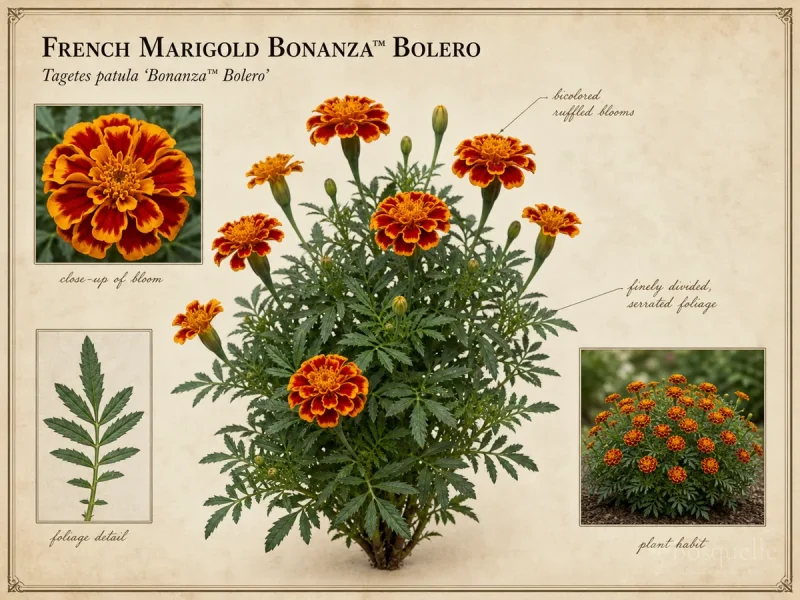
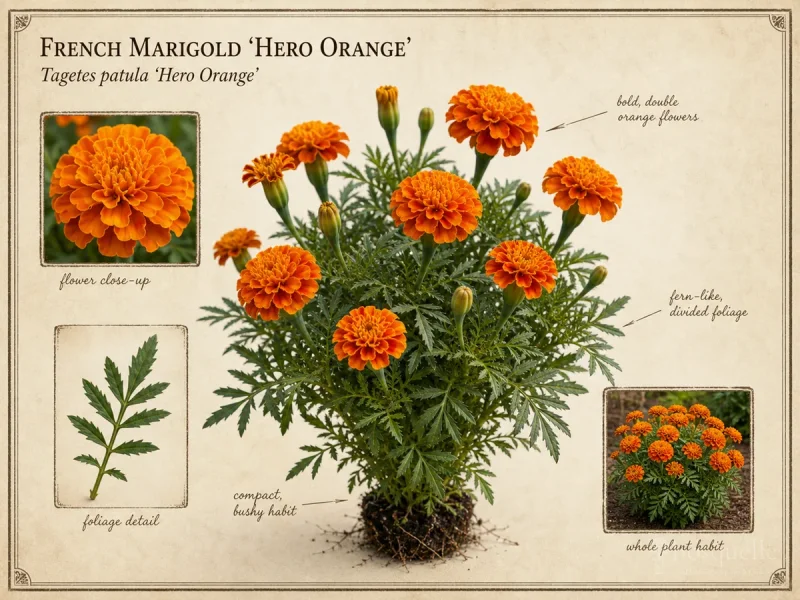
Series such as Bonanza Bolero and Hero Orange are French unless the tag says erecta. Read height before you fill a window box.
One tall African in a whiskey-barrel tub can work. Three tall Africans in a shallow bowl will not. Match plant to volume.
Signet mounds also fit pots. They still want drain and sun. Do not treat them as a wet-shade filler.
Water, heat, and frost finish
Pots dry faster than beds, especially on paving. Water when the top inch is dry. Soak until water leaves the holes. Do not leave the pot in a puddled saucer in afternoon heat.
Hot, dusty patios invite spider mites. Rinse leaf undersides. Do not let the mix go bone-dry for days, then flood. Even moisture beats that swing.
Feed lightly if the mix is poor. A bloom fertilizer every few weeks is enough. Heavy nitrogen makes leaves and few flowers in a pot too.
Hard frost ends bedding marigolds. Empty the pot. Plan a fresh pack or sowing next spring. This is the annual finish, not a failed overwinter.
If paving reflects heat, water more often and choose compact French types. Tall African foliage scorches and mites first on a black driveway.
Do not move a sun type into shade to “save water.” You will lose bloom and keep the mix wet. Keep sun. Adjust the soak.
A cachepot without holes is decoration. Keep the nursery pot inside it only if you can lift it out to drain. Standing water in the shell rots the mix.
After a storm, empty saucers. Wind can flop a tall African even in a heavy tub. Stake that plant, or grow French types next year.
Label the pot with class. Next May you will not remember which orange needed volume. Color is easy to swap. Pot size is not.
If two instincts compete — cram every color into one bowl versus one well-drained French pot — grow the drained pot. A sour mix wastes the summer.
Store unused mix dry and sealed. Wet bags grow fungus. Fresh mix in spring is cheaper than replacing a rotted row in June.
When you deadhead, drop the spent heads in the trash if mites were present. Do not leave a pile of wet flowers in the saucer.
A first-week transplant needs even moisture until roots leave the pack. After that, let the top inch dry. Daily sprinkles that never wet the ball invite rot in a sealed pot.
If paving is black and hot, water in the morning and choose French types. Afternoon wilt on African foliage is a volume and heat problem, not a reason to move the tub into shade.
Group three compact French in a 14-inch pot if you want a block of color. Leave a finger of mix between root balls so air still moves after rain.
At season’s end, scrub the empty pot. Salt crust and old mix hold disease. A clean pot and fresh mix are cheaper than replacing a rotted row in June.
Label the pot with sow week if you started from seed. A July sowing in a small pot still wants drain and sun. It will bloom late. That delay is not a reason to flood the mix.
FAQ
Which marigolds are best for pots?
Compact French (patula) types. Tall African types need deep, stable volume.
Why did my pot marigold rot?
Usually sealed drainage or a constantly wet mix. Open the holes and empty the saucer.
Can I keep the same pot marigold next year?
Bedding types are annuals. Pull them at frost and replant in spring.
How often do I water potted marigolds?
When the top inch is dry. Soak until water leaves the holes, then empty the saucer.
Where is full care?
How to Grow Marigolds.
Can I mix French and African in one pot?
Only in a deep tub with volume for the African type. A small trough should stay French.
Do pots get spider mites?
Yes, especially on hot, dusty paving. Keep even moisture and rinse leaf undersides.
What mix should I use?
Fresh potting mix that drains. Do not pack garden clay into a small pot.
Related guides


Recommended plants



This note is part of Tagetes Guides.
More container notes by plant live in Container Growing Guides.
Updated: Reviewed by Bosquelle Editors