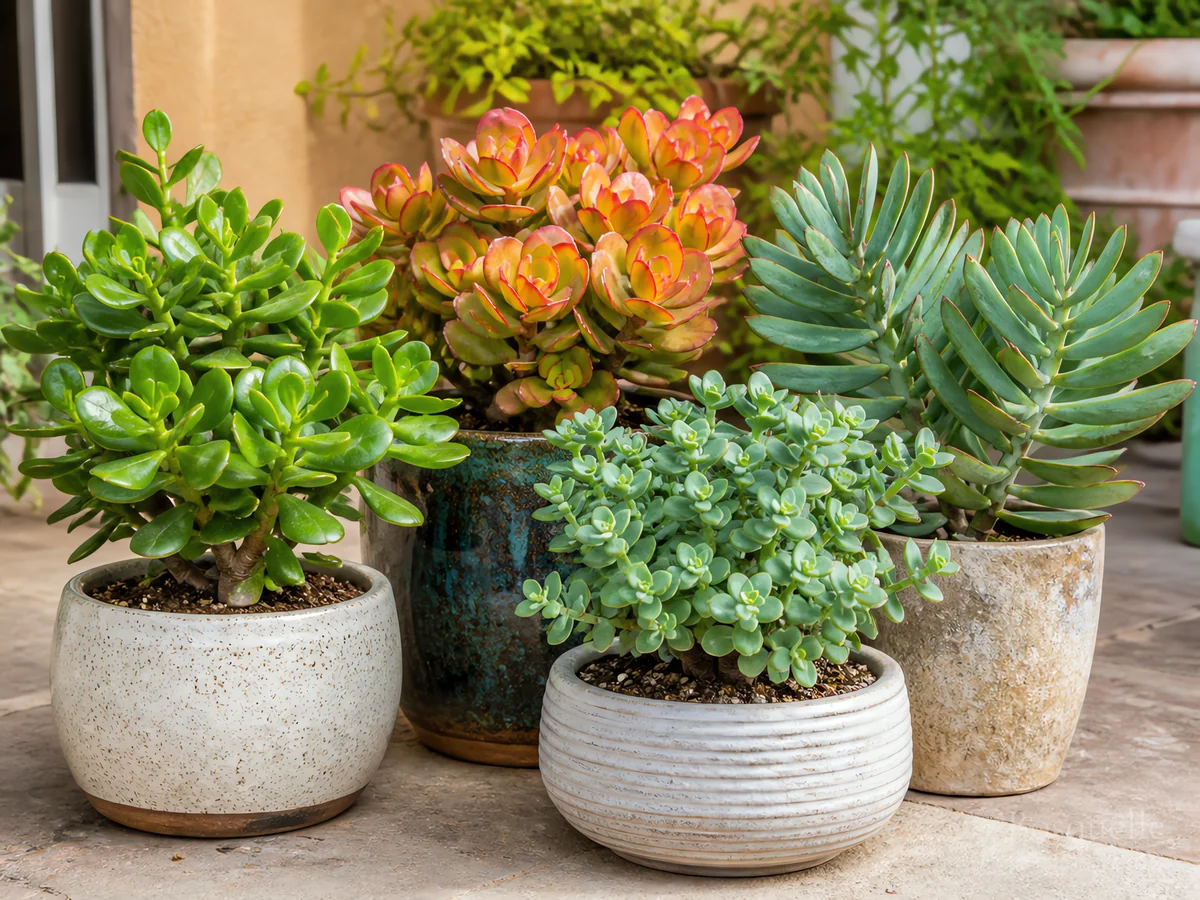
Repot C. ovata only when you must — tipping, roots out the holes, or mix that has turned to dust. It can stay root-bound for years. Step only 1–2 inches wider, into a heavy draining pot and cactus mix.

Jade can stay root-bound for years
| Factor | Recommended | Avoid |
|---|---|---|
| When | When the pot tips, roots pour from the drain, or the mix has vanished — as new growth starts | A yearly calendar jump while the plant is still snug and healthy |
| Pot | 1–2 inches wider, or the same pot after a root prune; heavy terracotta once it is top-heavy | A pot two sizes up, or a light cup that tips |
| Mix | Cactus or succulent blend that drains | Garden clay, or moisture-control peat in a cachepot with no hole |
| Water after | Water once to settle, then wait until the mix is dry | Watering on a calendar while the mix is still wet |
Jade can live quite happily for years while root-bound. Move it when it tips or the mix has failed — not because spring arrived. [1][2]
How do I know when to repot a jade plant?
When the pot tips, roots pour from the drain, or the mix has vanished. If the plant is only mildly snug, leave it — jade is fine root-bound for years.
Does jade like to be root bound?
Yes for years. Move it when it tips or the mix has failed, not on a yearly calendar. Step only one to two inches.
Keep-alive sun stays on How to Grow Jade Plant.
How to repot into cactus mix
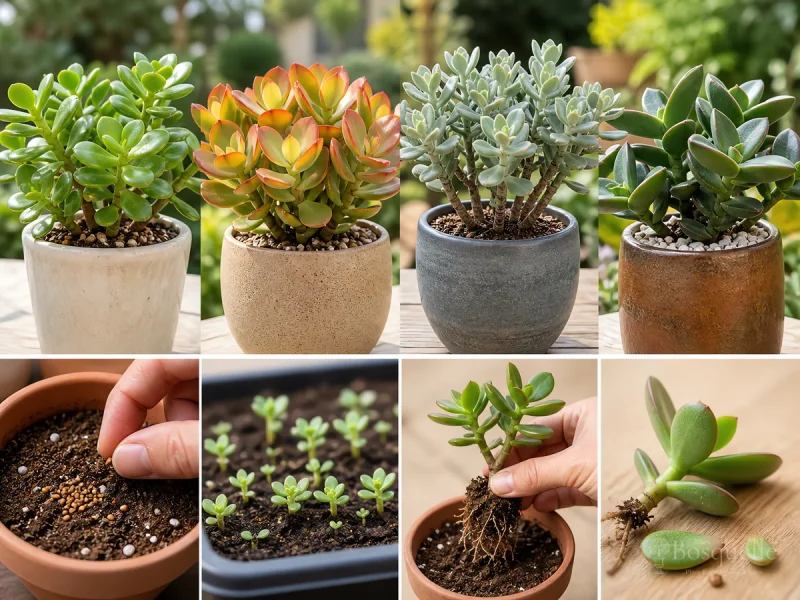
- Work as new growth starts if you can. Ease the plant out. Do not yank the trunk. Lay a stuck pot on its side and run a knife around the rim.
- Tease circling roots. Trim only black mush. Set the woody stem at the same height — burying succulent trunk invites rot.
- Use a pot with a hole, one to two inches wider — or the same pot after a root prune. Heavy clay beats a light plastic cup once the head is a tree. [3]
- Fresh cactus mix around the sides. Not garden soil. Crown at the old soil line. [4]
- Water once to settle, then wait until the mix is dry. Empty the saucer. No fertilizer for about four months.
Why not a much bigger pot?
Unused mix stays wet around the stem and can rot it. Step up one to two inches at a time.
What fails a jade repot
- A pot two sizes up — unused mix stays wet.
- Garden soil or moisture-control peat in a cachepot with no drain.
- Burying the woody stem.
- Watering on a calendar after the lift while the mix is still wet.
- A tiny decorative pot for a top-heavy tree — it will tip and snap the neck.
If you also wanted extra plants, that is a different job on How to Propagate Jade Plant. Finish ID on Types of Crassula if the tag never said Crassula.
Leave it until it tips. Then one to two inches, cactus mix, water once and wait.
FAQ
How much larger should the new pot be?
About one to two inches wider. A big jump holds wet mix and can rot the stem.
When is the best time to repot jade?
As new growth starts. Give a full growing season before the lean winter rest.
Can I repot into the same pot?
Yes. Prune roots when returning to the same size, and cut stems back if you are keeping a bonsai shape.
Should I water more after repotting?
Water once to settle, then let the mix dry. Do not resume a summer calendar while it is still wet.
Do I fertilize right after?
No. Wait about four months. Fresh mix is enough.
Will repotting make it bloom?
No. Bloom follows cool dry nights and light, not a bigger pot.
Related guides

Recommended plants



References
- [1] Clemson HGIC -
https://hgic.clemson.edu/factsheet/jade-plant/ - [2] Wisconsin Horticulture -
https://hort.extension.wisc.edu/articles/jade-plant-crassula-ovata/ - [3] Penn State Extension -
https://extension.psu.edu/jade-plant-a-no-fuss-houseplant - [4] NC State Extension -
https://plants.ces.ncsu.edu/plants/crassula-ovata/
This note is part of Crassula Guides.
More container notes by plant live in Container Growing Guides.
Updated: Reviewed by Bosquelle Editors