
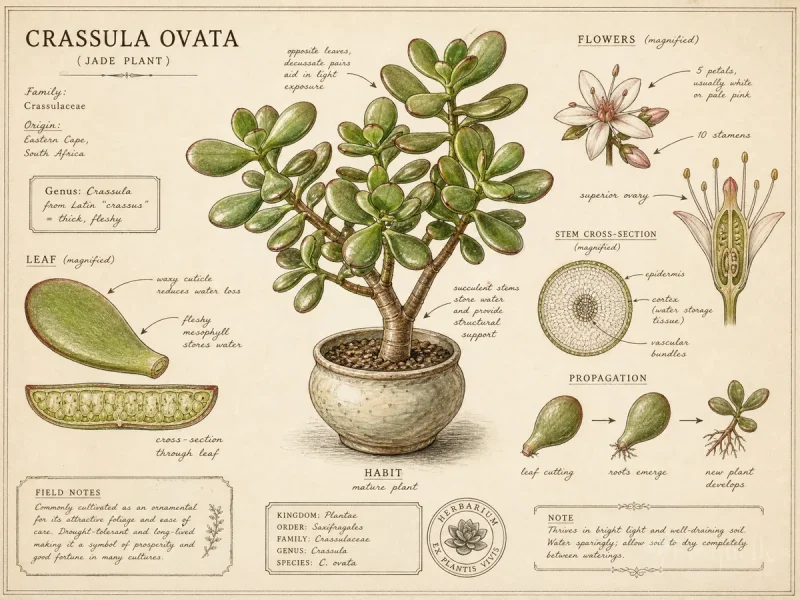
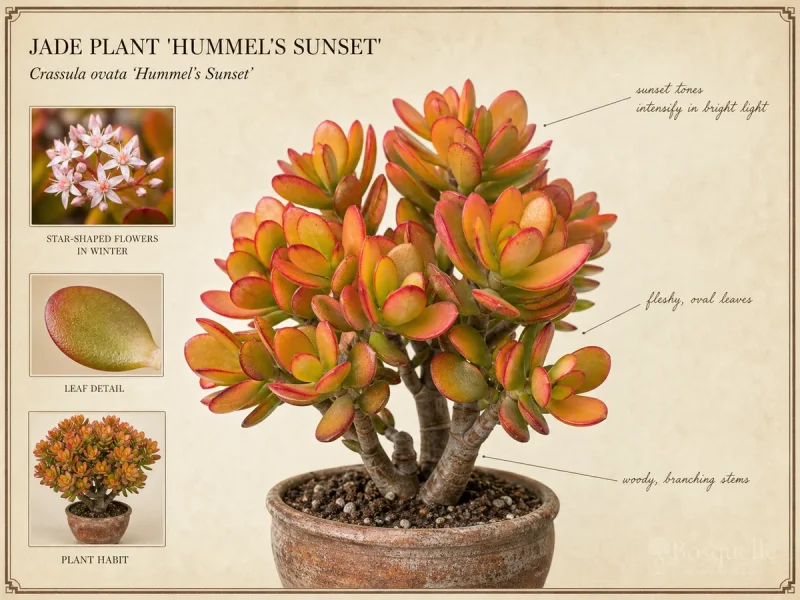
Propagate C. ovata from a stem or a whole leaf after the wound calluses — not from a wet fresh cut. Named color forms such as ‘Hummel’s Sunset’ use the same ritual.

Callus a stem or a whole leaf first
| Factor | Recommended | Avoid |
|---|---|---|
| The piece | A 3–5 inch stem cut below a node, or a whole leaf twisted off with its base | A torn leaf with no base, or a mushy stem |
| Callus | Warm dry air for a few days until the wound is dry and slightly tough | A humidity bag, or potting a wet fresh cut |
| Mix | Fairly dry cactus mix in a draining pot | Wet peat, or a water jar left until the stem turns mush |
| After it roots | Bright sun and dry-between water | Fertilizing a brand-new cutting |
Take a stem or a whole leaf, let the cut dry a few days, then set it on fairly dry, well-drained mix. A torn scrap with no base will not make a plant. [1]
How do I propagate a jade plant?
Take a stem or a whole leaf, let the cut callus a few days, then set it on barely moist cactus mix in bright indirect light. Water sparingly. A wet fresh cut rots.
How to root a jade cutting
- Choose a healthy plant in spring or summer if you can. For a stem, cut three to five inches just below a node and strip the lowest leaves so you can bury about an inch. [2]
- For a leaf, twist a plump leaf so the base comes away clean. A knife-cut leaf often fails. [3]
- Set pieces on a plate in a warm, dry place out of direct sun for a few days until the wound looks dry and slightly tough. Do not bag them.
- Fill a small draining pot with cactus mix. Plant the stem about an inch deep. Lay leaves flat so the callused end just touches the surface — do not bury the leaf. Jade rots in mix that stays wet. [4]
- Bright indirect light at first. Water when the top of the mix is dry. No saucer of standing water. New growth is the later signal — often weeks, not days.
Can I propagate jade from a leaf?
Yes, if you twist off a whole healthy leaf including the base, let it callus, and lay it on dry succulent mix. A torn scrap without the base will not make a plant.
What fails a jade cutting
- A torn leaf with no base — it shrivels.
- A wet fresh cut in peat or a humidity dome — the wound rots.
- Noon sun on an uncallused wound.
- A water jar left until the stem turns mush — soil is more reliable; if you try water, still callus first and move to cactus mix as soon as roots show.
- Expecting a leaf plantlet in a week — roots, then a plantlet, often take a month or two.
Cousins on the same sill use the same callus-then-dry-mix rule. After it roots, sun and dry-between water return to How to Grow Jade Plant. A packed mother is a different job on How to Repot Jade Plant.
Callus a stem or a whole leaf, then set it on dry cactus mix.
FAQ
When is the best time to take jade cuttings?
Spring or summer while the plant is growing. They can root any time; heat makes it easier.
How long until a cutting roots?
Stems often take a few weeks. Leaves can take longer — roots, then a plantlet over a month or two.
Do I need rooting hormone?
Optional. Callus and dry mix matter more. Hormone will not save a torn leaf with no base.
Can I propagate jade in water?
You can try after callusing, but soil is more reliable. Move to cactus mix when roots show.
Should I cover cuttings with plastic?
No. Extra humidity invites rot. Bright indirect air is enough.
Will seed give me the same tree?
Usually no. Cuttings keep the plant you already like. Seedlings vary.
Related guides

Recommended plants



References
- [1] Wisconsin Horticulture -
https://hort.extension.wisc.edu/articles/jade-plant-crassula-ovata/ - [2] Clemson HGIC -
https://hgic.clemson.edu/factsheet/jade-plant/ - [3] NC State Extension -
https://plants.ces.ncsu.edu/plants/crassula-ovata/ - [4] Chicago Botanic Garden -
https://www.chicagobotanic.org/plant-information/plant-finder/crassula-ovata-jade-plant
This note is part of Crassula Guides.
More notes on making another plant live in Propagating Guides.
Updated: Reviewed by Bosquelle Editors