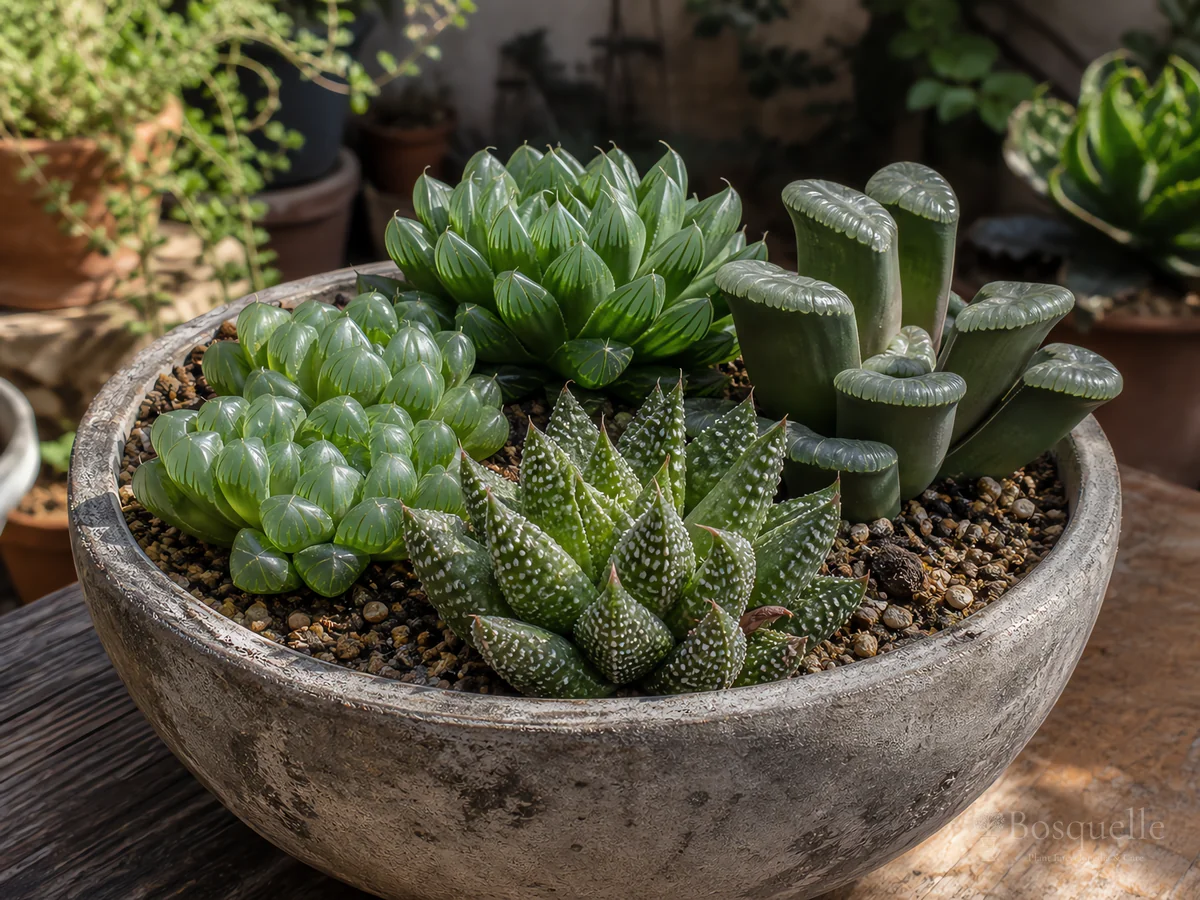
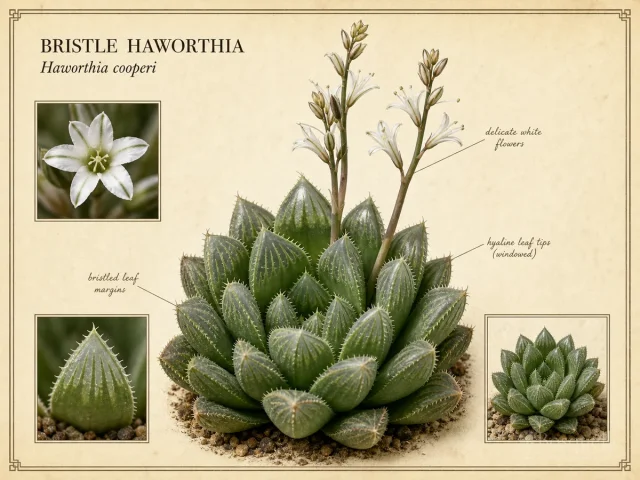
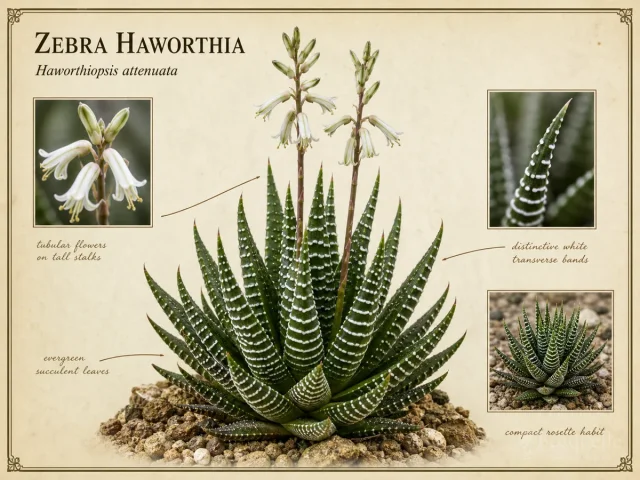
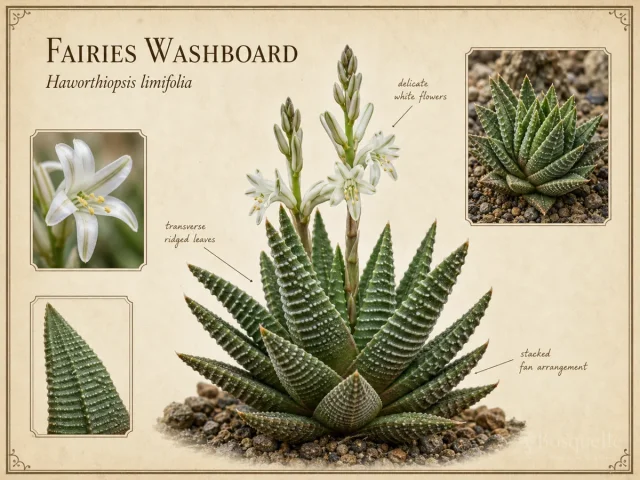
Repot H. cooperi or zebra H. attenuata only when you must — crowding, roots out the holes, or mix that has turned to dust. Stay in a shallow pot, the same size or one to two inches wider, with fresh grit.
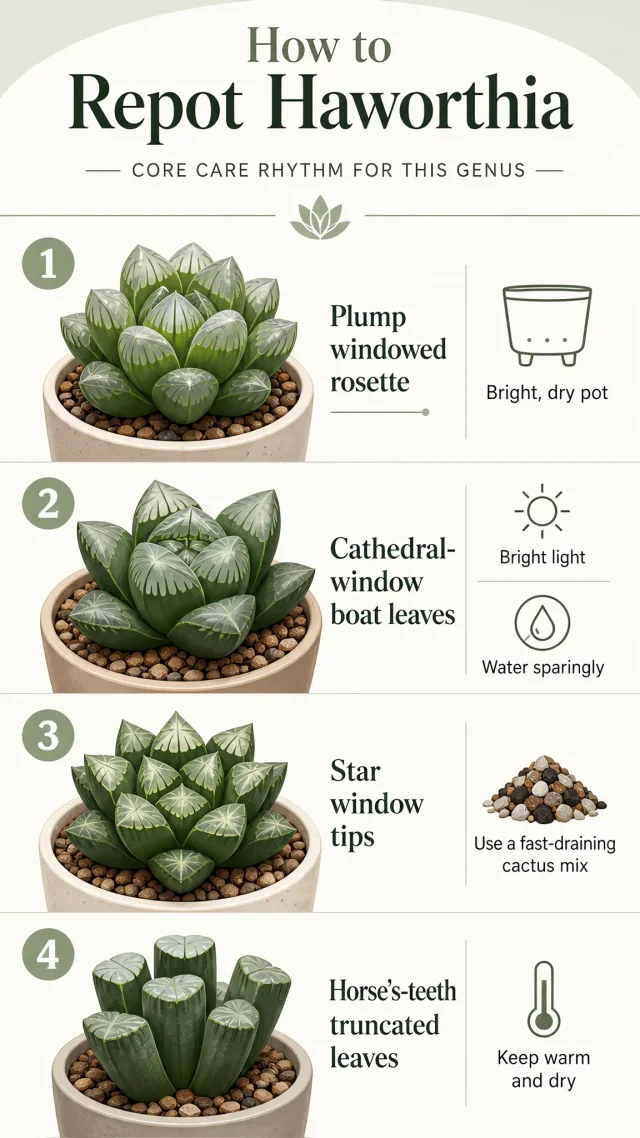
Stay in a shallow pot — same size or one to two inches wider
| Factor | Recommended | Avoid |
|---|---|---|
| When | Offsets crowding the rim, roots out the drain, or mix that has gone sour — often every 2–3 years | A jump “for growth” while the mix still drains |
| Pot | Shallow, with a hole; terracotta dries faster | A deep unused volume, or a cachepot with no drain |
| Step | Same pot with fresh mix, or 1–2 inches wider if the ball is packed | Two sizes up of wet mix |
| Season | Spring or summer, when the mix is dry | Mid-winter in a cold, wet room |
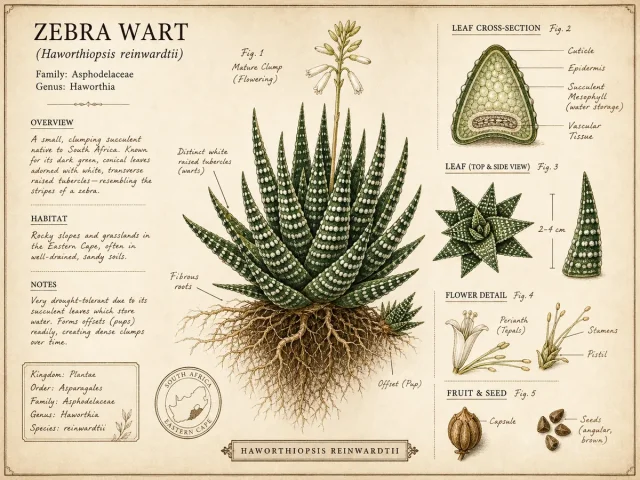
Haworthias have short, fibrous roots. Match the pot to the root system, not to a future clump you hope for. Refresh mix every two to three years even if the pot stays the same. [1] Shallow terracotta is the usual home setup. [2]
When should I repot haworthia?
When offsets crowd the pot or the mix has broken down — often every two to three years, even if the pot size stays the same. A deep jump is not the fix.
Why a shallow pot?
Haworthia roots are short. A deep unused volume of mix stays wet and rots them. Shallow terracotta dries with the plant.
Keep-alive light and water stay on How to Grow Haworthia.
How to refresh the mix or step up
- Work when the mix is dry. Run a knife around the rim. Do not haul on windowed leaves — they bruise.
- Ease the plant out. Tease circling roots. Trim only black mush; air-dry those wounds if you cut. [3]
- Choose a shallow pot with a hole. Same size if you only needed new grit; one to two inches wider if the ball is packed.
- Set the rosette at the old depth. Cactus mix around the sides. Do not bury the crown. [4]
- Water once to settle, then wait until the mix dries. Empty the saucer. No fertilizer for weeks.
How much larger should the new pot be?
About one to two inches wider if you step up — or the same pot with fresh mix. A big jump holds wet mix.
What fails a haworthia pot
- A pot two sizes up “for growth.”
- A deep decorative cachepot with no drain.
- Burying the crown.
- Watering on a calendar after the lift while the mix is still wet.
- Leaving mushy roots in the new grit.
- A week in a dim hallway “to recover” — the next flush stretches.
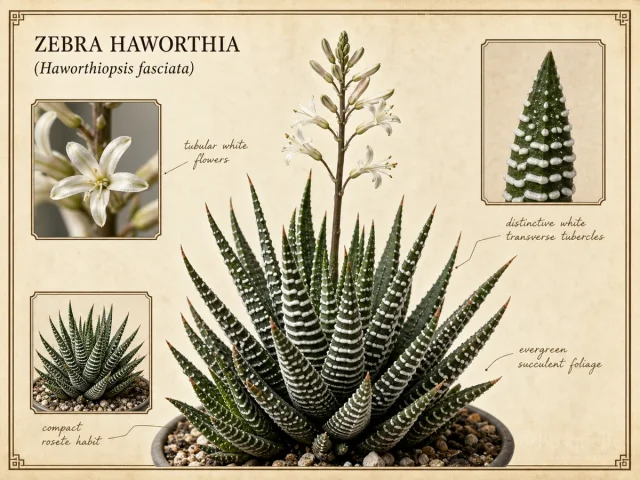
If you also wanted extra plants, that is a different job on How to Propagate Haworthia. Finish ID on Types of Haworthia if the tag never said Haworthia or Haworthiopsis.
Shallow pot, same size or one to two inches, fresh grit. Water once, then wait until it dries.
FAQ
Can I reuse the same pot?
Yes. If it has not outgrown the pot, reuse it with fresh succulent mix.
Should I water more after repotting?
Water once to settle, then wait until the mix dries. Do not keep the new grit soggy.
Do I fertilize right after?
No. Wait until the plant is growing again. Fresh mix is enough at first.
What mix should I use?
A cactus or succulent blend, or potting mix cut with pumice or perlite. Garden clay in a closed cachepot is a rot setup.
Why terracotta?
It helps the mix dry. Plastic works if you water less. A pot without a drain hole does not work.
Will a bigger pot make it grow faster?
No. These plants are slow. Extra unused mix stays wet. Light and dry-between matter more.
Related guides
Recommended plants



References
- [1] Wisconsin Horticulture -
https://hort.extension.wisc.edu/articles/haworthias-super-succulents-for-small-spaces/ - [2] Penn State Extension -
https://extension.psu.edu/zebra-plant-as-a-houseplant - [3] The Growing Leaf -
https://thegrowingleaf.com/how-to-fix-root-rot-in-haworthia-succulents/ - [4] Gardener’s Path -
https://gardenerspath.com/plants/succulents/grow-zebra-haworthia/
This note is part of Haworthia Guides.
More container notes by plant live in Container Growing Guides.
Updated: Reviewed by Bosquelle Editors