
Repot Aglaonema one to two inches up when roots circle or the mix dries too fast. These plants like being slightly snug. ‘Silver Bay’ is a larger office form; it still fails in a cavern of unused wet mix.
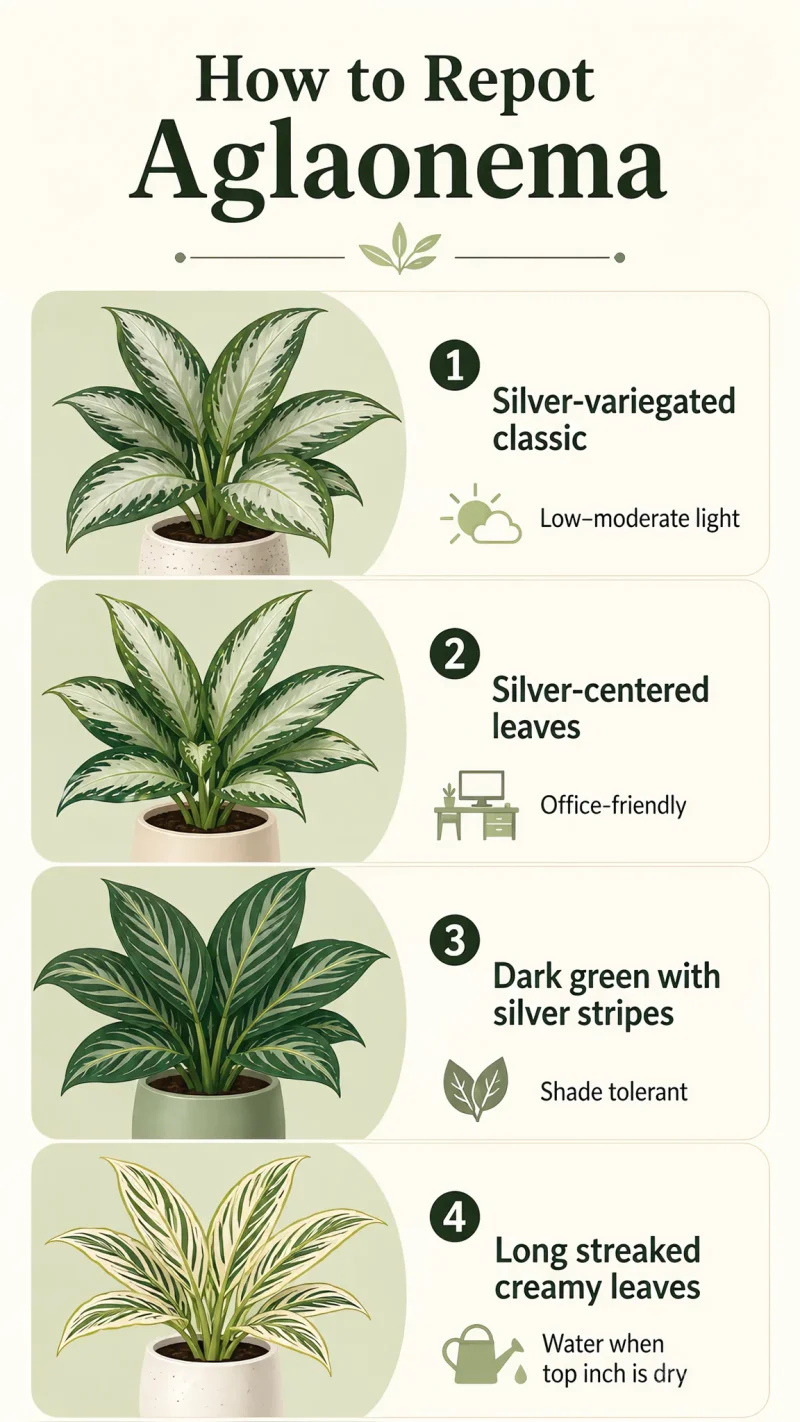
One size up, slightly snug
| Factor | Recommended | Avoid |
|---|---|---|
| Pot size | About 1 to 2 inches wider than the current pot | Three sizes of unused wet mix |
| Mix | Airy houseplant mix with extra perlite | Garden soil, or a pot with no holes |
| When | Spring, or when roots fill the pot — often every 2 to 3 years | A winter move on a healthy plant |
| Crown | The same height as before | Burying the stems deeper |
Chinese evergreen grows slowly, so the mix dries between waterings in a slightly snug pot. [1] Step one to two inches up when roots circle, water races through, or the plant is about to tip. [2] Spring is the kindest week.
When should I repot Aglaonema?
Every 2 to 3 years in spring, or when roots fill the pot. Size up only one to two inches. These plants like a slightly snug pot.
Keep-alive light stays on How to Grow Aglaonema. Pink types still need the brighter shelf after a move — choose the leaf on Types of Aglaonema first.
How to repot
- Choose a pot with real drain holes, about one to two inches wider. Skip gravel in the bottom. [3]
- Use an airy indoor mix — potting base plus perlite. Fine wet peat in a much larger pot stays anaerobic.
- Water a healthy plant the day before so the root ball slides. Skip the soak if you already suspect rot. Wear gloves. Tip the pot, support the crown, and ease the root ball out.
- Trim only dark, mushy roots. Loosen circling roots. Set the plant at the old soil line. Fill around the sides, water until runoff, empty the saucer. Do not fertilize for two to four weeks.
- Optional: if a side clump already has its own roots and several stems, separate it now on How to Propagate Aglaonema.
How much larger should the new pot be?
One to two inches wider — one nursery size, maybe two. A floor planter around a small plant stays wet in low light.
What fails an Aglaonema pot
- A dish without holes — wet feet on the shelf.
- Three sizes up of unused wet mix — rot before the plant fills. [4]
- Fertilizer on day one — burned edges on a plant that is still settling.
- A cold garage “just while it settles” — chilling on top of root disturbance.
- Watering on the old daily schedule in fresh mix — the extra volume stays wet.
One to two inches up, draining mix, empty the tray. Keep the pot slightly snug.
FAQ
Should I water right after repotting?
Yes for a healthy root ball — water once to settle mix, then drain. After a rot trim, water more cautiously.
Can I repot in winter?
For a healthy plant, spring is kinder. For rot or a pot with no drainage, repot whenever you see it — then keep it warm.
Terracotta or plastic?
Either, with a drain hole. Terracotta dries faster. Plastic holds moisture longer — useful if you underwater, risky if you overwater in low light.
Should I fertilize after repotting?
No. Wait two to four weeks, until the plant is making normal growth.
Why is my Aglaonema drooping after a repot?
Mild droop can be root disturbance. If the mix stays wet, the new pot is likely too large or the mix too dense.
Can I refresh mix without going up a size?
Yes. If roots still have space but the mix is compacted, refill a similar pot. These plants like slightly snug.
Related guides
Recommended plants



References
- [1] Almanac -
https://www.almanac.com/plant/chinese-evergreen - [2] Houseplant101 -
https://houseplant101.com/plants/chinese-evergreen/ - [3] Clemson HGIC -
https://hgic.clemson.edu/factsheet/chinese-evergreen-aglaonema-care-cultivation-growing-guide/ - [4] NC State Extension -
https://plants.ces.ncsu.edu/plants/aglaonema/
This note is part of Aglaonema Guides.
More container notes by plant live in Container Growing Guides.
Updated: Reviewed by Bosquelle Editors