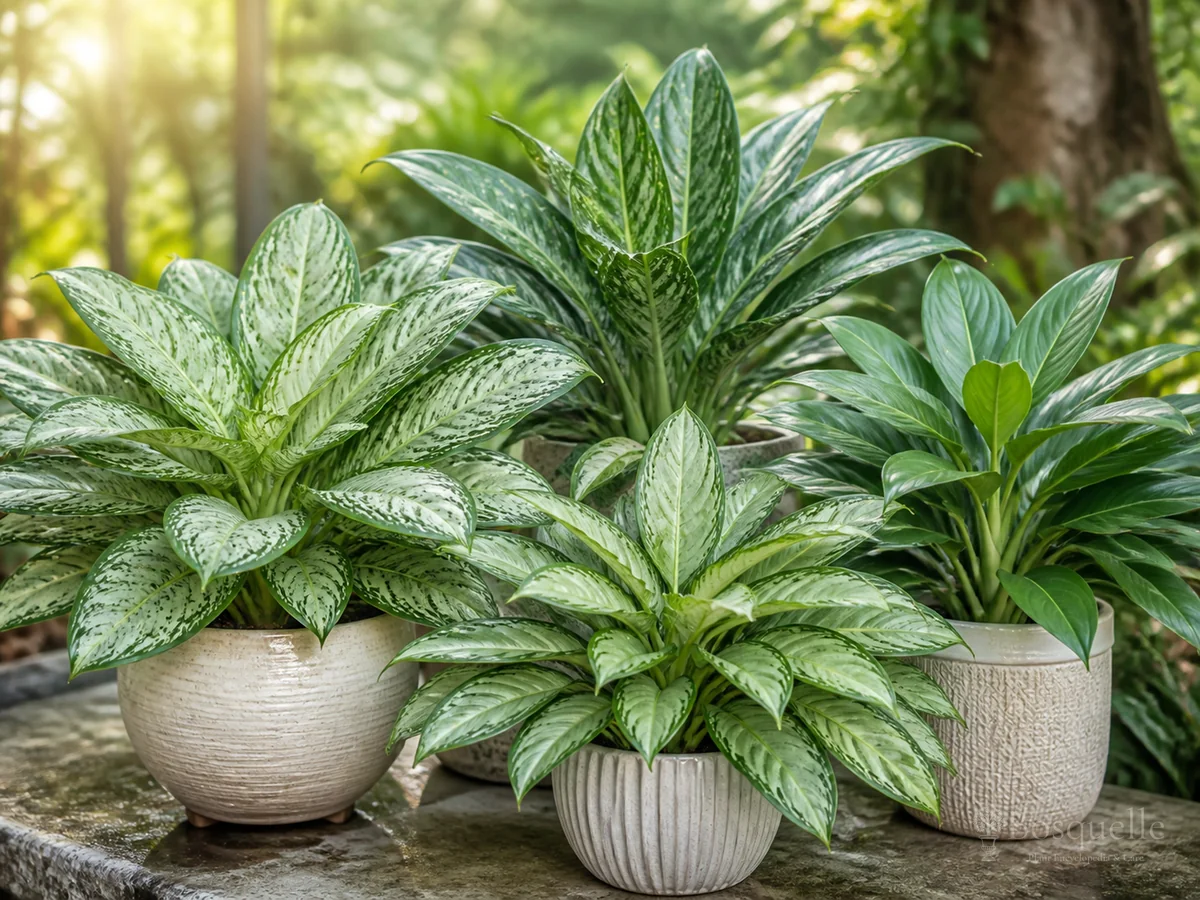
Grow Aglaonema in low to moderate indirect light. Water when the top of the mix is dry, and keep the room warm. Chinese evergreen is the usual shop name.

Low to moderate indirect light, water when the top is dry, and a warm room
| Factor | Recommended | Avoid |
|---|---|---|
| Light | Low to moderate indirect; dark green types take a dimmer shelf; pink, red, and heavy silver need brighter indirect | Hot midday glass, or a windowless closet |
| Water | When the top 1 to 2 inches of mix feel dry; then drain | A pot left in a full saucer |
| Temperature | About 65 to 80°F | A cold draft by a door, or nights near 55°F |
| Mix | Soilless houseplant mix that still drains | Garden soil, or a pot with no holes |
Low to moderate indirect light and a mix that dries at the top is the usual indoor setup. A wet pot with no drain, or a cold draft by a door, is the usual fail. [1] Dark green types hold in a dimmer room; pink and red types fade there first.
- Place the pot in low to moderate indirect light. Harsh midday glass scorches. A sealed closet is not “low light.”
- Water when the top inch or two feels dry. Soak, then drain, and empty the saucer. Use room-temperature water. [2]
- Keep the room about 65 to 80°F. Pull the pot off a cold door, a leaky window, or a heater blast. [3]
- Wipe dust off the leaves. Feed lightly in spring and summer. Skip fertilizer in a wet pot and in winter, when growth slows.
How much light does Aglaonema need?
Low to moderate indirect light. Dark green types handle dim rooms. Pink, red, and heavily silver types need a brighter shelf to keep their pattern. Direct hot sun scorches.
How often should I water Aglaonema?
When the top 1 to 2 inches of mix feel dry. Soak, drain, and water less in winter. These plants forgive a missed week better than a soggy pot.
What temperature is too cold for Aglaonema?
Keep plants above about 55°F. Ideal indoor range is roughly 65 to 80°F. Cold windows and exterior doors cause sudden leaf damage.
Yellow leaves and wilt in wet soil
Feel the mix before you add water. Yellow lower leaves plus a wet pot usually mean overwater or a mix that will not drain. Wilt in wet mix is not thirst. [4]
- Yellow, wet mix — empty the tray, confirm holes, let the top dry. Mushy brown roots need a refresh on the repot page.
- Yellow, dry mix — water thoroughly and drain.
- Sudden yellow after a cold night — move warmer and off the draft before you change fertilizer.
- Brown tips — soggy pots, dry air, salts, or drafts. Confirm wet versus dry before you change everything.
- One oldest leaf yellowing — normal aging if new growth continues.
Why are Chinese evergreen leaves turning yellow?
Often overwatering if lower leaves go soft yellow in wet soil. Crispy yellow with dry soil means underwatering. Sudden yellow after a cold draft is chilling injury.
Why is my Aglaonema drooping?
Check the soil. Dry soil means water. Wet soil with wilt means overwatering or root rot — do not add more water.
Low to moderate indirect light, water when the top of the mix is dry. Match the leaf on Types of Aglaonema.
FAQ
Is Aglaonema toxic to cats and dogs?
Yes. Calcium oxalate in the leaves and sap can burn the mouth and cause drooling and vomiting. Keep plants out of chew range.
Should I mist my Aglaonema?
Optional. Average home humidity is tolerated. A pebble tray or humidifier helps more than a daily spray.
Can I grow Chinese evergreen outdoors?
As a summer porch plant in shade, yes, if nights stay above about 55°F and you bring it in before cold. It is not a temperate landscape shrub.
When should I fertilize?
Lightly in spring and summer while it is growing. Skip heavy feed in winter and never fertilize a waterlogged pot.
Should I remove the flowers?
Yes if they appear. Clip the spathe so energy stays in the leaves. Indoor plants rarely bloom in low light.
Can I prune a leggy stem?
Yes. Cut just below a node and keep pieces that have nodes if you want extras. The clone steps live on How to Propagate Aglaonema.
Related guides

Recommended plants




References
- [1] Clemson HGIC -
https://hgic.clemson.edu/factsheet/chinese-evergreen-aglaonema-care-cultivation-growing-guide/ - [2] Almanac -
https://www.almanac.com/plant/chinese-evergreen - [3] NC State Extension -
https://plants.ces.ncsu.edu/plants/aglaonema/ - [4] Cafe Planta -
https://cafeplanta.com/blogs/resources/overwatered-aglaonema
This note is part of Aglaonema Guides.
More first-season notes by plant are gathered in How to Grow Guides.
Updated: Reviewed by Bosquelle Editors