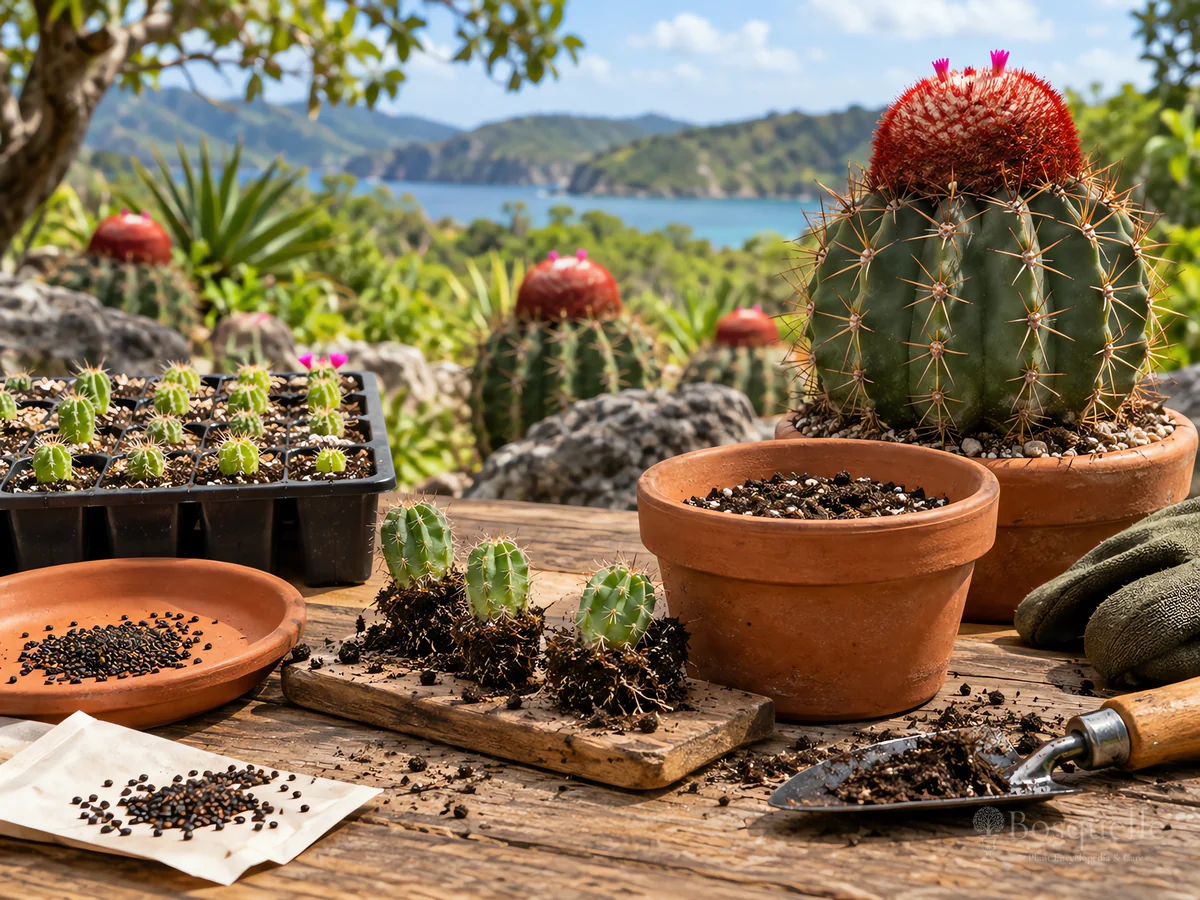
Propagate Turk's-cap cactus from seed. Squeeze the pink fruit, dry the black seed, and sow it on grit, barely covered. Do not wait on offsets. The plant is usually solitary.

Sow fresh seed from the pink fruit, barely covered
| Factor | Recommended | Avoid |
|---|---|---|
| When | Warm months, from a ripe pink fruit on the cephalium | Do not sow old, dusty seed if you can take a fresh fruit |
| Mix | Fine grit, coarse sand, or cactus mix that sheds water | Do not bury the seed under a thick layer of soil |
| Cover | None, or a dusting of fine sand no deeper than the seed | Do not wash the seed away with a heavy spray |
| Water | Keep the surface barely moist until seedlings show, then let it dry a little | Do not keep the pot wet after the first small globes form |
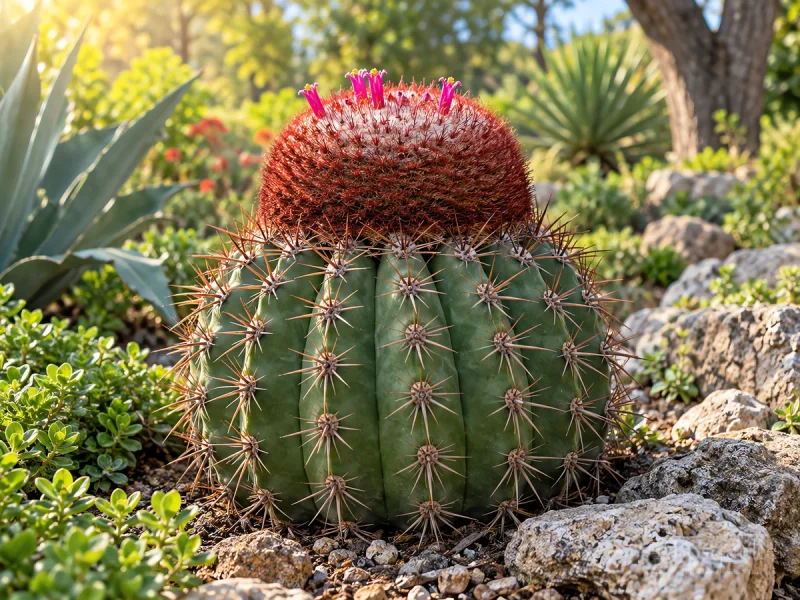
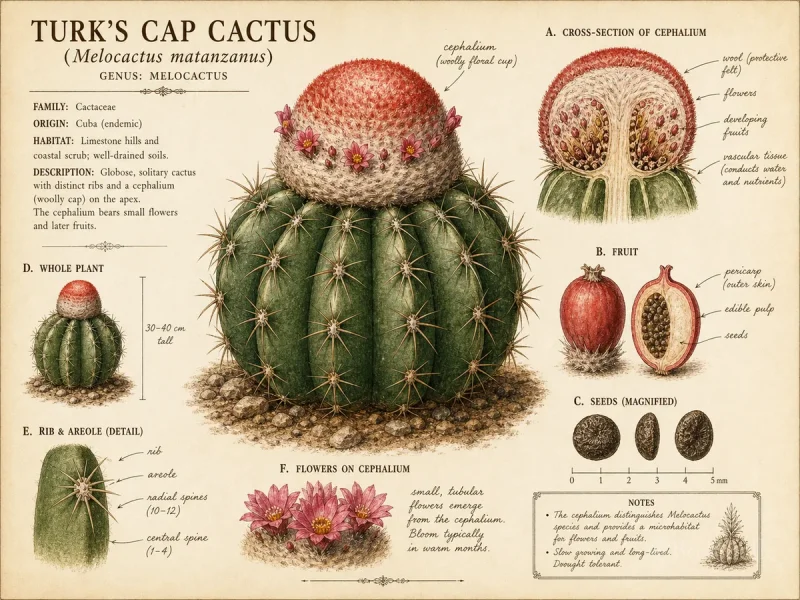
Turk's-cap cactus makes seed in the pink, pepper-shaped fruits that push up through the cephalium when they are ripe. [1] Each fruit holds many small black seeds, and that is the usual start for this genus. [2] The fruit looks like a tiny pepper. [3] When it is ready, the plant pushes it to the top of the wool so you can pluck it. [4] Sun and later watering stay on How to Grow Turk's Cap Cactus.
- Pluck a pink fruit from the cephalium. Squeeze out the black seed, rinse off the pulp, and let the seed dry for a day.
- Fill a small pot with free-draining cactus mix plus extra grit. Water it and let it drain.
- Scatter the seed on the surface. Cover it with no more than a dusting of fine sand, or leave it bare.
- Mist gently so the seed stays in place. Keep the pot warm and bright, out of harsh midday sun. Once seedlings show, let the top of the mix dry a little between waterings.
When do I sow Turk's-cap cactus?
In warm weather, from a ripe pink fruit. Scatter the seed on grit, barely covered, and keep the surface barely moist until seedlings show.
The plant is usually solitary — do not wait on offsets
A healthy plant does not branch or throw pups unless the body is damaged. Do not wait for offsets the way you would with a pincushion cactus. Fresh seed is the start. Grafting a seedling onto another cactus does not make it grow faster than a seedling on its own roots, so skip that extra step unless you already graft other cacti.
- Wait for pink fruit on the cephalium rather than watching the base for pups.
- Sow that seed as soon as it is dry. Do not store it for years if you can help it.
- Grow the seedlings in small pots of grit. Do not split a single globe in half.
- If a damaged plant does throw a shoot, let that shoot make its own roots before you cut it away, then pot it in dry mix and wait before you water.
Will it make offsets I can pot up?
Usually no. The plant is solitary unless it is damaged. Sow seed from the pink fruit instead of waiting on pups.
If seedlings collapse, sow thinner, use a finer mist, and let the top of the mix dry a little once they show.
FAQ
Can I root a cutting?
A stem cutting is a poor bet. This cactus is a globe without pads. Sow seed, or wait for a rare shoot after damage.
Does grafting make it grow faster?
Growers who graft seedlings do not see a real speed gain over plants on their own roots. Sow seed and keep the seedlings warm.
Related guides
Recommended plants
References
- [1] Henry Shaw Cactus and Succulent Society -
https://hscactus.org/resources/plants-of-the-month/melocactus-2017/ - [2] Henry Shaw Cactus and Succulent Society -
https://hscactus.org/resources/plants-of-the-month/melocactus-2005/ - [3] Wikipedia -
https://en.wikipedia.org/wiki/Melocactus - [4] University of Texas -
https://web.biosci.utexas.edu/mauseth/researchoncacti/Cephalia.htm
This note is part of Melocactus Guides.
More notes on making another plant live in Propagating Guides.
Updated: Reviewed by Bosquelle Editors