
Propagate ruby necklace from a stem. Let the cut dry, set the stem on grit, and keep it barely moist until roots form. Seed can sprout; a cutting is the usual start.
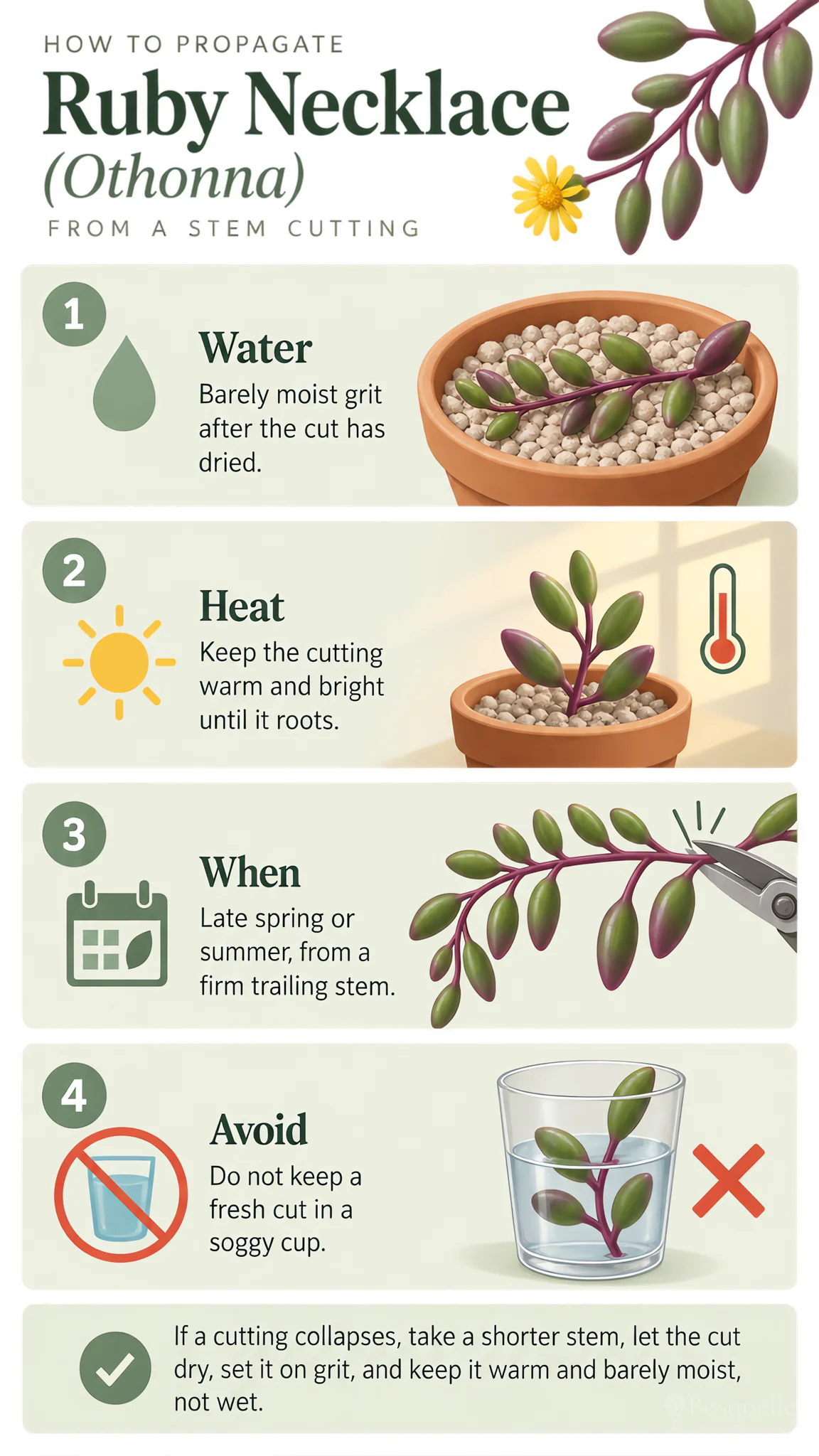
Let the cut dry, then set the stem on grit
| Factor | Recommended | Avoid |
|---|---|---|
| When | Late spring or summer, from a firm trailing stem | Do not take cuttings from a cold, rotting plant |
| Stem | A firm piece a few inches long, with a node | Do not bury a fresh cut in wet compost |
| Heat | Keep the cutting warm and bright until it roots | Do not root it in a cold, damp room |
| Water | Barely moist grit after the cut has dried | Do not keep a fresh cut in a soggy cup |
ruby necklace roots from a stem. Stem cuttings are the usual home start. [1] Take a section in warm weather, when the plant is growing. Late summer cuttings with extra bottom heat also work. [2] Light and later watering stay on How to Grow Ruby Necklace.
Can ruby necklace be propagated?
Yes. A stem cutting is the usual way. Let the cut dry, set it on grit, and keep it barely moist.
When do I take ruby necklace cuttings?
In late spring or summer, from a firm stem. A cold, wet plant is a poor parent.
Keep the cutting barely moist until it roots
Work with a clean snip. Rooting hormone is optional. A dry cut and warm grit matter more than a powder.
- Cut a firm stem a few inches long, just below a node. Choose a piece that is not soft or yellow.
- Lay the cutting in a dry, shaded spot until the wound is dry to the touch, at least a day or two.
- Set the stem on gritty cactus mix, or barely press the dry end in. Do not bury it in wet compost. A piece that already has roots can be potted as it is.
- Keep the pot warm, in bright light without harsh midday sun.
- Keep the mix barely moist. Water only when it is dry. Wait for new growth before you treat it like an established plant. [3]
Should I bury the cutting?
No. Set it on grit, or barely press the dry end in, so the wound is not sitting in wet mix. A buried, wet stem is the usual rot.
Seed can sprout; a cutting is the usual start
Seed is possible in warm grit. Sow in spring at about 64–70°F, keep the surface barely moist, and give it bright light. A warm outdoor plant can set seed on its own. [4] A cutting gives you a plant sooner, with the same pickle-shaped leaves.
If a cutting collapses, take a shorter stem, let the cut dry, set it on grit, and keep it warm and barely moist, not wet.
FAQ
Can I root a single leaf?
A stem with a node is the reliable start. A lone leaf is a slower, less sure bet.
Can I divide a clump?
A stem that has already rooted can be lifted and potted, but a fresh cutting set on grit is cleaner. Division is not the usual start.
Will seed match the parent?
Species seed comes close. If you want the same ruby color you already like, take a cutting, then grow it in strong sun.
Related guides
Recommended plants
References
- [1] Royal Horticultural Society -
https://www.rhs.org.uk/plants/353589/crassothonna-capensis/details - [2] Fine Gardening -
https://www.finegardening.com/genus/othonna - [3] San Marcos Growers -
https://www.smgrowers.com/products/plants/plantdisplay.asp?plant_id=3799 - [4] Kumbula Indigenous Nursery -
https://kumbulanursery.co.za/plants/othonna-capensis
This note is part of Othonna Guides.
More notes on making another plant live in Propagating Guides.
Updated: Reviewed by Bosquelle Editors