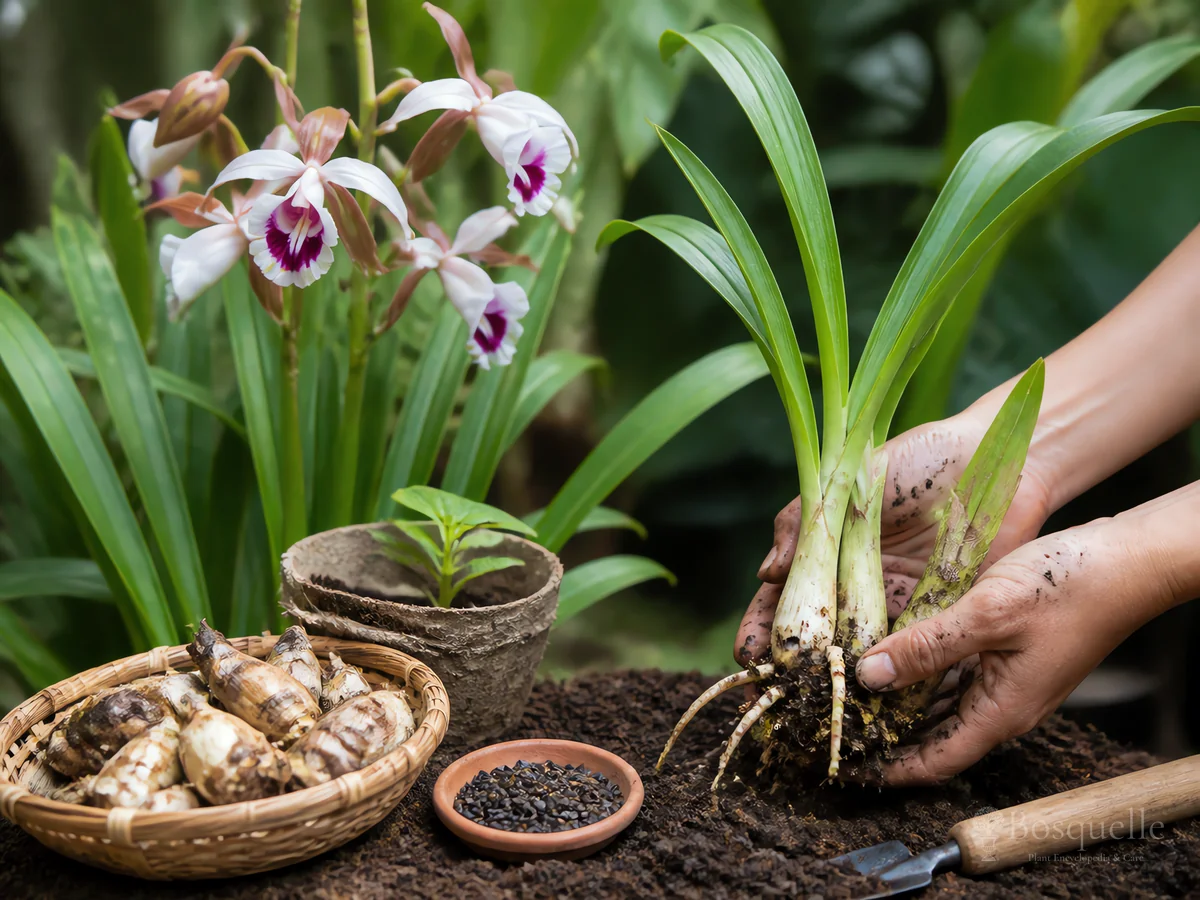
Clone P. tankervilleae after the flowers finish: split pseudobulbs with roots, or lay the spent spike on damp sand until nodes sprout. Both land in terrestrial mix — not bark. A moth-orchid keiki and a water jar are the wrong pictures.
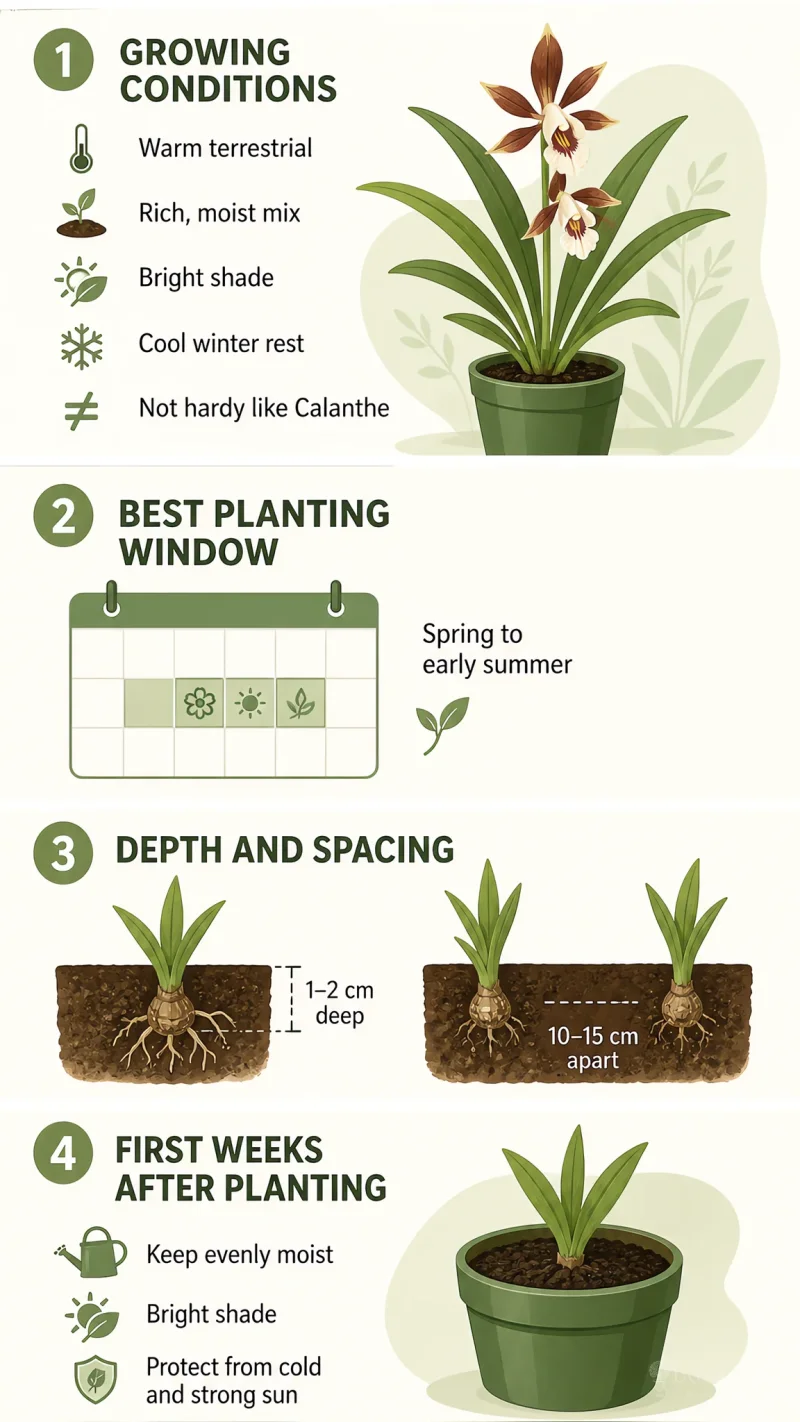
Spent spike or a split with roots
Work when the last flower has faded — usually spring. Division makes a blooming-size plant sooner. The spent inflorescence makes plantlets from nodes over two to three months. University of Florida IFAS: split clumps of pseudobulbs after bloom, or root the expended flower stalk. Choose one job per tray. Do not try both on the same rotting stem.
A spike still in bloom is not a cutting. A winter rest is for buds, not for surgery. Sterilize the knife. This is not a pothos node in a jar. Green orchid stems rot in water.
Bark mix is the moth-orchid picture. Splits go in sterile potting mix, not bark. The baby from a spike also wants terrestrial mix once it has roots — not a hanging basket. Aftercare stays on How to Grow Nun's Orchid.
Keep two to four pseudobulbs together when you can. A single backbulb with no roots is a slower start. Older bulbs still feed new growth — do not strip every spent bulb off a show plant unless you are dividing on purpose.
How to propagate nun's orchid
Split
- Tip the pot. Shake off mix. You will see egg-shaped pseudobulbs (swollen stems at the base), not true bulbs. Rinse only enough to see where to cut.
- Cut between bulbs so each piece has roots attached. If you can, keep two to four together for a stronger restart. Discard a hollow center with no buds.
- Pot each piece in sterile terrestrial mix — peat, compost, and bark fines plus drain, not chunky epiphyte bark. Keep slightly moist until new growth. Empty any saucer under the new pots.
Spent spike
- Cut the finished inflorescence from the plant.
- Lay it whole on a tray of damp horticultural sand and press it into contact, or cut sections at the internodes, optional hormone on the lower cut, and set them in damp sand or sphagnum.
- Shade, humidity, moist not a puddle. Two to three months. New shoots from nodes. When plantlets have roots — often when they are several inches tall — pot them in the same terrestrial mix. Cut between plantlets only after each has its own roots.
Some spike sections rot. Pull those so they do not sour the tray. Division is the faster stock. Do not feed until a plantlet is growing. Do not set the tray in hot sun. Tepid water only. Label the tray with the date.
Sand that looks dry on top can still be wet underneath. Check with a finger, not a daily flood. When a node swells, do not twist the plantlet off until it has its own roots. A bald sprout in dry air crisps. Once potted, treat the young plant as a small terrestrial: bright shade, even moisture, no packed mix.
If you are already moving a crowded pot after bloom, you can split and refresh mix in one sitting. Group about four bulbs when you want a show plant next year — that grouping lives on How to Repot Nun's Orchid.
What fails a nun's orchid clone
- A water jar — stems rot. Sand or sphagnum with air is the spike job.
- Bark-only pots — splits want terrestrial mix, not bark.
- Cutting a spike in full bloom — wait until flowers finish.
- A sealed wet tray — fungus, not plantlets. Moist sand, not a puddle.
- A moth-orchid keiki tutorial — different genus, different spike.
- A cold garage as a rooting bench — the mother may rest cool; the tray still wants warmth and humidity.
Success looks like a node with a small shoot and roots in sand, or a split that holds when you tug the new pot. Waiting on the spike beats a second jar of water. One clean cut on a division, not a mash. If a split has no roots, it is a gamble — pot it shallow and keep barely moist, or compost it.
Do not wait for a keiki on a blooming Phaius spike as the plan. That is a moth-orchid picture. Here the stalk works after the flowers are gone, on damp sand.
Keep extras in open shade for the first week if the site is hot. Then match the mother’s bright shade. Firm the mix so the crown does not rock. A quiet month of new roots is waiting, not failure.
Space new pots so air moves. A crowded tray of rotting stalks spreads fungus. Pull any section that goes soft. Do not share a water jar as a shortcut.
Work when the soil is moist enough that the ball holds. Dry mix shatters fans off the crown. Soaking mix smears and tears roots. Water the day before a split, then dig.
Label the tray with the date. When a node swells, leave it until roots show. A bald sprout in dry air crisps before it can pot on.
After bloom, split pseudobulbs with roots or lay the spent spike on damp sand until nodes sprout. Pot in terrestrial mix, not bark. Do not use a water jar. Keep the tray warm and humid while nodes sprout. Division is the faster stock if you need a blooming-size plant this year.
FAQ
Can I root the flower spike?
Yes — after the flowers are gone. Lay the spent stalk on damp sand, or cut at the nodes, and wait two to three months in shade and humidity.
Is this the same as a moth-orchid keiki?
No. Phalaenopsis sometimes grows a plantlet on a live spike. Nun's orchid uses a spent stalk on sand, or a split.
When should I divide nun's orchid?
After bloom, usually spring. Do not split a plant in full flower unless it is failing.
Should I pot splits in orchid bark?
No. Use sterile terrestrial mix, not bark. Nun's orchid is a ground orchid.
How many pseudobulbs per piece?
Keep two to four together when you can, with roots attached. A single backbulb is a slower start.
Do I need rooting hormone on the spike?
Optional on cut sections. The whole stalk on damp sand still works without it.
Can I grow nun's orchid from seed?
Not the beginner path. Division or a spent spike is the home method.
Why did the spike section rot?
Too wet, too little air, or a cut made while flowers were still open. Pull the rot and keep sand moist, not flooded.
Can I leave old pseudobulbs on the plant?
Yes. Spent bulbs still feed new growth. Remove them only when you are dividing.
Related guides
Recommended plants

This note is part of Phaius Guides.
More notes on making another plant live in Propagating Guides.
Updated: Reviewed by Bosquelle Editors