
Nun's orchid (P. tankervilleae) is a warm terrestrial with pleated leaves and tall hooded spikes — a ground orchid, not a moth orchid on bark. It fails in a bark basket, in hot noon sun, or in a winter room that never cools. Keep the mix rich and moist, shade the afternoon, and rest it cooler so the spikes return.
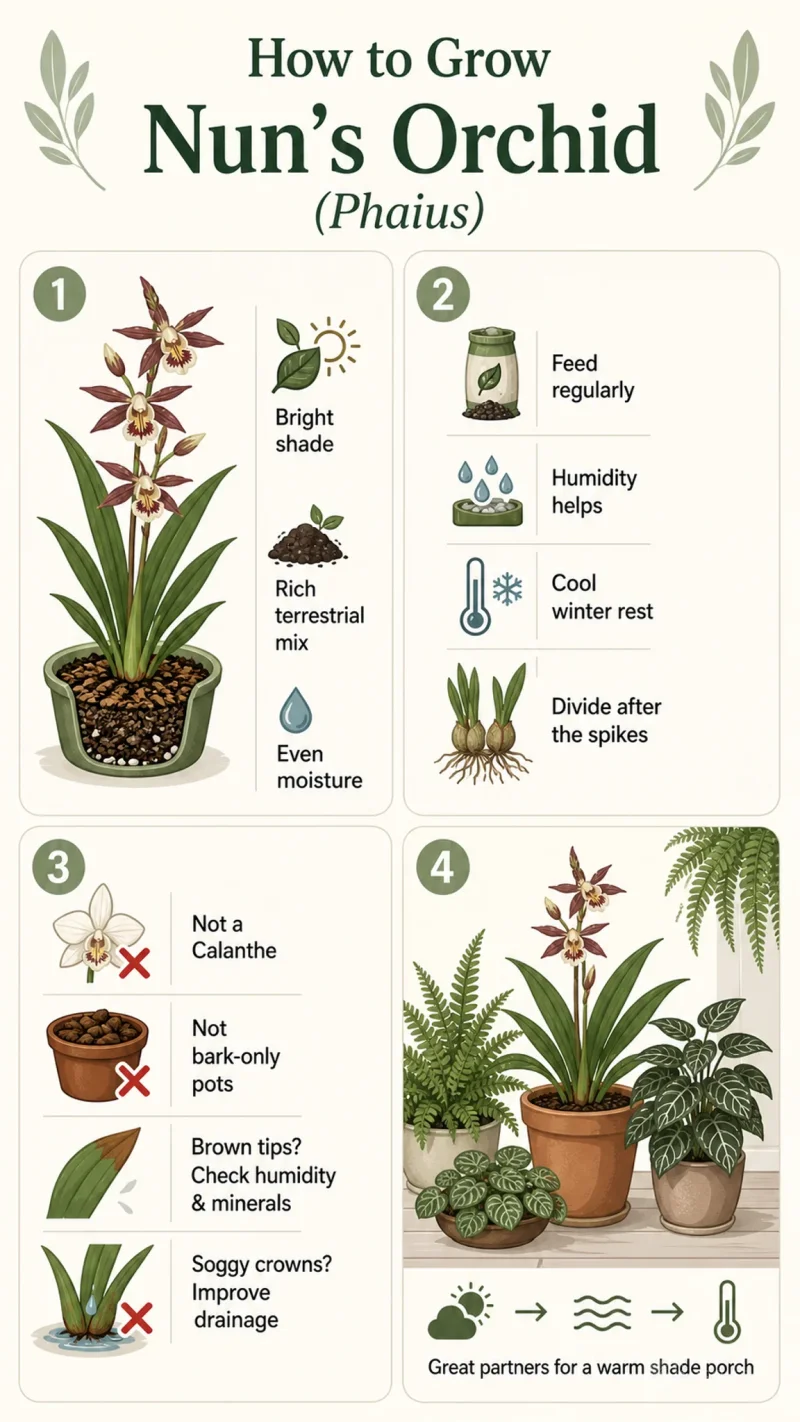
Bright shade, terrestrial mix, and even moisture
| Factor | Recommended | Avoid |
|---|---|---|
| Light | Bright light to light shade; east window or shaded porch | Hot direct afternoon sun; a dim north room year-round |
| Mix | Rich terrestrial mix that holds moisture and still drains | Bark-only hanging basket; a side-slit epiphyte pot |
| Water | Even moisture in growth; ease off in the cool rest | Standing water at the crown; ice cubes; wet leaves |
| Humidity | About 50% or higher; air around the leaves | Crisp heated air; a crowded shelf that never dries |
| Temperature | Warm in growth; protect from hard frost | A freeze; a radiator ledge in winter |
Give nun's orchid bright shade and a mix that stays moist without sitting wet. University of Florida IFAS: roughly sixty to seventy percent peat, compost, and pine bark, opened with perlite or sand. Keep moisture even. Let the top couple of inches dry once new foliage matures. Do not flood the crown.
- Choose a bright shaded porch, east window, or warm bed that skips the hottest afternoon and does not hold water after rain. A west window needs a sheer or a step back from the glass.
- Pot in a deep container of rich terrestrial mix — organic matter plus drainage — not a hanging bark basket. Set the crown at the same height it grew in the nursery pot.
- Water the mix in the morning until it is evenly moist in growth. Empty the saucer. Keep the pleated leaves dry. Do not leave the pot standing in water overnight.
- Hold humidity near fifty percent or better. A pebble tray under the pot helps more than misting the fans. Leave air around the leaves so they dry after a splash.
- Use tepid water. Ice cubes are a moth-orchid gimmick. Do not use them here. Rainwater or distilled water helps if tips brown on hard tap water.
Soft leaves bruise and tear. Give the plant room. Do not pin it against a hot pane. Tall spikes may need a stake once they rise. Stake while the stem is still flexible.
Turn the pot a quarter-turn every few weeks so one side does not bleach. A sitter who waters when the top inch or two is dry beats daily dribbles. In the cool rest, tell them to water less, not more.
Outdoor plants in frost-free beds use the same mix — organic, draining, not a flood pocket. Bring the pot inside if a cold night is coming. A mulch pile will not save a tropical crown from ice.
A west wall that bakes the leaves is a harder site than an east porch with the same mix. Deep shade thins bloom. Reflected heat off paving scorches the thin fans even when the air feels mild.
Firm the mix so the clump does not rock and dry. Water the day you pot. In a wet week, skip the can. In a hot dry week, water the mix, not the leaves. Empty the saucer every time.
Feed, humidity, and cool winter rest
Feed in active growth, then ease off for bloom. Guide to Houseplants: cooler nights about 55–60°F and leaner water in winter help set spring spikes, then return to ordinary room warmth. Do not freeze the plant. Bring it in near 40°F. Damage is severe below freezing.
Hold humidity near fifty percent or better. Feed weekly at half strength after a thorough watering in growth, then flush the mix to limit salt. Stop feed in the rest. Water early in the day. Keep leaves dry.
- Growth: keep the mix evenly moist. Feed on a blooming-orchid or balanced schedule. Flush salts monthly if tap water is hard.
- Winter rest: cooler nights, leaner water, still bright shade. A year-round hot, wet pot often skips flowers.
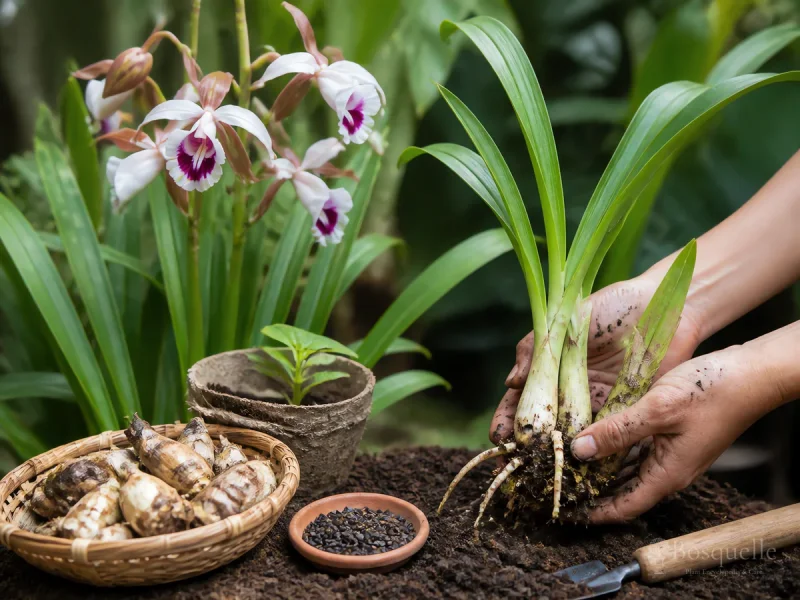
- After the spikes fade: divide or repot, or root the spent stalk on sand if you want extras.
A plant that sat in shade all year will not bloom because you bought fertilizer. Bright indirect light year-round plus the cool lean rest is the bloom job. Flowers open on mature new growth, typically once a year. Spikes can rise near four feet. Stake them before they lean into a pane.
If you missed the cool rest and got leaves without spikes, do not panic-feed. Give the next winter 55–60°F and leaner water. A bark refresh will not invent a rest. A heated living room needs the coolest bright corner you have — not a radiator ledge.
Flush the mix once a month if tap water is hard. Brown tips that stay after a flush are old damage; wait for new fans. Do not wet the foliage to raise humidity — use a pebble tray or a humid room.
Stake the spike when it is still flexible. Soft leaves tear if you wrestle the plant later. After the flowers fade, cut the spent stalk if you are not rooting it. Leave the green fans; they feed the next growth.
Brown tips, soggy crowns, and Calanthe
Yellow or brown that starts at the leaf tip after hard water and feed is often salt, not thirst. Missouri Botanical Garden: distilled or rainwater and a regular flush after fertilizer. Do not answer brown tips with more feed. Salt crust on the rim is a flush signal, not a bigger-pot signal.
A watery rot at the crown, or black spots after wet leaves, is too much moisture on the plant — not a cue to water more. Keep the mix moist, not a puddle. Water the medium. Leave air around the fans so they dry. Soft, foul bases go in the trash.
Hardy Calanthe is a different woodland orchid for cool temperate shade beds. Nun's orchid is Phaius — warm terrestrial culture and frost protection. Shop the Latin. A moth orchid in bark is the other mix-up. This plant wants terrestrial mix, not a hanging basket.
No bloom is usually weak light, no cool rest, or a starved plant. Move to brighter shade before you shop another fertilizer. Aphids find new growth and buds. Wipe early. Tip-only bronze after a brief chill is weather; a mushy crown is rot.
If one fan collapses and the crown is firm, check light and salts before you unpot. If the crown is mushy, the plant is done in that pot. Do not plant a replacement in the same sour mix.
Scale and mealybugs hide in the leaf bases. A strong rinse in the morning, then dry leaves, usually settles a light attack. Do not oil the fans in hot sun.
Pots, clones, and the one plant we hold
Shops sell P. tankervilleae as nun's orchid. Extra Phaius names such as wallichii or flavus are not cards on this site. Hardy Calanthe is another genus. Size, a deep pot, and about four pseudobulbs live on How to Repot Nun's Orchid.
Clone after bloom: split pseudobulbs with roots, or lay the spent spike on damp sand. Both jobs live on How to Propagate Nun's Orchid. Do not stick a leaf in water. Do not wait for a moth-orchid keiki on a live spike as the plan.
Open mix that stays moist still beats a bark basket once the plant is matched. Empty saucers. Keep leaves dry. The same cool winter rest applies in a pot.
A sunroom with bright shade and a cool night drop is closer to what this plant wants than a dim heated lounge. If you only have one room, pick the brightest window and move the pot back from the glass on hot afternoons.
What usually decides success is shade plus a mix that stays moist without drowning the crown, then a cooler winter. What usually fails is a bark basket, ice cubes, wet leaves, or a room that never cools.
Grow nun's orchid in bright shade in a rich mix that stays moist without sitting wet, keep the leaves dry, and give it a cooler, leaner winter so the spikes return. It is not a moth orchid in bark. Keep the crown out of standing water. Bright shade plus a cool lean winter sets the spikes. Do not treat it like hardy Calanthe or a moth orchid on bark.
FAQ
Is nun's orchid the same as Calanthe?
No. Hardy Calanthe is a different woodland orchid. Nun's orchid is Phaius — a warm terrestrial.
Should I use orchid bark or a soil mix?
Use a rich terrestrial mix that holds moisture and still drains. Pure epiphyte bark is the wrong mix.
How much light does nun's orchid need?
Bright light to light shade — never hot direct afternoon sun. An east window or a shaded porch works.
Does nun's orchid need a winter rest?
Yes for best bloom. Cooler nights and leaner water in winter help set spring spikes.
Can I grow nun's orchid outdoors?
In warm climates where frost is rare. Elsewhere, grow it as a houseplant and protect below about 40°F.
Why are the leaf tips turning brown?
Often fertilizer salts or hard water. Flush the mix and try rainwater or distilled water.
Should I use ice cubes?
No. Use tepid water on the mix. Ice cubes belong to other orchid marketing.
Why won't my nun's orchid bloom?
Usually weak light, no cool winter rest, or not enough feed. Bright shade plus a cool lean rest helps.
Can I wet the leaves when I water?
Better not — wet leaves can spot. Water the mix early in the day and keep foliage dry.
How tall does nun's orchid get?
Leaves can reach about three feet; flower spikes may rise near four feet when in bloom.
How do I get more plants?
After bloom, split pseudobulbs with roots or lay the spent spike on damp sand. See How to Propagate Nun's Orchid.
Related guides
Recommended plants

This note is part of Phaius Guides.
More first-season notes by plant are gathered in How to Grow Guides.
Updated: Reviewed by Bosquelle Editors