
Propagate Indian plum from hardwood cuttings taken in early winter, before the buds swell, or lift a rooted sucker while the shrub is dormant.

Take hardwood cuttings in early winter, before the buds swell
| Factor | Recommended | Avoid |
|---|---|---|
| When | Early winter, often November or December, from last season's wood before the buds swell | Do not wait until late winter, when this shrub has already broken bud |
| Wood | Vigorous one-year stems, about pencil thick, treated with rooting hormone | Do not use old, weak wood, and do not skip the hormone on a first try |
| Mix | A free-draining mix of sand and perlite; keep it moist, not soggy | Do not stand the cuttings in a wet, airless pot |
| Success | Results vary by plant; take more cuttings than you need | Do not treat one failed batch as proof the method never works |
Indian plum copies from hardwood if you take the wood early. Use vigorous one-year stems, dip the base in rooting hormone, and stick them before the buds swell. This shrub breaks bud early, so a February cutting is often too late. [1] [2] Semi-ripe tips in late summer also root for some growers. Sticking unrooted stems into wet ground is a restoration trick, not the home method. [3] [4]
- In November or December, take 6 inch cuttings from last season's stems, before the buds swell.
- Dip the base in rooting hormone. Stand the cuttings in a free-draining mix of perlite and sand.
- Keep the mix moist, not soggy, and out of hot sun. A humid cover helps if you can vent it so the stems do not rot.
- When a gentle tug meets resistance, pot each rooted cutting on its own and grow it on for a season before planting out.
Why did my cuttings fail?
This shrub breaks bud early, and some plants root much less readily than others. Take wood in November or December, use hormone, and start more cuttings than you need.
Lift a rooted sucker while the shrub is dormant
A rooted sucker is often easier than a cutting. Dig it while the shrub is dormant, keep a piece of root attached, and pot it or plant it at once in moist soil that drains. Layering works if a low stem is already touching the ground; pin it in spring and separate it the next dormant season. Seed is the usual nursery route, on Growing Indian Plum From Seed.
- In late fall or winter, find a sucker with its own roots a short way from the parent.
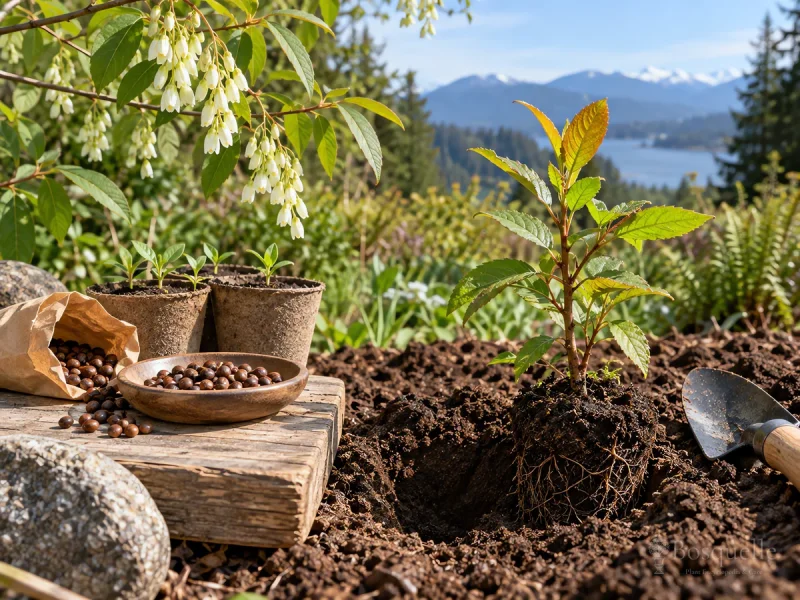
- Cut it from the parent, keep root attached, and pot it or set it in its new hole at the old soil line.
- Water it through the first dry season. The hole and spacing for a permanent plant are on Planting Indian Plum.
Can I divide the whole clump?
You can lift a rooted sucker. Splitting the whole crown is harder and is not the usual home method. Take suckers, or start seed.
If a batch of cuttings dries out or breaks bud before it roots, take a fresh set in November and lift one sucker from the same shrub so one route can succeed.
FAQ
Are cuttings faster than seed?
Not always. Seed is the usual nursery method. Cuttings skip the chill, but they still need a season in a pot, and some plants root poorly.
When do I lift a sucker?
While the shrub is dormant, in late fall or winter. Keep root on the sucker, and plant it before it dries out.
Related guides


Recommended plants
References
- [1] NRCS Plant Materials Center, Corvallis -
https://plants.sc.egov.usda.gov/DocumentLibrary/factsheet/pdf/fs_oece.pdf - [2] University of Washington Restoration -
https://depts.washington.edu/propplnt/Plants/oemleria.htm - [3] Native Plants PNW -
https://nativeplantspnw.com/indian-plum-oemleria-cerasiformis/ - [4] Plants For A Future -
https://pfaf.org/user/Plant.aspx?LatinName=Oemleria
This note is part of Oemleria Guides.
More notes on making another plant live in Propagating Guides.
Updated: Reviewed by Bosquelle Editors