
Start alpine snowbell by dividing the clump after the bells fade, and replant the pieces in fresh mix. Fresh seed is slower: sow it as soon as it is ripe, in a cold frame.
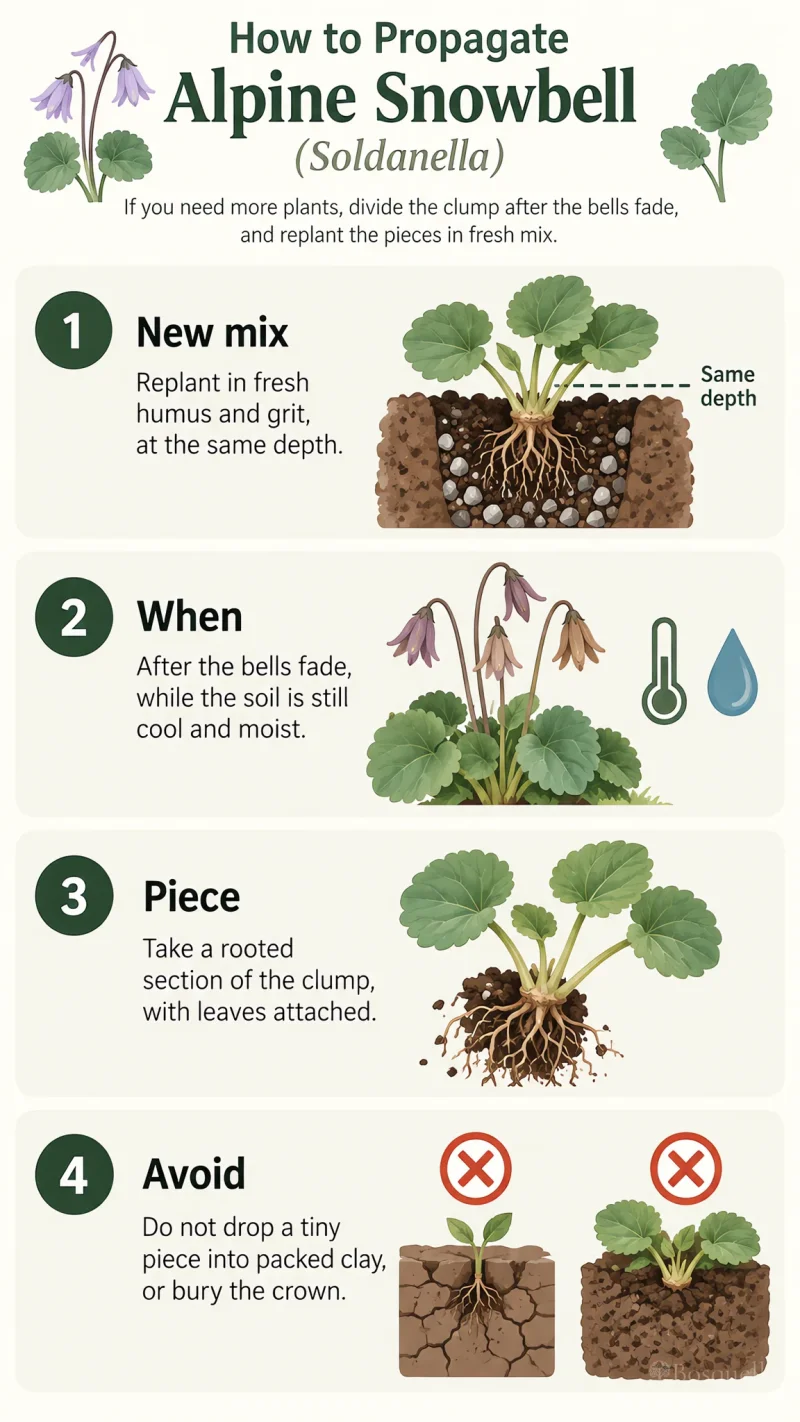
Divide the clump after the bells fade, and replant in fresh mix
| Factor | Recommended | Avoid |
|---|---|---|
| When | After the bells fade, while the soil is still cool and moist | Do not rip the clump apart in midsummer heat, with the roots stripped bare |
| Piece | Take a rooted section of the clump, with leaves attached | Do not keep a leafless scrap with no roots |
| New mix | Replant in fresh humus and grit, at the same depth | Do not drop a tiny piece into packed clay, or bury the crown |
| First weeks | Keep the new pieces moist and cool until they take | Do not set a fresh division in hot afternoon sun |
Alpine snowbell makes a small rhizome clump, so a home plant is usually started by division. Lift a side of the clump after the bells fade and split off rooted pieces that still have leaves. [1] Replant at once in fresh humus and grit, at the same depth, and keep the mix moist and cool until new growth shows. A tired clump often blooms better after this refresh. [2]
- After bloom, lift a side of the clump with a knife or a trowel. Keep soil stuck to the roots.
- Split off pieces that already have fine roots and a few leaves. Discard scraps with no roots.
- Replant at the same depth in fresh humus and grit. Top-dress grit around the crown.
- Keep the mix moist and cool until new leaves show. Hold a tiny piece in a pan in shade for a few weeks if the roots are sparse.
How do I start a new plant?
Divide the clump after the bells fade. Replant rooted pieces in fresh humus and grit, and keep them moist and cool until they take.
Sow fresh seed at once, in a cold frame
The seed does not keep well, so sow it as soon as the capsule splits. Surface-sow it on a moist, gritty mix in a cold frame, and do not bury it deep. Keep the mix moist. Some batches germinate in weeks; others take months. [3] Grow the seedlings in that pan through the first winter, then move them out after they have true leaves and a settled root. [4]
- Collect the capsule as soon as it ripens, and sow the same day. Do not store the seed dry for a year and hope.
- Surface-sow on a moist, gritty mix in a cold frame. Press the seed in; do not cover it deep.
- Keep the mix moist. Wait. Germination can take one to six months.
- Grow the seedlings through the first winter in the pan. Plant them out after they have a true leaf. Read How to Grow Alpine Snowbell if you still need the rock pocket or trough.
How do I sow the seed?
Sow it the day you collect it, on a moist gritty mix in a cold frame. Do not bury it deep. Grow the seedlings through the first winter before you plant them out.
If you need more plants, divide the clump after the bells fade, and replant the pieces in fresh mix.
FAQ
Can I root a softwood cutting?
A rooted division after bloom is the usual start. A softwood cutting can work, but it is slower and less reliable than a piece that already has roots.
Will stored seed still grow?
Fresh seed is the reliable start. The seed loses viability in storage, so sow it as soon as the capsule splits.
Related guides

Recommended plants

References
- [1] Alpine Garden Society -
http://encyclopaedia.alpinegardensociety.net/plants/Soldanella - [2] GardenersHQ -
https://www.gardenershq.com/Soldanella-Alpine-Snowbell.php - [3] Useful Temperate Plants -
https://temperate.theferns.info/plant/Soldanella+alpina - [4] Royal Horticultural Society -
https://www.rhs.org.uk/plants/17459/soldanella-alpina/details
This note is part of Soldanella Guides.
More notes on making another plant live in Propagating Guides.
Updated: Reviewed by Bosquelle Editors