
Yarrow grows best in full sun and lean, well-drained soil. Rich beds and wet winter crowns make stems flop and rot. Common yarrow spreads by rhizome; many named hybrids clump instead.

Get the soil and habit right first. Types, partners, and seed live on the child pages.
Full sun, lean soil, and drainage
| Factor | Recommended | Avoid |
|---|---|---|
| Light | Full sun, all day if you can | Part shade that stretches stems and thins bloom |
| Soil | Lean, gritty, well-drained ground | Rich compost-heavy beds and wet winter crowns |
| Water | Water to establish, then ease off | Weekly soak on an already-moist border |
| Fertilizer | None, or a light spring scratch at most | Rose-style feeding that softens stems |
Yarrow evolved for dry, sunny ground. Once the roots are down, it tolerates summer drought. That is not the same as surviving a wet, airless winter crown. Waterlogged cold soil rots the plant that sailed through last July. Raise the bed or add grit where clay seals.
Example: Moonshine stays upright in poor soil and flops after a hard rain if you feed it like a rose. Coronation Gold wants the same lean sun. Color does not rewrite drainage.
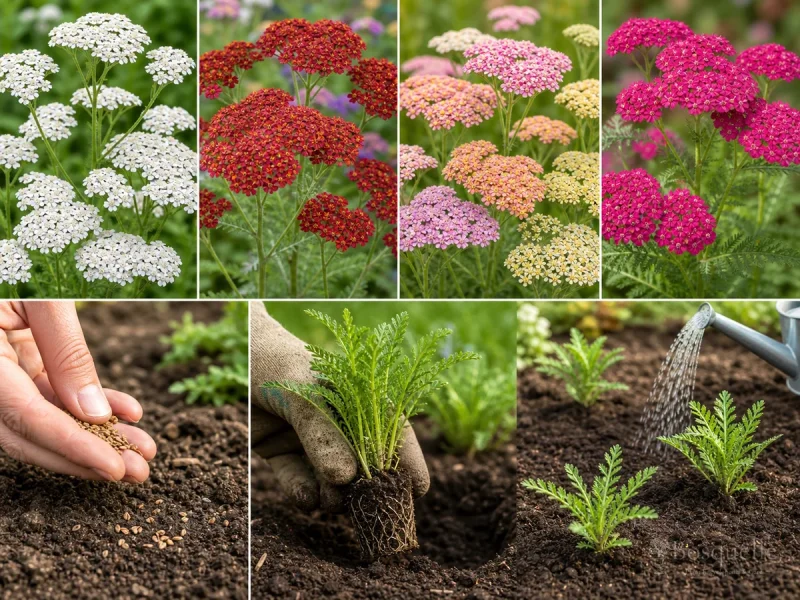
Plant in spring or early fall into workable soil. Do not add a bag of compost into an already-rich bed “to help it along.” That is the usual cause of floppy stems. Native soil, plus grit on heavy ground, is enough.
- Choose a full-sun, well-drained spot.
- Skip low wet corners and afternoon shade.
- Dig a hole as deep as the pot and twice as wide.
- Backfill with native soil. Add no compost in rich beds.
- Space clump types 12–18 inches. Give running types an edge.
- Water once to settle. Ease off once new growth is established.
Pots can hold a compact clump in a gritty mix if the pot drains and does not sit in a saucer of water. Ground plantings are easier. A running millefolium in a pot still wants watching — rhizomes find the drainage holes.
First-year plants need more even moisture than a mature clump. Keep the crown from sitting wet, but do not let a new rootball bake in week one. After that, dry spells are normal. Yellow lower leaves in a wet bed are a drainage problem, not a fertilizer problem.
Winter mulch should be light and coarse if you use it at all. A packed wet blanket over the crown is a rot risk. In snow country the plant dies back and returns from the crown. Protect the crown from ice puddles, not from cold itself.
A gravel mulch or a thin layer of grit around the crown sheds splash and keeps the neck dry. Bark fines that stay wet against the stem are the wrong mulch here. If you already piled rich compost last year, scrape it back from the crown this spring and stop feeding.
Established clumps in the right soil can go weeks without a hose in summer. New divisions cannot. Treat anything you just planted as a new plant for two to three weeks, then step water back. Calendar soaking of a mature, lean planting is how you undo the drought tolerance you bought the plant for.
Common yarrow runs — decide habit first
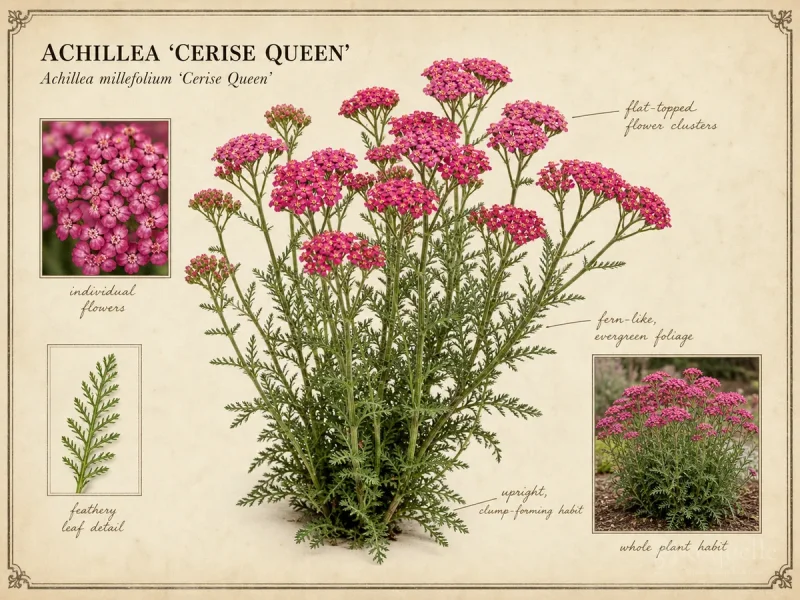
Read the Latin before you trust the flower color. Achillea millefolium and its garden colors spread by rhizome. In lean, dry soil the run is manageable. In fertile, moist soil it can fill a bed in a few seasons. Cerise Queen is still a millefolium type. Pink petals do not stop the rhizomes.
Clumping hybrids and fern-leaf types stay in a slowly widening crown. Compact series stay small on purpose. If you needed a 18-inch border edge with no containment, do not plant the species. Sort the habit on Types of Yarrow before you buy a second color of the same runner.
Contain a running patch with a buried edging strip, a mown grass margin, or a meadow you accept will fill. Digging stray rhizomes in spring works if you stay after it. Switching to a clumping hybrid is easier than fighting the species forever in a small bed.
Measure the job before you buy a second color. A roadside meadow and a 3-foot mixed border are different jobs. The same pink tag can succeed in one and overrun the other. If you cannot install an edge, buy a clump.
If you wanted a drift that knits, buy the species and plan to mow or pull the edges once a year.
Self-sown seedlings around a named color often come paler or off- type. They can crowd the original clump. Pull them, or divide from a known piece of the named plant. Do not assume the prettiest seedling is still the cultivar you paid for.
Deadhead through summer for more bloom
Spent heads left in place slow the next flush. Cut them, and many types throw more flowers into late summer. Leave a few late heads if you want winter structure or seed. That is a choice, not a rule.
- Cut each spent head back to a leaf cluster.
- Repeat as flushes fade from early summer onward.
- After the first flush, cut leggy stems by about one-third.
- Stop deadheading stems you want for seed or winter form.
Shearing the whole clump to stubble works in a meadow. In a mixed border, cut stem by stem so you do not strip foliage the plant still needs. Stems for the house should be taken when the heads are just open. They dry well if you hang them in a warm, dark place.
Powdery mildew shows in still, humid air more than in dry sun. Thin a crowded clump and keep the site open. Do not answer mildew with extra fertilizer. That makes softer growth and more mildew.
Divide every few years
A clump that has gone three or four years without division often opens a woody, hollow center and flowers only on the rim. Division resets that. Spring, or just after the main flush, are the usual windows. Fall is possible where the soil stays drained into winter.
- Lift the clump with a fork, keeping outer roots intact.
- Discard the woody, hollow center.
- Replant vigorous outer pieces into lean, drained soil.
- Water to settle, then treat as a new planting for two weeks.
Named colors that faded toward pale pink or white are often crowded by their own seedlings. Division from the original piece restores the color. Seed will not. Full seed notes live on Growing Yarrow from Seed.
Softwood cuttings from non-flowering shoots can work. They are fussier than division and rarely needed. If you only need more of one named plant, divide it.
When stems flop or the clump thins
Floppy stems after rain almost always mean soil that is too rich, light that is too low, or both. Move the plant to leaner sun, or divide it into poorer ground. Feeding more will not stiffen the stems. Staking hides the cause for one season.
A thin, woody clump that barely blooms needs division, not a richer feed. A patch that ran through the neighbors needs an edge or a clumping replacement. A crown that turns mushy after a wet winter needs grit and a higher sit, not more summer water the following year.
Aphids can cluster on new stems. A strong spray of water or a simple soap treatment is enough on a small clump. Do not drench the crown in oil that sits wet. Rust and stem spots show more in crowded, damp plantings. Give air. Replace a chronically wet crown rather than spraying forever.
Deer usually leave yarrow alone compared with hosta, but they will browse new growth if food is short. A fence or repellent is a site choice. Habit and soil still come first.
Rabbits nibble young stems more than old woody clumps. Net a new division for a month if pressure is high. Do not answer browsing with richer fertilizer in hope of faster recovery. Soft new growth is what they eat.
If a clump looks tired in year five and you have never divided it, that is the first fix. If it looks tired in year two in a wet shade pocket, move it. Age and site are different failures. Division will not save a crown that sits in winter water.
Wild lookalike — poison hemlock
Before it flowers, yarrow’s ferny foliage can resemble poison hemlock and other toxic carrot-family plants in rough sunny ground. Nursery-bought, labelled garden Achillea is not a foraging problem. The caution is for unidentified wild plants.
Poison hemlock (Conium maculatum) often shows purple-spotted stems and grows much taller than garden yarrow. Do not identify a wild plant for eating from a photo or from this page. This is not a foraging guide. Plant labelled stock, and leave wild lookalikes alone.
Types, partners, and seed
Once the site is lean and sunny, choose the habit you can host — running species, clumping hybrid, or compact form — on Types of Yarrow. Pair plants that share full sun and sharp drainage on Yarrow Companion Plants. Sow species or open strains, not named hybrids, using Growing Yarrow from Seed.
FAQ
How do I divide yarrow, and how often?
Every two to four years, in spring or just after the main flush. Lift the clump, discard the woody center, and replant vigorous outer pieces in lean soil.
Can I take cuttings instead of dividing?
Division is the reliable method. Softwood cuttings from non-flowering shoots are possible but fussier.
Will yarrow come back every year?
Yes. It is a hardy herbaceous perennial. The crown needs winter drainage; summer drought tolerance does not protect a waterlogged crown.
Does yarrow spread aggressively?
Common yarrow (Achillea millefolium) spreads by rhizome, especially in fertile, moist soil. Clumping hybrids and compact forms stay much tighter. Check the type.
Why did my yarrow flop after rain?
Soil too rich, too much shade, or both. Move it to lean sun or divide into poorer ground. Extra fertilizer will not stiffen the stems.
Is yarrow drought tolerant?
Yes once established — for dry summers, not wet winters. Waterlogged cold soil rots the crown.
How do I get more bloom through the season?
Deadhead spent heads back to a leaf cluster. After the first flush, cut leggy stems by about one-third.
Can yarrow be confused with a poisonous plant?
Ferny foliage can resemble poison hemlock before bloom. Use labelled nursery plants. This is not a foraging guide.
Why did the flower color change on a named plant?
Self-sown seedlings often come paler and crowd the original. Divide from a known piece of the named plant.
Can I grow yarrow in a pot?
A compact clump can, in a gritty mix that drains. Ground plantings are easier. Running types still try to escape.
Related guides


Recommended plants





This note is part of Achillea Guides.
More first-season notes by plant are gathered in How to Grow Guides.
Updated: Reviewed by Bosquelle Editors