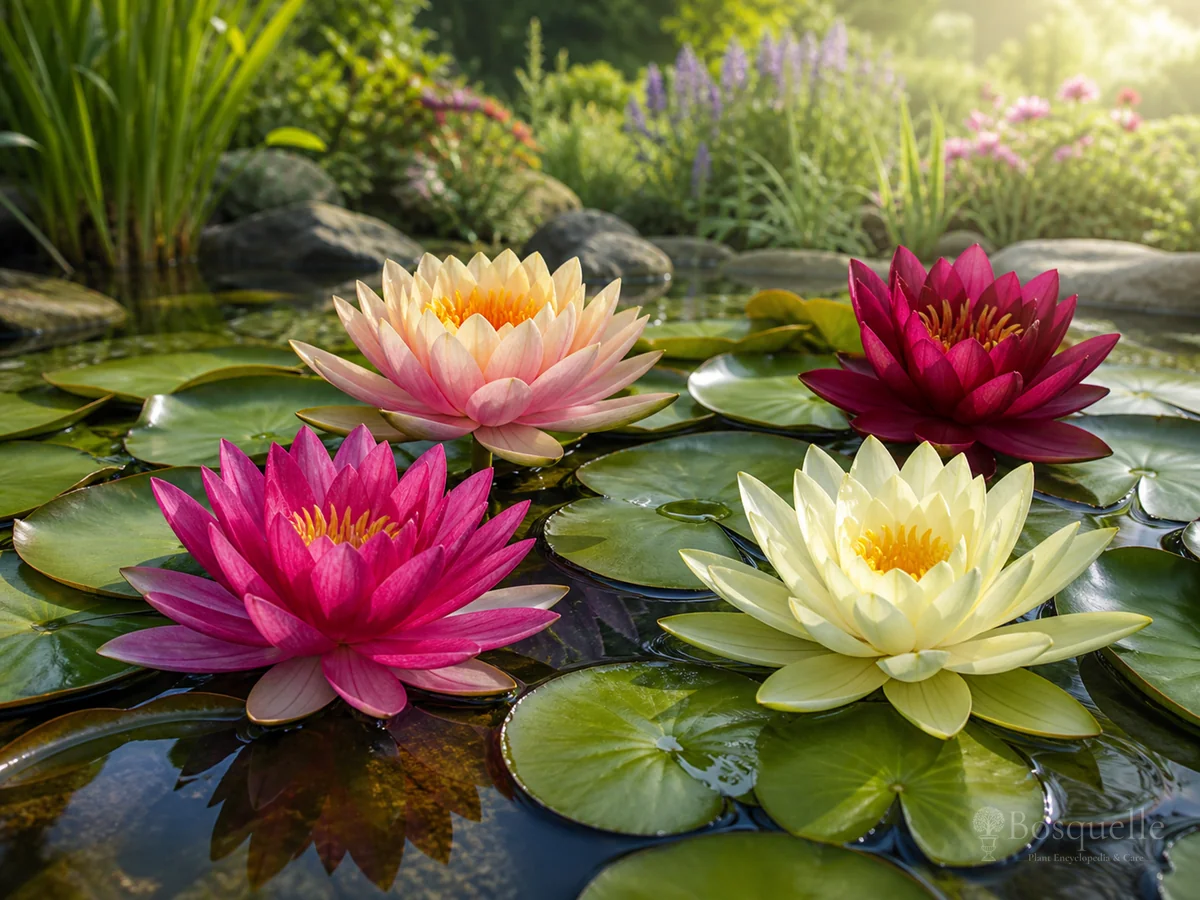
Grow water lilies (Nymphaea) in full sun in calm water, and leave part of the surface open. Decide hardy versus tropical before you buy — they are not the same winter plant. They are not lotus.
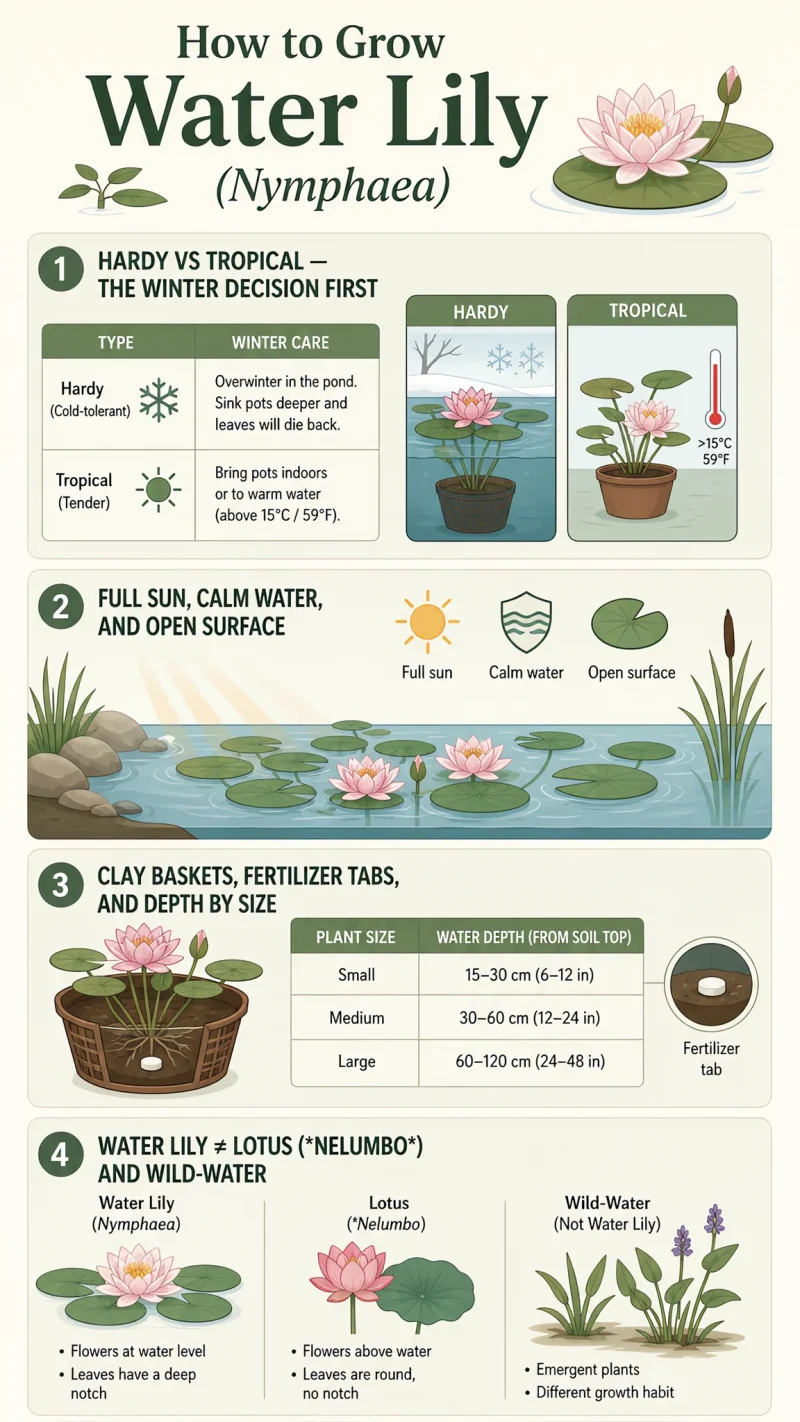
Hardy vs tropical first
| Factor | Recommended | Avoid |
|---|---|---|
| Hardy | Rhizome stays in the pond below the ice line in most temperate ponds | Treating a hardy lily as a one-season annual unless the pond freezes to the mud |
| Tropical | Warm water in summer; lift the tuber or buy new in spring | Leaving a tropical in a pond that freezes |
| Sun | Full sun, about 5–6 hours | A shaded bay with few flowers |
| Water | Calm surface; no fountain jet on the pads | Turbulence that shreds young leaves |
| Surface | Leave open water — about 40% is a useful target | Pads covering the whole pond |
Pick the winter class first. A tropical bought in June is gone by December if nobody planned a store or a replacement. [1] If you keep tropicals, decide the day you buy: a frost-free place to hold the tuber barely moist, or a new plant next June. Do not wait until the pond ices.
Should I grow a hardy or a tropical water lily?
Hardy types overwinter in the pond in most temperate climates. Tropicals need warm water and either indoor tuber storage or a fresh plant each spring.
Full sun, calm water, and open surface
Bloom wants direct sun — about five to six hours. Pads shade fish and slow algae, but a full blanket cuts light into the water. [2] Keep the surface still. A jet aimed at the basket batters young leaves. Leave open water so gas can exchange and the crown still sees sky. [3] Six hours on the pads is not the same as six hours on a wall behind the pond. If trees close the south sky in August, flowers drop first.
How much sun do water lilies need?
Full sun — about five to six hours. Shade is the usual reason a mature plant makes pads and no flowers.
Should pads cover the whole pond?
No. Leave open water — about 40% is a useful target. A full blanket cuts light and starves the pond underneath.
Plant in a heavy clay or loam basket, not a bag of potting mix that floats apart. [4] The basket steps live on Planting Water Lily. Fertilizer tabs go in that soil, not into free water.
What fails a water lily pond
- A tropical in a freezing pond — hardy or annual, not both by accident.
- Shade — pads, few flowers.
- A fountain on the crown — torn young leaves.
- Potting mix in the pond — it floats and fouls the water.
- Wall-to-wall pads — no open water.
Do not empty extras into a creek or a natural pond. Hardy stock can spread where water overflows. Keep the pond as a closed basin, not a spillway.
Kinds, planting, and partners
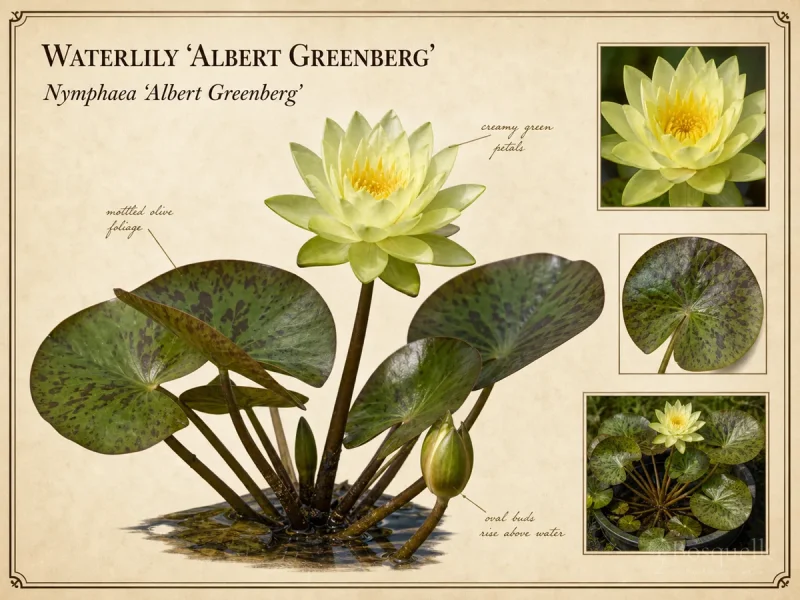
- Hardy ‘Attraction’ versus tropical ‘Albert Greenberg’ or night-blooming ‘Red Flare’ — Types of Water Lilies. Lotus is not a type.
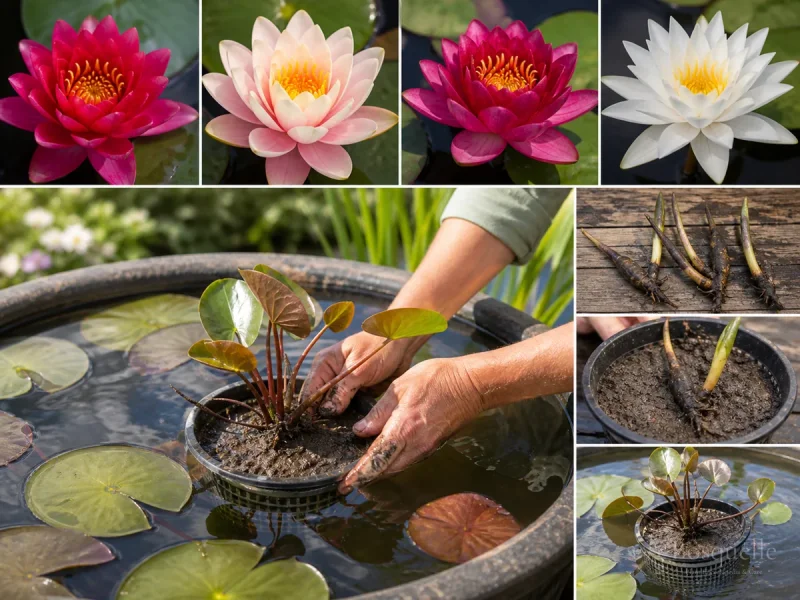
- Basket, angle, tabs, and the warm-water gate — Planting Water Lily.
- Oxygenators and marginals that leave open water — Water Lily Companion Plants.
Hardy or tropical first. Full sun, still water, open surface. Plant the basket on Planting Water Lily.
FAQ
Is a water lily the same as a lotus?
No. Water lily is Nymphaea. Lotus is Nelumbo. Compare pads and flower height on Types of Water Lilies.
How often do you water a water lily?
You do not water the plant like a pot on a patio. Keep the pond or tub filled so the pads float. Top up in heat.
How often should I fertilize?
Push aquatic tablets into the basket soil on a summer schedule — not into open water. The planting page owns the first-season steps.
Can I leave a tropical in the pond all winter?
Not where the pond freezes. Lift the tuber after frost and store it cool and barely moist, or treat the plant as an annual.
Can I empty extras into a natural pond?
No. Keep hardy plants in a contained pond. Overflow into wild water is how they spread where they should not.
Related guides

Recommended plants






References
- [1] University of Missouri IPM -
https://ipm.missouri.edu/MEG/2017/5/Water_Lilies/ - [2] NC State Extension -
https://plants.ces.ncsu.edu/plants/nymphaea-hardy-water-lilies/ - [3] Chicago Botanic Garden -
https://www.chicagobotanic.org/plant-information/smart-gardener/picture-perfect-water-lilies - [4] Gardening Know How -
https://www.gardeningknowhow.com/ornamental/water-plants/water-lily/growing-water-lilies.htm
This note is part of Nymphaea Guides.
More first-season notes by plant are gathered in How to Grow Guides.
Updated: Reviewed by Bosquelle Editors