
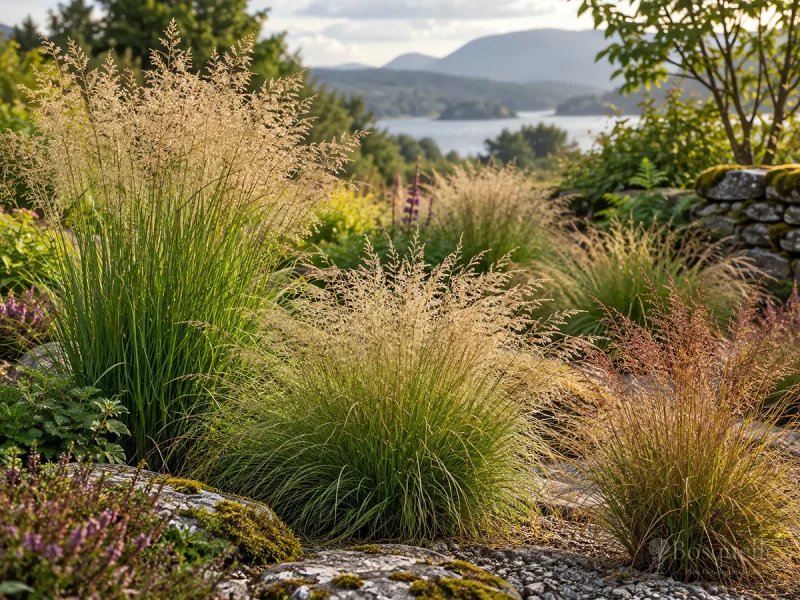
Grow tufted hair grass in part shade, in soil that stays moist. Tufted hair grass is Deschampsia cespitosa, also called tussock grass.

Give it part shade and soil that stays moist
| Factor | Recommended | Avoid |
|---|---|---|
| Sun | Part shade, or morning sun if the soil stays moist | Do not bake it in hot afternoon sun on dry ground |
| Soil | Moist, humus-rich soil that still drains after rain | Do not leave it in a dry, baked bed |
| Water | Keep the soil evenly moist, especially in sun | Do not let a sunny clump dry out in summer heat |
| Deer | Deer usually leave tufted hair grass | Do not assume a hungry spring deer will never nibble new blades |
| Salt | Tufted hair grass tolerates some salt | Do not treat wavy hairgrass as a salt plant |
Tufted hair grass is a cool-season clump. It prefers part shade and soil that stays moist, including spots that stay soggy after rain. It will grow in full sun when the ground stays wet, but hot afternoon sun on dry soil browns the blades. [1] Keep new plants watered. Some established clumps take a short dry spell, but a sunny bed that dries out in summer heat is the usual reason the foliage looks scorched. [2] [3] tufted hair grass is Deschampsia cespitosa. Wavy hairgrass wants a drier, shadier bed — pick the kind on Types of Deschampsia.
Does tufted hair grass need full sun?
No. Give it part shade, or morning sun if the soil stays moist. Hot afternoon sun on dry ground browns the blades.
How often should I water tufted hair grass?
Keep the soil evenly moist, especially in sun. Do not let a sunny clump dry out in summer heat. Do not leave the crown in a stagnant puddle that never drains.
Will deer eat tufted hair grass?
Deer usually leave it. They may nibble new blades in early spring before other forage is up. The clump typically grows back.
Cut last year's stems in late winter
Leave the tan panicles through winter. In late winter, before new green blades push, cut last year's stems to a few inches above the crown. Do not cut the clump in fall. The old foliage shelters the crown, and the seed heads are the winter show. [4]
- Leave the tan flower stems standing through winter.
- In late winter, before new blades show, cut last year's stems to a few inches above the crown.
- Do not cut in fall. Early cuts expose the crown and remove winter structure.
- Bag or compost the cuttings if you do not want volunteer seedlings nearby.
When should I cut back tufted hair grass?
Cut last year's stems in late winter, before new green blades push. Do not cut in fall.
Not Japanese forest grass — and not blue fescue
Japanese forest grass is Hakonechloa macra, a shade grass with broader, often striped blades — see How to Grow Japanese Forest Grass. Blue fescue is Festuca, a small dry-sun mound — see How to Grow Blue Fescue. Those are not this grass. Wavy hairgrass is still Deschampsia; it is the dry-shade kind, not a blue fescue.
Is tufted hair grass the same as Japanese forest grass?
No. Tufted hair grass is Deschampsia, a fine cool-season tussock. Japanese forest grass is Hakonechloa, with broader, often striped blades.
If last year's stems are still standing and new blades are not up yet, cut them this week.
FAQ
Can I grow tufted hair grass in a pot?
Yes, in a pot with a drainage hole, if you keep the mix moist and give it part shade. A small pot that dries in afternoon sun will brown the blades.
Can I grow it from seed?
Yes. It self-sows in moist ground. Sow on the surface of moist soil in spring if you want more plants. Do not bury the seed deep.
Is tussock grass a sedge?
Not this one. Tussock grass here is tufted hair grass, a true grass. Tussock sedge is Carex — see How to Grow Sedge.
Does it survive hot, humid summers?
It often looks tired in hot, humid summers, especially in full sun. Keep the soil moist and give it afternoon shade. It grows best where nights stay cool.
Related guides

Recommended plants


References
- [1] NC State Extension Gardener -
https://plants.ces.ncsu.edu/plants/deschampsia-cespitosa/ - [2] University of Illinois Extension -
https://web.extension.illinois.edu/hortanswers/plantdetail.cfm?PlantID=605&PlantTypeID=3 - [3] Lady Bird Johnson Wildflower Center -
https://www.wildflower.org/plants/result.php?id_plant=DECE - [4] The Morton Arboretum -
https://mortonarb.org/plant-and-protect/trees-and-plants/tufted-hair-grass/
This note is part of Deschampsia Guides.
More first-season notes by plant are gathered in How to Grow Guides.
Updated: Reviewed by Bosquelle Editors