
Grow Japanese forest grass in part shade and soil that stays moist. Hakone grass is the same plant.
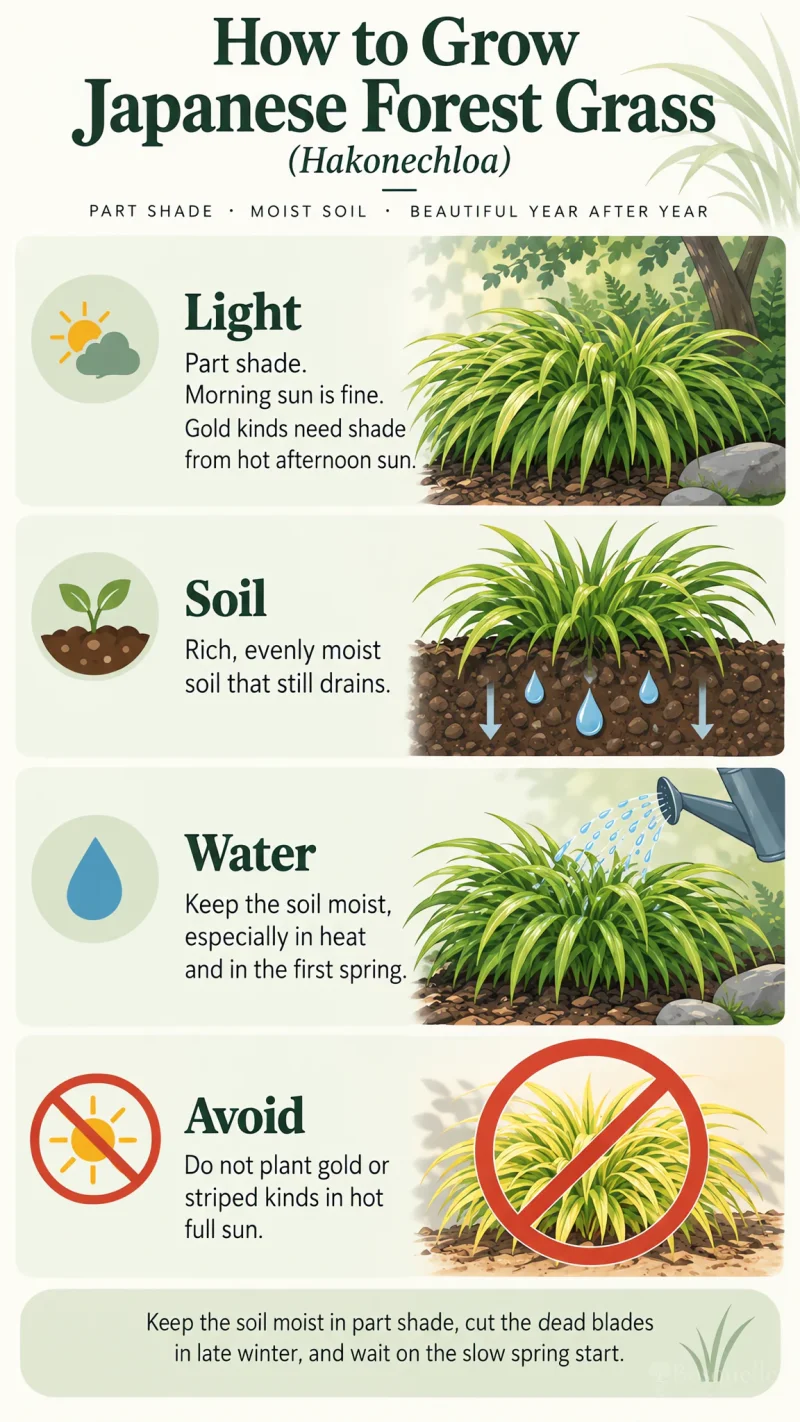
Give it part shade and soil that stays moist
| Factor | Recommended | Avoid |
|---|---|---|
| Light | Part shade. Morning sun is fine. Gold kinds need shade from hot afternoon sun | Do not plant gold or striped kinds in hot full sun |
| Soil | Rich, evenly moist soil that still drains | Do not plant in heavy clay or in dry ground |
| Water | Keep the soil moist, especially in heat and in the first spring | Do not let the bed dry out in July |
| Deer | Deer usually leave it | Do not count on it as deer-proof in a hungry winter yard |
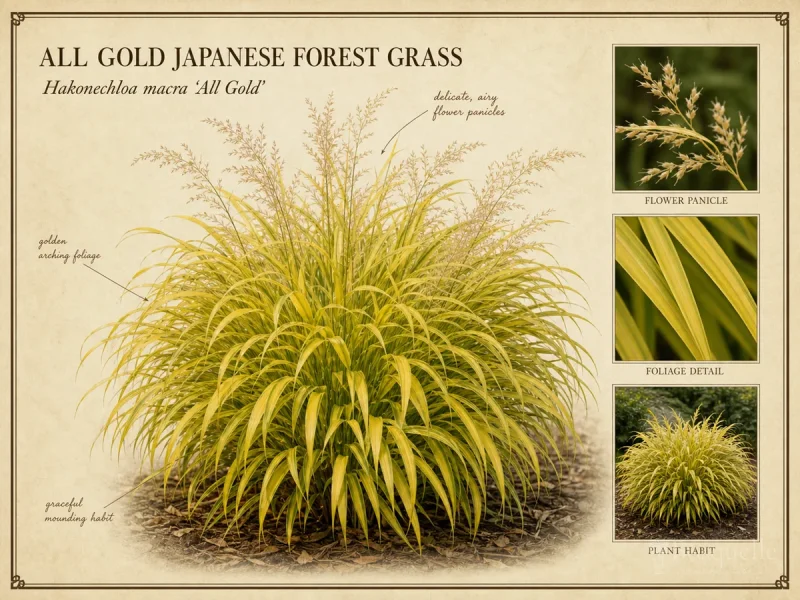
This is a shade grass. Give it part shade and soil that stays evenly moist, with enough drainage that the crown is not sitting in a clay puddle. [1] Gold and striped kinds scorch if the afternoon sun is hot and the soil dries. [2] Green kinds take a bit more sun than gold ones, but they still want moisture. The plant is a warm-season grass, so it is slow to reappear in spring — wait before you dig it up. Match the kind on Types of Japanese Forest Grass if you need a green clump, a gold stripe, or a solid gold. green Japanese forest grass is the green species. Aureola is the usual gold stripe. All Gold is solid gold.
- Site it in part shade. Morning sun is fine. Keep gold kinds out of hot afternoon sun.
- Work in organic matter so the soil stays moist but still drains. Skip a heavy clay hole and skip dry sand.
- Water whenever the top starts to dry, especially in heat. Mulch the crown before winter so frost does not heave it.
Does Japanese forest grass like sun or shade?
Part shade. Morning sun is fine. Gold and striped kinds scorch in hot afternoon sun. Green kinds take a bit more sun if the soil stays moist.
How often should I water it?
Keep the soil evenly moist. Water when the top starts to dry, especially in heat and in the first season. Do not let a clay hole sit wet around the crown.
Why is it slow to come up in spring?
It is a warm-season grass. New blades come late. Wait before you assume the clump is dead.
Grow it in a pot you can bury or move for winter
A pot with a drainage hole works if you keep the mix moist. The blades cascade over the rim. In winter, do not leave the pot sitting exposed above ground — bury it, wrap it, or move it into an unheated garage so freeze-and-thaw does not kill the roots. [3]
Can I grow it in a pot?
Yes. Use a pot with a hole and keep the mix moist. For winter, bury the pot or move it to an unheated garage. An exposed pot above ground often fails.
Cut the dead leaves to the ground in late winter
The blades die back. They do not stand as a winter screen. Leave them through winter so they cover the crown, then cut them to the ground in late winter or early spring, before new shoots show, so you are not cutting into the new growth.
- Leave the dead blades through winter so they cover the crown.
- In late winter or early spring, cut the clump to the ground before new blades appear.
- Do not shear it in summer as if it were a hedge. Trim only scorched tips if they bother you.
When do I cut it back?
Late winter or early spring, to the ground, before new shoots. Leave the dead blades through winter to cover the crown.
Not maiden grass — and not Japanese sedge
Japanese forest grass is not maiden grass. Maiden grass is How to Grow Miscanthus — a 4- to 12-foot sun clump, often weedy. [4] This plant is a 12- to 20-inch shade mound that stays put. Japanese sedge is How to Grow Sedge — often evergreen through winter. This grass dies back. The papery blades look like a tiny bamboo, but it is a grass in this genus, not a bamboo cane.
Is this maiden grass?
No. Maiden grass is Miscanthus, a tall sun grass. Japanese forest grass is a short shade mound. Japanese sedge is Carex and often stays green in winter. This grass looks a little like bamboo, but it is still this plant.
Keep the soil moist in part shade, cut the dead blades in late winter, and wait on the slow spring start. Hot dry sun scorches the blades.
FAQ
Does it spread and take over?
It creeps by rhizomes, slowly. It is not invasive. Give it years to fill, not a season.
Can I grow it from seed?
Named kinds do not come true from seed, and most do not set useful seed. Buy a nursery clump, or divide one you already have.
What should I plant with it?
Other shade plants that like moist ground — hostas, ferns, and dark-leaved coral bells. Site and water stay on this page.
Related guides


Recommended plants




References
- [1] University of Wisconsin–Madison Extension -
https://hort.extension.wisc.edu/articles/japanese-forest-grass-hakonechloa-macra/ - [2] NC State Extension Gardener -
https://plants.ces.ncsu.edu/plants/hakonechloa-macra/ - [3] Garden Design -
https://www.gardendesign.com/ornamental-grasses/japanese-forest-grass.html - [4] NC State Extension Gardener -
https://plants.ces.ncsu.edu/plants/miscanthus-sinensis/
This note is part of Hakonechloa Guides.
More first-season notes by plant are gathered in How to Grow Guides.
Updated: Reviewed by Bosquelle Editors