
Grow Swedish ivy in bright light, in mix that drains, and water when the top inch feels dry. Hang the basket so the stems can trail. Swedish ivy is Plectranthus verticillatus, a mint-family trailer. It is not a true ivy.
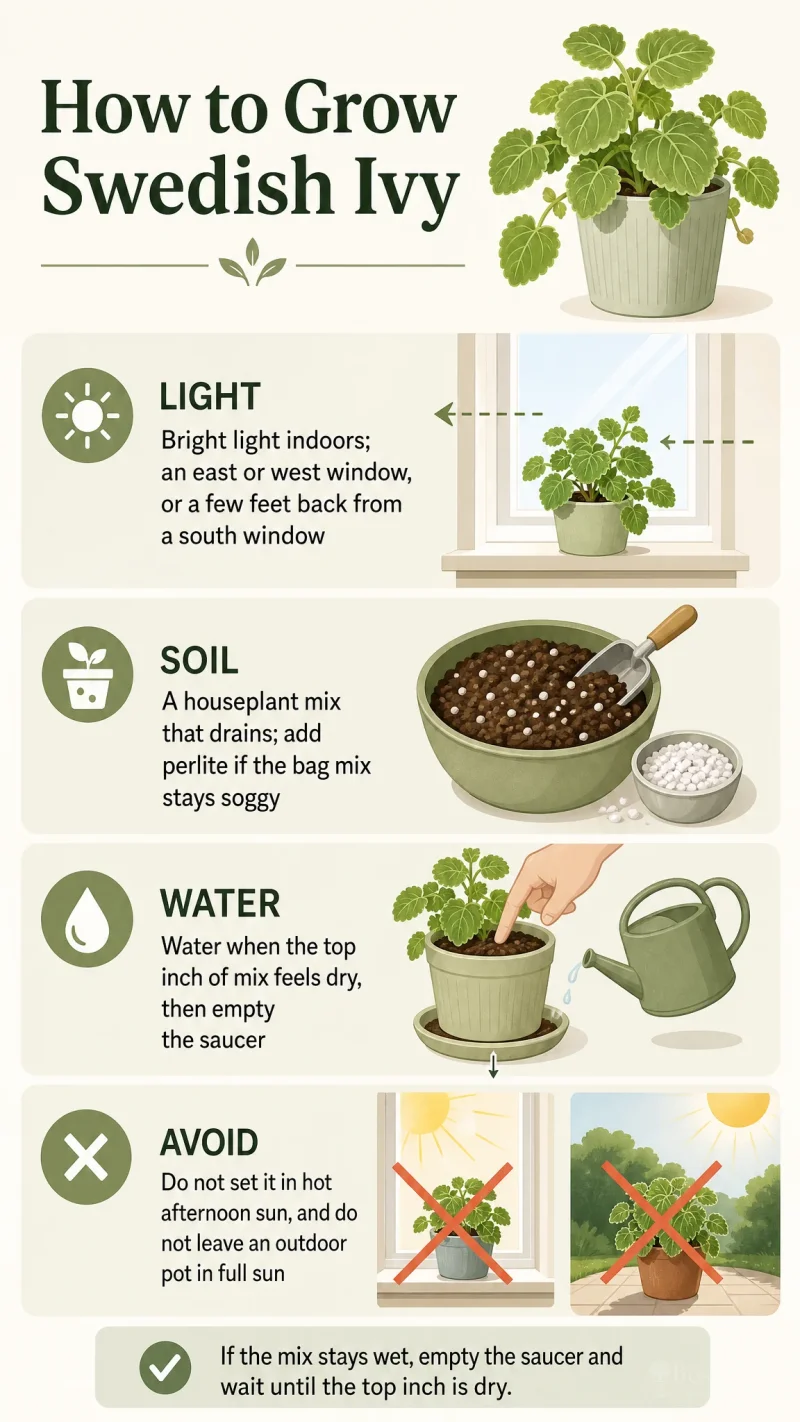
Give it bright light, and water when the top inch is dry
| Factor | Recommended | Avoid |
|---|---|---|
| Light | Bright light indoors; an east or west window, or a few feet back from a south window | Do not set it in hot afternoon sun, and do not leave an outdoor pot in full sun |
| Water | Water when the top inch of mix feels dry, then empty the saucer | Do not leave the pot sitting in water |
| Soil | A houseplant mix that drains; add perlite if the bag mix stays soggy | Do not use a dense mix that stays wet around the roots |
| Temperature | Average indoor rooms; bring the pot in before a freeze | Do not leave it out overnight once frost is possible |
| Feed | A diluted houseplant fertilizer in spring and summer | Do not keep feeding heavily in winter, and do not soak the mix to “make it grow” |
Swedish ivy is a trailing mint-family plant with rounded, scalloped, glossy leaves. Give it bright light indoors, and water when the top inch of mix feels dry, because a soggy saucer is the usual reason roots rot. Outdoors, keep the pot in shade; direct sun burns the foliage. [1] An east or west window is a good home. Morning sun is fine; hot afternoon glass scorches the leaves. [2] If lower leaves yellow and drop, water less. In summer, water more often if the hanging basket dries fast, then go drier once growth slows. [3]
- Set the pot in bright light. Move it off hot afternoon glass if the leaves bleach or crisp.
- Water when the top inch of mix feels dry. Soak the mix, let extra water run out, and empty the saucer.
- If lower leaves yellow and drop, water less. If the whole plant wilts and does not recover after you water, the roots have likely rotted; take cuttings from the healthiest tips and discard the wet parent.
Why is my Swedish ivy turning yellow?
Yellow lower leaves usually mean the mix stayed wet. Let the top inch dry, empty the saucer, and water less often. Hot sun can also bleach and dull the leaves.
Is Swedish ivy hard to care for?
No. Give it bright light, a mix that drains, and water when the top inch is dry. Pinch the tips so the basket stays full.
Hang it in a draining basket, and pinch the tips
Swedish ivy looks best in a hanging basket, where the stems can trail. Use a pot with a drainage hole. Pinch the growing tips so the plant branches instead of running as a few long, bare stems. You can pinch at any time of year. After the small flowers fade, pinch those stems back too. The plant tolerates a hard cut if it has gone leggy.
- Choose a hanging basket or pot with a drainage hole. Fill it with mix that drains, and set the plant at the same depth it grew in the nursery pot.
- Hang it where the stems can fall freely, in bright light out of hot afternoon sun.
- Pinch or snip the soft tips just above a leaf pair when you want a fuller crown. Cut a long bare stem back to a leafy node.
- Wait to repot until the basket is crowded, then move up one size in spring in fresh mix that drains.
Root the pinched tips as new plants on How to Propagate Swedish Ivy.
How do I keep Swedish ivy from getting leggy?
Give it brighter light first, then pinch the tips above a leaf pair. Pinching in a dim corner will not keep new growth compact.
Bring it in before a freeze, and water less in winter
You can summer the basket outdoors in shade after frost is gone. Bring it indoors before a freeze. It can take a short dip near 40°F, but a freeze kills it. Once growth slows, water less and stop heavy feeding, because a wet mix in a cool room rots the roots. Some leaves drop after the move. That is common. Keep the mix barely moist, and wait for new growth in spring.
Not a true ivy — and not the lawn weed called creeping Charlie
Swedish ivy does not cling to walls. It is a mint-family trailer, native to southern Africa, not Hedera. True ivy climbs with aerial roots — see How to Grow English Ivy. Shops also call this plant creeping Charlie. That nickname is the lawn weed Glechoma hederacea, a hardy ground ivy with kidney-shaped leaves and violet flowers. If you are trying to kill a lawn weed, you do not have this houseplant.
Coleus is a related mint grown for painted leaves — see How to Grow Coleus. Swedish begonia is another shop name; it is not a begonia — see How to Grow Begonias. German ivy is Delairea, a different hanging vine. Mona Lavender is another Plectranthus, grown for bloom, not this scalloped trailer. Confirm the tag is Plectranthus verticillatus (also sold under the misapplied name P. australis). [4]
Is Swedish ivy the same as creeping Charlie?
No. This houseplant is sometimes sold as creeping Charlie, but lawn creeping Charlie is Glechoma, a hardy weed. Pilea with crinkled leaves is another plant that uses that name.
Is Swedish ivy a true ivy?
No. It is Plectranthus, in the mint family. It trails from a basket. It does not cling to a wall the way English ivy does.
If the mix stays wet, empty the saucer and wait until the top inch is dry. If the stems go long and bare, move the basket into brighter light and pinch the tips.
FAQ
Can I put my Swedish ivy outside?
Yes, in shade after frost is gone. Bring the basket in before a freeze. In frost-free gardens it can trail as a ground cover, but most of the country grows it as a houseplant.
Does Swedish ivy flower indoors?
It can make small white or pale purple spikes off and on. Grow it for the leaves. If you want more bloom, give it brighter light and ease off high-nitrogen feed in spring.
Is Swedish ivy safe for pets?
ASPCA lists it as non-toxic to dogs, cats, and horses. Still keep pets from chewing houseplants. English ivy is a different plant and is toxic if eaten.
Are there other kinds of Swedish ivy?
This catalog holds Plectranthus verticillatus. Shops also sell white-edged selections, and they sometimes put the same common name on other Plectranthus. Those are extra shop names, not extra cards here.
What are the common problems with Swedish ivy?
A soggy saucer rots the roots. Dim light makes long bare stems. White fluff on stems is mealybugs; wipe them off and treat with insecticidal soap if they persist. Fine webbing is spider mites in dry air.
Related guides
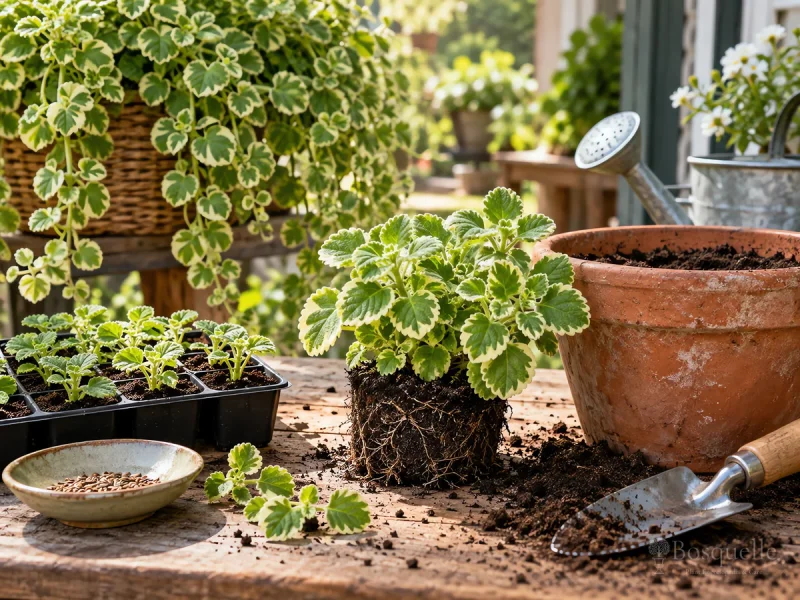
Recommended plants
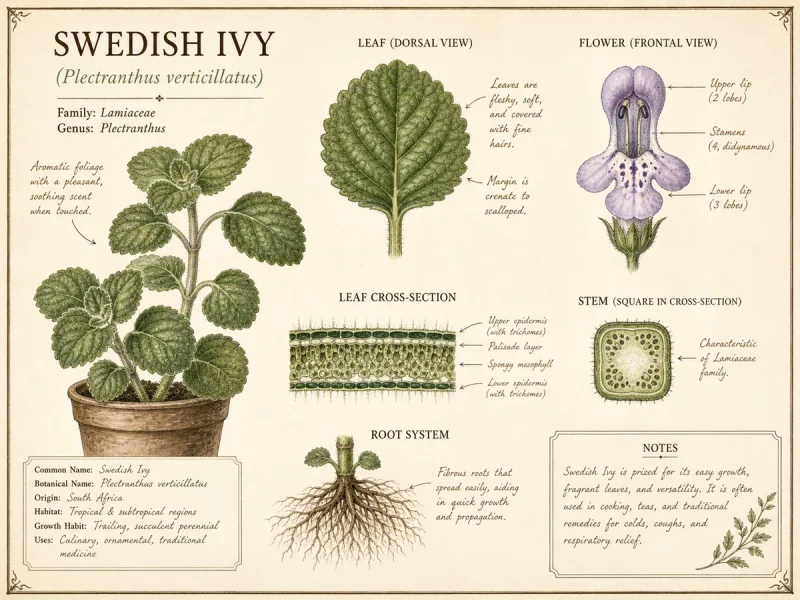
References
- [1] UF/IFAS Gardening Solutions -
https://gardeningsolutions.ifas.ufl.edu/plants/houseplants/swedish-ivy/ - [2] Gardener's Supply -
https://www.gardeners.com/how-to/swedish-ivy-care/9728.html - [3] UF/IFAS Extension Nassau County -
https://blogs.ifas.ufl.edu/nassauco/2017/06/21/q-lately-swedish-ivy-seems-kind-pitiful-looking-im-wondering-perk/ - [4] Royal Horticultural Society -
https://www.rhs.org.uk/plants/13263/plectranthus-verticillatus/details
This note is part of Swedish_ivy Guides.
More first-season notes by plant are gathered in How to Grow Guides.
Updated: Reviewed by Bosquelle Editors