
Most garden begonias want partial shade, an airy mix, and a crown that sits above standing water. Wet crowns rot more plants than a short dry spell in shade. The harder split is winter: tuberous types lift and store; rex, rhizomatous, and cane stay as houseplants; hardy grandis can stay in the ground where winters are mild. This catalog is not wax-bedding heavy — sort the class before you copy a bedding plan. Class browse is on Types of Begonias; drained pots and baskets on Begonias in Containers; tuber lift vs indoor keep on Overwintering Begonias.

Know which begonia you bought
Read the tag for the job, not only the word begonia. A tuberous Nonstop is a summer flower from a tuber. A rex is grown for patterned leaves. A boliviensis trailer spills over a basket rim. Hardy grandis is the outdoor returner in this catalog — not a tender patio tuber. Paste the wrong winter path and you either rot a rex in a paper bag or freeze a Nonstop that should have been lifted.
| Class | Grown for | Winter |
|---|---|---|
| Tuberous (upright or hanging) | Summer flowers | Lift and store cool and dry |
| Boliviensis / trailing | Long cascade | Tender — lift or replace |
| Rex / rhizomatous / cane | Foliage (and some bloom) | Cool indoor keep |
| Hardy grandis | Shade bed that returns | Mulch in place where winters allow |
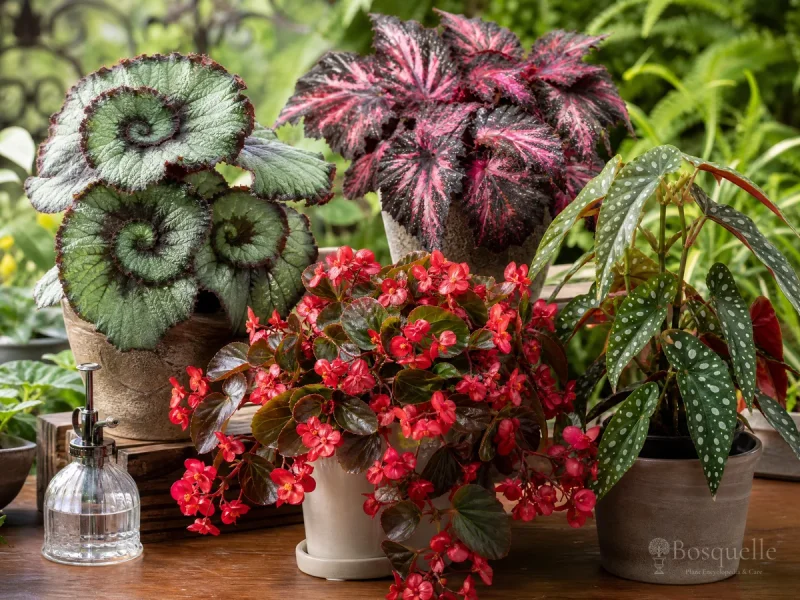
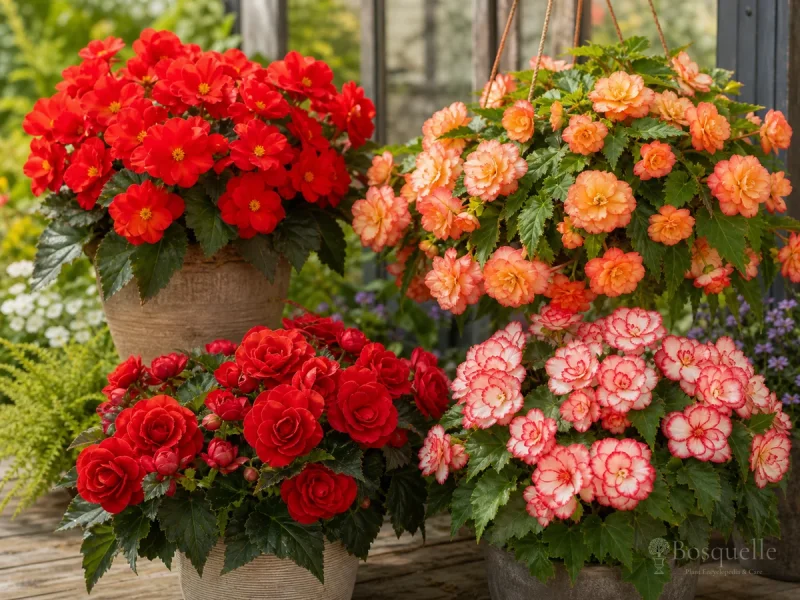
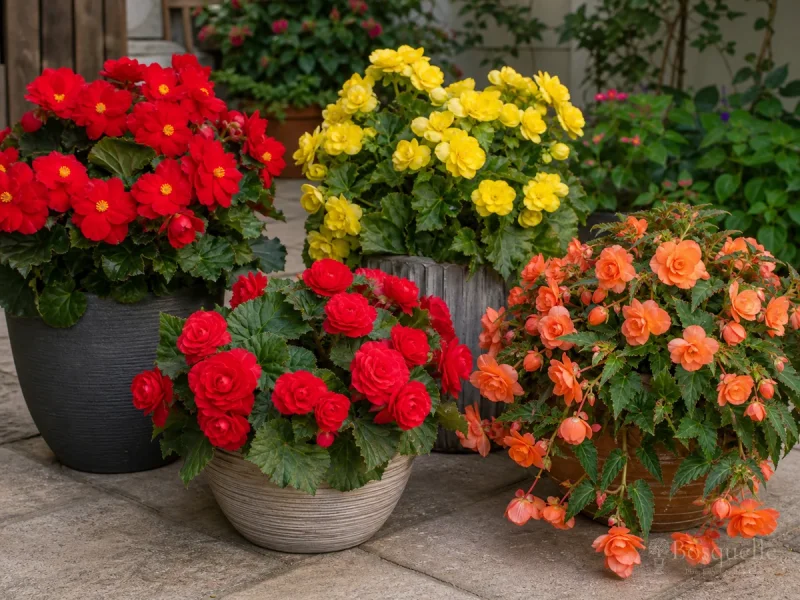
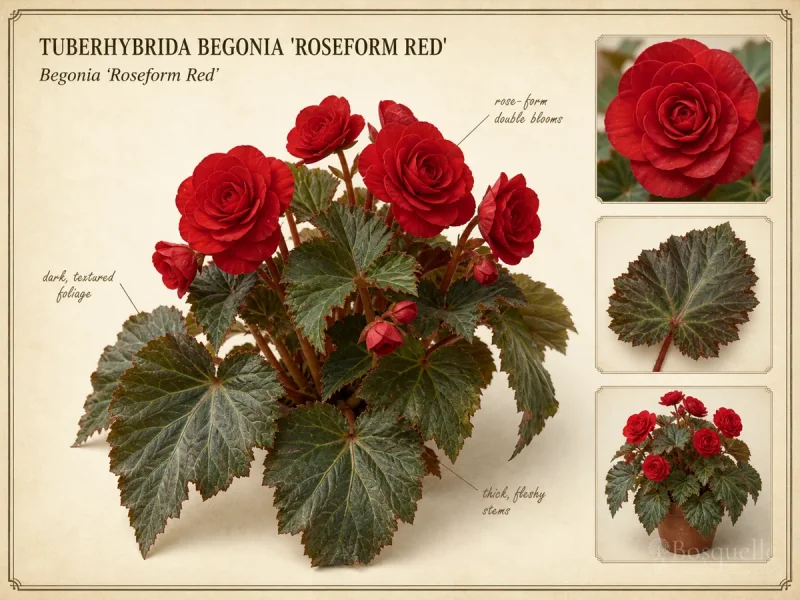
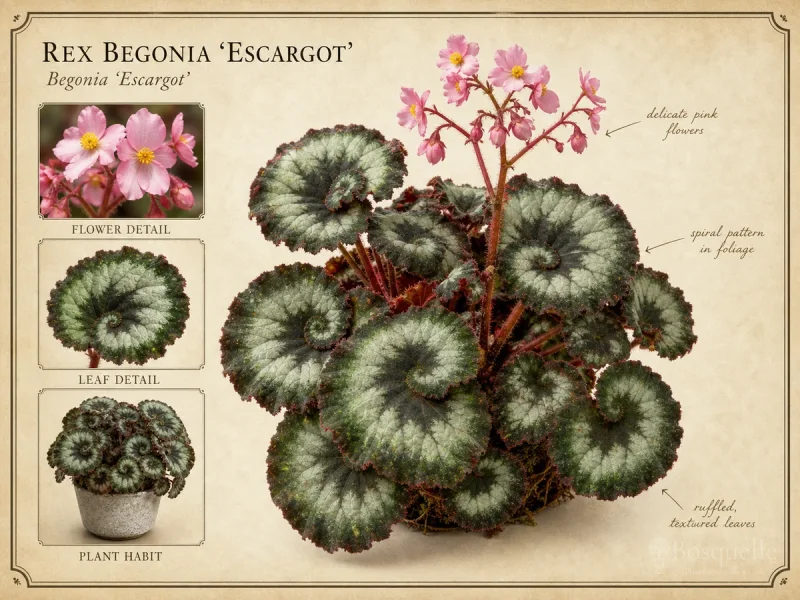
Upright tuberous examples such as Nonstop Red and Roseform Red share that flower job. Escargot is rex foliage. Bonfire is a boliviensis trailer. Heron’s Pirouette is hardy grandis. Full sort is on Types of Begonias.
Shade, mix, and the crown
| Factor | Recommended | Avoid |
|---|---|---|
| Light | Partial shade or bright shade; morning sun is fine | Hot afternoon sun that scorches leaves |
| Mix | Airy potting mix with grit or perlite | Heavy soil that stays wet at the crown |
| Planting depth | Crown slightly proud of the surface | Buried crown or a saucer of standing water |
Most of this catalog wants light without a west-facing fry. Tuberous and rex types bleach and stall in reflective full sun. (Bronze-leaf wax bedding can take more sun — that is not the bulk of this library.) Plant after frost, once nights stay near 60°F. Pots and hanging baskets are on Begonias in Containers.
- Wait until frost risk is over. Begonias sulk in cold, wet soil.
- Set a nursery plant at the depth it arrived, with the crown just above a wet surface.
- If you are starting a tuber, set the concave (hollow) side up and barely cover it. The rounded side goes down.
- Water once to settle the mix, then empty the saucer. Do not leave the pot standing in water overnight.
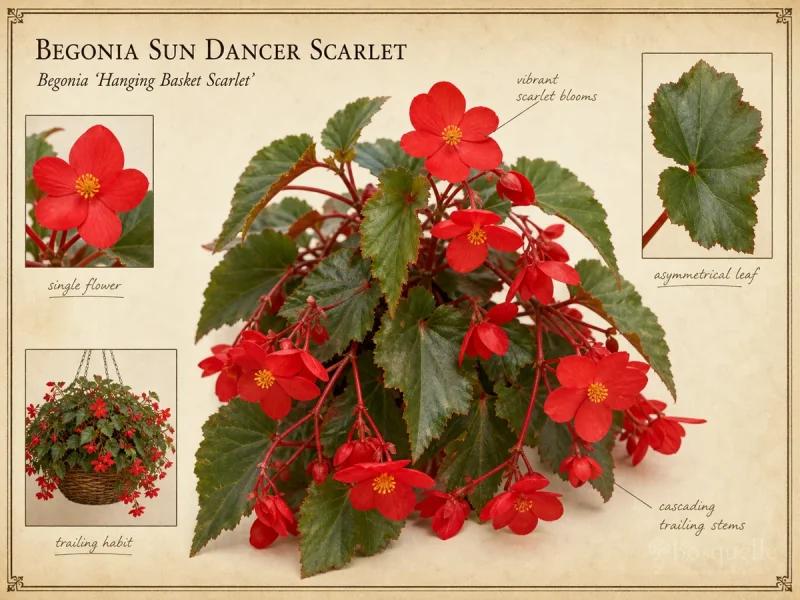
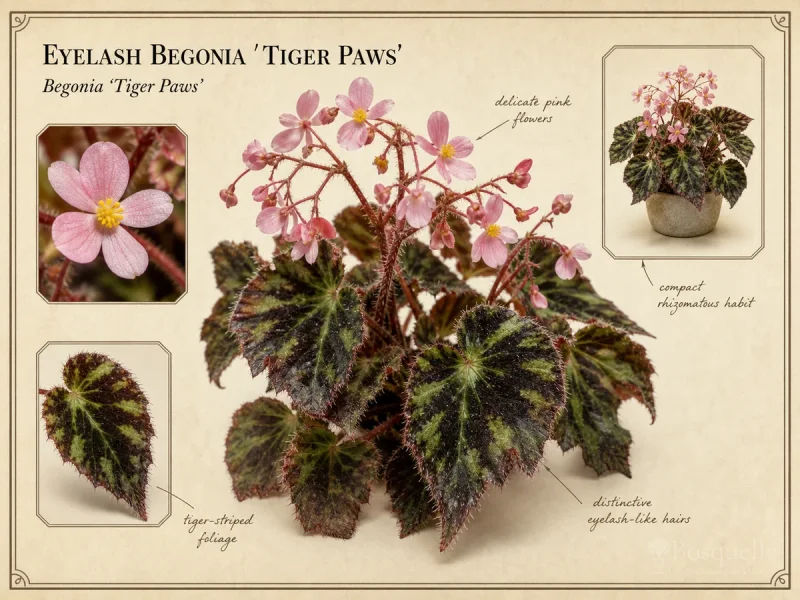
Hanging Basket Scarlet and Bonfire still want that same shade and drain — they just need more room to trail. Dragon Wing Red and Tiger Paws refuse a soggy crown for the same reason a Nonstop does.
Water, feed, and spent flowers
- Water the mix at the base when the top inch is dry. Do not soak the leaves every evening — mildew likes wet foliage in still air.
- Empty saucers after you water. A short dry spell in shade beats a wet crown.
- Feed lightly every 1–2 weeks in peak growth with a dilute liquid. Skip heavy nitrogen that makes soft, floppy shoots.
- Snip spent flowers on tuberous and hanging types so petals do not sit on the leaves. That is a tidy, not a shrub prune (there is no separate pruning URL).
- Hanging baskets dry fast in wind. Check daily in heat, then let the extra water run out.
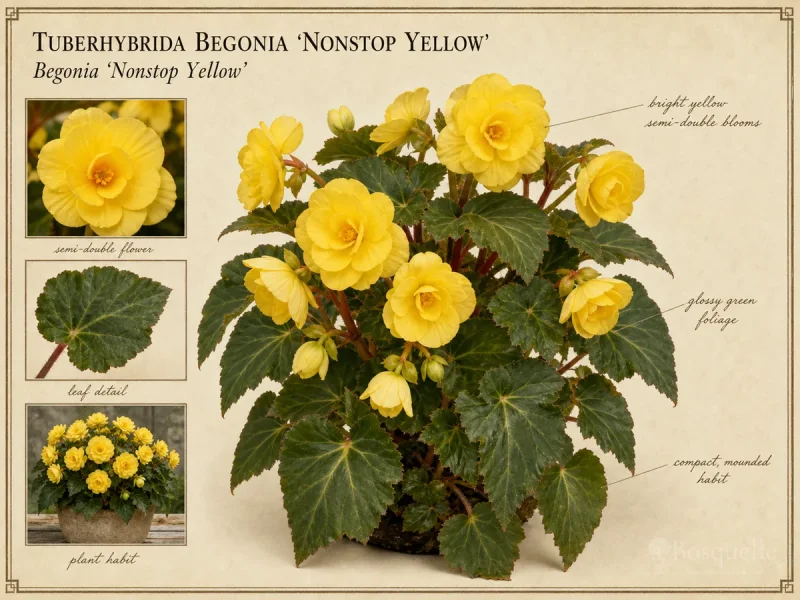
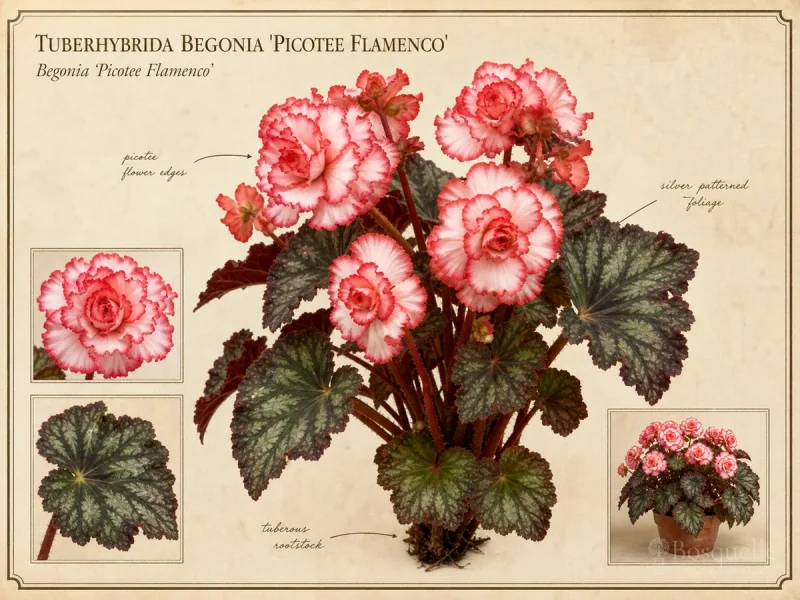
Scorched leaves usually mean too much sun, not more fertilizer on a stressed plant. Nonstop Yellow and Picotee Flamenco still fail in a puddle. Fireworks fails the same way. Hanging Basket Apricot and Santa Cruz need the same empty-saucer rule in a basket.
Seasonal jobs
- Late spring: plant or set out after frost; water to establish; start a light feed once growth is active.
- Summer: partial shade, airy mix, deadhead, check pots and baskets often.
- Fall: enjoy late color while nights stay mild; watch the forecast for tender types.
- First frost: lift tuberous tubers, or bring rex, rhizomatous, and cane indoors. Hardy grandis stays put where winters allow — steps are on Overwintering Begonias.
Take a rex leaf or a cane stem cutting — see Propagating Begonias — and do not treat a stored tuber as that method.
Alba is the hardy outdoor class, not a disposable annual and not a Nonstop tuber. Begonias are toxic if chewed (oxalates — mouth irritation in pets). Do not leave trimmings where dogs or cats graze.
Match tuberous, rex, boliviensis, and hardy grandis first. Give partial shade and a crown above standing water. Then open Types, Containers, or Overwintering for the next job.
FAQ
Are all begonias the same for winter?
No. Tuberous types are lifted and stored cool and dry. Rex, rhizomatous, and cane usually stay as cool indoor houseplants. Hardy grandis can return outdoors in suitable climates. Sort class first on Types of Begonias.
Do begonias need sun or shade?
Partial shade or bright shade for most of this catalog. Hot afternoon sun fries leaves and shortens bloom on tuberous and rex types.
Why did my begonia rot at the base?
Usually a soggy crown or standing water in the saucer. Use an airy mix, keep the crown proud, and empty saucers after watering.
Are begonias toxic to dogs or cats?
Yes — begonias are toxic if chewed (insoluble oxalates, often mouth irritation). Do not encourage chewing. Keep fertilizer out of reach too.
Is a begonia a perennial or an annual?
Tuberous types are tender perennials: lift the tuber in frost climates and replant in spring. Hardy grandis is perennial outdoors where winters are mild. Wax/fibrous bedding is usually treated as an annual in frost gardens.
Should I deadhead begonias?
Tuberous and hanging types benefit from removing spent flowers so petals do not sit on the foliage. Wax types often drop spent blooms on their own. A mid-season trim of a third can refresh a leggy plant — that is not a shrub-prune program.
Which side of the tuber faces up?
The concave, hollow side faces up — that is where shoots emerge. The rounded side goes down into the mix.
Can I propagate begonias from cuttings?
Yes. Rex from a leaf, cane and wax from a stem. See Propagating Begonias. A stored tuber is a different job.
Related guides

Recommended plants





This note is part of Begonia Guides.
More first-season notes by plant are gathered in How to Grow Guides.
Updated: Reviewed by Bosquelle Editors