
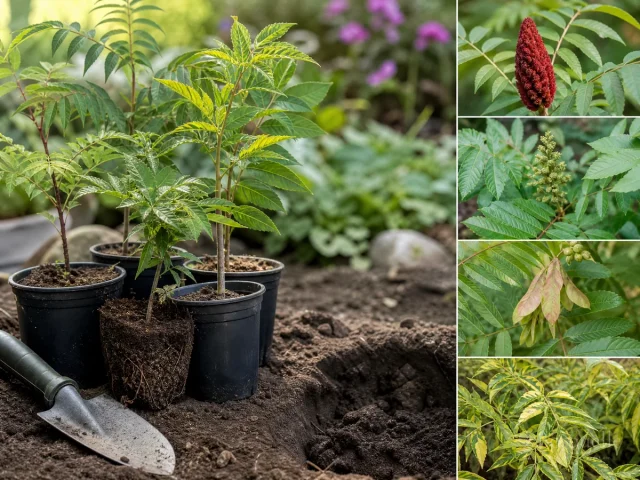
Grow sumac in full sun and soil that drains. Sumac is Rhus — staghorn, fragrant, and smooth are the usual tags — a deciduous shrub or small tree, not poison ivy.

Give it full sun and soil that drains
| Factor | Recommended | Avoid |
|---|---|---|
| Sun | Full sun for fall color and fruit cones | Do not site it in deep shade |
| Soil | Well-drained to dry; poor or rocky ground is fine | Do not plant in a wet clay pocket |
| Drought | Once roots have taken, skip extra water | Do not keep an established plant soggy |
| Room | A bank, slope, or edge where a colony can spread | Do not squeeze a colony against a foundation you cannot mow |
Sumac wants a full day of sun and ground that dries after rain. Wet clay around the roots is the usual cause of rot. [1] [2] staghorn sumac and fragrant sumac share that same drain. Match kind on Types of Sumac.
How much sun does sumac need?
Full sun for the best color and fruit. Part shade is fine on fragrant kinds, but deep shade cuts both.
Water a young plant, then let it take dry spells
A new plant needs water so roots leave the nursery ball. An established sumac takes missed rain better than a soggy crown.
- Water thoroughly after planting. Keep the root ball moist — not soggy — through the first growing season.
- Check a few inches down. Water again when that soil is drying, not on a calendar splash.
- Water at the soil line so leaves stay dry.
- Once roots have taken, soak only during long dry spells. Keep mulch off the stems so bark stays dry.
How often should I water a young sumac?
Keep a new plant moist for the first season. After that, soak during dry spells. Do not leave the crown in standing water.
Not poison ivy, poison sumac, smoke bush, or tree of heaven
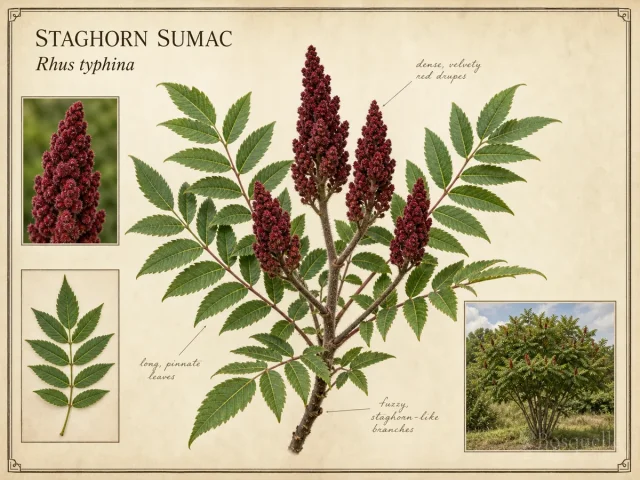
Poison ivy is Toxicodendron radicans, a vine with three leaflets and whitish fruit. Poison sumac is Toxicodendron vernix: white or greenish fruit that droops, in swamps, not dry roadsides. [3] Garden sumac holds upright red cones. Fragrant sumac also has three leaflets, but the middle leaflet has little or no stalk, and the fruit is red. [4] Smoke bush is Cotinus — see How to Grow Smoke Bush. Tree of heaven has leaflets notched at the base and winged seeds, not red cones. A shop search for staghorn fern is a fern, not staghorn sumac.
Is sumac the same as poison ivy?
No. Garden sumac is Rhus. Poison ivy and poison sumac are Toxicodendron. Red upright cones are garden sumac; white drooping fruit in a swamp is poison sumac.
If the hole stays wet, move the plant to draining ground — do not add more water.
FAQ
Can I grow sumac in a pot?
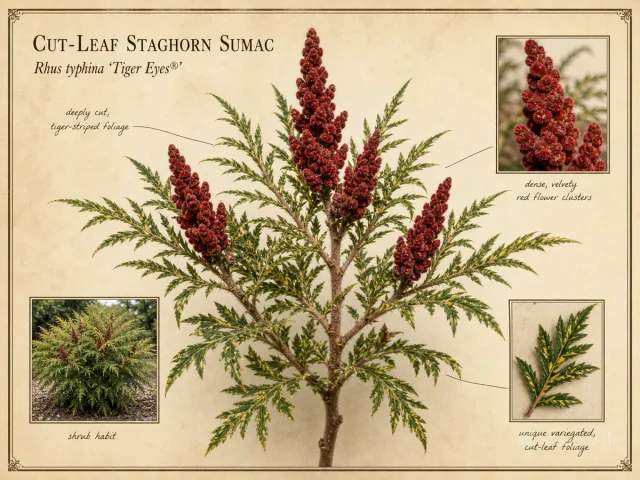
A large draining pot can hold a compact cutleaf for a season. Long-term, sumac belongs in open ground where roots can run.
Does sumac need fertilizer?
No. Rich, wet ground makes floppy growth. Poor, draining soil is the usual site.
What about leaf spot?
Leaf spot and rust show up in wet summers. The plant usually lives. Do not spray on a schedule.
Related guides

Recommended plants


References
- [1] NC State Extension Gardener -
https://plants.ces.ncsu.edu/plants/rhus-typhina/ - [2] The Morton Arboretum -
https://mortonarb.org/plant-and-protect/trees-and-plants/staghorn-sumac/ - [3] Alabama Cooperative Extension System -
https://www.aces.edu/blog/topics/forestry/touch-me-nots-poison-ivy-poison-oak-and-poison-sumac/ - [4] PlantNative -
https://plantnative.org/native-plants/staghorn-sumac-rhus-typhina.htm
This note is part of Rhus Guides.
More first-season notes by plant are gathered in How to Grow Guides.
Updated: Reviewed by Bosquelle Editors