
Grow Sparaxis in full sun and soil that drains. Harlequin flower is the shop name for these South African corms. The plant sold as wand flower is usually Gaura, not this corm.

Give it full sun, soil that drains, and a dry rest after bloom
| Factor | Recommended | Avoid |
|---|---|---|
| Light | Full sun so the stars open | Do not site it in shade that thins the bloom |
| Water | Keep the mix moist while the leaves are up; stop once they yellow | Do not water a dormant corm as if it were a lawn |
| Soil | Sandy or loam that drains after rain | Do not plant it in a soggy clay pocket |
| After bloom | Leave the grasslike leaves until they brown | Do not cut the leaves while they are still green |
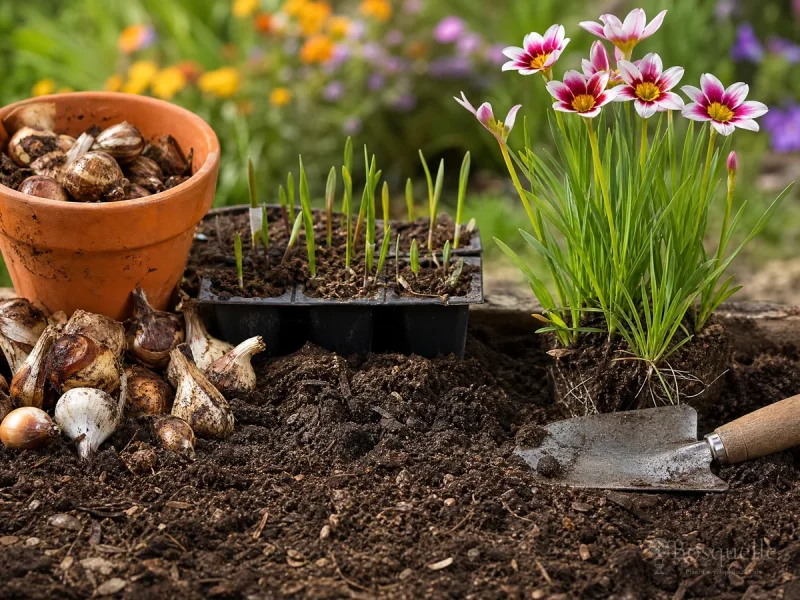
harlequin flower is Sparaxis tricolor, a cormous iris from the Cape winter-rainfall region. It greens up in the cool season, blooms in spring, and then the leaves yellow so the corm can rest dry. Give it the hottest sun you have and soil that drains, and keep the mix moist only while those leaves are up, because wet soil around a dormant corm is the primary cause of rot. [1] [2] The flowers are orange, red, or yellow with a dark-edged yellow eye. Set the corms on Planting Sparaxis. [3] [4]
Does Sparaxis need full sun?
Yes. Plant it in full sun so the stars open. Shade thins the bloom and keeps the stems weak.
Should I water it after the leaves yellow?
No. Once the leaves have yellowed, keep the corms dry. Summer wet is the usual cause of corm rot.
Leave the leaves until they brown, then stop watering
After the last flower fades, the grasslike leaves still feed the corm. Cut only the spent flower stems if you want the bed tidy, and leave those leaves in place until they yellow and brown on their own. Then stop watering, so the corm can rest dry through the hot months.
- After the last flower, cut the spent flower stems if you want the bed tidy.
- Leave the grasslike leaves until they yellow and brown.
- Stop watering once the leaves have browned. If a wet summer or a hard freeze will hit the bed, lift the corms after the foliage dies and store them dry until you plant again.
Do I cut the leaves after bloom?
No. Leave the leaves until they brown. Green leaves still store food in the corm for next year.
Not the Gaura wand flower — and not Ixia or harlequin pothos
A shop search for wand flower usually means Gaura, an airy perennial with four-petaled flowers on thin stems, not this corm. See How to Grow Gaura. African corn lily is Ixia, a related Cape corm with taller wiry sprays of stars; see How to Grow Ixia. Harlequin pothos is a houseplant vine with splashed leaves, not a garden corm — that care lives on How to Grow Pothos. Confirm Sparaxis on the Latin.
Is this the same as Gaura?
No. Gaura is the airy perennial sold as wand flower. Sparaxis is a South African corm with star-shaped flowers.
Is this Ixia?
No. Ixia is the related Cape corm sold as African corn lily, with taller wiry sprays. Sparaxis is shorter, with a dark eye in the flower.
If the leaves have yellowed, stop watering and leave the spot marked — or lift the corms and store them dry until you plant again.
FAQ
Can I grow it in a pot?
Yes. Use a pot that drains, set the corms a little closer than in the ground, and move the pot under cover before a hard freeze. A ground bed that drains is the simpler long-term home.
Is there more than one kind?
This catalog holds Sparaxis tricolor, the harlequin flower with a dark-edged yellow eye. Other species and mix packs show up in shops; they use the same sun, drain, and dry rest.
Can I cut the stems for a vase?
Yes. Cut a few flowering stems if you want them indoors. Leave the grasslike leaves in the bed until they brown, so the corm can store food for next year.
Are grandiflora or Fire King in this catalog?
No. This catalog holds Sparaxis tricolor. Grandiflora, elegans, and named mix packs such as Fire King are other shop colors, not a second card here.
Is this the same as freesia?
No. Freesia is a related Cape corm grown for scent; see How to Grow Freesia. Gladiolus and crocosmia are summer irises with their own care.
Is it listed as toxic to pets?
It is not on the ASPCA plant list. Keep pets from chewing corms anyway, and call a vet if they do.
Related guides
Recommended plants

References
- [1] Pacific Bulb Society -
https://www.pacificbulbsociety.org/pbswiki/index.php/sparaxis - [2] Gardening Know How -
https://www.gardeningknowhow.com/ornamental/bulbs/sparaxis/planting-sparaxis-bulbs.htm - [3] Van Zyverden -
https://www.vanzyverden.com/garden-guides/spring-planting/bulbs/sparaxis/ - [4] NC State Extension Gardener -
https://plants.ces.ncsu.edu/plants/sparaxis/
This note is part of Sparaxis Guides.
More first-season notes by plant are gathered in How to Grow Guides.
Updated: Reviewed by Bosquelle Editors