
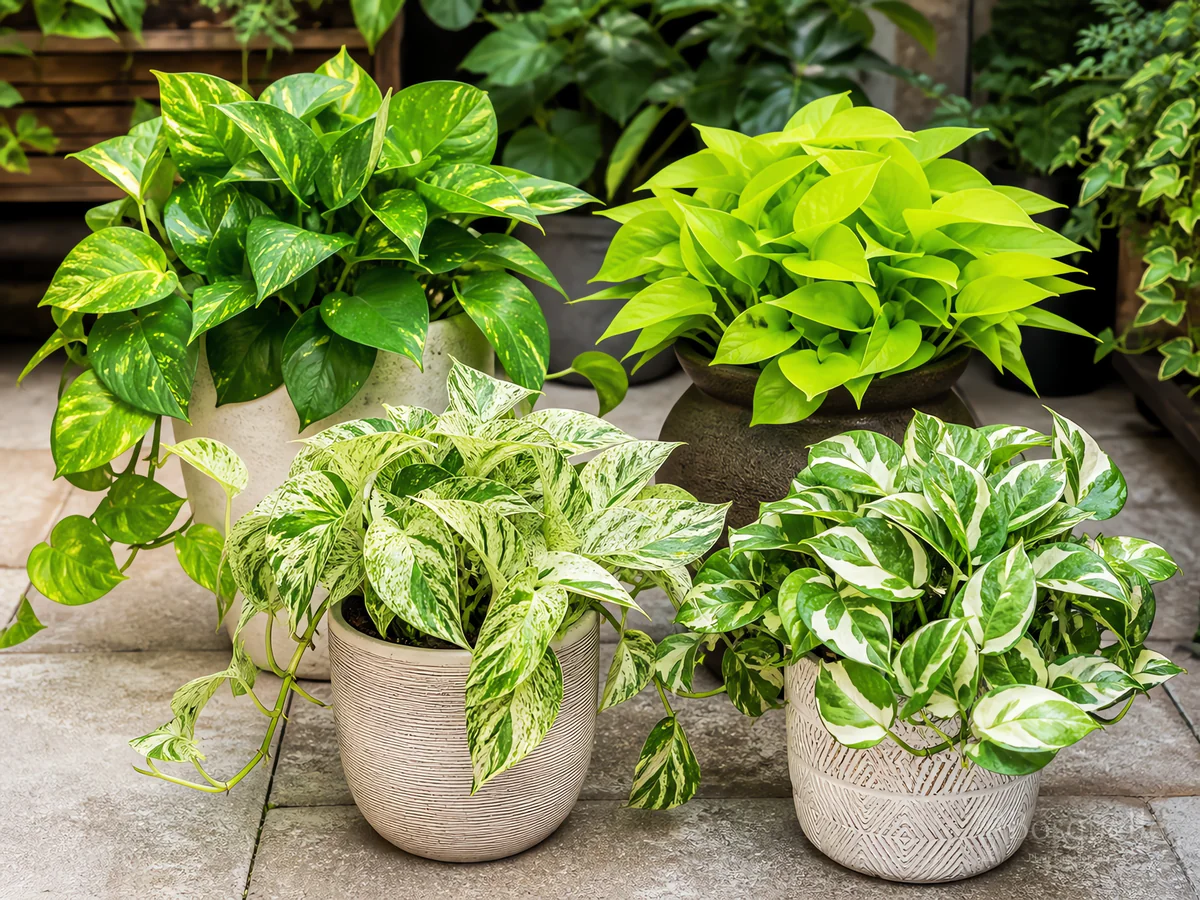
Grow pothos in bright indirect light, in a mix that drains, and water only when the mix is dry. Epipremnum is the botanical name.

Bright indirect light, water when the mix is dry, and a warm room
| Factor | Recommended | Avoid |
|---|---|---|
| Light | Bright indirect — an east window, or a few feet back from south or west glass | Hot midday sun through glass, or a dim corner that stretches vines and fades variegation |
| Water | Water thoroughly when the mix is dry, then empty the saucer | Weekly watering while the mix is still wet |
| Mix | Airy houseplant mix in a pot with a drain hole | A cachepot with no hole, or a saucer left full |
| Room | About 60–85°F; average home humidity is enough | Icy glass, heater blasts, or rooms that stay below about 50°F |
Bright indirect light and a mix that dries between waterings keep the vine firm. It will survive a dimmer shelf, but internodes stretch and cream or gold sectors fade toward green. [1] All parts contain calcium oxalate — keep vines where pets and children cannot chew them.
- Set the pot in bright, filtered light. Turn it weekly so vines do not lean to one side. [2]
- Use a draining pot and an airy mix. Empty the saucer after you water.
- Water thoroughly when the mix is dry. Soft droop on dry mix usually means water now; yellow leaves on wet mix usually means you watered too soon. The plant tolerates a missed watering better than a soggy pot.
- Feed a balanced houseplant fertilizer during spring and summer growth. Ease off in dull winter light.
How much light does pothos need?
Bright, indirect light is the usual indoor target. It survives lower light, but vines stretch and variegation fades. Avoid hot direct sun that scorches leaves.
How often should I water pothos?
Whenever the mix has dried — often every one to two weeks indoors, but always check the mix. Calendar watering is the usual path to root rot.
Is pothos toxic to cats and dogs?
Yes. All parts contain calcium oxalate crystals that irritate the mouth and gut. Keep vines out of chew reach.
Hang, prune, or climb for larger leaves
Vines climb with aerial roots at each node. A hang or a shelf trailer stays in the juvenile heart-shaped look. Give the same plant a moss pole or totem, and leaves can size up. [3]
- Hang the pot or set it high if you want a trailer. Gather vines so they do not snap when you move the pot.
- Prune just above a node when stems go sparse or run too long. A short stub pushes bushier growth from remaining buds.
- Train aerial roots onto a moist moss pole or totem if you want larger, more mature leaves. Guide the stem; do not force a dry stick into a packed root ball as an afterthought.
Can pothos grow on a moss pole?
Yes. Aerial roots will cling to a moist moss pole or totem. Climbing in good light is what produces larger leaves than a trailing basket.
Yellow leaves and a wet pot
Soft yellow on wet mix is usually overwatering or poor drainage. Let the mix dry, confirm holes in the pot, and look for mushy roots if collapse is fast. Yellow on bone-dry mix can mean underwatering. Crispy bleach is sun scorch, not a reason to water more. [4] One oldest leaf yellowing while the crown is firm is often normal shed. Patterned kinds that go green need more bright indirect light, not a wetter pot.
Why are my pothos leaves turning yellow?
Most often overwatering or poor drainage. Let the mix dry, check for mushy roots, and use a freer-draining mix if needed. Low fertility after long neglect can also yellow leaves once watering is corrected.
Bright indirect light, a draining mix, water when dry. Match the kind on Types of Pothos.
FAQ
How do you tell pothos from heartleaf philodendron?
Pothos petioles are grooved where they clasp the stem, and new leaves emerge without a drying cataphyll sheath. Heartleaf philodendron petioles are smoother, and new leaves often have a sheath that browns and drops.
Can pothos live permanently in water?
Cuttings root easily in water and can live hydroponically for long stretches with occasional dilute feed and clean water changes, but most long-term houseplants do best in a well-draining potting mix.
Can I grow pothos outdoors?
In frost-free tropical areas it can scramble, and it is discouraged as an outdoor escape in places such as South Florida. For most US readers this is an indoor vine.
Should I fertilize pothos?
Light, balanced feed in spring and summer during active growth. Ease off in dull winter light.
Do I need to mist pothos?
Average home humidity is tolerated. Mist will not save an overwatered root ball.
Is devil’s ivy the same plant?
Yes. Devil’s ivy is an old shop name for Epipremnum aureum, the vine most tags call pothos or golden pothos.
Related guides


Recommended plants


References
- [1] Clemson HGIC -
https://hgic.clemson.edu/factsheet/how-to-grow-pothos-indoors-epipremnum-spp-care-cultivars-and-common-problems/ - [2] Penn State Extension -
https://extension.psu.edu/pothos-as-a-houseplant/ - [3] NC State Extension -
https://plants.ces.ncsu.edu/plants/epipremnum-aureum/ - [4] Garden Design -
https://www.gardendesign.com/houseplants/pothos.html
This note is part of Epipremnum Guides.
More first-season notes by plant are gathered in How to Grow Guides.
Updated: Reviewed by Bosquelle Editors