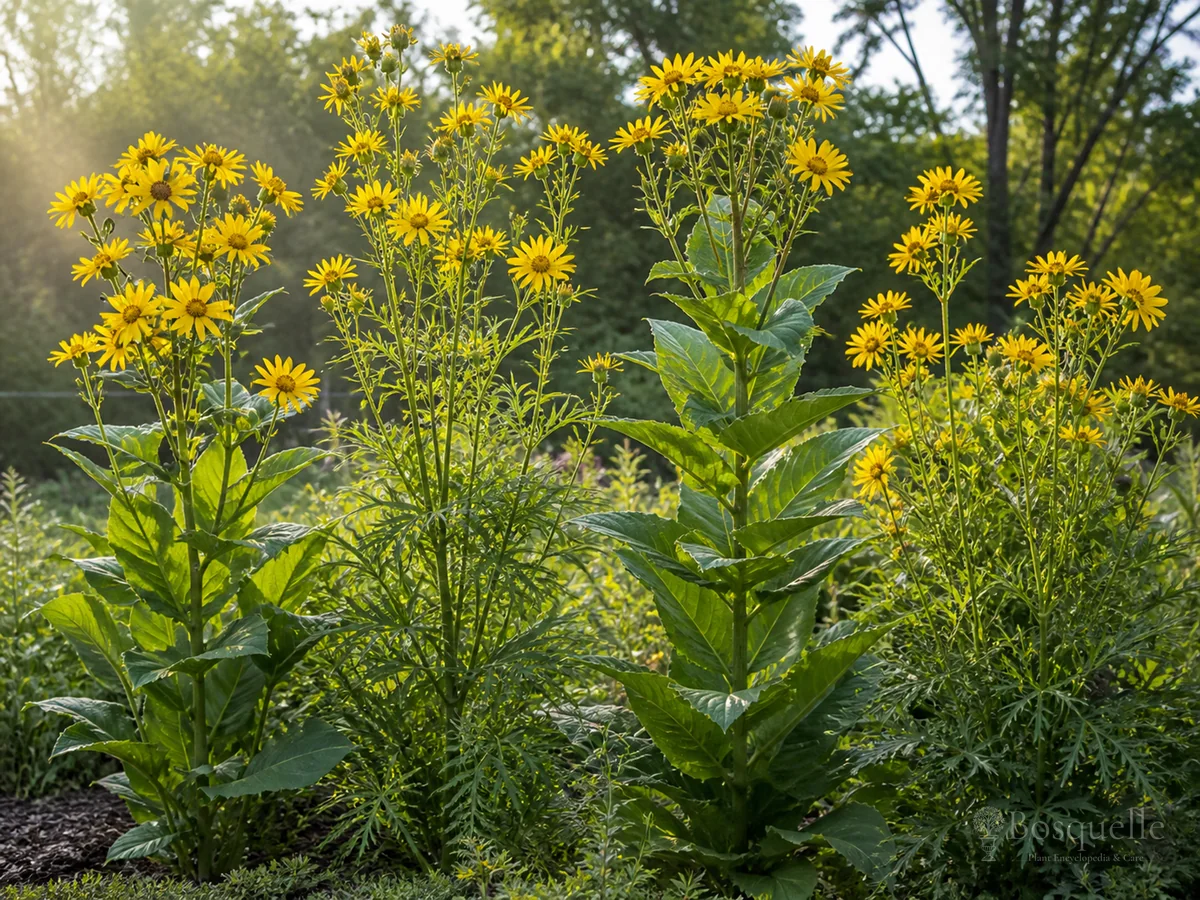
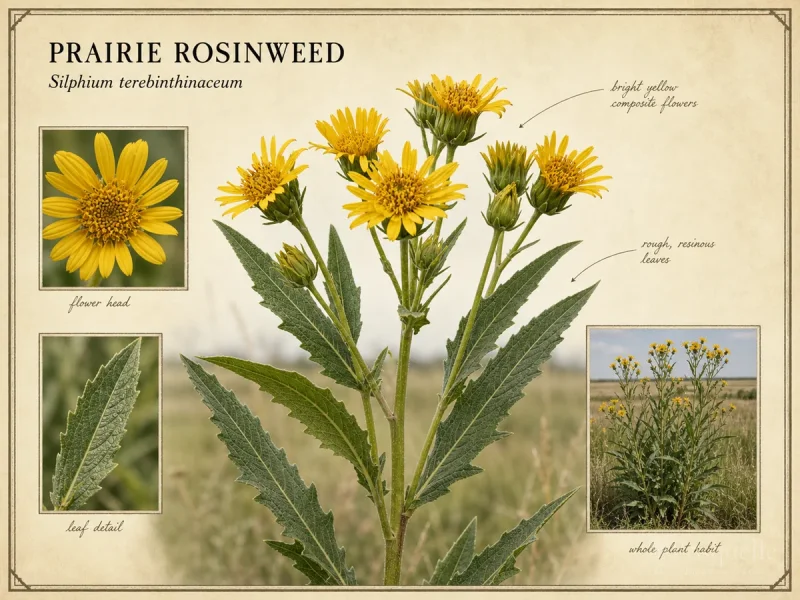
Grow Silphium in full sun with room for a prairie-scale daisy. Tags may also say cup plant or compass plant. It is not a Helianthus sunflower.
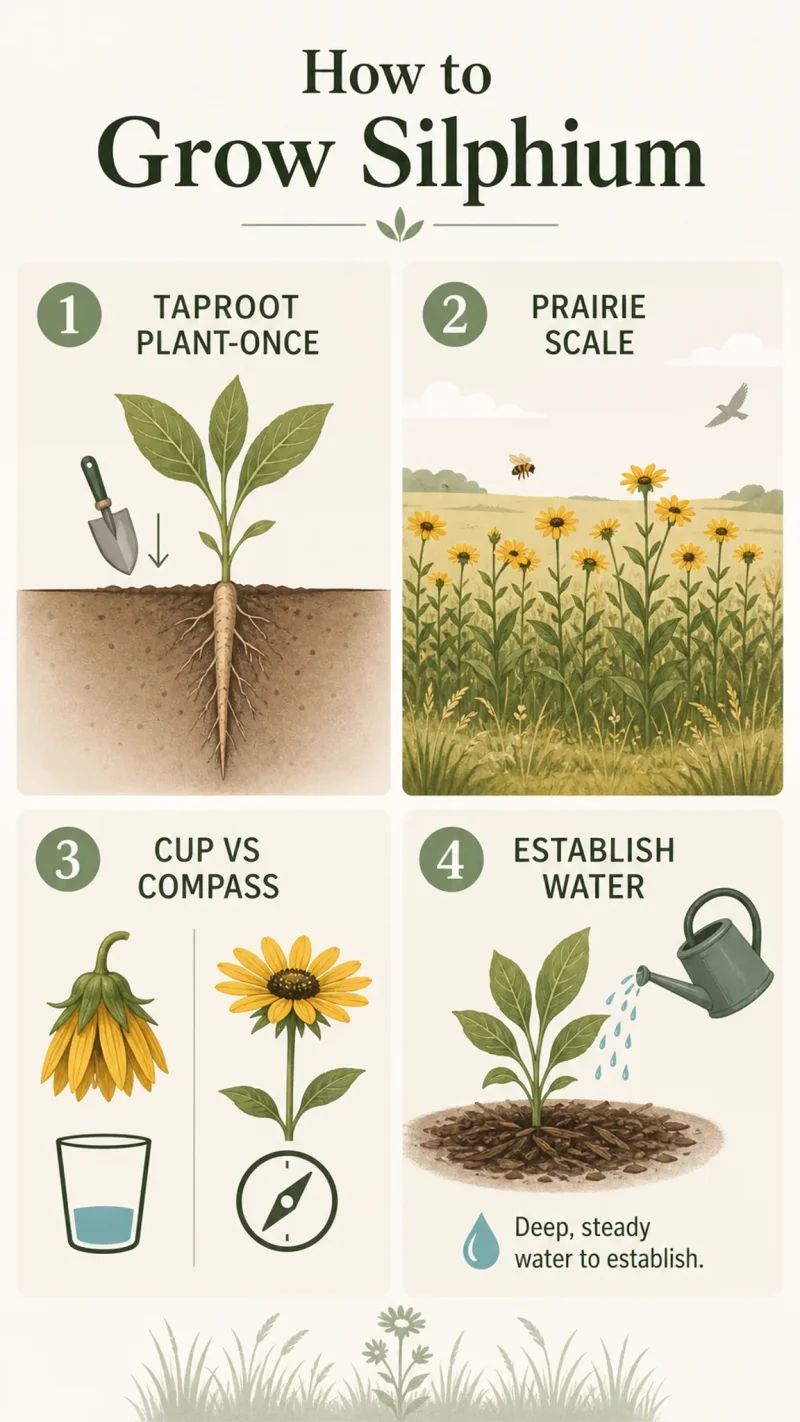
Give it full sun, prairie-scale room, and water while it establishes
| Factor | Recommended | Avoid |
|---|---|---|
| Light | Full sun, six hours or more | Shade that weakens stems and thins bloom |
| Soil | Average ground that drains after rain. Cup plant also takes moist to wet soil | A tiny mixed border redesigned every year |
| Water | Water deeply through the first one to two seasons. Established plants ride dry spells | Skipping the hose in year one, then blaming the plant for drought |
| Room | Rear border, meadow strip, or naturalized edge — plants commonly reach 4 to 10 feet | A 2-foot formal bed, or a path the basal leaves will slap |
Silphium is a prairie daisy with a deep taproot. Give it sun and a permanent spot. [1] Shade makes floppy stems. Rich, wet ground plus wind can topple a cup plant that is already top-heavy. [2] Once the taproot is down, many kinds ride drought better. That is not a license to skip water on a new transplant. [3]
How do I care for a cup plant?
Full sun, prairie-scale room, and deep water while it establishes. After that, ordinary moisture is enough in most years.
Where is the best place to plant a cup plant?
The back of a sunny meadow or a large moist edge. Not a small mixed border you plan to dig every season.
Do cup plants spread?
Cup plant can seed and thicken fast in moist rich ground. Compass plant usually stays a deep-rooted clump. Deadhead cup plant if you must limit seed.
Is Silphium invasive?
It is a North American prairie native. Cup plant can still run a small moist garden by seed and short underground stems. Site it where that vigour is welcome.
Pair it with other tall prairie plants
Partners should want the same sun and a spot that is not dug every year: tall grasses, coneflower, blazing star, and other late-summer daisies. Leave a path so you can deadhead cup plant without trampling neighbours.
Plant a young plant once — do not move a mature taproot
Set a nursery start or a small seedling in spring, or in early fall with enough weeks for roots to take. Put the crown at the same depth it grew in the pot. Mature plants resist digging because the storage root goes deep. [4]
- Confirm Silphium — cup plant, compass plant, prairie dock, or wholeleaf rosinweed — not an annual sunflower.
- Pick full sun with height clearance for a 4 to 10 foot plant.
- Dig a hole as deep as the pot and a little wider. Do not bury the crown in a compost collar.
- Set the plant at pot depth, backfill with the soil you dug, and water to settle.
- Water deeply through the first seasons. Light sprinkles do not build a taproot.
- Leave the crown alone. Do not lift a mature plant to “check roots” or to move it across the yard.
Do cup plants bloom the first year?
Often not from seed. Bloom commonly waits until year two or three. A plug may flower sooner. Year-one height is not a reason to transplant.
Start from seed or a small plug
Sow unstratified seed in fall, or cold-moist stratified seed in spring. Keep the first summers watered. A small plant establishes; a mature taproot does not want to move. Young offshoots at the edge of a cup plant clump are the only pieces worth shifting.
- Start seed or buy a young plant — not a mature crown from a neighbour’s shovel.
- Expect foliage first and bloom later. Patience is part of the taproot.
- If cup plant seedlings appear where you do not want them, pull them while they are small.
Skip a pot unless you are only holding a young plant
Open ground wins. A shallow patio bowl cannot take a prairie taproot. If you must hold a young plant briefly, use a deep tub and move it to permanent soil while it is still young.
Deadhead cup plant to limit seed, and cut dead stems in late winter
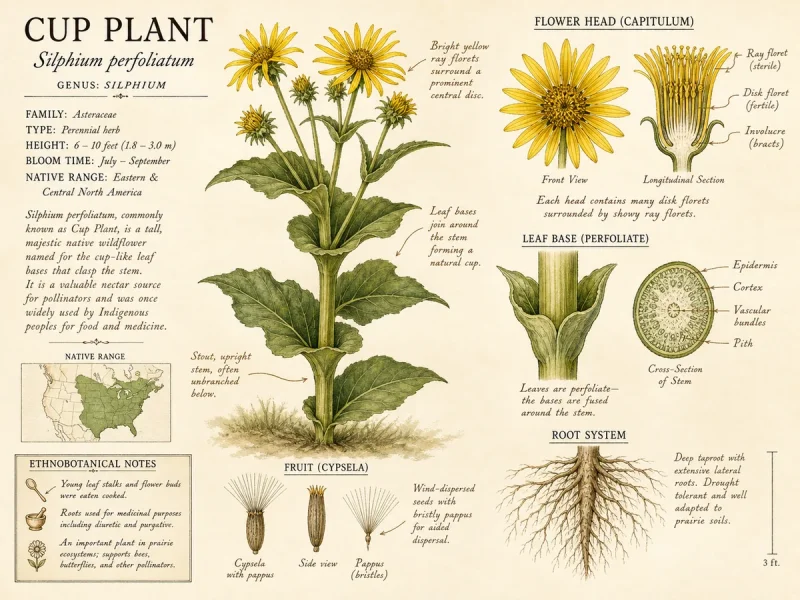
Cup plant reseeds freely in moist rich ground. Compass plant is usually slower but still takes vertical space. S. perfoliatum is the kind to deadhead if the bed cannot take seedlings. S. laciniatum can keep its seed heads for birds.
- Through summer, snip spent cup-plant heads if you must limit seed rain. Leave heads if goldfinches are the point.
- A late-spring cut of about one-third can shorten a top-heavy cup plant before bloom. Bloom may start later.
- After frost, either leave the stems for winter structure or cut them in late winter before new growth starts.
- Do not scalp green crowns in peak heat.
Can a cup plant be Chelsea chopped?
A late-spring cut of about one-third can keep a top-heavy cup plant from flopping. Expect bloom a little later. Skip the cut on a plant you want at full prairie height.
Not a sunflower — and not false sunflower
True sunflowers are Helianthus, including oilseed and giant annuals. False sunflower is Heliopsis, a clumping prairie daisy you can divide. Silphium is the deep-taproot native with cup, compass, dock, or wholeleaf faces. Read the Latin on the tag before you copy sunflower crop culture or Heliopsis division.
Obedient plant is Physostegia, a mint with hinged flowers and roaming rhizomes. That is not this plant.
If a mature clump sits in shade or a tiny bed, leave the taproot and start a young plant in full sun instead of digging the old crown.
FAQ
Is gopher plant the same plant?
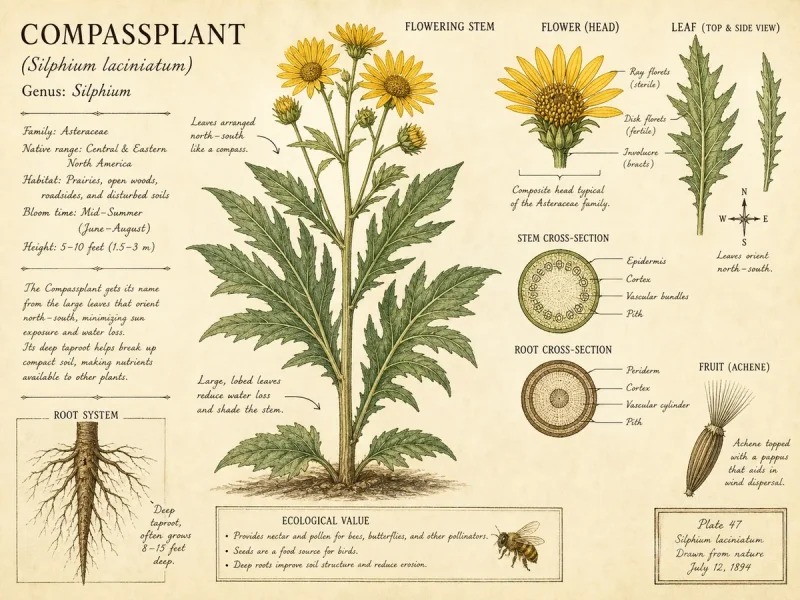
Gopher plant is one catalog alias for compass plant. Same Silphium laciniatum, same deep taproot.
Will deer eat it?
Deer usually leave the coarse leaves alone. Do not plant it as a guaranteed deer-proof hedge.
Can I chew the resin?
Broken stems exude a sticky resin some accounts treat as chewing gum. Grow it for the prairie daisy, not as a gum crop.
What pests hit Silphium?
Usually few. Red aphids may sit under cup-plant leaves. Wind flop and seed rain are the usual problems, not a separate pest page.
Related guides

Recommended plants

References
- [1] University of Illinois Extension -
https://web.extension.illinois.edu/hortanswers/plantdetail.cfm?PlantID=876&PlantTypeID=14 - [2] NC State Extension -
https://plants.ces.ncsu.edu/plants/silphium-perfoliatum/ - [3] University of Wisconsin–Madison Arboretum -
https://arboretum.wisc.edu/news/arboretum-news/gardening-with-native-plants-silphiums-in-bloom/ - [4] Lady Bird Johnson Wildflower Center -
https://www.wildflower.org/plants/result.php?id_plant=SIPE2
This note is part of Silphium Guides.
More first-season notes by plant are gathered in How to Grow Guides.
Updated: Reviewed by Bosquelle Editors