
Grow potato vine in full sun on a support, in soil that drains. Potato vine here is the ornamental climber — Solanum laxum, also sold as Solanum jasminoides — not a food potato and not a sweetpotato vine.
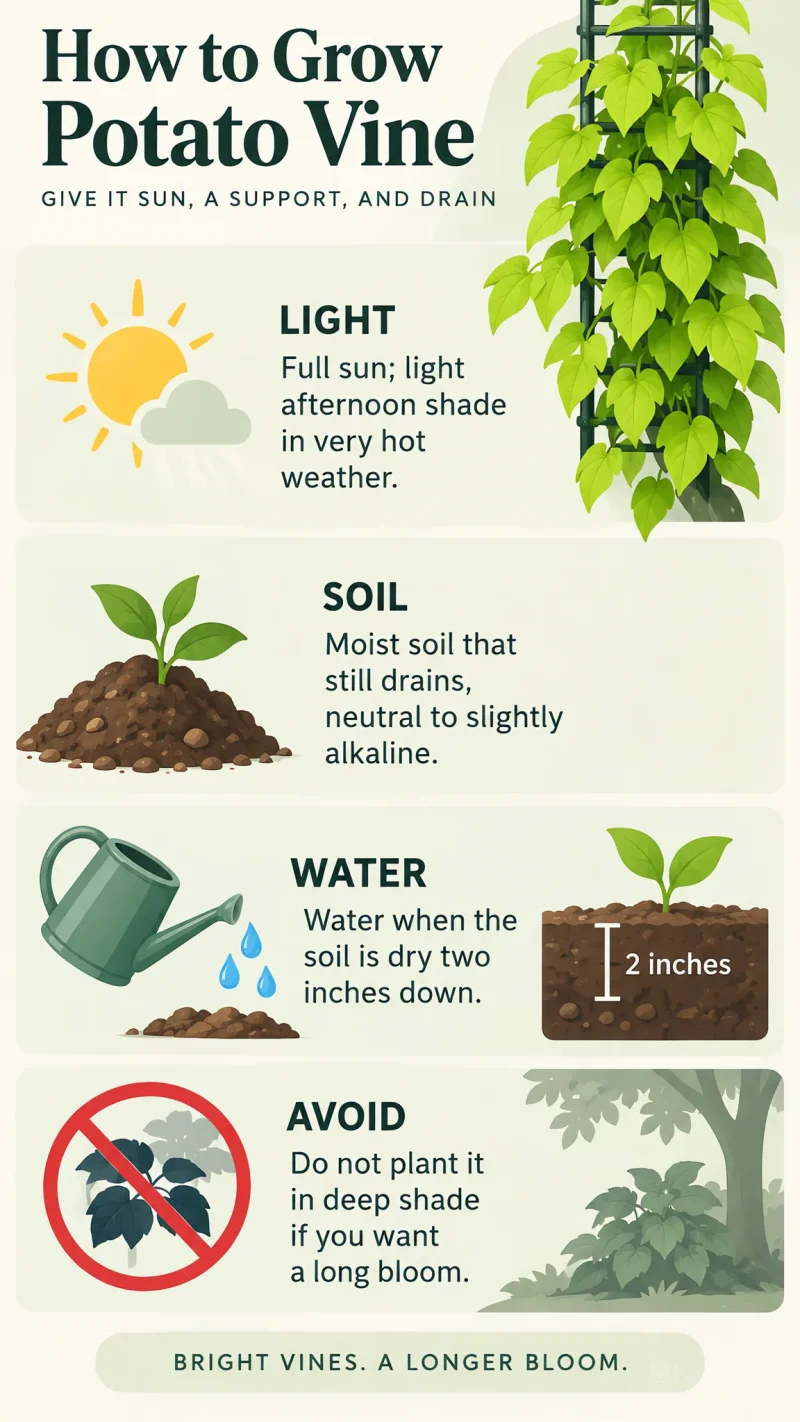
Give it full sun, a support, and soil that drains
| Factor | Recommended | Avoid |
|---|---|---|
| Light | Full sun; light afternoon shade in very hot weather | Do not plant it in deep shade if you want a long bloom |
| Soil | Moist soil that still drains, neutral to slightly alkaline | Do not leave the roots in a wet pocket |
| Water | Water when the soil is dry two inches down | Do not keep the soil soaked around the crown |
| Support | A trellis, wires, or an arbor, with stems tied as they grow | Do not leave the stems on the ground to mat and rot |
| Deer | Usually left alone | Do not plant it as a guaranteed deer-proof screen and walk away |
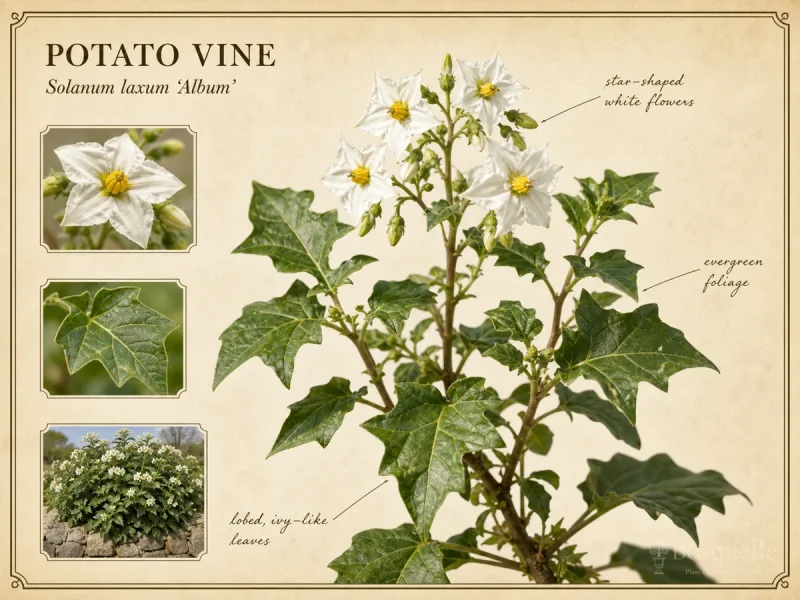
potato vine is a fast semi-evergreen nightshade climber with starry white flowers and a yellow center. Give it full sun, soil that drains, and a trellis or wires from the start. Water when the top two inches of soil are dry. Stems twine, but they still need tying so they cover the support instead of tangling on the ground. [1] A sheltered south or west wall with moist but well-drained soil is the usual outdoor site. [2]
Chilean potato bush wants the same sun, drain, and support. It is the purple-blue scrambling kind — stouter stems you tie in, not a twiner — and it still flowers on a sunny wall. [3]
- Choose full sun. Light afternoon shade is fine where summers run very hot. Deep shade is the usual reason the bloom stays thin.
- Set it in soil that stays moist but still drains. A wet pocket around the roots is the usual cause of rot.
- Fix a trellis, wires, or an arbor before the stems run. Tie new growth as it lengthens so the cover stays even.
- Water when the soil is dry two inches below the surface. Let extra water run off. Do not keep the bed soaked.
Set a plant in the ground on Planting Potato Vine. Cut it back to a framework on How to Prune Potato Vine. Start another plant from a cutting on How to Propagate Potato Vine.
How much sun does potato vine need?
Full sun. Light afternoon shade helps in very hot weather. Deep shade is the usual reason the bloom stays thin.
How often should I water potato vine?
Water when the soil is dry two inches down. Do not keep the soil soaked around the crown.
Grow it in a pot and bring it in before frost
Where frost hits, grow potato vine in a large pot so you can move it. A draining tub with an obelisk or a small trellis can spend summer in full sun and come indoors before a freeze. Keep the mix barely moist while it rests, and stop feeding until new growth starts. [4] Tip-prune through the season if you need a plant that still fits the door.
- Choose a large pot with a drainage hole. A pot on wheels is easier to move once the vine fills out.
- Fill it with a potting mix that drains. Water when the top two inches are dry, and empty the saucer so the roots do not sit wet.
- Set a support in the pot at planting, and tie stems as they grow.
- Bring the pot indoors before frost. Give it a bright, cool room. Keep the mix barely moist. Do not feed it until new growth starts in spring. If the room is dim, expect some leaf drop; keep watering so the root ball does not dry out completely.
Can I grow potato vine in a pot?
Yes. Use a large pot with a drainage hole and a support, and bring it indoors before frost. Water when the top two inches are dry in summer, and keep the mix barely moist while it rests.
Not a sweetpotato vine — and not a food potato
Potato vine is an ornamental climbing nightshade. Sweetpotato vine is Ipomoea, grown for colored leaves in a basket — see How to Grow Sweetpotato Vine. A food potato is Solanum tuberosum, grown for tubers — see How to Grow Potatoes. Blue potato bush is Lycianthes, a shrub you can train as a small standard — see How to Grow Blue Potato Bush.
The name does not mean you can eat the berries. Leaves and fruit can make people and pets sick if eaten, so wear gloves when you handle it and keep pets and children from chewing stems or berries. If the tag is Ipomoea, a seed potato, or Lycianthes, you do not have this plant.
Is potato vine the same as sweetpotato vine?
No. Potato vine is a climbing nightshade with starry flowers. Sweetpotato vine is Ipomoea, grown for its leaves. A food potato is a different plant grown for tubers.
Are the berries edible?
No. Leaves and berries can make people and pets sick if eaten. Wear gloves when you handle it, and keep pets and children from chewing the fruit.
Give it sun, a support, and drain, water when the top two inches are dry, and move a pot indoors before frost.
FAQ
Is Chilean potato bush a different plant?
Glasnevin is the purple-blue scrambling kind in this cluster. Album is the white twiner. Site them the same way — sun, drain, and a support.
Is it sold as Solanum jasminoides?
Yes. That is the older name for the white-flowered climber. Check that the tag is not a sweetpotato vine, a food potato, or a blue potato bush.
Will deer eat it?
Deer usually leave it alone. That is not a promise they will never browse a tender shoot.
Why isn't it blooming?
Give it more sun, and let the top two inches of soil dry before you water. A vine in deep shade, or with roots sitting wet, often stays leafy and shy to flower.
Related guides

Recommended plants

References
- [1] NC State Extension -
https://plants.ces.ncsu.edu/plants/solanum-laxum/ - [2] San Marcos Growers -
https://www.smgrowers.com/products/plants/plantdisplay.asp?plant_id=1509 - [3] San Marcos Growers -
https://www.smgrowers.com/products/plants/plantdisplay.asp?plant_id=4842 - [4] Royal Horticultural Society -
https://www.rhs.org.uk/plants/150759/solanum-laxum/details
This note is part of Potato_vine Guides.
More first-season notes by plant are gathered in How to Grow Guides.
Updated: Reviewed by Bosquelle Editors